Table of Contents >> Show >> Hide
- Why Basements Get Dusty, Allergy-Prone, and Smelly
- How We Picked the Best Basement Air Purifiers
- Basement Sizing Cheat Sheet (So You Don’t Guess Wrong)
- 10 Best Air Purifiers for a Basement
- 1) Coway Airmega 400S Best Overall for Big, Open Basements
- 2) Blueair Blue Pure 211i Max Best for Fast Dust and Smoke Clearing
- 3) Alen BreatheSmart 75i Best Premium Pick for Very Large Basements
- 4) Honeywell HPA300 Best “Classic Workhorse” for Basement Allergens
- 5) Levoit Core 400S Best Value Smart Purifier for Most Finished Basements
- 6) Medify MA-112 Best for Extra-Large Basements and Basement Gyms
- 7) Rabbit Air MinusA2 Best for Odor-Heavy Basements (and Wall-Mount Flexibility)
- 8) Austin Air HealthMate Best for Stubborn Odors, VOCs, and “Old House Basement” Air
- 9) IQAir HealthPro Plus XE Best Medical-Grade Splurge for Particles + Odors
- 10) GermGuardian Airsafe+ (AC9200WCA) Best Tower-Style for Large Basement Coverage
- Basement Air Purifier Tips That Actually Help
- Conclusion: The Right Basement Purifier Is the One Sized for Your Air (and Your Reality)
- Real-Life Basement Air Purifier Experiences (What People Notice After the First Week)
- SEO Tags
Basements are the unofficial “everything room”: laundry zone, storage unit, home gym, game cave, andif you’re unluckymuseum of mysterious smells.
Because basements sit below grade, they tend to trap dust, hold onto allergens, and marinate in odors longer than the rest of the house.
A good air purifier won’t turn your basement into a mountain meadow (sorry), but it can noticeably reduce airborne particles and help tame musty,
stale, or “what is that?” funkespecially when it’s paired with smart moisture control.
This guide breaks down what actually matters for basement air cleaning, how to size a purifier without doing advanced math on a napkin,
and the 10 best air purifiers for a basement that balance strong filtration, odor control, and real-world usability.
Why Basements Get Dusty, Allergy-Prone, and Smelly
Dust and allergens love low-traffic spaces
Basements collect dust the way a black hoodie collects lint: aggressively and with confidence.
Cardboard boxes shed fibers, stored fabric holds dust mites, and unfinished areas often have exposed joists that act like dust shelves.
Add pet dander, pollen that gets tracked in, and occasional construction debris, and you’ve got a particle party.
A basement-ready purifier should move a lot of air through a strong particle filter (ideally True HEPA).
Odors and VOCs linger longer downstairs
Basements are famous for “baseline stink.” That can come from paints, stored chemicals, hobby supplies, old furniture, litter boxes,
workout gear, or just stale air. For odors, activated carbon (and other adsorbent media) matters.
A purifier with a tiny, paper-thin carbon sheet won’t do much for the “musty basement” vibe.
Important reality check: moisture is the boss fight
If your basement is damp, smells may return even with a great purifierbecause moisture fuels mildew and mold growth on surfaces.
An air purifier helps with airborne particles, but it doesn’t dry out concrete or stop water intrusion.
In most basements, the best results come from a combo: fix leaks, improve ventilation if possible, run a dehumidifier as needed,
and use an air purifier to capture what’s floating around.
How We Picked the Best Basement Air Purifiers
This list is based on a synthesis of U.S.-based lab testing, consumer guidance, and manufacturer specifications (including performance metrics like CADR,
room-coverage claims, filtration stages, and odor-control design). We prioritized models that make sense for basements specifically:
bigger spaces, heavier dust loads, and more odor challenges than a typical bedroom.
- High airflow / strong CADR: Because basements are often large, open, or oddly shaped.
- True HEPA or equivalent high-efficiency filtration: For dust, dander, and allergen reduction.
- Serious odor support: Substantial carbon or gas/VOC filtration options.
- Filter cost and availability: Basements can be “high-pollution” rooms that chew through filters faster.
- Noise and usability: Quiet enough for a TV room, strong enough for a workshop corner.
- Credibility signals: AHAM-style performance ratings, ENERGY STAR certification where applicable, and strong third-party test coverage.
Basement Sizing Cheat Sheet (So You Don’t Guess Wrong)
If you’re shopping by “coverage area,” you’ll see numbers that don’t always matchbecause brands use different assumptions.
A more reliable approach is to look at CADR (Clean Air Delivery Rate) and think in terms of how quickly the unit can cycle the air.
Two quick rules that work for most basements
-
Start with the 2/3 rule: Aim for a smoke CADR around two-thirds of your basement’s square footage.
Example: a 600 sq ft basement → target smoke CADR ~400. -
Consider multiple units for divided spaces: If your basement has rooms, corners, or a closed-off laundry area,
two medium purifiers often outperform one giant unit parked in the wrong spot.
Placement matters, too. Give the purifier breathing room (a few feet of clearance is ideal), and put it where the air is actually “dirty”:
near the stairs (traffic), near the laundry zone (odors), or near the area that always smells like old carpet even after you’ve cleaned it twice.
10 Best Air Purifiers for a Basement
1) Coway Airmega 400S Best Overall for Big, Open Basements
If you want one purifier that can handle a large finished basement without breaking a sweat, the Airmega 400S is a standout.
It’s built for big-room airflow and offers a strong multi-stage filtration setup that’s well-suited for dust and allergens.
It also includes smart features that make it easier to run consistentlybecause the best purifier is the one you actually keep on.
- Best for: Large basements, open layouts, “one-unit solution” households
- Why it works: High airflow + robust filtration = faster particle reduction
- Odor note: Helpful for everyday basement funk, especially with regular filter maintenance
- Watch-outs: Bigger footprint; replacement filters aren’t “tiny budget” pricing
2) Blueair Blue Pure 211i Max Best for Fast Dust and Smoke Clearing
Basements need speed: you want the air to clean up quickly after vacuuming, woodworking, moving boxes, or hosting people downstairs.
The 211i Max is known for strong performance in large rooms and a user-friendly design (including smart controls on newer models).
It’s a great pick when your main goals are dust, allergens, and general odor reduction without fiddly complexity.
- Best for: Large finished basements, rec rooms, big open areas
- Why it works: High CADR performance helps clear particles quickly
- Odor note: Carbon support is useful for “stale air,” though heavy VOC/chemical odors may need deeper carbon media
- Watch-outs: Filter costs vary; check replacement pricing before you fall in love
3) Alen BreatheSmart 75i Best Premium Pick for Very Large Basements
The Alen 75i is for the “I want my basement to feel like upstairs” crowd.
It’s designed for large spaces and can move serious air while staying impressively livable on noise.
A major advantage for basements: Alen offers filter options geared toward different needs, including odor-focused choices
which is exactly what you want when you’re trying to evict that musty smell.
- Best for: Very large basements, open concept downstairs living spaces, premium comfort
- Why it works: Strong airflow + coverage claims that actually match big rooms
- Odor note: Odor-focused filter options make it basement-friendly
- Watch-outs: Higher upfront cost; pay attention to filter replacement schedule in dusty spaces
4) Honeywell HPA300 Best “Classic Workhorse” for Basement Allergens
The Honeywell HPA300 has been around long enough to be considered the air-purifier equivalent of a reliable pickup truck.
It’s not trying to be trendy; it’s trying to move air and capture particles.
If your basement triggers sneezing, itchy eyes, or that “why do I feel stuffed up down here?” sensation, this is a solid, proven choice.
- Best for: Dust and allergy reduction in medium-to-large basement areas
- Why it works: High CADR ratings for smoke, dust, and pollen
- Odor note: Uses a pre-filter that can help with everyday odors (swap it on schedule)
- Watch-outs: Not app-controlled; filter replacements are straightforward but ongoing
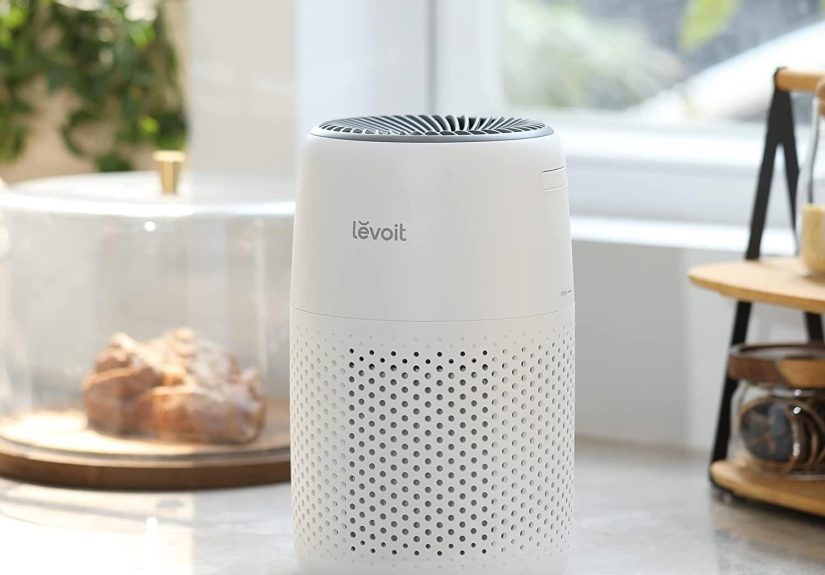
5) Levoit Core 400S Best Value Smart Purifier for Most Finished Basements
For a lot of people, the best basement purifier is the one that’s easy to live with: set it up, put it on Auto, and let it do its thing.
The Core 400S hits that sweet spot with strong mainstream testing coverage, smart controls, and a size that works well for many finished basements,
especially if yours is in the “big room + storage nook” category.
- Best for: Finished basements, TV rooms, home offices downstairs
- Why it works: Strong overall performance in third-party testing + convenient smart features
- Odor note: Look for the filter option that includes meaningful carbon support if odors are a priority
- Watch-outs: If your basement is huge, you may want two units or step up to a larger model
6) Medify MA-112 Best for Extra-Large Basements and Basement Gyms
If your basement is basically a second homecomplete with treadmill, couch, and the world’s heaviest “temporary” storage binsthe Medify MA-112 is worth a look.
It’s built to move a lot of air and is positioned for very large rooms.
For basements, that matters because dust loads can be high, and you often want the air to recover quickly after activity.
- Best for: Extra-large finished basements, basement gyms, big open spaces
- Why it works: Very high airflow and big-room coverage claims
- Odor note: Uses a substantial carbon stage designed for odors and smoke
- Watch-outs: Bigger unit and higher filter costs; overkill for small basements
7) Rabbit Air MinusA2 Best for Odor-Heavy Basements (and Wall-Mount Flexibility)
Some basements don’t just smell mustythey smell like a rotating schedule of “laundry day,” “paint project,” and “mysterious cardboard.”
Rabbit Air’s MinusA2 is popular for its flexible filtration approach, including options tuned for odor and chemical sensitivity.
Bonus: you can mount it on the wall, which is handy in tight basements where floor space is precious.
- Best for: Basements with persistent odors, mixed-use spaces, tight layouts
- Why it works: Customizable filtration + practical installation options
- Odor note: Choose the filter configuration aimed at odors/VOCs if smell is your main issue
- Watch-outs: Replacement filters can add up; choose based on your actual problem (not vibes)
8) Austin Air HealthMate Best for Stubborn Odors, VOCs, and “Old House Basement” Air
If you’re fighting the kind of basement smell that laughs at scented candles, you may need more than standard carbon sheets.
Austin Air units are known for heavy-duty adsorption media aimed at odors and gases, which makes them a strong candidate for older homes,
basements with stored chemicals, or spaces that always smell slightly like “finished in 1978.”
- Best for: Strong odors, VOC concerns, older basements, workshops (non-toxic use)
- Why it works: Deep media design focused on gas/odor filtration + long-running durability
- Odor note: This is one of the best “odor-first” styles of purifier
- Watch-outs: Higher upfront investment; not a tiny, discreet tower
9) IQAir HealthPro Plus XE Best Medical-Grade Splurge for Particles + Odors
For households that want top-tier filtration engineeringespecially for ultrafine particles plus gas/odor controlIQAir is a premium category.
The HealthPro Plus XE is positioned as a medical-grade option with a dedicated gas/odor filtration stage.
If your basement is a primary living area (or someone in the home is extremely sensitive), this is the “no shortcuts” pick.
- Best for: High sensitivity households, multi-pollutant concerns (particles + odors), finished basements used daily
- Why it works: High-end filtration stages with strong gas/odor support and smart monitoring
- Odor note: Gas/odor filtration stage is a major advantage for basement smells
- Watch-outs: Expensive; you’re paying for engineering and filtration depth
10) GermGuardian Airsafe+ (AC9200WCA) Best Tower-Style for Large Basement Coverage
If you prefer a tower form factoreasy to tuck near a wall, simple controls, good room presencethe Airsafe+ is a strong contender.
It’s designed for large-room coverage and offers a multi-stage approach aimed at particles and everyday odors.
Great for finished basements where you want the unit to exist without stealing the room’s whole personality.
- Best for: Large finished basements, rec rooms, open downstairs spaces
- Why it works: High CADR and large-room coverage claims
- Odor note: Better for everyday odors than heavy chemical/VOC situations
- Watch-outs: Like any basement purifier, it needs consistent filter care to keep odor performance strong
Basement Air Purifier Tips That Actually Help
1) Run it longer than you think
Basements often need steady operation to stay comfortable. If you only run the purifier “when it smells,” you’re always playing catch-up.
Auto mode is great, but don’t be afraid to run a higher fan speed for an hour after vacuuming, organizing, or doing anything that kicks up dust.
2) Don’t block airflow
A purifier jammed between storage bins is like trying to breathe through a pillow. Give it clearance so it can circulate air.
If your basement has a central open area, start thereand adjust based on where dust and odors concentrate.
3) Odors need real carbon (not wishful thinking)
For musty air, smoke, litter box smells, paint fumes, or “basement chemistry,” prioritize models with a substantial carbon stage
or dedicated gas filtration. And remember: carbon filters saturate. If the smell returns, it may be time for a replacement.
4) If you have dampness, treat humidity like a first-class problem
A basement that stays humid will keep generating odor sources. Use a dehumidifier if needed, improve drainage and sealing where possible,
and address water intrusion. Once the space is dry, a purifier becomes dramatically more effective at keeping the air feeling clean.
Conclusion: The Right Basement Purifier Is the One Sized for Your Air (and Your Reality)
Basements aren’t “normal rooms.” They’re dustier, smellier, and more likely to trap stale air.
The best approach is practical: choose a purifier with strong CADR for your space, prioritize real odor filtration if mustiness is a problem,
and pair it with moisture control so you’re not fighting an endless cycle of damp air.
If you want a dependable all-around option for a big basement, start with the Coway Airmega 400S or Blueair 211i Max.
If odor control is your main mission, look hard at carbon-heavy designs like Austin Air or gas/odor-focused premium filtration like IQAir.
And if you want smart convenience without going full luxury, the Levoit Core 400S is a strong everyday choice.
Real-Life Basement Air Purifier Experiences (What People Notice After the First Week)
The first thing many people notice isn’t some dramatic “Hollywood clean-air glow.” It’s the small stufflike how the basement feels less
irritating in the nose and throat when you hang out downstairs for a couple of hours. In a dusty basement office, that often shows up as fewer
sneezing fits during the workday and less of that scratchy “I should probably go upstairs for a break” feeling. The air starts to feel more
neutralless like it’s been sitting in a box since last Halloween.
The second common experience is dust behaving differently. Basements tend to show dust fast because storage and lower airflow let particles settle.
After a purifier runs consistently for several days, people often report that flat surfaces (TV stands, shelves, treadmill rails) stay presentable
a little longer. It’s not magicyou’ll still need to cleanbut it can shift dusting from “every other day” to “okay, weekly is fine,” especially
if the purifier has a pre-filter that catches larger lint and hair before it reaches the main filter.
Odors are where expectations need a quick reality check. If the basement smell is mostly stale air and mild mustiness, a purifier with decent carbon
can make the space noticeably more pleasantoften within a few days. People describe it as the basement smelling “less like basement” and more like
“a normal room that happens to be downstairs.” But if the odor is driven by humidity (damp carpet, wet concrete, a slow leak, or chronic high moisture),
the purifier can feel like it’s doing its job while the smell stubbornly hangs on. In those cases, once a dehumidifier is added and the humidity drops,
the purifier’s odor benefits suddenly become obvious. It’s like the purifier was ready to helpyou just had to stop the basement from constantly creating
new smell fuel.
Placement is another “learned the hard way” experience. A purifier shoved into a corner behind stacked bins may run all day and still leave the couch area
feeling stale. Move it into a more open spotnear the center of the space or along a clear traffic pathand people often notice an immediate improvement.
In divided basements, the most common upgrade is going from one large unit to two smaller ones: one near the stairs/TV area and one near laundry/storage.
That setup tends to reduce both dust and odors more evenly, because the purifier is working with the airflow of the space instead of fighting it.
Finally: filter maintenance becomes very real in basements. Dusty storage areas can load a pre-filter fast. People who get the best long-term results are
the ones who treat the purifier like a “basement appliance,” not a decorative gadget: quick pre-filter cleaning, replacing odor filters on schedule,
and using higher fan speeds after messy projects. The payoff is a basement that feels like a place you actually want to userather than a place you only
visit to grab holiday decorations and immediately regret your life choices.