Table of Contents >> Show >> Hide
- What Basil Needs (So You Pick the Right Neighbors)
- The 10 Best Basil Companion Plants
- Quick Companion Cheat Sheet
- What NOT to Plant Near Basil (Yes, Basil Has Boundaries)
- Container Pairing Ideas (Patio-Friendly and Actually Doable)
- Planting and Care Tips That Make Companion Planting Work
- Practical Experiences and Lessons from Real Gardens (Extra ~)
- Conclusion
Basil is the social butterfly of the herb world. It shows up to the party smelling amazing, makes the tomatoes look better,
and somehow convinces bugs to take their drama somewhere else. But basil isn’t friends with everyoneit likes warm weather,
steady moisture, and neighbors that won’t treat its roots like a parking lot.
In this guide, you’ll get the 10 best basil companion plants for raised beds, in-ground gardens, and containersplus exactly
how to pair them (with practical spacing, container sizing ideas, and a few “learn from other people’s mistakes” notes).
Whether you’re building a patio “pizza pot” or planting a full-blown summer jungle, these pairings help you use space wisely,
keep plants healthier, and harvest more flavor per square foot.
What Basil Needs (So You Pick the Right Neighbors)
Think of basil as a warm-season herb with “golden retriever energy”: it thrives when conditions are sunny, comfortable, and consistent.
Match companions that like similar care, and you’ll avoid the classic container-garden tragedy: one plant thriving while the other sulks.
- Sun: Full sun is ideal (especially outdoors in summer).
- Water: Regular moisturedon’t let it swing from bone-dry to swampy.
- Soil: Fertile, well-drained soil (compost is basil’s love language).
- Airflow: Basil appreciates breathing room to reduce leaf issues in humid weather.
The 10 Best Basil Companion Plants
Below are the top basil companions that work beautifully in beds and containers. Each includes: why it works,
how to plant it, and container-friendly pairing tips.
1) Tomatoes
Basil and tomatoes are the iconic duopartly because they love similar summer conditions and partly because your taste buds insist.
Gardeners often grow basil near tomatoes to help with garden balance and to make harvesting “Caprese ingredients” feel like a personality trait.
There’s also research suggesting basil (and marigolds) can help reduce thrips pressure in tomato plantings, and intercropping may support tomato growth.
- In the garden: Plant basil around the edges of tomato beds or between plants where there’s space and light.
- Spacing tip: Give basil room so the tomato canopy doesn’t smother it as summer ramps up.
- In containers: A tomato needs a big pot; basil can share only if the container is truly large and you prune consistently.
A safer move: keep basil in its own pot right next to your tomato container for easy care and airflow.
2) Peppers (Sweet or Hot)
Peppers and basil are both heat-lovers. They’re great neighbors in a “salsa” or “pizza” garden because they appreciate similar sun and watering rhythms.
Plus, basil’s strong aroma is a useful addition to mixed plantings where you’re trying to keep pest pressure down without turning your patio into a chemistry lab.
- In the garden: Tuck basil between pepper plants early in the season while peppers are still small, then harvest basil heavily as peppers fill out.
- In containers: Pair one pepper plant with one basil plant in a roomy container (or use separate pots placed together).
The “place together” trick still gives you the companion effect while keeping crowding under control.
3) Lettuce
Basil and lettuce can be an unexpectedly smart comboespecially if you’re working with limited space.
Lettuce enjoys steady moisture, and basil appreciates a little extra humidity around its root zone (as long as airflow stays decent).
In hot weather, larger basil plants can also provide light, partial shade that helps reduce lettuce bitterness and bolting.
- In the garden: Plant lettuce as a short-season crop near basil; harvest lettuce while basil is still ramping up.
- In containers: Use lettuce as a “filler” around basil in wider pots.
Harvest outer leaves often so lettuce doesn’t turn into a crowded mosh pit.
4) Spinach
Like lettuce, spinach is a cool-season-to-shoulder-season crop that can share space with basil if you plan the timing.
Spinach grows fast; basil grows bigger later. That means spinach can be harvested before basil becomes the main character.
This pairing is especially useful in beds where you want to keep soil covered and productive.
- In the garden: Plant spinach earlier, then transplant basil as the weather warms and spinach harvest is underway.
- In containers: Use spinach as an early “ring” around basil, then pull spinach once basil starts taking over.
5) Parsley
Parsley plays well with basil because it’s not overly competitive, and both are common kitchen herbs with similar “keep it moderately moist” preferences.
As a bonus, parsley flowers attract beneficial insects if you let a plant bolt late in the seasonbasically an invitation to the good guys.
- In the garden: Plant parsley near basil in herb rows or mixed beds. Harvest regularly to keep both compact and leafy.
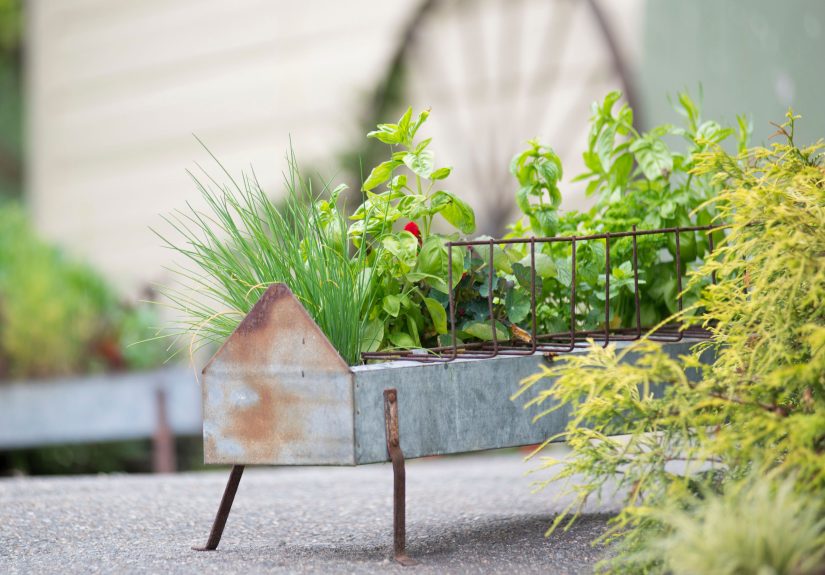
- In containers: Try a “kitchen herbs” pot: basil + parsley + chives works well if the container is wide enough and you don’t overwater.
6) Oregano
Oregano is frequently recommended in companion planting for general garden benefits and because it fits beautifully into basil-heavy cooking.
The big watch-out: oregano can be a spreader (especially in beds), so give it boundaries or keep it in a container.
Still, basil + oregano is a classic “pizza garden” pairing that’s practical and delicious.
- In the garden: Consider planting oregano where it won’t creep into everything (or grow it in a pot sunk into the ground).
- In containers: Basil and oregano can share a large container, but keep oregano trimmed so it doesn’t crowd basil’s lower stems.
7) Chives
Chives (and other mild alliums) are solid basil companions because they stay relatively tidy, don’t hog space, and are common partners in traditional companion planting charts.
Their scent is also a plus in mixed plantings. Translation: they’re that calm friend who makes the group chat better without starting arguments.
- In the garden: Plant chives as a border plant near basil and other summer crops.
- In containers: One basil plant + one clump of chives works well in a wider potjust keep harvesting chives to maintain airflow.
8) Marigolds
Marigolds are a superstar companion in many vegetable gardens, and basil + marigold is a common pairing.
In tomatoes specifically, there are studies suggesting basil and marigolds can reduce thrips populations under certain conditions.
Even aside from pest dynamics, marigolds pull double duty: they add color, attract pollinators, and make your edible garden look intentional
(instead of like you dropped groceries onto soil and hoped for the best).
- In the garden: Plant marigolds as edging near basil, tomatoes, and peppers.
- In containers: Use marigolds as a bright “filler” alongside basil in a large potgreat for patios and balcony gardens.
9) Nasturtiums
Nasturtiums are charming, edible, and useful in mixed plantings. They can act as a distraction crop for certain pests,
and they spill beautifully over container edgesmeaning you get both function and flair.
Nasturtiums also thrive in containers, making them a natural basil buddy for small-space gardening.
- In the garden: Plant nasturtiums near basil and nearby vegetables as a living groundcover in sunny areas.
- In containers: Basil as the upright centerpiece + nasturtium as the “spiller” is a winning design and a practical space-saver.
10) Bush Beans
Beans are often included in companion planting charts, and bush types are particularly helpful in mixed beds because they don’t take over your whole zip code.
Beans also help support soil health in diverse plantings, and they can be rotated through spaces as basil and other herbs shift through the season.
The key is not to crowd basilkeep the planting airy and harvest often.
- In the garden: Plant bush beans in nearby rows or blocks, with basil along the edges where you can harvest easily.
- In containers: A big container can host a compact “edible trio” (basil + marigold + bush bean), but it must be wide and well-drained.
If your container is under 12 inches wide, separate pots will perform better.
Quick Companion Cheat Sheet
| Companion Plant | Why It Pairs Well | Best Use (Garden vs. Container) |
|---|---|---|
| Tomatoes | Similar needs; popular pairing; may help in intercropping systems | Both (containers only if very large) |
| Peppers | Both love heat and sun; great “kitchen garden” match | Both |
| Lettuce | Short-season crop; compatible moisture needs | Both |
| Spinach | Early harvest before basil dominates; efficient space use | Both |
| Parsley | Non-competitive herb; easy co-care | Both |
| Oregano | Classic pairing; trim to prevent crowding | Best in containers or controlled beds |
| Chives | Tidy growth; common companion chart favorite | Both |
| Marigolds | Attract pollinators; useful in mixed plantings; colorful edging | Both |
| Nasturtiums | Edible flowers; great spiller; helpful in diverse plantings | Both (especially containers) |
| Bush Beans | Works well in diverse beds; compact habit | Garden best; containers if large |
What NOT to Plant Near Basil (Yes, Basil Has Boundaries)
Companion planting works best when neighbors share similar needs. Basil prefers regular moisture and warm weather,
so pairing it with drought-loving herbs can create a “who gets watered?” custody battle. Some plants are also commonly listed
as poor neighbors due to growth conflicts or chemical incompatibility.
- Rue: Often described as chemically incompatible with basil.
- Fennel: Frequently listed as a poor companion in many garden charts.
- Sage and thyme: Prefer drier conditions; can clash with basil’s moisture needs.
- Cucumbers and certain brassicas (like kale): Sometimes listed as less ideal neighbors (especially in tight spaces).
The practical takeaway: if it wants dry soil and hates summer watering, keep it out of basil’s friend groupespecially in containers,
where one watering schedule rules them all.
Container Pairing Ideas (Patio-Friendly and Actually Doable)
Containers are where basil companion planting gets real. You don’t have infinite soil, you don’t have infinite water buffering,
and you definitely don’t have infinite patience for crammed roots. The best container pairings follow three rules:
match moisture needs, avoid overcrowding, and prune like you mean it.
Option A: The “Pizza Pot”
A classic combo is basil + oregano, optionally with a compact pepper or lettuce.
If you’re adding a tomato, the container must be truly largeand you’ll need consistent feeding and watering.
- Best for: Large containers (and gardeners who enjoy regular maintenance).
- Easy version: Keep basil and oregano together; put the tomato in its own big container right beside them.
Option B: The “Salad Bowl” Container
Basil + lettuce + spinach is a smart seasonal strategy. Harvest greens early and often, then let basil take over as summer heats up.
This is one of the best ways to maximize a medium-to-large container without turning it into a root traffic jam.
Option C: The “Pollinator Pop” Herb Planter
Basil + marigolds + nasturtiums is a practical, pretty combo: basil gives height, marigolds fill, nasturtiums spill.
It’s also one of the simplest mixed containers to keep healthy because the plants can coexist without one instantly overpowering the others.
Planting and Care Tips That Make Companion Planting Work
- Don’t crowd basil: In mixed plantings, basil can get shaded or smothered as larger plants mature. Harvest regularly to keep it compact.
- Water consistently: Basil hates the “desert-to-flood” routine. Aim for steady moisture and well-drained soil.
- Feed lightly but regularly: Compost and balanced feeding keep basil leafyespecially in containers where nutrients wash out faster.
- Pinch for bushiness: Pinching basil tips encourages branching, which means more leaves and fewer sad, leggy stems.
- Watch airflow: Humid climates and crowded planters can lead to leaf issues. Space plants and prune for light and air movement.
Practical Experiences and Lessons from Real Gardens (Extra ~)
If you ask a group of gardeners about basil companion plants, you’ll hear a surprising amount of agreementand an equally impressive
collection of “and here’s what I’d do differently next time” stories. The biggest lesson tends to be this: companion planting is less like
magical matchmaking and more like good roommate selection. When basil’s neighbors want the same basics (sun, steady water, decent soil),
everything feels easier. When they don’t, you’ll spend the season negotiating peace treaties with a watering can.
One common experience is the “tomato shade surprise.” In early summer, basil next to tomatoes looks perfectplenty of sun, lots of room,
and that dreamy garden-to-plate fantasy. Then the tomatoes hit their stride. Suddenly, basil that once basked in full sun is living under a leafy
roof, stretching like it’s trying to reach a ceiling fan. The fix is simple: plan basil placement where it can still catch light (bed edges work well),
and harvest basil aggressively. Regular pinching keeps it shorter, bushier, and better able to tolerate changing light.
Container gardeners often learn a different lesson: “One pot” sounds efficient, but roots have opinions. A small or medium container packed with a tomato,
basil, and bonus plants can look fine for a month, then become a thirst crisis by July. Soil volume matters because it buffers moisture and nutrients.
Many gardeners end up liking the “cluster method” best: separate pots grouped together. You still get a compact patio setup, and the plants can be watered
according to their needs without over-soaking or starving a neighbor. Basil, in particular, tends to reward consistencysteady watering and frequent harvesting
often produce better leaves than any complicated planting scheme.
The “salad greens + basil” combo is another crowd favoriteespecially for people who want results fast. Lettuce and spinach give early wins and make containers
look full while basil is still small. Then, as heat arrives, greens are harvested out and basil becomes the main crop. Gardeners who do this intentionally
often say it feels like a planned performance: opening act (greens), headliner (basil), and a late-season encore (flowers from nasturtiums or marigolds).
It’s also a practical way to keep soil covered, reduce bare spots, and get multiple harvests from one container footprint.
Flower companions like marigolds and nasturtiums are frequently mentioned in “most satisfying” lists because they do more than just exist.
They add color, attract beneficial insects, and make edible plantings look designed instead of accidental. And in the real world, that matters:
when a container looks good, people tend to care for it more consistently. That consistencywatering, pinching, harvestingends up being the real
secret sauce behind thriving basil and productive companion plantings.
In other words: companion planting isn’t a spell. It’s a strategy. Basil thrives when you pair it with plants that share its care needs,
give it space and airflow, and encourage you to harvest often. Do that, and you’ll get the best kind of garden outcome:
more flavor, fewer headaches, and a steady supply of leaves that make even basic Tuesday pasta feel like a celebration.
Conclusion
The best basil companion plantstomatoes, peppers, leafy greens, friendly herbs, and a few hardworking flowershelp you build a garden that’s productive,
space-smart, and easier to manage. The key is compatibility: match sun and water needs, avoid overcrowding (especially in containers), and harvest basil often.
Whether you’re growing on a balcony or in raised beds, these pairings can make your basil happierand your meals a lot more interesting.