Table of Contents >> Show >> Hide
- What Are Birth Mutations in Animals, Anyway?
- 1. Two-Headed Calves and Other Polycephalic Animals
- 2. Conjoined Twins: Double the Body, Shared Parts
- 3. Parasitic Twins: When One Twin “Hitches a Ride”
- 4. Polymelia: Six-Legged Calves, Lambs, and Goats
- 5. Cyclopia: The One-Eyed “Mythical” Animal
- 6. Albino Animals: When Pigment Vanishes
- 7. Melanism: Shadow-Black Panthers and Other Dark Mutants
- 8. Leucism and Piebald Patterns: Patchy Pigment Mutations
- 9. Polydactyly: Extra Toes and “Thumbs”
- 10. Skeletal Dwarfism: Miniature Bodies With Big Health Costs
- Why Do These Mutations Happen?
- Looking Without Exploiting: Ethics of “Freak” Animals
- Real-Life Encounters and Viral Moments: Experiences With Animal Birth Mutations
- Bottom Line: Strange Births, Serious Science
Nature usually follows a pretty reliable blueprint. A calf is born with four legs, a turtle hatches with one head,
and a peacock struts around in full color. Every now and then, though, that blueprint gets creatively (and sometimes
tragically) edited. The result is a handful of bizarre birth mutations in animals that look like something out of
mythology, science fiction, or an overactive Photoshop session.
These rare congenital mutations can be fascinating, unsettling, and scientifically important all at once. From
two-headed calves to all-white peacocks and six-legged goats, each case tells a story about how genes, environment,
and pure chance can collide. In this Listverse-style roundup, we’ll walk through 10 of the strangest birth mutations
in animals, what causes them, and why they matter far beyond their viral photo potential.
We’ll focus on real, documented conditions and case reports, but keep things readable and humane. After all, behind
every “whoa, what is THAT?” photo is a living creature that didn’t exactly ask to become internet famous.
What Are Birth Mutations in Animals, Anyway?
When people talk about bizarre birth mutations in animals, they’re usually referring to congenital
anomalies structural or functional changes present at birth. These can be caused by genetic mutations,
random developmental errors during gestation, exposure to toxins, nutritional imbalances, infections, or some
combination of all of the above.
Veterinarians and researchers categorize these anomalies in many ways, but for our purposes, we’ll look at visible
changes that dramatically alter appearance: extra limbs, missing structures, unusual coloring, or surprising
arrangements of body parts. Some are mostly cosmetic, while others are incompatible with life. Either way, each one
gives scientists clues about how normal development is supposed to work by showing what happens when it doesn’t.
1. Two-Headed Calves and Other Polycephalic Animals
If you’ve ever walked through a roadside museum or old county fair exhibit, you’ve probably seen a taxidermied
two-headed calf. That’s not a hoax it’s an example of polycephaly, a developmental anomaly in
which an animal is born with more than one head. Polycephaly usually comes in two flavors:
dicephaly (two heads on one body) or tricephaly (three heads, which is even rarer).
Polycephalic animals have been documented in cattle, snakes, turtles, and even sharks. The condition likely results
from incomplete splitting of the embryo (similar to conjoined twins) or partial fusion of two embryos early in
development. Most polycephalic animals die shortly after birth, but a few live for days, weeks, or even years with
extensive human care.
Farmers and veterinarians might encounter a two-headed calf only once in a lifetime, if at all. For the internet,
of course, that one calf is instantly immortalized in a thousand reposts with captions like “Nature Glitched.”
2. Conjoined Twins: Double the Body, Shared Parts
Closely related to polycephaly are conjoined twins, in which two genetically identical embryos fail
to fully separate. Instead of becoming two individuals, they remain physically connected sometimes at the chest,
abdomen, pelvis, or spine. Veterinary case reports describe conjoined twins in guinea pigs, goats, pigs, and
livestock of all kinds. In some cases, the twins are perfectly mirrored but share internal organs; in others, one
twin is smaller and less developed.
Recently, a rare set of conjoined eastern box turtle hatchlings made headlines when wildlife veterinarians
successfully separated them with delicate surgery only hours after hatching. Each tiny turtle weighed just a few
grams, shared tissue and yolk structures, and needed precise microsurgery to get a fair shot at survival. Stories
like this highlight how advances in veterinary medicine can sometimes turn a seemingly hopeless anomaly into a
survivable even release-able case.
Most conjoined twins in animals, though, do not survive long after birth. Many are discovered stillborn during
difficult deliveries (dystocia), where the unusual body shape physically blocks birth. For vets, these
cases are not just oddities; they’re emergencies.
3. Parasitic Twins: When One Twin “Hitches a Ride”
A more extreme twist on conjoined twins is the parasitic twin. Here, one twin develops
relatively normally, while the other remains incomplete and is attached as a smaller, partially formed body. This
can look like a strange lump or extra partial torso growing from the side, back, or abdomen of the host animal.
In veterinary literature, parasitic twins have been reported in pigs, calves, and other domestic species. Often, the
parasitic twin lacks functional organs and depends entirely on the host twin’s circulatory system. These cases may
resemble polymelia (extra limbs), but closer examination shows that the “extra” parts actually belong to a partially
duplicated body.
Surgical removal is sometimes possible if the parasitic twin is not deeply intertwined with vital organs and if the
host newborn is otherwise healthy. But in many farm situations, the animal doesn’t survive long enough to justify
complex surgery especially when economic realities enter the picture.
4. Polymelia: Six-Legged Calves, Lambs, and Goats
Few images spread faster online than a photo of a six-legged cow or lamb. These animals are examples of
polymelia, a congenital malformation in which one or more extra limbs are present at birth. The
supernumerary leg can be attached to the flank, pelvis, or even the back, and may be fully formed, partially formed,
or nonfunctional.
Modern genetic studies in cattle have linked some cases of polymelia to recessive mutations affecting the regulation
of limb development during embryogenesis. In other instances, the extra limb may represent a partially fused twin.
Environmental factors, such as toxins or nutritional deficiencies, may also play a role in disrupting early limb
patterning.
From the animal’s perspective, extra legs are not a quirky advantage. They can interfere with walking, nursing, or
giving birth later in life. In some case reports, veterinarians have successfully removed extra limbs surgically when
they were not essential for supporting the animal’s weight. When surgery goes well, the animal can go on to live a
fairly normal farm life minus one conversation-starting party trick.
5. Cyclopia: The One-Eyed “Mythical” Animal
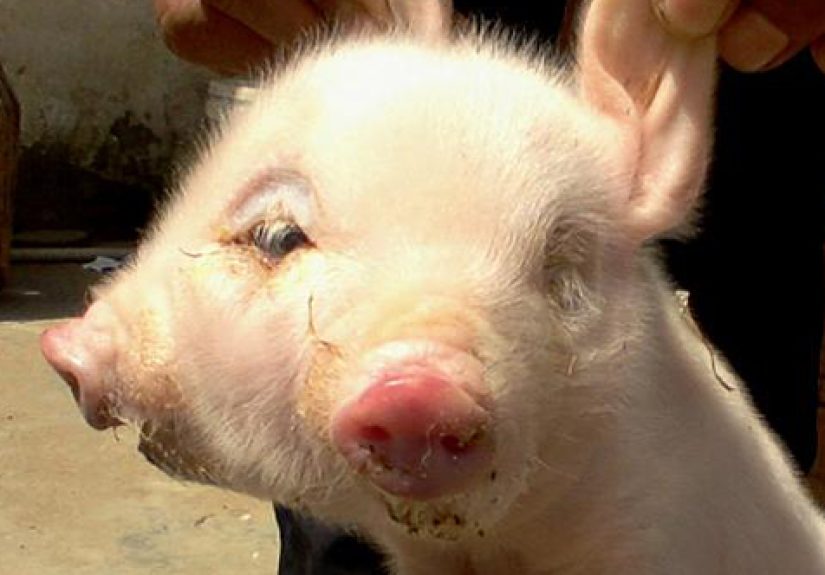
Cyclops creatures are the stuff of Greek myths, but cyclopia is a real, extremely rare congenital
anomaly. In cyclopia, the embryonic brain fails to divide properly into two hemispheres, and the structures that form
the eye sockets don’t separate. The result is a single central eye or a partially fused pair of eyes located in one
socket, often combined with severe facial deformities.
Cyclopia has been documented in lambs, foals, pigs, goats, and even shark fetuses. In some well-known veterinary
outbreaks among sheep, the cause was traced to pregnant ewes grazing on a toxic plant called corn lily
(Veratrum californicum), which contains the teratogenic compound cyclopamine. This toxin interferes with
key signaling pathways that guide early brain and facial development.
Animals born with cyclopia almost never survive more than a few hours, if they are born alive at all. Many lack a
functional nose or mouth, making breathing and nursing impossible. While the photos are unforgettable, the condition
is truly a developmental disaster rather than a “cute” mutation.
6. Albino Animals: When Pigment Vanishes
On the opposite end of the weirdness spectrum from structural deformities are color mutations.
One of the most striking is albinism, a genetic condition in which an animal produces little or no
melanin, the pigment that gives color to skin, fur, scales, and eyes.
True albino animals are completely white with pink or red eyes (the eye color comes from visible blood vessels in
the retina). Albinism is seen across the animal kingdom, from squirrels and raccoons to deer, birds, reptiles, and
fish. In mammals, it’s estimated to occur in roughly 1 in 10,000 births; in birds, it may be somewhat more common.
Albino animals are undeniably beautiful, but the condition is not just a cosmetic quirk. Lack of pigment often means
poor vision, higher sensitivity to sunlight, and increased vulnerability to predators it’s hard to hide when
you’re glowing white against a dark forest background. In the wild, albino individuals rarely survive long, which is
why they feel so “mythical” when spotted.
7. Melanism: Shadow-Black Panthers and Other Dark Mutants
If albinism is one extreme, melanism is the other. Melanistic animals produce an excess of melanin,
resulting in very dark or nearly black coloration. Famous examples include the so-called “black panthers” which
are actually melanistic leopards or jaguars as well as melanistic foxes, squirrels, snakes, and birds.
Unlike many of the bizarre birth mutations in animals on this list, melanism can actually be beneficial. In some
environments, darker coloration may help with camouflage, heat absorption, or even social signaling. In fact,
melanism is sometimes maintained in wild populations by natural selection rather than random chance.
That said, extreme or unusual coats still tend to draw human attention. A melanistic deer or big cat can turn a
quiet wildlife preserve into a paparazzi hotspot almost overnight if someone manages to get a clear photo.
8. Leucism and Piebald Patterns: Patchy Pigment Mutations
Not all pale animals are albino. Many white or partially white creatures actually have leucism, a
condition in which pigment cells fail to migrate properly or function in certain areas of the body. Unlike true
albinism, leucistic animals often have normal eye color but show dramatic white patches or completely white coats.
Leucism can create stunning patterns in birds and mammals: white squirrels with dark eyes, partially white deer, or
piebald horses and ball pythons with irregular patches of color and white. Some of these mutations are selectively
bred by humans (hello, fancy morphs in reptiles and koi); others pop up spontaneously in wild populations.
While not as life-threatening as cyclopia or severe limb malformations, leucism still carries risks. White or
high-contrast animals are more visible to predators and may be rejected by their own species if they look too
different, which can affect their chances of finding mates.
9. Polydactyly: Extra Toes and “Thumbs”
Compared with six legs or one eye, polydactyly having extra toes or digits might seem tame. But
it’s still a classic example of a birth mutation in animals. In cats, polydactyly is so common in some lineages that
they’ve earned their own nickname: “Hemingway cats,” after the famously cat-loving author whose Key West colony
included many multi-toed felines.
Polydactyl animals are usually healthy. Extra toes may be fully formed and functional, partially formed, or fused.
In some working animals, like certain dog breeds, extra dewclaws or digits can cause problems if they catch on
obstacles. But in general, this mutation is more of a party fact than a serious defect.
Still, as with all congenital traits, polydactyly can reveal a lot about how limb patterning is genetically
controlled. It’s one of the reasons biologists are so obsessed with the precise choreography of developmental genes.
10. Skeletal Dwarfism: Miniature Bodies With Big Health Costs
Finally, some bizarre birth mutations in animals affect overall body proportions rather than individual parts.
Dwarfism especially forms like chondrodysplasia that affect cartilage and bone growth can
produce animals with unusually short limbs, large heads, and long backs. We see milder versions in many domestic dog
breeds and miniature livestock, where these traits have been deliberately selected over generations.
When dwarfism appears as a spontaneous mutation, however, it can be associated with severe joint problems, spinal
issues, and shortened lifespan. For wild animals, the combination of altered body shape and mobility challenges is
usually a survival disaster.
The line between “adorable mini animal” and “painful skeletal disorder” can be thin. Ethical breeders and
veterinarians now push back against extreme dwarf traits, focusing instead on health and function even when the
internet is clamoring for the next viral teacup creature.
Why Do These Mutations Happen?
So what actually causes these bizarre birth mutations in animals? There’s no single answer, but several recurring
themes show up in case reports and genetic studies:
-
Genetic mutations: Changes in key developmental genes can scramble instructions for building
limbs, organs, and facial structures. -
Recessive traits and inbreeding: When closely related animals breed, rare harmful mutations are
more likely to pair up and be expressed. -
Environmental toxins: Certain plants, chemicals, or medications taken by the mother during early
pregnancy can disrupt embryonic development, as seen with cyclopia linked to corn lily ingestion in sheep. -
Nutritional deficiencies or infections: Poor maternal nutrition and some viral infections have
been implicated in birth defects across species. -
Random developmental errors: Even with perfect genes and good environments, early cell divisions
are complex and occasionally go wrong with no clear external trigger.
In many individual cases, the exact cause is never fully understood. That’s why oddball births are so interesting to
scientists: each one is a puzzle piece in the bigger picture of how animals develop.
Looking Without Exploiting: Ethics of “Freak” Animals
The internet loves a bizarre animal photo. Unfortunately, that often means these creatures are treated as props or
punchlines. Many images of two-headed calves, six-legged lambs, or cyclops sharks are shared without context,
consent, or concern for the animal’s welfare.
A more responsible approach is to treat these cases as living beings first and curiosities second. That means:
- Prioritizing veterinary care and humane treatment over shock value.
- Avoiding graphic or demeaning captions when images are shared.
- Including educational context what the condition is, what causes it, and whether the animal is in pain.
- Recognizing that many of these births end sadly and quickly, even when photos look “cool.”
When handled thoughtfully, stories about bizarre birth mutations in animals can spark curiosity about biology,
genetics, and animal welfare instead of just fueling the next round of viral gawking.
Real-Life Encounters and Viral Moments: Experiences With Animal Birth Mutations
It’s one thing to scroll past a strange animal on your phone. It’s another thing entirely to be the person in the
barn, clinic, or rehab center when that animal takes its first breath. Here are some common types of experiences
people describe when they meet these unusual creatures in real life.
A Farmer and the Two-Headed Calf
Imagine you’ve been getting up at 4 a.m. for calving season for years. You know the rhythm by heart: restless cows,
long nights, the relief when a healthy calf finally stands up to nurse. Then one night, after a difficult delivery,
you’re suddenly staring at a calf with two fully formed heads on one body.
For many farmers, the first reaction isn’t “This will get so many likes.” It’s shock, worry, and a dozen practical
questions: Can the calf breathe and swallow? Will it stand? Is the mother okay? A veterinarian might be called in to
assess whether the calf is suffering and if humane euthanasia is the kindest option. In rare cases where the calf is
somewhat stable, the farm may decide to provide intensive bottle-feeding and supportive care, knowing the prognosis
is still poor.
Only later sometimes years later, when the calf has died and been preserved does the story become a local legend
or a museum exhibit. For the people who were there, it’s remembered less as a “freak show” and more as one strange,
emotional night in the barn.
The Wildlife Rehabilitator and the Albino Raccoon
Wildlife rehabilitators occasionally receive animals that look like they’ve been desaturated in Photoshop think
an albino raccoon or squirrel. At intake, the focus is the same as for any other patient: injuries, hydration,
parasites, and behavior. The white coat is just one more medical note on the chart.
The rehab team knows that sending an albino animal back into the wild is risky. Its vision may be poor, and its
bright coloring makes stealth nearly impossible. Depending on local regulations, the animal might become a
non-releasable educational ambassador, living in a protected enclosure and helping teach school groups about genetics
and wildlife conservation.
Visitors often gasp when they see an all-white animal up close. That “wow” moment is a perfect opportunity to talk
about how rare these mutations are, why they’re not always cute for the animal, and how human impacts on habitats can
make survival even tougher for any creature that’s different.
Veterinarians Facing a Six-Legged Lamb
For large-animal veterinarians, bizarre birth mutations in animals are part science, part triage, and part ethics.
When a six-legged lamb or a calf with extra limbs is born, the vet has to answer several fast questions:
- Are the extra limbs interfering with standing, walking, or nursing?
- Do imaging and physical exams suggest surgery is possible and safe?
- Is the animal otherwise healthy and likely to benefit from intervention?
- Can the owner realistically provide post-surgical care and long-term management?
Sometimes the answer is yes, and the vet performs a carefully planned operation to remove nonfunctional limbs. When
it works, the “before and after” photos show a dramatic transformation from “internet oddity” to “totally normal
sheep, thank you very much.” Other times, the kindest choice is euthanasia a reality that rarely makes it into
viral posts.
Zoos and the Ethics of Display
Public-facing institutions like zoos and aquariums occasionally encounter animals with unusual birth conditions,
especially color mutations like leucism or melanism. Decisions must be made about whether to place these animals on
exhibit, move them behind the scenes, or pair them with educational programs.
On one hand, visitors love seeing an all-white peacock or a jet-black big cat. On the other, staff must consider
stress, social dynamics, and whether constant attention is good for the animal. In well-run facilities, the goal is
not to show off “weird” animals, but to use those individuals to tell deeper stories about genetics, biodiversity,
and conservation while still keeping their welfare front and center.
Social Media: The Best and Worst Reactions
Finally, there’s the digital experience most of us have: a strange animal pops up on our feed with some dramatic
caption. Comment sections tend to split into two camps: people who are fascinated and ask “Is this real?” and people
who crack jokes or call the animal cursed, alien, or fake.
Over time, more creators, veterinarians, and science communicators have started to reclaim these posts, adding
medical explanations, ethical reminders, and context about the animal’s welfare. When done well, a single bizarre
photo can kick off a surprisingly thoughtful conversation about evolution, development, and what it means to treat
all animals even the genetically unlucky ones with respect.
Bottom Line: Strange Births, Serious Science
Bizarre birth mutations in animals can be visually shocking, but they’re not random “glitches in the matrix.” They’re
windows into the delicate choreography of development a reminder that building a body from a single fertilized egg
is incredibly complicated, and nature doesn’t always stick the landing.
From polycephalic calves and conjoined turtles to albino peacocks and six-legged lambs, each case tells us something
valuable about genetics, environment, and the limits of normal development. The challenge for us is to move beyond
rubbernecking and treat these animals, and their stories, with curiosity, compassion, and respect.