Table of Contents >> Show >> Hide
- 1) A Fish That Smells Like Its FoodOn Purpose
- 2) Cheetahs Don’t Burn as Much Energy as You’d Think
- 3) Some Sharks Are “Extroverts,” Others Are “Introverts”
- 4) Leatherback Sea Turtles Might Have a Built-In “Skylight”
- 5) Baby Sea Turtles May “Talk” Before They Hatch
- 6) Rats Show Something That Looks a Lot Like Regret
- 7) Deer Moms Respond to Human Baby Cries (Sort Of)
- 8) Bats Can Sabotage Each Other’s Sonar
- 9) Narwhal Tusks Work Like Environmental Sensors (And Maybe Dating Profiles)
- 10) Tuberculosis May Have Reached the Americas via SealsNot People
- Bonus Shock Factor: Electric Eels “Remote-Control” Prey
- What These 2014 Animal Discoveries Have in Common
- Experiences From the “2014 Animal Facts” Era (A 500-Word Add-On)
- Conclusion
- SEO Tags
If you ever needed proof that the animal kingdom is basically a never-ending plot twist, 2014 delivered. It was the year scientists quietly (and sometimes loudly) revealed that nature has been running advanced “tech,” clever psychology, and shockingly strategic social drama long before humans invented Wi-Fi, game theory, or passive-aggressive group chats.
In this Listverse-style rounduprewritten from scratch and expanded with contextwe’re revisiting ten of the coolest and quirkiest animal facts that made waves in 2014. These aren’t just “wow” moments for trivia night. Many of them hint at how animals communicate, compete, sense the world, and survive with adaptations that feel almost unfair. (Spoiler: bats can sabotage each other, rats can “regret,” and electric eels basically come with a factory-installed remote control.)
1) A Fish That Smells Like Its FoodOn Purpose
Camouflage usually means looking like a leaf, a stick, or an oddly suspicious rock. But in 2014, researchers highlighted a reef fish that upgrades the concept: it can smell like the coral it eats. That’s a big deal because predators don’t just hunt with eyeballsthey hunt with noses (or the fish equivalent of chemical detection).
The orange-spotted (also called harlequin) filefish blends in visually with branching corals, but the weird flex is chemical: by feeding on certain corals, it can pick up and re-release coral compounds so its scent profile matches its surroundings. Translation: to a predator cruising by at night, the filefish doesn’t “announce” itself as a tasty fishit registers more like “just more coral, keep swimming.”
Why it matters: This kind of chemical disguise suggests that “you are what you eat” can be literal in evolutionary terms. It also reminds us that survival isn’t always about being fasterit’s about being harder to detect.
2) Cheetahs Don’t Burn as Much Energy as You’d Think
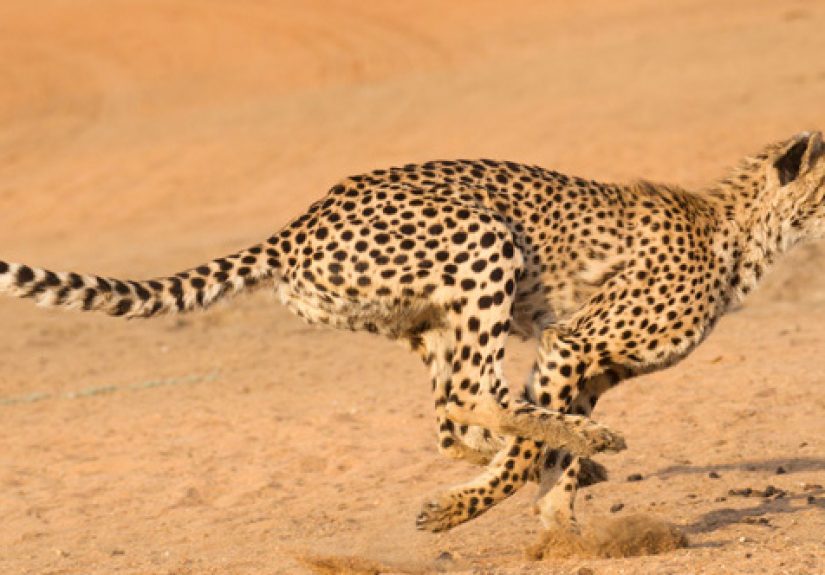
The cheetah’s brand is speed. If cheetahs had business cards, they’d just say “FAST.” So you’d assume their daily energy budget is basically a bonfire. But in 2014, research-driven reporting highlighted an unexpected twist: cheetahs can be surprisingly energy-efficient overallpartly because they spend a lot of time doing what looks like professional-level lounging.
Instead of constantly revving the engine, cheetahs appear to manage energy by resting a lot and hunting in bursts. The sprint itself is intense, but it’s short, and the animal’s broader strategy helps keep total daily expenditure from spiraling. That’s especially important when you consider the messy reality of their lives: prey gets stolen, hunts fail, and big competitors force cheetahs into tougher choices.
Why it matters: Predator success isn’t just about top speedit’s about the economics of survival. Energy is currency, and cheetahs are budgeting like they’ve seen the price of groceries.
3) Some Sharks Are “Extroverts,” Others Are “Introverts”
Sharks have a reputation for being one-note characters: swim, bite, star in ominous music. But in 2014, research on small-spotted catsharks suggested something more relatable: individuals can show consistent “personality” differences, especially around social behavior.
When researchers observed juvenile catsharks in different habitat setups, some sharks repeatedly preferred hanging out in groups, while others consistently chose solitude or shelter. Importantly, these tendencies held steady even when the environment changedmeaning it wasn’t just a one-time mood. In other words: even sharks can have that friend who’s always down for a party, and that other friend who needs to recharge in a quiet corner.
Why it matters: Personality traits can affect feeding, risk-taking, social learning, and even conservation outcomes (because animals that behave differently may respond differently to habitat change).
4) Leatherback Sea Turtles Might Have a Built-In “Skylight”
Leatherback turtles are already living legends: giant bodies, deep dives, long migrations, and a diet that can be summarized as “jellyfish… and vibes.” In 2014, researchers discussed a curious feature on their heads often described as a “pink spot.” Beneath that area, skull structures appear compatible with the idea that light could reach tissues linked to the pineal glandraising the possibility of a light-sensing function tied to seasonal behavior.
Think of it less like a third eye and more like a biological light meter: a way to detect environmental light cues that could help time feeding migrations or seasonal movement. It’s a reminder that navigation and timing in the ocean aren’t always GPS-and-compass problems. Sometimes they’re “How bright is the world right now?” problems.
Why it matters: If light sensing helps tune migration timing, it could influence how turtles respond to changing ocean conditions and shifting seasonal patterns.
5) Baby Sea Turtles May “Talk” Before They Hatch
If you’ve ever seen a sea turtle nest erupt in a sandy bursta so-called “nest boil”you know timing is everything. In 2014, reporting highlighted research suggesting that leatherback turtle embryos and hatchlings can produce sounds in the nest. The idea is that vocalizations could help coordinate group behavior around hatching and emergence.
The wild part isn’t just that turtles make noiseit’s that it reframes hatching as a coordinated team event rather than a set of isolated individuals. Getting out together can reduce predation risk (too many targets at once), and digging out in a group can make the whole process more efficient. Even if the details of how much “coordination” is happening remain an active question, the headline is clear: turtles aren’t the silent, solitary hatch machines we once imagined.
Why it matters: Understanding cues that shape emergence could improve conservation practices for nests affected by light, noise, vibration, and human disturbance.
6) Rats Show Something That Looks a Lot Like Regret
In 2014, neuroscience gave rats a starring role in an uncomfortable human emotion: regret. In a decision-making experiment sometimes described as a “restaurant row,” rats faced repeated choices that involved tradeoffswait longer for a preferred snack, or skip and move on. The twist came when a rat skipped a good deal and immediately encountered a worse one.
In those moments, rats behaved differently than in ordinary disappointment. They paused, looked back toward the option they passed up, and changed their behavior afterward in ways consistent with a counterfactual thought: “I could have had the better thing if I’d chosen differently.” Neural recordings added another layer, linking this behavior to activity patterns in brain regions associated with evaluating choices.
Why it matters: If animals compute “what might have been,” it strengthens the idea that complex decision processes aren’t uniquely humanand it provides models for understanding how regret shapes learning and behavior.
7) Deer Moms Respond to Human Baby Cries (Sort Of)
Here’s one that sounds like a Disney plot until you read the methods section: in 2014, research reports described how mother deer can respond to distress calls from the infants of other speciesincluding humansif the sound’s core frequency falls within the range that deer associate with their own fawns.
The explanation is less “deer adopt everything” and more “evolution built a caregiver alarm system that keys off certain acoustic features.” If a sound hits the right pitch and pattern, it can trigger an approach responsebecause in nature, ignoring your baby’s distress call is a very bad strategy. The deer aren’t identifying species. They’re reacting to a signal shape that resembles a fawn in trouble.
Why it matters: It’s a compelling example of how communication can be shaped by shared constraintssmall mammal bodies, similar vocal mechanics, and the universal urgency of “help me.”
8) Bats Can Sabotage Each Other’s Sonar
In 2014, scientists revealed a competitive behavior in Mexican free-tailed bats that feels rude in the most technically impressive way: they can actively jam a rival’s echolocation at the critical moment of a hunt. When one bat locks onto prey and ramps up its rapid “terminal buzz,” another bat may emit a specialized interference call timed to mess up that targeting.
This isn’t accidental noise in a crowded sky. It’s tactical disruptionmore like cutting in line by turning off the lights. Experiments showed that the “jamming” signal only worked when delivered with precise timing and frequency characteristics, suggesting an evolved strategy rather than random chaos.
Why it matters: It expands how we think about animal competition. Sometimes the battle isn’t “run faster” or “fly harder.” Sometimes it’s “break your opponent’s sensors.”
9) Narwhal Tusks Work Like Environmental Sensors (And Maybe Dating Profiles)
Narwhals have been stuck with the “unicorn of the sea” branding for centuries, and honestly, it’s fair. But in 2014, researchers traced sensory pathways that support the tusk functioning as a genuine sensory organ. The tusk’s structure includes channels and tissues that can transmit information through nerves toward the brainsuggesting it’s not just decoration or a glorified ice pick.
Also in the 2014 conversation: evidence pointing to sexual selection. Reporting on research discussed how tusk length in mature males correlates with reproductive metrics (including testes mass), hinting that the tusk could signal fitnessless “sword for fighting” and more “billboard for genetics.” In evolutionary terms, that’s the narwhal equivalent of showing up to the party with a very expensive-looking watch.
Why it matters: One structure can carry multiple functionssensing the environment, social signaling, and reproductive competition. Nature loves a multi-tool.
10) Tuberculosis May Have Reached the Americas via SealsNot People
This 2014 finding is quirky in a “history just got rewritten” way. Genetic analysis of ancient tuberculosis bacteria from pre-Columbian human remains suggested that the strain was closely related to forms associated with pinnipeds (seals and sea lions). That supports the idea that TB could have jumped from humans to marine mammals elsewhere, traveled with them, and later spilled back into humans along coastal communities in the Americaswell before European contact.
If your first reaction is “Wait… seals gave humans TB?” you’re not alone. But infectious disease history is full of cross-species leaps, and coastal ecosystems create contact points that land-based narratives miss. It’s a reminder that human history is also animal historyand sometimes microbes are the most well-traveled characters in the story.
Why it matters: It reshapes how scientists think about disease movement, ancient contact networks, and the complex pathways pathogens can take through ecosystems.
Bonus Shock Factor: Electric Eels “Remote-Control” Prey
We’re ending with the animal fact that sounds like it was invented by a sci-fi screenwriter who got bored and started reading biology journals. In 2014, research coverage showed that electric eels don’t just zap prey to stun itthey use electricity with precision.
When prey is hiding, eels can deliver paired pulses (“doublets”) that trigger involuntary muscle twitches in nearby animalsbasically forcing the prey to reveal itself by moving. And when it’s time to capture, the eel unleashes a rapid volley of high-voltage pulses that induces whole-body muscle contraction (tetanus), effectively freezing the prey in place while the eel strikes.
Why it matters: This is one of the clearest examples of an animal using a physical mechanism to manipulate another animal’s body at a distance. Nature didn’t just build a weaponit built a control system.
What These 2014 Animal Discoveries Have in Common
On the surface, these facts look like a chaotic trivia buffet: smelly fish, lazy cheetahs, chatty turtles, and bats acting like aerial hackers. But there’s a shared theme: animals are constantly solving problems of detection, deception, timing, and tradeoffs.
- Detection: Narwhals sensing seawater changes; turtles tracking seasonal light; predators sniffing out prey.
- Deception: Filefish masking scent; bats disrupting rivals’ sonar; prey using timing and group emergence to reduce risk.
- Tradeoffs: Cheetahs budgeting energy; rats evaluating choices; mothers responding to “infant distress” cues across species.
In other words: 2014 wasn’t just a year of quirky headlinesit was a year that helped sharpen a bigger picture of animals as strategic, responsive, and often surprisingly sophisticated.
Experiences From the “2014 Animal Facts” Era (A 500-Word Add-On)
If you were online in 2014even casuallyyou probably remember how animal science stories felt like small, delightful ambushes in your feed. One moment you’re reading the news, the next you’re learning that a fish can wear “coral perfume,” and suddenly you’re questioning your entire understanding of camouflage. The experience wasn’t just about learning facts; it was about having your mental model of nature updated in public, in real time.
A lot of people’s first reaction to these discoveries was the same: laughter, disbelief, and then the slow realization that the joke is on us. Take the bat sonar jamming story. Plenty of readers initially treated it like a memebats “pranking” each other mid-hunt. But the more you sit with it, the more it feels like a lesson in how intense competition can get when resources are limited. If you’ve ever watched a crowded parking lot turn into a social experiment, you already understand the evolutionary pressure. The bat story just made it audible.
The sea turtle stories in particular tended to land differently depending on your experiences. If you’ve ever attended a hatchling release or watched conservation volunteers guard nests at night, the idea of hatchlings “coordinating” (or at least producing meaningful sound) feels instantly plausible. You start picturing the nest not as a pile of independent eggs, but as a miniature communityan underground waiting room where timing could be the difference between survival and becoming an easy snack. For readers with a conservation background, these stories also carried a quiet tension: if sound, vibration, or light cues matter, then human disturbance might matter even more than we realized.
Meanwhile, the rat regret research hit people in a surprisingly personal place. It’s one thing to anthropomorphize a pet doing something “silly.” It’s another to see behavioral evidence that an animal may process “what I should have done” in a structured way. For many readers, that created an odd empathy: if a rat can pivot emotionally (or computationally) after a missed opportunity, maybe regret is less a uniquely human tragedy and more a shared cognitive feature of brains that learn. The story didn’t just say something about ratsit said something about the architecture of decision-making.
And then there was the electric eel: the ultimate “please stop, science is too cool today” headline. People didn’t just share it because it was weird; they shared it because it sounded impossible. Yet the underlying experience was familiar: that moment when you realize nature isn’t only a catalog of animals, but a catalog of mechanismssensors, disruptors, remote triggers, and biological engineering solutions that have been field-tested for millions of years. That’s what made 2014’s animal discoveries so sticky. They weren’t only facts. They were little reminders that the world is still full of surprisesespecially when you look closely enough.