Table of Contents >> Show >> Hide
- Before You Plant: A Quick Dish Garden Blueprint
- 10 Dish Garden Ideas That Will Bring the Outdoors In
- 1) The “Desert Sunset” Succulent Dish (Color Without the Complaining)
- 2) Mini Zen Rock Garden (For When Your Brain Has 37 Tabs Open)
- 3) The “Forest Floor” Dish (Moss, Ferns, and Tiny-Hike Vibes)
- 4) Jewel-Box Tropicals (Fittonia + Friends, Maximum Drama in Miniature)
- 5) The Edible Windowsill Dish (A Micro Herb Moment)
- 6) The “Coastal Walk” Dish (Shells, Driftwood, and Beachy Texture)
- 7) The Glass-Cloche Microclimate (Dish Garden That Cheats Humidity)
- 8) The “Storybook Path” Fairy Dish (Whimsical, Not Cheesy)
- 9) Paperwhite Bulb Bowl (Instant Winter-to-Spring Plot Twist)
- 10) The “Living Centerpiece” Seasonal Dish (Pretty Now, Practical Later)
- Maintenance: Keep Your Dish Garden Looking Like You Didn’t Just Wing It
- of Real-World Experience: What Dish Gardens Teach You (Fast)
- Conclusion
A dish garden is basically a tiny indoor landscape you can place on a coffee table, kitchen windowsill, or desk
the “I swear I go outside” of home decor. It’s part houseplant, part miniature world, and part design project
that doesn’t require power tools (unless you count a spoon as a tool, which… fair).
The magic is that dish gardens let you mix texture, color, and plant personality in one containerso your space
feels greener, calmer, and a little more alive. The trick is not mixing plants that want totally different
lives. If one plant wants desert drought and another wants rainforest spa humidity, someone’s going to have a bad time.
Before You Plant: A Quick Dish Garden Blueprint
1) Pick your “ecosystem” first (this prevents plant drama)
- Desert-style dish garden: succulents/cacti, gritty soil, bright light, deep-but-infrequent watering.
- Woodland/tropical-style dish garden: ferns, fittonia (nerve plant), peperomia, mossmoist soil, gentle light, steadier humidity.
- Bulb bowl dish garden: paperwhites or other forced bulbsstones or gravel + water level management.
2) Decide: drainage hole or no drainage hole?
Drainage holes make life easier because extra water can leave the building. If your container has no holes,
you can still succeedjust water like you’re handling a cup of coffee in a white shirt: slowly, carefully, and with respect.
- Best practice: use a nursery pot with drainage inside a decorative outer dish.
- If you’re going hole-less: keep plant choices consistent, use a light mix, and water lightly to avoid soggy roots.
3) Soil matters more than the container “vibe”
- Succulents/cacti: cactus/succulent mix + extra perlite/pumice for faster draining.
- Tropical/woodland: airy potting mix (often with perlite) that holds moisture but doesn’t stay swampy.
- Terrarium-style mixes: use light, well-drained media and go easy on water.
4) A note about bottom layers (gravel/charcoal)
You’ll see a lot of tutorials recommending gravel and charcoal at the bottom of containers without drainage. These layers
can help create a space where excess water collects away from roots and can reduce odors in enclosed setupsbut they don’t
magically “create drainage” the way holes do. Think of them as a seatbelt, not an invincibility cloak.
10 Dish Garden Ideas That Will Bring the Outdoors In
1) The “Desert Sunset” Succulent Dish (Color Without the Complaining)
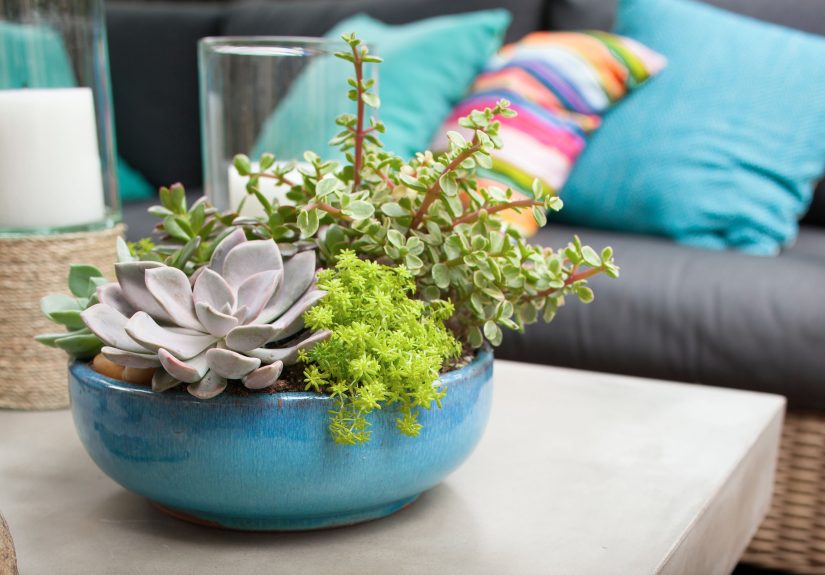
If you want a dish garden that looks like a tiny alien planetin a good waygo succulent. Choose rosette shapes and
contrasting colors for instant design.
Plant picks
- Echeveria (rosettes in greens, pinks, purples)
- Sedum or burro’s tail for trailing texture
- Haworthia for stripes and structure
Design tip
Place one “hero” rosette slightly off-center, then build around it like you’re arranging a tiny bouquet that refuses to wilt.
Top-dress with small gravel for a clean finish and fewer fungus gnats auditioning for your living room.
Care in one sentence
Bright light, let soil dry, then water thoroughly (and don’t let water sit trapped under the roots).
2) Mini Zen Rock Garden (For When Your Brain Has 37 Tabs Open)
This dish garden is more about calm composition than plant quantity. Think: minimal greenery, lots of negative space,
and textures that feel intentional.
What to use
- A shallow ceramic dish
- One structural plant: haworthia, small aloe, or a compact sansevieria “bird’s nest” type
- Fine gravel + a few smooth stones
Design tip
Leave breathing room. Your plant is the “tree,” your stones are the “mountains,” and your gravel is the “please stop emailing me” energy.
Use a chopstick or small brush to make simple raked lines.
3) The “Forest Floor” Dish (Moss, Ferns, and Tiny-Hike Vibes)
Want your home to feel like it smells faintly of rain and good decisions? Build a woodland scene with moss and shade lovers.
This one thrives in bright indirect lightthink near a window, not sunbathing in it.
Plant picks
- Button fern or lemon button fern
- Sheet moss or cushion moss (as a living “ground cover”)
- Small peperomia for thick, glossy leaves
Build tip
Create small hills and valleys in the soil so it looks like a real forest floor. Add a piece of bark or a smooth rock
and suddenly you’ve got “landscape design,” not “plants I shoved in a bowl.”
Care tip
Keep soil evenly moistnot drenched. Moss likes humidity, so this is a great option for kitchens or bathrooms with decent light.
4) Jewel-Box Tropicals (Fittonia + Friends, Maximum Drama in Miniature)
Fittonia (nerve plant) looks like it’s wearing tiny stained-glass windows for leaves. Pair it with other small tropicals and you’ll
get a dish garden that’s colorful even when nothing is blooming.
Plant picks
- Fittonia (pink, red, or white veins)
- Peperomia (compact varieties)
- Pilea or small ivy-type groundcover (only if humidity/light match)
Design tip
Use color like a painter: one main vein color (say, pink fittonia), then calmer greens around it so the whole dish doesn’t scream
like a neon sign at midnight.
Care tip
Fittonia can wilt dramatically when drythen bounce back after watering. Keep moisture consistent, avoid hot direct sun, and it’ll behave.
5) The Edible Windowsill Dish (A Micro Herb Moment)
Not every herb loves being crowded, but a shallow “snip garden” works if you treat it like a short-term indoor project
or keep herbs in their own mini pots grouped inside a larger dish.
Best approach
- Place 2–4 small nursery pots (with drainage) into one decorative tray or shallow bowl.
- Top-dress around the pots with pebbles or moss for a unified look.
Herb picks
- Chives (tough, compact)
- Thyme (likes bright light, moderate water)
- Mint (keep it contained unless you want “mint: the sequel” in every pot)
Care tip
Give as much light as you cansouth or west windows are bestand rotate weekly so it doesn’t lean like it’s trying to eavesdrop.
6) The “Coastal Walk” Dish (Shells, Driftwood, and Beachy Texture)
This is an indoor landscape that feels like a vacation you can’t be late for. Use plants that match the vibe: tough, tidy, sculptural.
Plant picks
- Small snake plant (bird’s nest type)
- Compact jade plant cutting (Crassula)
- A trailing succulent for “dune grass” energy
Design tip
Use sand-colored gravel, a few shells, and one piece of driftwood or pale stone. Keep it simple so it reads “coastal chic,” not “souvenir shop.”
7) The Glass-Cloche Microclimate (Dish Garden That Cheats Humidity)
If your home air is dry (hello, AC season), a glass cloche or dome can help create a gentler microclimate for humidity lovers.
You’re essentially giving your plants a tiny weather systemwithout needing a meteorology degree.
Plant picks
- Fittonia
- Small fern
- Mini moss patches
How to avoid the “foggy swamp” problem
- Keep the lid slightly ajar sometimes for airflow.
- Water lightly; enclosed spaces hold moisture longer.
- Remove any decaying leaves quickly (they spread trouble).
8) The “Storybook Path” Fairy Dish (Whimsical, Not Cheesy)
Fairy gardens can be adorable. They can also look like a craft store exploded. The difference is restraint: one “path,” one focal feature,
and plants that stay small enough to keep the illusion.
Plant picks
- Baby tears (Soleirolia) for soft ground cover
- Small peperomia or pilea
- Moss accents for “ancient forest” vibes
Design tip
Make a tiny path using pea gravel or small stones. Add one miniature itemlike a tiny bench or doorthen stop. The point is “storybook,” not “theme park.”
9) Paperwhite Bulb Bowl (Instant Winter-to-Spring Plot Twist)
If you want something that looks impressive fast, paperwhites are the cheat code. You can grow them in a shallow bowl with gravel and water
and get fragrant blooms in a few weeks.
How to set it up
- Use a shallow bowl wide enough to hold several bulbs snugly.
- Add washed gravel or stones, nestle bulbs in, then add more gravel to hold them steady.
- Add water so it just touches the base of the bulbs (roots grow down into the water).
Care tip
Bright light keeps stems sturdier. Cooler indoor temps can help blooms last longer. When they lean, don’t take it personallyjust rotate the bowl.
10) The “Living Centerpiece” Seasonal Dish (Pretty Now, Practical Later)
This is the dish garden you put on a dining table and feel like you have your life together. The secret is choosing plants that can
be transplanted later, so it’s not a one-season decoration pretending to be a lifestyle.
Two easy seasonal formulas
- Spring: small flowering kalanchoe + trailing ivy-type plant + moss top-dress
- Autumn/winter: compact foliage plants + pinecones + cinnamon sticks (decor only, keep away from moist soil)
Care tip
Keep it in bright indirect light, water carefully, and remove decorative items if they start trapping moisture or mold. Beauty should not come with mildew.
Maintenance: Keep Your Dish Garden Looking Like You Didn’t Just Wing It
Watering (the #1 success factor)
- No drainage hole: water lightly and less often; never leave standing water at the bottom.
- With drainage: water thoroughly, let excess drain, empty saucers/outer dishes.
- Succulents: let soil dry between waterings; bright light prevents “stretching.”
- Tropicals: aim for evenly moist soil; humidity helps, but soggy roots don’t.
Light (the #1 reason dish gardens get sad)
- Succulents/cacti: brightest window you’ve got, or supplemental light.
- Ferns/fittonia/moss: bright indirect light; avoid harsh direct sun that crisps leaves.
Grooming (tiny garden, tiny chores)
- Trim leggy growth to keep the “mini landscape” proportions.
- Remove yellow leaves quicklydecay spreads faster in crowded plantings.
- Skip heavy fertilizer if you want plants to stay small and tidy longer.
of Real-World Experience: What Dish Gardens Teach You (Fast)
People think the hard part of a dish garden is planting. The real challenge is realizing you’ve become the weather. Not in a dramatic
“I control the skies!” waymore like a humble “I am responsible for whether this tiny fern lives” way. The first time you build one,
you learn quickly that dish gardens don’t forgive random watering. A normal houseplant in a pot with drainage can handle the occasional
“oops.” A dish garden in a cute container with no hole is basically a sponge in a bowl: it will remember everything you did.
The next surprise is how much design matters when everything is miniature. In a big planter, you can toss plants in and call it “lush.”
In a dish, every leaf feels like it’s wearing a name tag. You start noticing shapes: rosettes read like flowers, upright plants act like
trees, and trailing plants become vines or ground cover. You also discover that empty space is not failureit’s composition. Leaving a patch
of gravel visible can make the whole scene feel intentional, like a path through a tiny landscape instead of a crowded waiting room.
Then comes the oddly satisfying part: maintenance becomes a small ritual. A dish garden is the kind of project that invites you to slow down.
You rotate it a quarter turn, pinch back a stem, brush away a few crumbs of soil, and suddenly your brain stops sprinting. Some people keep
a chopstick nearby for “precision watering,” which sounds silly until you try it and realize you’re basically doing plant surgery with a stick.
You’ll also become weirdly proud of tiny detailslike top-dressing gravel so the surface looks clean, or tucking moss around rocks so it looks
like it grew there naturally instead of being placed five minutes ago.
Dish gardens also make you better at matching plants. You’ll remember the time you combined a succulent with a moisture-loving fern because it
looked cute on day oneand then day fourteen happened. That experience teaches the single most valuable rule: group plants with the same needs.
When you do, the dish garden gets easier, not harder. Watering becomes consistent, growth stays balanced, and you spend less time troubleshooting
and more time enjoying the little pocket of outdoors you made inside.
Finally, you learn that the best dish gardens aren’t the fussiestthey’re the ones that fit your real life. If you forget to water, go succulent.
If you love misty, green “forest” vibes and don’t mind a little upkeep, go tropical. If you want a quick seasonal win, force paperwhites and let
the fragrance do the heavy lifting. A dish garden doesn’t need to be perfect. It just needs to be aliveand ideally, not leaking onto your furniture.
Conclusion
The best dish garden ideas don’t start with a containerthey start with a plan for plant compatibility. Choose one “ecosystem,” pick plants that
share the same light and watering needs, and build a mini landscape with intentional space, texture, and a little personality. Whether you go full
desert-succulent, lush forest floor, or a winter paperwhite bowl that blooms on cue, you’ll end up with an indoor garden that makes your space feel
fresher, calmer, and more like you live near something green (even if it’s just your coffee table).