Table of Contents >> Show >> Hide
- Why stainless steel still wins (even when your Pinterest board says “stone farmhouse”)
- The Remodelista approach: deep, undermount, single-bowl (when you can swing it)
- Before you shop: 7 sink specs that matter more than the brand name
- 1) Gauge: the “thickness” conversation (and why it’s not the only conversation)
- 2) Steel grade: look for 304/T-304 (the workhorse standard)
- 3) Sound dampening: the secret sauce for a “quiet” sink
- 4) Corner radius: sharp corners look modern, but they demand more cleaning attention
- 5) Installation type: undermount vs. drop-in (and why your countertop gets a vote)
- 6) Bowl configuration: single vs. double, and the truth about the “divider life”
- 7) Workstation features: when your sink becomes a prep station
- 10 Easy Pieces: stainless steel sinks worth knowing (in the Remodelista spirit)
- 1) The pro-style deep single bowl (for “hide the dishes” survival)
- 2) The made-in-USA, handcrafted 16-gauge statement (for people who care about “how it’s made”)
- 3) The crisp, modern square-corner sink (for minimalist kitchens that still cook)
- 4) The quiet utility undermount (for open-plan kitchens and noise-sensitive households)
- 5) The premium “kit” sink with thoughtful insulation (for remodelers who want fewer decisions)
- 6) The luxury stainless sink with a designer detail (for when plumbing is part of the aesthetic)
- 7) The workstation sink with a built-in ledge (for small counters and big ambitions)
- 8) The chef-friendly rectangular sink (for serious home cooks who abuse cookware)
- 9) The affordable undermount in 18-gauge (for “good enough” done right)
- 10) The budget-friendly, sound-absorbed top-mount (for rentals, quick swaps, and sanity)
- Cleaning and care: how to keep stainless from looking “tired”
- Common sink mistakes (a.k.a. how good sinks get blamed for bad planning)
- Conclusion: the “right” stainless sink is the one that fits your life
- of Real-World Experiences: what stainless steel sinks are like after the “new sink glow” fades
The kitchen sink is where the real drama happens: the post-taco-night cleanup, the “I’ll soak it” lies,
the mysterious spoon graveyard, and the one pan you swear is heavier when it’s dirty.
So when Remodelista publishes a “10 Easy Pieces” round-up, it’s basically a love letter to the hardest-working
fixture in the roomespecially when that fixture is stainless steel.
Stainless steel kitchen sinks aren’t trendy in the way “mushroom coffee” is trendy. They’re more like denim:
not flashy, always useful, and somehow compatible with everything you already own. Pros favor them for good reason:
they’re tough, hygienic, heat-friendly, and forgiving when life gets chaotic. But not all stainless sinks are created equal.
In this guide, we’ll borrow the Remodelista mindsetsimple, considered, functionaland break down what to buy, why to buy it,
and which “easy pieces” fit different real-life kitchens.
Why stainless steel still wins (even when your Pinterest board says “stone farmhouse”)
Stainless steel is popular because it’s practical. It resists heat (hot sheet pan? no problem), doesn’t chip like enamel,
and won’t crack like some fireclay sinks can if something heavy lands the wrong way. It also plays nicely with modern appliances
and hardware finisheswhether you’re a brushed-nickel minimalist or a “mixed metals are my personality” maximalist.
The trade-offs are real: stainless can be noisy, it shows water spots in hard-water areas, and it can scratch.
The good news is that most of those issues are either preventable (hello, bottom grid) or manageable
(a quick towel dry is the grown-up version of flossingannoying, effective, and always recommended).
The Remodelista approach: deep, undermount, single-bowl (when you can swing it)
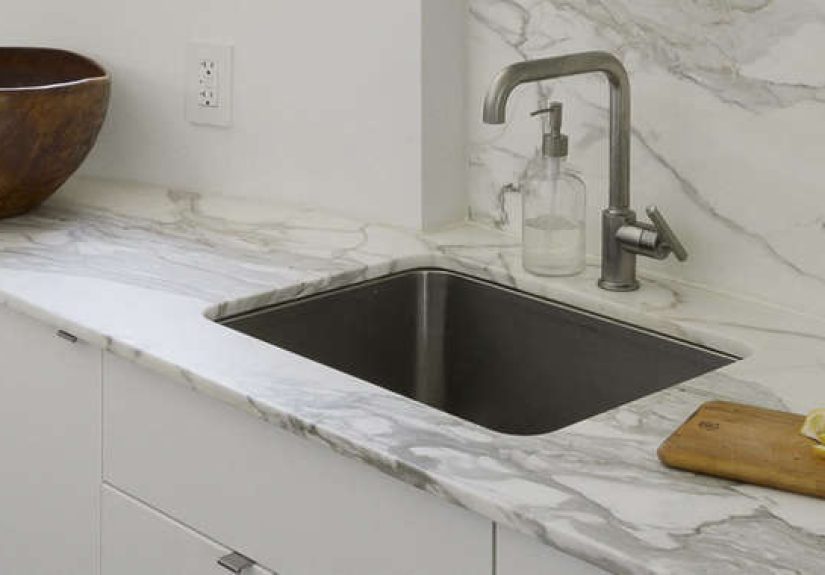
Remodelista’s stainless-steel sink philosophy is refreshingly specific: a single-bowl undermount sink, “the deeper the better.”
The logic is simple: a deep basin hides dishes during a dinner party (or a Tuesday), fits stockpots without splashing,
and makes cleanup easier because there’s no center divider stealing your elbow room.
That doesn’t mean every kitchen needs a giant single bowl. But it does mean you should pick your sink based on how you live
not how a catalog photo looks five minutes after a professional styling team cleaned it with mystical lighting.
Before you shop: 7 sink specs that matter more than the brand name
1) Gauge: the “thickness” conversation (and why it’s not the only conversation)
Gauge measures steel thicknesslower number, thicker steel. Many homeowners aim for 16-gauge or 18-gauge stainless steel.
Remodelista’s featured architect advice: spring for the lowest gauge you can afford; ideally 16-gauge with a soundproof-coated bottom,
and at minimum 18-gauge. Thick steel tends to feel more solid and can reduce that “metallic ping” when a fork takes a dive.
But here’s the nuance: some independent testing has found gauge alone doesn’t guarantee better real-world performance.
Build quality, sound dampening, and installation matter too. Translation: a well-built 18-gauge sink with great undercoating can outperform a
bargain 16-gauge sink that skipped the quieting materials.
2) Steel grade: look for 304/T-304 (the workhorse standard)
If you want a sink that holds up to years of hot pans, acidic foods, and whatever your kids are doing in there,
stainless steel grade matters. In residential sinks, 304 stainless (often written as T-304) is commonly used because it balances
corrosion resistance and durability.
3) Sound dampening: the secret sauce for a “quiet” sink
A stainless sink without sound-dampening pads is basically a small indoor percussion instrument.
Look for rubber pads and/or spray coatings on the undersideespecially on the bottom and side walls.
The goal is to reduce vibration (and your desire to dramatically announce, “NOBODY MOVE, I’M WASHING DISHES!”).
4) Corner radius: sharp corners look modern, but they demand more cleaning attention
Crisp, tight corners photograph beautifully. But super-square corners can trap grime in ways that rounded corners don’t.
If you hate scrubbing corners with a tiny brush like you’re detailing a sports car, choose a slightly rounded corner radius.
Many modern sinks split the difference with “easy-clean” corners that still look sleek.
5) Installation type: undermount vs. drop-in (and why your countertop gets a vote)
Undermount sinks are the fan favorite for a reason: you can wipe crumbs straight into the basin, and the look is streamlined.
But they typically require a solid countertop material (like stone, quartz, or solid surface) and proper support underneath.
Drop-in (top-mount) sinks are often easier and cheaper to install, and they work well with laminate countertops or quick replacements.
The rim is visible, and you’ll clean around the edgebut for rentals or budget remodels, drop-in stainless is a genuinely smart move.
6) Bowl configuration: single vs. double, and the truth about the “divider life”
Single bowls are great for big cookware and washing baking sheets without turning them into a splashy obstacle course.
Double bowls shine when you want separation (wash on one side, rinse on the other) or when two people are doing different sink tasks.
If you love the concept of double bowls but fear losing space, look for “60/40” or “70/30” splits. You keep a main basin for large items,
plus a smaller one for rinsing, soaking, or pretending you’re organized.
7) Workstation features: when your sink becomes a prep station
Workstation sinks (sometimes called “galley sinks”) include built-in ledges that hold accessoriescutting boards, colanders,
drying racks, and trays. The best versions genuinely save counter space and streamline prep.
The worst versions give you three accessories you can’t store and one cutting board you mildly resent.
10 Easy Pieces: stainless steel sinks worth knowing (in the Remodelista spirit)
Remodelista’s original roundup leans toward deep, undermount, single-bowl workhorsesthen sprinkles in a few budget-friendly
and design-forward options. Below are ten “easy pieces” that echo that approach, with the practical details you should consider
before you click “add to cart.”
1) The pro-style deep single bowl (for “hide the dishes” survival)
If your kitchen is the social hub, a deep pro-style sink is the ultimate cleanup camouflage. Remodelista highlighted a Franke professional series
option with a notably deep basinexactly the kind of sink that swallows a dinner party’s worth of plates and lets you pretend you’re effortlessly composed.
Look for: deep basin, solid sound-dampening, and a bottom grid to prevent scratches.
2) The made-in-USA, handcrafted 16-gauge statement (for people who care about “how it’s made”)
Remodelista also calls out a handcrafted, heavy-duty 16-gauge undermount sink made in the US (with soundproof coating).
This category is for homeowners who want something closer to commercial qualitythicker steel, confident build, and fewer compromises.
Look for: handmade weld quality, durable finish, and a reputation for consistent manufacturing.
3) The crisp, modern square-corner sink (for minimalist kitchens that still cook)
Blanco’s modern, clean-lined stainless sinks show why “simple” doesn’t mean boring. Square corners and a crisp profile look tailored
especially with flat-panel cabinets and streamlined faucets. Just pair it with good cleaning habits (and maybe a soft brush for corners).
Look for: rounded-but-modern corners if you want easier maintenance.
4) The quiet utility undermount (for open-plan kitchens and noise-sensitive households)
Noise reduction is not a luxury if your kitchen opens to a living room, a homework table, or a sleeping baby.
Remodelista spotlighted a Moen undermount sink specifically noted for noise reduction features.
Look for: thick pads on sides and bottom, plus undercoating coverage that’s more than a tiny token patch.
5) The premium “kit” sink with thoughtful insulation (for remodelers who want fewer decisions)
Some sinks come as part of a coordinated kitsink, drains, accessoriesdesigned to work together without the “will this part fit?” anxiety.
Remodelista included a 16-gauge Elkay undermount option with sound insulation and a deep bowl, which fits this “buy once, cry once” category.
Look for: included accessories you’ll actually use (grid, strainer, maybe a roll-up rack).
6) The luxury stainless sink with a designer detail (for when plumbing is part of the aesthetic)
There’s stainless steel, and then there’s stainless steel that looks like it belongs in a boutique hotel.
Remodelista’s roundup includes a high-end Waterworks stainless sink made of 16-gauge steelproof that even utilitarian materials can read “special”
when the lines are right and the craftsmanship is dialed in.
Look for: thoughtful drain placement (some luxury sinks use rear drains for better drainage space), refined corners, and long-term parts support.
7) The workstation sink with a built-in ledge (for small counters and big ambitions)
Workstation sinks aren’t just a fad; they’re a response to how people actually use kitchens nowmore prep, more multitasking, less counter space than we’d like.
Remodelista highlighted Kohler’s ledge-style sink concept: a deep basin plus a stepped platform designed for accessories.
Look for: accessories that fit securely, a ledge depth you’ll use comfortably, and storage space for the add-ons.
8) The chef-friendly rectangular sink (for serious home cooks who abuse cookware)
If your cookware collection includes giant roasting pans and the kind of skillet that could double as gym equipment,
you want width, depth, and a drain setup that doesn’t steal basin space.
Remodelista included a large rectangular “chefhaus” style stainless sinkgreat for high-volume cooking and heavy-duty cleanup.
Look for: adequate cabinet size, strong mounting support, and a grid that protects the bottom finish.
9) The affordable undermount in 18-gauge (for “good enough” done right)
You don’t need a four-figure sink to get a solid stainless workhorse. Remodelista’s list includes an affordable 18-gauge single bowl undermount
optionexactly the kind of sink that can be upgraded with a grid and still feel like a serious improvement over builder-basic.
Look for: good undercoating, smooth welding, and a finish that hides daily wear (brushed is usually more forgiving than mirror).
10) The budget-friendly, sound-absorbed top-mount (for rentals, quick swaps, and sanity)
Sometimes you need a sink that installs easily, works with existing counters, and doesn’t start a full remodel domino effect.
Remodelista included an IKEA stainless sink with sound-absorbing material (even though the brand doesn’t always specify the gauge in listings).
This category is perfect for refresh projects: a clean look, practical performance, and a price that leaves room in the budget for a great faucet.
Look for: a low-profile rim, included clips, and a drain kit that matches your disposal setup.
Cleaning and care: how to keep stainless from looking “tired”
Stainless steel is low-maintenance, not no-maintenance. A few habits go a long way:
- Rinse and wipe daily: food acids and salty residue can dull the finish over time.
- Dry to prevent water spots: especially in hard-water areas, a quick towel dry makes a huge difference.
- Scrub with the grain: stainless has a brushed direction; follow it to minimize visible marks.
- Use gentle abrasives wisely: baking soda paste is commonly used for grime; for tougher stains, a stainless-safe cleanser can help.
- Avoid harsh chemicals: bleach and abrasive pads can damage the finish and create long-term dullness.
For a weekly “reset,” many homeowners use a simple routine: rinse, sprinkle baking soda, scrub with a non-scratch sponge,
rinse again, then dry and buff. If mineral deposits show up, vinegar soaks (followed by a rinse and dry) can help.
For stubborn discoloration or rust-like spots, a stainless-safe cleaner used gently (and rinsed thoroughly) is often recommended by manufacturers.
Common sink mistakes (a.k.a. how good sinks get blamed for bad planning)
- Ignoring cabinet size: a large undermount sink often needs a larger base cabinet. Measure twice, thank yourself later.
- Buying “deep” without checking plumbing: deep sinks can conflict with disposal units, drain heights, or existing plumbing routes.
- Skipping sound dampening: the quietest sink is the one that has pads, undercoating, and a solid install.
- Overcommitting to sharp corners: if you hate cleaning corners, don’t pick a sink that demands corner cleaning as a hobby.
- Falling for unusable accessories: workstation features are greatif you have storage for them and actually prep at the sink.
Conclusion: the “right” stainless sink is the one that fits your life
Remodelista’s stainless steel sink roundup gets one big thing right: the best kitchen sink isn’t a status symbolit’s a tool.
If you cook a lot, prioritize depth, durability, and accessories that earn their keep. If you’re remodeling on a budget, a well-chosen
top-mount or affordable undermount with good sound dampening can feel like a luxury upgrade. And if you’re aiming for a kitchen that looks calm
even when your life isn’t, pick a sink that helps you reset the room fast.
of Real-World Experiences: what stainless steel sinks are like after the “new sink glow” fades
Talk to enough homeowners and you’ll hear the same theme: stainless steel sinks are rarely the “glamorous” choiceuntil you live with one.
The first week is all admiration and polite rinsing. The second week is when reality moves in with its suitcase of coffee grounds, pasta starch,
and one surprisingly indestructible smear of peanut butter.
One of the most common “aha” moments is noise. People don’t think about it until they’re in an open-plan kitchen and someone drops a spoon
that sounds like a cymbal crash at a middle-school band concert. That’s why sound-dampening pads and undercoating matter so much in daily life:
they don’t just reduce noise; they reduce friction. A quieter sink feels calmer, and a calmer kitchen is the closest thing adults get to a spa day.
The second real-life lesson is water spots. In areas with hard water, stainless can look speckled ten minutes after you clean itlike the sink
is politely refusing to “stay styled.” The fix is not complicated, but it is a habit: dry the sink with a towel after the last use of the night.
People who do this swear it keeps the sink looking new. People who don’t do this swear the sink is “always dirty,” even when it’s not.
(Both groups are correct, in their own emotional way.)
Then there’s the great single-bowl vs. double-bowl debate. Single-bowl fans love the freedom: roasting pans fit, big pots soak, and you don’t
have to play Tetris with your cookware. Double-bowl fans love the structure: one side for washing, one side for rinsing, or one side for prep while
the other is “currently occupied by the science project known as dishes.” What often surprises people is that you can “cheat” either direction.
Single-bowl owners add a rack or a dish tub to create zones. Double-bowl owners choose an offset divider (60/40) so the larger basin still handles big jobs.
Workstation sinks produce their own set of experiences. The honeymoon phase is real: sliding a cutting board across the ledge feels like you’re hosting
a cooking show. The long-term relationship depends on storage. If you have a place for the accessories, workstation features can genuinely save counter space.
If you don’t, the accessories become the kitchen equivalent of that exercise bike you now use as a coat rack.
Finally, scratches. Stainless steel will scratch. The good news is that most scratches blend into a brushed finish and become part of the sink’s “patina.”
Many owners stop noticing them once they accept that a kitchen sink is a work surface, not a museum exhibit. The best practical move is using a bottom grid,
scrubbing with the grain, and choosing a finish that hides wear. The best emotional move is remembering: if your sink has a few scratches, it means your kitchen
is being usedand that’s the whole point.