Table of Contents >> Show >> Hide
- 1. Aoshima Is Tiny, But Its Cats Once Outnumbered People Dozens To One
- 2. The Cats Were Originally Brought In As Working “Employees”
- 3. There Are No Hotels, Restaurants, Or Even Vending Machines
- 4. Getting There Requires Planning (And An Early Alarm)
- 5. The Cats Have Designated Feeding Areas (And They Eat Very Well)
- 6. A Spay-Neuter Program Changed The Island’s Future
- 7. The Human Population Is Aging, And The Island May One Day Be Empty
- 8. Aoshima Is One Of Several “Cat Islands” In Japan
- 9. Global Media Turned Aoshima Into An Internet Legend
- 10. Visiting Aoshima Comes With Responsibilities
- What It’s Really Like To Visit Aoshima, The Island Of Cats
Imagine stepping off a tiny ferry and immediately being surrounded by dozens of cats
stretching in the sun, trotting along the pier, and politely (or not so politely) asking
if you brought snacks. Welcome to Aoshima, the legendary “Island of Cats” in Japan’s
Seto Inland Sea. This pocket-sized fishing village has become internet-famous for its
feline majority and quiet, time-capsule atmosphere, drawing curious travelers and cat
lovers from around the world.
But Aoshima is more than just a cute backdrop for viral photos. It’s a real community
with a long history, a shrinking human population, and a cat colony that has gone from
explosive growth to carefully managed decline. If you’re dreaming of visiting this
Japanese cat island or just want to understand why it fascinates so many people
here are ten in-depth, fun facts about Aoshima, the Island of Cats.
1. Aoshima Is Tiny, But Its Cats Once Outnumbered People Dozens To One
Aoshima is small enough that you can stroll around it in under an hour. The island is
only about one mile long (roughly 0.49 square kilometers), with a short coastline and
a simple loop of paths connecting the pier, houses, and shrine. Yet for years, this
tiny dot in Ehime Prefecture became famous because cats outnumbered people by wild
ratios early news reports put it around six to one, and as the human population
dropped, estimates pushed that ratio much higher.
After World War II, nearly 900 people lived on Aoshima. Over the decades, younger
residents left for jobs on the mainland, and the fishing economy faded. Today, only a
handful of elderly residents remain on the island while the cats still roam the
streets, alleys, harbor walls, and abandoned homes. Recent counts suggest there are
roughly 80 cats and just a few human residents left, meaning the cats remain very much
in charge of the landscape.
2. The Cats Were Originally Brought In As Working “Employees”
The feline invasion didn’t start as a tourism plan. Aoshima was historically a sardine
fishing village. Fishermen brought cats to the island to control the mice that chewed
through their nets and stole bait on the boats and in storage sheds. Cats were, quite
literally, the island’s original pest-control staff.
Over time, as is the way with cats, they made themselves very comfortable. With plenty
of shelter in wooden houses and sheds, a mild coastal climate, and easy access to
leftovers and small prey, the cat population quietly ballooned. Long after the fishing
boom ended and the human community shrank, the descendants of those working cats were
still thriving and multiplying all over the island.
3. There Are No Hotels, Restaurants, Or Even Vending Machines
If “cat island” makes you picture a polished tourist attraction with themed cafés and
souvenir shops, Aoshima will surprise you. This is not a resort or a theme park. Aoshima
was never designed as a tourist destination; it’s a fading fishing village that happens
to have a lot of cats. There are:
- No hotels, inns, or guesthouses.
- No restaurants, cafés, or convenience stores.
- No vending machines or tourist shops.
Visitors are strictly day-trippers. You bring everything you need with you water,
lunch, snacks, and any treats for the cats and you take all of your trash back to
the mainland. There is a simple public restroom and a few small shelters, but otherwise
the infrastructure is minimal. That lack of facilities is part of Aoshima’s charm: it
feels like a quiet, lived-in place, not a commercial attraction.
4. Getting There Requires Planning (And An Early Alarm)
One of the reasons Aoshima has stayed relatively low-key is that it’s not especially
easy to reach. The island lies off the coast of Ehime Prefecture in western Japan, and
the only way to get there is by small passenger ferry from Nagahama Port, near
JR Iyo-Nagahama Station.
The ferry ride takes around 30–40 minutes. In typical schedules, only a couple of
ferries run to the island per day, usually in the morning and around midday, with a
single return boat in the afternoon. Tickets are inexpensive, but capacity is limited;
on busy days, people have been turned away once the boat is full.
For cat fans, that means two key rules: arrive early and have a backup plan in case
the weather turns. Ferries can be cancelled for strong winds, rain, or rough seas.
Aoshima may be a social media star, but it still follows small-island rules.
5. The Cats Have Designated Feeding Areas (And They Eat Very Well)
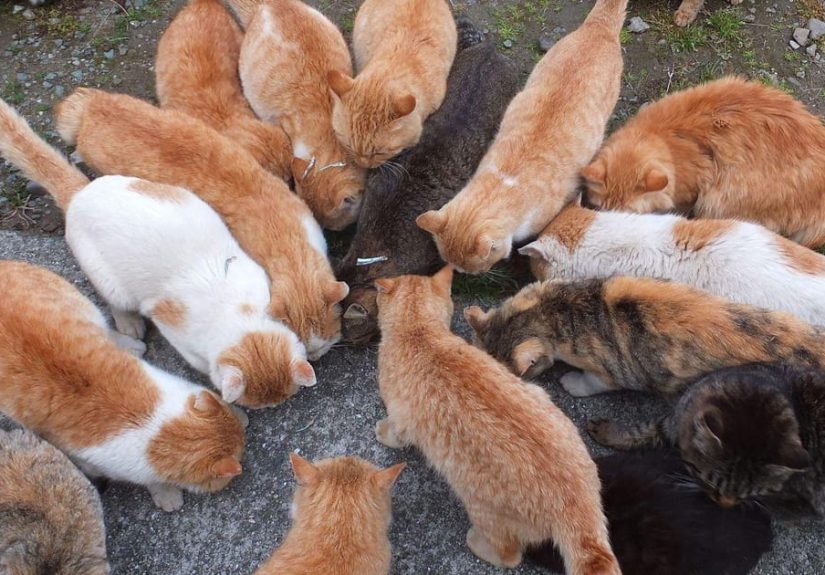
At first glance, Aoshima’s cats may look like they live entirely off tourists’ handouts.
In reality, their food supply is a mix of local care, donations, and visitor snacks.
Over the years, cat lovers across Japan have sent bags and boxes of food to support
Aoshima’s feline residents, and volunteers and locals help feed them regularly.
To keep things manageable, there are designated feeding areas a short walk from the
pier, often near the shrine. Signs and locals encourage visitors to:
- Feed cats only in these approved areas.
- Avoid overfeeding yes, even if they give you big anime eyes.
- Use bowls or plates where possible instead of scattering food everywhere.
The cats also hunt small animals and scavenge leftovers, so they’re generally well-fed
sometimes a little too well-fed. Many visitors joke that Aoshima’s cats look like
they’ve never missed a single meal, which is probably accurate.
6. A Spay-Neuter Program Changed The Island’s Future
For years, the number of cats on Aoshima just kept climbing. As tourism interest grew,
photos of what looked like hundreds of cats crowded along the harbor or lounging in
alleys went viral. But caring for that many animals is a huge job, especially on an
island with only a few elderly residents and no resident veterinarian.
In response, local authorities and the Aoshima Cat Protection Society introduced a
large spay and neuter campaign around 2018. Almost all of the island’s cats underwent
surgery, often marked with a small clipped ear to show they’d been sterilized. Since
then, no new kittens have been born on Aoshima, and the population has gradually
decreased as older cats pass away.
This is bittersweet news for visitors. It means fewer tiny kittens to cuddle, but it
also means each remaining cat can be better cared for, and the island avoids a true
overpopulation crisis. In the long run, the program protects both the cats and the few
humans who look after them.
7. The Human Population Is Aging, And The Island May One Day Be Empty
Aoshima’s story is deeply tied to a broader issue in rural Japan: depopulation. Many
remote islands and countryside villages have lost residents to big cities, leaving a
small, aging community behind. Aoshima is a vivid example. The island once had
hundreds of residents, a functioning school, and a lively fishing port. Today, the
school stands abandoned, houses sit empty or collapsing, and just a tiny number of
elderly people remain.
Some recent reports suggest that the island could become completely uninhabited within
a few years as the remaining residents age. The cat population is also aging; many are
seniors with health issues related to inbreeding and long-term outdoor life. Local
authorities and animal welfare groups have discussed what might happen next from
relocating remaining cats to shelters, to letting the island slowly return to nature.
For travelers, this means that Aoshima is not only a cute cat island; it’s also a
living snapshot of Japan’s demographic challenges and the fragile balance between
tourism, community, and animal welfare.
8. Aoshima Is One Of Several “Cat Islands” In Japan
Aoshima might be the most famous cat island on the internet, but it’s not the only one.
Japan has multiple “neko-shima” (cat islands) where feline populations flourished in
small fishing communities. Other well-known examples include:
-
Tashirojima in Miyagi Prefecture, sometimes called the “original”
cat island and home to a shrine dedicated to a cat deity. -
Ainoshima in Fukuoka Prefecture, located conveniently close to the
mainland and often recommended for travelers with limited time. -
Ogijima and other islands in the Seto Inland Sea, where art projects
and cat colonies coexist.
What makes Aoshima unique is how concentrated everything is. Because the island is so
small and so quiet, the experience feels incredibly intimate: there are no big
tourist complexes, just cats, sea views, and the remains of a slowly fading village.
9. Global Media Turned Aoshima Into An Internet Legend
Aoshima’s leap from anonymous fishing village to international cat celebrity happened
quickly. Around the mid-2010s, photographers and reporters from major outlets
including wire services, U.S. newspapers, and magazines visited the island and
published striking images of cats crowding the harbor, swarming new arrivals from the
ferry, and lounging in abandoned classrooms.
Those photos spread everywhere: on news sites, blogs, Twitter, Facebook, and Reddit.
Headlines emphasized how cats outnumbered people, and travel stories described the
island as a “feline paradise” or “post-apocalyptic cat village.” As social media
amplified the coverage, Aoshima went from a barely visited corner of Ehime Prefecture
to a bucket-list destination for cat-loving travelers worldwide.
Ironically, that fame was both a blessing and a challenge. It brought in visitor
spending and care for the cats, but it also risked overwhelming a fragile, aging
community. That tension is still part of the island’s story today.
10. Visiting Aoshima Comes With Responsibilities
Aoshima may look like a dream playground for cat fans, but it’s crucial to remember
that it’s a real village and a delicate ecosystem. The cats are semi-feral; they’re
friendly, but they live outdoors, share limited space, and intersect with local
wildlife. Uncontrolled feeding, rough handling, or careless behavior can hurt both the
cats and the environment.
Responsible visitors follow a few simple rules:
-
Respect the residents’ privacy. Do not wander into clearly private
areas or photograph people without permission. -
Feed cats only where allowed. Use designated feeding zones and avoid
dumping large amounts of food everywhere. -
Don’t pick up or chase cats. Let them approach you. Some love
attention; others prefer distance. -
Take all trash with you. There is no full-service waste system on
the island, so litter quickly becomes a big problem. -
Think long-term. Consider donating to reputable animal welfare
groups that support spay-neuter efforts and medical care.
Cats might be the stars of Aoshima, but ethical tourism ensures that they remain
healthy and that the last human residents can enjoy their home in peace.
What It’s Really Like To Visit Aoshima, The Island Of Cats
So what is the actual experience of visiting Aoshima like? Imagine waking up early in
Matsuyama or another nearby town and catching a local train along the coast to
Iyo-Nagahama Station. The station is small and quiet; from there, you walk a few
minutes through a sleepy port town until you reach the ferry dock. There’s usually a
small crowd waiting: backpackers with cameras, local families, and a few serious cat
people carrying bags of treats like proud cat Santas.
The ferry itself is compact more commuter boat than cruise ship. As it pulls away
from the mainland, you get wide views of the Seto Inland Sea, dotted with islands and
fishing boats. The ride takes around half an hour. Some people nap; others watch the
water and quietly clutch their bags of cat food with increasing excitement.
When the boat docks at Aoshima, the main event begins. A cluster of cats is usually
already gathered on the pier or along the concrete ramp, as if they’ve checked the
ferry schedule and punched into work. A few bold cats walk straight up to the new
arrivals, sniffing bags and shoelaces. Others hang back in the sun, watching the scene
with that classic “I’m judging you” feline expression.
The first thing you notice is how quiet the island is. There are no engines revving,
no traffic noise, and no loudspeakers blasting announcements. You hear waves, the call
of seabirds, the chatter of visitors, and the occasional meow. The village itself feels
frozen in time: narrow lanes, small wooden houses, rusted fishing gear, and a school
building that nature is slowly reclaiming.
Most visitors follow a simple rhythm: walk a little, encounter a pack of cats, stop
for a long, photo-heavy break, and repeat. Cats nap in flowerbeds, stretch across
doorsteps, and weave around your feet. Some are sleek and confident, clearly used to
humans. Others look older, with clouded eyes or missing patches of fur, and move more
slowly. You start to recognize individual personalities as you wander: the bossy
orange tom who patrols the pier, the shy calico who only creeps closer when you sit
quietly, the black-and-white cat who insists on photobombing every shot.
Lunch on Aoshima is a DIY affair. There’s nowhere to buy food, so visitors spread out
on benches, seawalls, or patches of grass with bento boxes and onigiri they brought
from the mainland. You quickly learn that eating in front of dozens of cats is a
high-risk, high-cuteness activity. The trick is to keep human food securely sealed and
stick to approved treats for your furry audience.
Between cat interactions, you might walk to the small shrine, wander past the
crumbling school, or simply sit and watch the village breathe. It’s easy to forget
just how small and vulnerable the community is until you notice the details: boarded
windows, empty gardens, and notice boards that haven’t been updated in years. Aoshima
feels like a place halfway between everyday life and memory.
As the afternoon ferry time approaches, the energy subtly shifts. Visitors gather near
the dock, juggling last-minute photos and reluctant goodbyes. Many people talk about
how surreal it feels that a place so famous online is, in person, this calm and
understated. When the ferry leaves, a handful of cats often follow along the pier,
watching the boat pull away as if to say, “Come back with more snacks.”
Back on the mainland, you realize that the magic of Aoshima isn’t just the sheer
number of cats. It’s the contrast: a globally known “cat island” that still runs on
slow ferry schedules, handwritten notices, and an aging community that never asked to
be a tourist hotspot. Visiting Aoshima is part cute animal encounter, part living
history lesson, and part reminder that internet-famous places are still real homes
for real people and, in this case, a lot of very photogenic cats.
Whether you ever set foot on the Island of Cats or just admire it from afar, Aoshima
offers a fascinating glimpse into the bond between humans and animals, the impact of
tourism, and the quiet beauty of Japan’s lesser-known islands.