Table of Contents >> Show >> Hide
- 1) The QWERTY Keyboard: A 19th-Century Layout That Won’t Retire
- 2) Barcodes: The “Beep” That Built Modern Retail
- 3) Traffic Lights: From “Don’t Die” to “Please Don’t Honk at Me”
- 4) Post-it Notes: The Sticky Accident That Became Office Culture
- 5) The Zipper: The Most Underappreciated Engineering Flex on Your Jacket
- 6) The Microwave Oven: A Candy Bar That Changed Dinner Forever
- 7) The Shopping Cart: The Invention That Let You Buy “Just One Thing” (Sure)
- 8) Canning: A Military Problem That Turned Into Pantry Magic
- 9) The Paper Clip: A Tiny Tool With a Surprisingly Complicated Backstory
- 10) The Flush Toilet: The Myth, the Reality, and the World-Changing Impact
- What These Everyday Origins Have in Common
- Origin-Spotting: of Real-Life “Wait, This Has a Backstory?” Experiences
- Conclusion
- SEO Tags
You know that tiny, daily “beep” at checkout? The little click of a zipper? The way your fingers automatically find
Q-W-E-R-T-Y without you having to negotiate with your brain first? We treat these conveniences like gravity:
always there, rarely questioned, and mildly annoying only when they stop working.
But the origins of everyday things are usually a mix of messy tinkering, happy accidents, and “Wait… that actually worked?”
moments. Below are 10 origin stories behind common inventions you probably use constantlyoften without realizing you’re
holding a piece of surprisingly dramatic history.
1) The QWERTY Keyboard: A 19th-Century Layout That Won’t Retire
Where it started
QWERTY traces back to early typewriters in the 1870s, when inventor Christopher Latham Sholes and collaborators kept
rearranging keys as they improved their writing machine. By the time Remington began producing typewriters, the now-familiar
layout had taken shape and spread with the popularity of those machines.
Why it stuck
People love to say QWERTY was designed to slow typists down so typewriter keys wouldn’t jam. The truth is more nuanced:
there were real mechanical concerns, but the layout also evolved through trial, error, and the practical realities of
training typists and standardizing equipment. Once typing schools, offices, and manufacturers aligned around one layout,
switching became harder than changing a family group chat name. (Everyone agrees it’s needed, but nobody wants the drama.)
2) Barcodes: The “Beep” That Built Modern Retail
Where it started
The barcode’s origin story begins with a simple problem: stores needed a faster, more reliable way to identify products.
Inventors Norman Joseph Woodland and Bernard Silver developed early barcode concepts and secured a U.S. patent in the early
1950swell before the world had the lasers and computing power to make it truly practical.
The moment it became real life
On June 26, 1974, a pack of Wrigley’s Juicy Fruit gum became famous for the most modern reason possible: it was the first
retail item scanned with a UPC at a supermarket checkout. That one tiny scan helped prove a bigger ideathat products could
“introduce themselves” to computers instantly. Today, barcodes are basically the quiet logistics superheroes of the economy.
3) Traffic Lights: From “Don’t Die” to “Please Don’t Honk at Me”
Where it started
As cities filled with vehicles, intersections turned into negotiation zones. Early traffic signals existed, but one major
leap came from inventor Garrett A. Morgan, who patented a three-position traffic signal in 1923. The key improvement wasn’t
just “stop” and “go”it was a safer transition phase that helped reduce chaos at crossings.
Why it matters
That “in-between” moment (the one drivers treat like a personal challenge) is the whole point: it creates a buffer for safety.
Modern traffic systems are full of sensors, timing algorithms, and coordination, but the core concept is still a structured
conversation between strangers who all believe they have somewhere extremely important to be.
4) Post-it Notes: The Sticky Accident That Became Office Culture
Where it started
In 1968, a 3M scientist named Spencer Silver was trying to create a super-strong adhesive. Instead, he made a weak, reusable
oneuseful, but in a “cool… now what?” kind of way. Years later, another 3M employee, Art Fry, realized that “weak glue” was
exactly what he needed to keep bookmarks in place without wrecking pages.
How it took off
Sticky notes didn’t become a hit because someone wrote a brilliant memo about “synergistic paper-based reminders.”
They became a hit because people tried them and instantly thought, “Oh. This solves like twelve small annoyances in my life.”
Bonus fun fact: the iconic yellow color was originally more happenstance than strategyone of those “well, this is what we’ve got”
lab moments that turned into branding destiny.
5) The Zipper: The Most Underappreciated Engineering Flex on Your Jacket
Where it started
Zippers weren’t instantly sleek. Early designs existed in the late 1800s, but the modern concept took shape after engineer
Gideon Sundback improved the mechanism in the 1910s, creating a much more reliable “hookless fastener” style design.
How it got its name
The word “zipper” stuck thanks to the B.F. Goodrich Company, which used Sundback’s fastener on rubber boots and marketed the
satisfying “zip” sound as a feature. Zippers first found a home in boots and pouches before fashion finally embraced them.
(Because of course the fashion industry needed time to decide whether a practical closure was emotionally ready for the runway.)
6) The Microwave Oven: A Candy Bar That Changed Dinner Forever
Where it started
In 1945, engineer Percy Spencer was working with magnetrons (key components in radar technology) when he noticed something odd:
food near the equipment heated up. The story is often told with a melted candy bar as the “aha” moment. From there, experiments
led to the first microwave cooking devices.
From giant machine to countertop hero
The earliest commercial microwaves were enormous and expensivemore “industrial sci-fi cabinet” than “reheat leftovers.”
Over time, the technology shrank and became affordable, eventually turning into the kitchen appliance that can both warm soup
and launch a frozen burrito into the stratosphere if you misjudge the time.
7) The Shopping Cart: The Invention That Let You Buy “Just One Thing” (Sure)
Where it started
In 1937, supermarket owner Sylvan Goldman wanted customers to be able to carry more than a hand basket allowed.
His early solution was wonderfully practical: a folding frame on wheels that held basketsbasically, a portable “more groceries”
machine.
Why it wasn’t instantly loved
The shopping cart didn’t glide into popularity on a cloud of applause. Early shoppers resistedsome thought it felt awkward,
others didn’t want to push something that reminded them of a stroller. Goldman reportedly hired people to “model” cart usage
in-store, showing customers it was normal and helpful. Today, we treat carts like an extension of our bodies… right up until
one has a wobbly wheel that drags you diagonally toward the frozen peas.
8) Canning: A Military Problem That Turned Into Pantry Magic
Where it started
Canning’s origin story is tied to a very human need: feeding people reliably. In the early 1800s, Nicolas Appert developed
a method of preserving food by sealing it and heating itwork that was driven by the demand for long-lasting provisions for
armies and navies. He proved it worked through relentless trial and error, even before germ theory explained why it worked.
The surprising twist
Early preserved foods weren’t always in the metal cans we picture today. The tech evolved, materials improved, and the entire
food system changed. Suddenly, seasonal foods could travel, emergencies were easier to prepare for, and “out of tomatoes” became
less of a crisis. (Unless you’re making spaghetti. Then it’s still a crisis.)
9) The Paper Clip: A Tiny Tool With a Surprisingly Complicated Backstory
Where it started
The paper clip feels so inevitable that it’s easy to assume it was invented once, perfectly, by a single genius with flawless
handwriting. Reality: there were multiple patents and designs, plus one especially successful shapethe “Gem” stylethat became
a quiet champion because it was simple, effective, and less likely to shred your papers like a tiny metal gremlin.
Why this matters
The paper clip shows how everyday object design often “selects” for what works best in the real world, not what looks best in a
patent drawing. The winner isn’t always the most advanced designit’s often the one people can use without instructions, a
tutorial video, or a deep emotional journey.
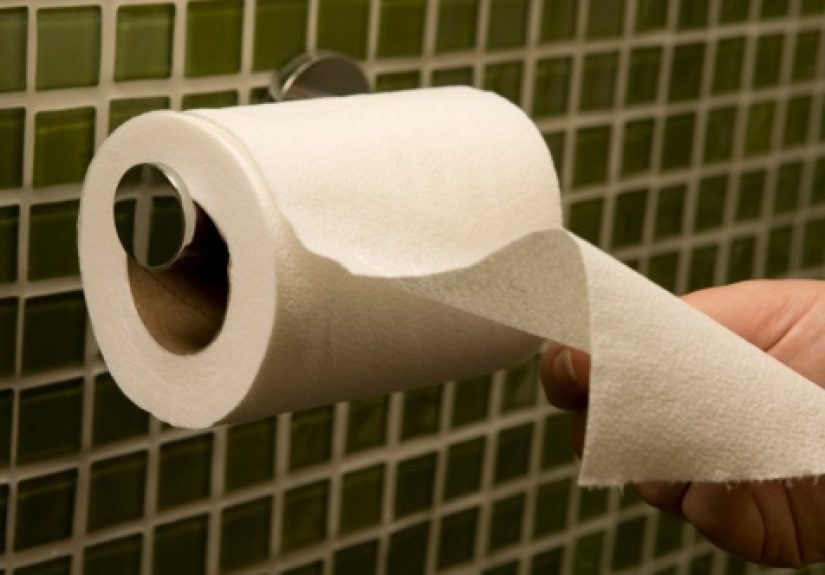
10) The Flush Toilet: The Myth, the Reality, and the World-Changing Impact
Where it started
Many people credit Thomas Crapper with inventing the flush toiletmostly because his name sounds like it was created by a
Victorian prankster. But the idea of flushing waste with water goes back much earlier. What Crapper did do was improve plumbing
systems and help popularize modern bathroom fixtures at a time when sanitation was becoming a public health priority.
Why it’s more than convenience
The real origin story here is bigger than any single inventor: it’s about the slow evolution of sanitation, engineering,
urban infrastructure, and disease prevention. The flush toilet isn’t just a household objectit’s part of a civilization-level
upgrade that reduced outbreaks, improved quality of life, and made “indoor plumbing” the gold standard of modern comfort.
What These Everyday Origins Have in Common
When you zoom out, the history of common inventions starts to rhyme. Most “obvious” modern conveniences weren’t obvious at all
at the beginning. They emerged because someone tried to fix a small frustration (carrying groceries), solve a big system problem
(product identification), or stumbled into an accidental breakthrough (microwaves, sticky notes).
Another pattern: adoption is half the battle. The best ideas don’t always win immediately. They win when the world is readywhen
manufacturing catches up, when standards form, when people learn new habits, and when the invention fits into daily routines
without demanding extra effort. The most successful everyday objects are the ones that feel like they were always meant to exist.
Origin-Spotting: of Real-Life “Wait, This Has a Backstory?” Experiences
Try this: spend one week treating your day like a scavenger hunt for the origins of everyday things. Not in a “I’m going to write a
dissertation in aisle seven” waymore like a casual, curious game. The goal is simple: when you touch something ordinary, pause for
three seconds and ask, “How did this become normal?”
Day one is the easiest because it starts at your fingertips. You type a messagemaybe a school assignment, a work email, or a late-night
“u up?” text you’ll pretend never happenedand your fingers land on QWERTY like they’re following choreography. Once you know QWERTY
comes from old typewriters, the keyboard suddenly feels like a museum exhibit you’re allowed to use. You might even catch yourself
eyeing alternative layouts online and thinking, “So you’re telling me we could have upgraded… and collectively chose not to.”
Day two, go grocery shopping (or just watch someone else do it if you’re living the “I came for chips, I left with feelings” life).
Notice how many systems are quietly cooperating: product codes, scanners, inventory databases, and checkout machines that all agree on
what a barcode means. That humble “beep” is a tiny public performance of standardization. The next time a barcode won’t scan and the
cashier has to key it in manually, you’ll feel the difference between “modern commerce” and “we are one step away from trading potatoes
like it’s 1795.”
Day three, you’ll probably hit a red light. Instead of treating it as a personal attack, imagine the intersection before signals:
a street-level debate club featuring cars, pedestrians, and confusion. Suddenly, the traffic light looks less like a nuisance and more
like a negotiated peace treaty. That yellow light becomes a tiny slice of engineering diplomacy: “Everyone breathe. Nobody do anything
dramatic for one second.”
By day four, you’ll start noticing “accidental inventions.” A Post-it Note becomes a story about a “failed” glue that became the perfect
glue. A microwave becomes a story about radar tech and curiosity. You might even look at your own small “failures” differentlylike that
time you tried to organize your desk and invented a new pile system instead. Progress can be weird like that.
Toward the end of the week, the most surprising realization kicks in: you’re surrounded by objects that had to earn your trust. Shopping
carts weren’t instantly beloved. Zippers needed better engineering and marketing. Toilets needed plumbing, public health advocacy, and a
cultural shift toward indoor sanitation. Even the paper clip is a quiet reminder that “simple” can be deeply optimized by years of
iteration.
And here’s the best part of this little experiment: once you start seeing the origins of everyday things, you stop treating convenience
as magic. You start treating it as human creativitysometimes brilliant, sometimes accidental, often stubborn, and frequently hilarious.
You don’t just live in the modern world. You live in a pile of solved problems, many of which started as someone saying, “There has to be
a better way.”
Conclusion
The next time you zip a jacket, stick a note on your monitor, scan a barcode, or grumble at a red light, you’re interacting with a
solution that took real experimentation, engineering, and cultural acceptance to become “normal.” The origins of everyday things aren’t
just triviathey’re proof that big change often arrives disguised as small convenience.