Table of Contents >> Show >> Hide
- Why GPS Can Be “Confidently Wrong”
- 1) The Collapsed Bridge That Never Left the Map
- 2) “Road Closed” Didn’t Beat “Continue Straight”
- 3) Death Valley: When “Just a Shortcut” Turns Into a Survival Story
- 4) The Oregon Snow Trap: Three Days Stuck Because “Shortest Route”
- 5) Seven Days in the Sierra: GPS Sends a Driver Into the Wrong Kind of Wilderness
- 6) The Harbor Incident: GPS Directs Tourists Down a Boat Ramp
- 7) South Carolina Marina: A GPS Mix-Up Almost Turned Into a Drowning
- 8) GPS vs. Physics: The Arkansas Bridge Collapse
- 9) The Covered Bridge Beatdown: When GPS Keeps Sending Trucks Into History
- 10) Massachusetts: “My GPS Said Go Straight” (Into a Lake)
- How to Avoid Becoming the Next “GPS Gone Wrong” Story
- Extra: of GPS-Related “Been There” Experiences (So You Don’t Have To)
- Conclusion: Let GPS HelpBut Don’t Let It Drive
GPS is one of humanity’s greatest inventionsright up until it becomes your overly confident backseat driver who
insists the “fastest route” is through a boat ramp, a washed-out bridge, or a mountain road that looks like it was
designed by a squirrel with a grudge.
To be fair, your navigation app isn’t evil. It’s just a math brain with imperfect data, blind faith in “roads” that
may no longer exist, and absolutely no shame about rerouting you into chaos. The real danger happens when we treat
turn-by-turn directions like a magic spell instead of a suggestion.
Below are ten real incidents where GPS guidance (or outdated mapping data) played a starring role in decisions that
ended with rescues, injuries, destroyed propertyand, in some cases, death. Consider this your friendly reminder:
you’re the pilot. The phone is the co-pilot. And the co-pilot is not allowed to fly the plane.
Why GPS Can Be “Confidently Wrong”
GPS usually fails in boring ways: a weird detour, an extra mile, a mild argument with your passenger. But when the
environment is dangerouswater, wilderness, winter, heavy trucks, unmarked closuressmall errors can become big
consequences.
- Outdated map data: Roads change, bridges wash out, construction happens, and databases lag behind.
- Routing algorithms: “Shortest” can mean “least safe,” especially on backroads or unpaved routes.
- Loss of signal: In forests, canyons, or mountains, GPS may fade right when you need it most.
- Human autopilot mode: People follow the voice prompt even when the real world is screaming “NO.”
- Wrong tool for the job: Car GPS for a semi-truck can equal “historic bridge demolition simulator.”
1) The Collapsed Bridge That Never Left the Map
In North Carolina, a father driving home at night reportedly followed navigation directions toward a bridge that had
washed out years earlier. With no effective barrier at the edge, his vehicle went off the broken span and into the
creek below. He didn’t survive. The tragedy later became the center of a lawsuit arguing that multiple warnings had
been submitted and the route still wasn’t corrected.
How the route turned deadly
- Navigation guidance directed a driver toward infrastructure that no longer functioned as a bridge.
- Dark, rainy conditions and the absence of strong physical deterrents compounded the risk.
Lesson: When a route looks wrong, assume it is wrong. Slow down, zoom out, and verify the road ahead.
2) “Road Closed” Didn’t Beat “Continue Straight”
In East Chicago, Indiana, police said a driver apparently followed GPS navigation and drove past multiple barricades
and “Road Closed” warningsending up on a ramp to a bridge that had been out of service for years. The vehicle went
off the edge. The driver was injured, and his wife was killed. It’s the kind of nightmare scenario that sounds
impossible… until you remember how easy it is to miss signs when you’re focused on the next spoken instruction.
Where it went wrong
- GPS guidance didn’t match current road closures and demolition status.
- Visual warnings were present, but were not treated as the “final authority.”
Lesson: Physical signs outrank digital directions. Always.
3) Death Valley: When “Just a Shortcut” Turns Into a Survival Story
Death Valley doesn’t do “minor inconveniences.” In one widely reported case, a mother and her child became stranded
after their vehicle got stuck in sand in a remote area of the park during extreme heat. They survived for days with
limited supplies before rescuers found thembut the child died. Stories like this are why rangers beg visitors not to
rely on GPS for remote routes: your screen can’t feel heat, can’t evaluate terrain, and can’t tell you how quickly
water disappears from your body.
Why it escalated fast
- Remote roads + harsh conditions make a “wrong turn” much more serious than in a city.
- Once stuck, rescue can take timeeven when people are searching.
Lesson: In extreme environments, plan for failure: extra water, paper maps, and a “turn back early” mindset.
4) The Oregon Snow Trap: Three Days Stuck Because “Shortest Route”
A Nevada couple was rescued after spending about three days stranded on an unplowed road deep in an Oregon forest.
They said GPS directions guided them into the mess. Fortunately, they had supplies and survived the freezing wait,
but the situation could have ended very differentlyespecially if their vehicle had failed, their food ran out, or
they tried walking out without knowing the terrain.
What made it dangerous
- Unplowed forest roads can look “valid” on a map while being completely impassable in winter.
- Cell service can be weak or nonexistentmaking a simple breakdown a life problem.
Lesson: In winter, avoid “shortcuts” and stick to known routesespecially at night.
5) Seven Days in the Sierra: GPS Sends a Driver Into the Wrong Kind of Wilderness
Near Lake Tahoe, a driver survived after being stranded in his truck for roughly a week during winter conditions.
Reports noted that he was initially led astray by GPS navigation into remote terrain. Even with a vehicle, surviving
that long is no joke: cold exposure, dehydration, and the simple stress of isolation can turn a bad route into a
medical emergency.
The hidden trap
- “Road” doesn’t always mean “maintained,” especially in mountainous regions.
- Snow can erase landmarks and make backtracking harder than continuing (which is also a trap).
Lesson: If the route stops looking like a road, don’t negotiateturn around while you still can.
6) The Harbor Incident: GPS Directs Tourists Down a Boat Ramp
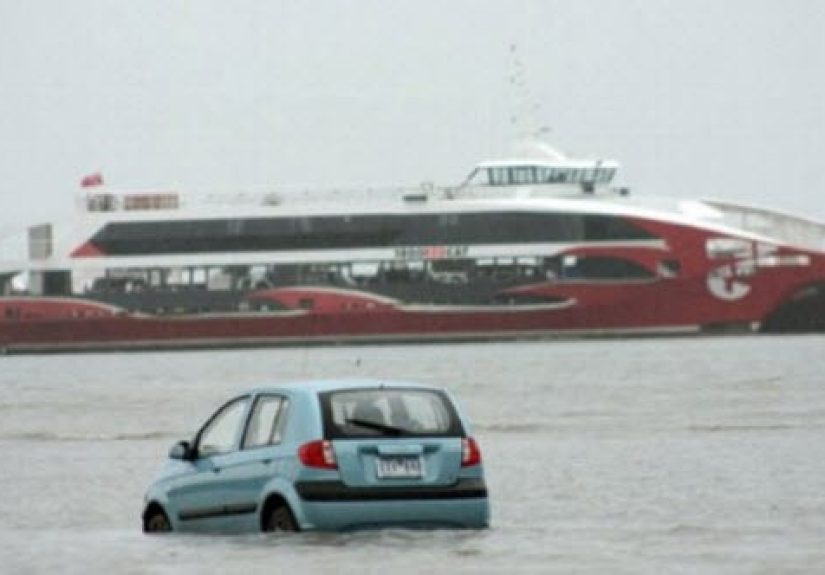
In Hawaii, witnesses watched a minivan roll confidently down a boat ramp and straight into a harbor. The passengers
were tourists, and the story went viral because it looked like a cartoonuntil you remember water can kill fast.
People nearby helped, and the occupants were rescued. But the moment the tires crossed the point of no return, it
stopped being funny and became a countdown.
How a “turn” becomes a plunge
- Boat ramps can resemble roadsespecially in rain, low visibility, or unfamiliar areas.
- GPS prompts don’t warn you when the “street” is also a launch point for boats.
Lesson: If the “road” gets shiny, slopes steeply, or smells like the oceanpause and reassess.
7) South Carolina Marina: A GPS Mix-Up Almost Turned Into a Drowning
On Isle of Palms, South Carolina, an out-of-town couple reportedly got confused by GPS directions, drove down a boat
ramp, and ended up in the water. What kept it from turning tragic was fast action: a restaurant employee jumped in
to help as the vehicle filled. The couple escaped, but it’s a sobering reminder that “wrong turns” near water are
uniquely unforgiving.
What saved them
- They stayed calm, rolled windows down, and got out quickly.
- Nearby bystanders responded immediately.
Lesson: Near water, slow down and ignore the pressure of “not missing the turn.” Missing the turn is fine. Missing oxygen is not.
8) GPS vs. Physics: The Arkansas Bridge Collapse
In rural Arkansas, officials believed a truck driver hauling frozen chickens was lost and relying on GPS when he
drove onto an old bridge that couldn’t handle the load. The span collapsed into the river. Even without injuries,
the consequences were massive: dangerous conditions, costly repairs, and a stark warning about using standard
navigation tools for commercial vehicles.
Why trucks need different navigation
- Weight limits, height limits, and restricted roads aren’t “optional” data points.
- Car-focused GPS may route a truck onto roads that were never meant for it.
Lesson: Commercial drivers need truck-specific routing and must treat posted limits as non-negotiable.
9) The Covered Bridge Beatdown: When GPS Keeps Sending Trucks Into History
In Vermont, historic covered bridges have been repeatedly struck by oversized trucksoften with drivers citing GPS as
the reason they ended up there. Some crashes have caused closures and months of repairs. The pattern is painfully
modern: the bridge is 140+ years old, the signs are there, and the algorithm still whispers, “This is fine.”
The repeating mistake
- Drivers follow car GPS routes instead of commercial-safe routing.
- Height/weight warnings get ignoreduntil wood and steel do the talking.
Lesson: GPS is not a permission slip. It’s a suggestion that must pass the “real world” test.
10) Massachusetts: “My GPS Said Go Straight” (Into a Lake)
In Charlton, Massachusetts, a driver following GPS navigation drove into Buffumville Lake near a boat launch. Divers
responded, the vehicle ended up fully submerged, and the driver was taken to the hospital with non-life-threatening
injuries. It’s a classic example of the most dangerous GPS phrase ever invented: “Continue straight.”
Straight into what? That’s between you and gravity.
Why it happens so often
- Boat launches can appear like normal lanes, especially at dawn, dusk, fog, or poor lighting.
- Drivers may trust the spoken prompt more than what their headlights reveal.
Lesson: Use GPS as a guide, not a blindfold. Your eyes are the primary sensor.
How to Avoid Becoming the Next “GPS Gone Wrong” Story
You don’t need to throw your phone into the ocean (though it would be thematically appropriate). You just need a few
habits that keep tech in its lane.
- Zoom out before you commit: A 5-second “big picture” check can reveal a suspicious detour.
- Beware “shortest route” settings: They love backroads, forest roads, and questionable optimism.
- In bad weather, drive like the map is wrong: Reduce speed and increase skepticism.
- Respect closures and warning signs: They’re updated in real time by people with actual eyeballs.
- Download offline maps for remote travel: Losing signal shouldn’t erase your plan.
- Tell someone your route in wilderness areas: A simple check-in can save hours of search time.
- Commercial drivers: use truck routing: Height and weight constraints are life-and-bridge constraints.
Extra: of GPS-Related “Been There” Experiences (So You Don’t Have To)
If you’ve ever driven with GPS, you’ve probably had at least one moment where you thought, “This can’t possibly be
right,” and the phone responded by cheerfully insisting it is. These experiences don’t always make headlines, but
they’re the tiny warning flares that come before the terrible consequences.
There’s the classic “mystery alley” reroute: you miss a turn in a city, and suddenly the app drags you through a
narrow service road behind a grocery store, past dumpsters that look like they’ve seen things, and out into daylight
like you just completed a side quest. Nothing bad happens, but your pulse suggests you survived a minor crime.
Then there’s the “avoid tolls” experience, where you save $3.25 and pay instead with a 27-minute detour, three
questionable left turns, and a new fear of unmarked roundabouts. You don’t feel clever. You feel like you got
hustled by a robot.
In unfamiliar suburbs, GPS can trigger the “identical streets syndrome.” Every neighborhood looks the same, every
intersection has the same tasteful landscaping, and the voice says “turn right” like it’s obvious which right. You
end up looping past the same mailbox so many times you start wondering if you’re trapped in an HOA-themed time loop.
This is how people accidentally roll toward boat ramps: not because they’re reckless, but because confusion plus
confidence is a dangerous combo.
Winter adds a special flavor of chaos. A dotted line on the map becomes a snowy nothing in real life, and GPS has no
way of telling you that the “road” ahead is unplowed, unmaintained, and about to become your new address. The
experience usually starts with bargain optimism“It’ll be fine; it’s only a few miles”and ends with you staring at
a white wall of weather while your phone chirps, “Rerouting,” as if it can reroute physics.
Remote travel has its own drama. In deserts or mountains, you can lose signal without warning, and the calm blue
route line disappears like it never existed. That’s the moment you realize how much you were outsourcing your
decision-making. The best “experience” here is the one where you stop early, turn around, and tell the story later
as a jokebecause the other version ends with rescue crews and regret.
The most useful habit I’ve seen people adopt is simple: treat GPS like a smart friend who is occasionally
overconfident. You listen, you consider, and you double-check. And when the friend says, “Drive into the water,” you
respond with the most powerful phrase in navigation history: “No, thanks.”
Conclusion: Let GPS HelpBut Don’t Let It Drive
GPS is incredible technology. It also has the emotional depth of a calculator and the situational awareness of a
houseplant. The stories above prove a single idea: terrible outcomes don’t always require reckless peoplesometimes
they just require a bad route, a little fatigue, and a voice prompt delivered with unjustified confidence.
So use GPS. Love GPS. Appreciate GPS. Just don’t worship it. If the route looks wrong, it probably is. And if the
“road” starts sloping into a lake… congratulations, you’ve found the one time you’re allowed to ghost a voice call.