Table of Contents >> Show >> Hide
- Street Photography, Explained Like a Normal Person
- Meet the Photographer Behind the 100 Images: Rohit Vohra
- Why India Makes Street Photography Look Like It Has a Soundtrack
- What You’ll Notice Across 100 Stunning Street Photos of India
- 1) The “Frame Inside a Frame” Trick (a.k.a. Visual Peanut Butter and Jelly)
- 2) Daily Rituals That Become Cinematic
- 3) Festivals and Public Joy (Color, Chaos, and a Lot of Motion)
- 4) Faces, But Not “Portrait Mode” Faces
- 5) Children Doing What Children Do Best: Ignoring the Universe
- 6) Animals as Full-Time Citizens
- 7) Light That Turns Ordinary Geometry Into Theater
- 8) The Comedy of Coincidence
- 9) Black-and-White as a Truth Serum
- 10) Quiet Moments That Stop the Scroll
- How a Street Photographer Finds Order in All That Chaos
- The Ethics of Street Photography (Because Humans Are Not Props)
- How to Create Your Own “100 Stunning Street Photos” Project (Without Moving to India)
- Bonus: The Experience of Chasing Street Photos in India (A 500-Word Reality Check, With Wonder)
- Final Thought
If you’ve ever tried to explain India to someone who’s never beengood luck. You can talk about the aromas,
the traffic that seems to run on telepathy, the colors that look like someone cranked the saturation knob past
“reasonable”… and you’ll still be missing the point.
That’s why street photography hits different. It doesn’t argue. It shows. And when a photographer spends decades
paying attention to the everyday, you don’t just get pretty picturesyou get a visual record of how a country breathes.
This article unpacks what makes a collection like “100 Stunning Street Photos of India” so watchable,
so teachable, and so hard to scroll past. We’ll also steal a few practical lessons (politely!) so you can build your
own “mini 100” wherever you live.
Street Photography, Explained Like a Normal Person
Street photography is the art (and occasional chaos) of photographing life in public spaces. It’s less about perfect poses
and more about real moments: glances, gestures, coincidences, patterns, and tiny stories you’d miss if you blinked.
The “street” part doesn’t always mean a literal streetit can be a market, a train station, a beach promenade, a festival,
or a quiet alley where the light is doing something suspiciously cinematic.
Here’s the magic trick: street photography turns ordinary minutes into evidence. Not courtroom evidencehuman evidence.
The kind that says, “This is what it felt like to be there.”
Meet the Photographer Behind the 100 Images: Rohit Vohra
The collection commonly shared under headlines like “100 Stunning Street Photos of India” centers on Indian street photographer
Rohit Vohra, known for documenting everyday life across India over a long span of time. He’s not the kind of
photographer who shows up, snaps a postcard, and leaves. His work is built from repetition: returning to streets, noticing rhythms,
and catching the moments most people walk right past.
Vohra’s background blends visual art training with long-term street practice. He’s also closely connected to the global street
photography community through education and judging roles, and he co-runs a well-known street photography platform and magazine
(APF). In other words, he’s spent years living inside this genreshooting it, teaching it, and evaluating it.
And yes, “award-winning” isn’t just a spicy adjective here. Street photography lives in an ecosystem of competitions and juried
recognition, and Vohra’s work and reputation are tied to that circuit through judging panels and international visibility. Still,
the real flex is simpler: the pictures hold your attention without needing a speech.
Why India Makes Street Photography Look Like It Has a Soundtrack
India’s streets are dense with story. Not because they’re “exotic” (a word that usually means “I didn’t bother learning anything”),
but because public life is genuinely vivid and layered: work, worship, play, travel, commerce, family, and celebration often share
the same spacesometimes the same square meter.
Add to that the country’s enormous linguistic and cultural diversity, and you get a street environment where small differences matter:
signs, clothing, rituals, architecture, vehicles, even how people cluster in groups. A good street photographer doesn’t try to simplify
this into one narrative. They look for the human constants inside the variety: care, hustle, pride, boredom, joy, fatigue, curiosity.
In a set of 100 photos, India becomes less of a “place” and more of a rotating cast of momentssome loud, some quiet, all oddly familiar.
What You’ll Notice Across 100 Stunning Street Photos of India
One photo can be a lucky hit. Ten photos can be a style. But a hundred? That’s a worldview. Here are the recurring patterns that often
show up in large street collections of Indiaespecially ones built from long-term, day-to-day observation.
1) The “Frame Inside a Frame” Trick (a.k.a. Visual Peanut Butter and Jelly)
Great street photos don’t just show a subjectthey present the subject. Look for doorways, windows, arches, bus frames, shadows,
or even unexpected shapes (like an animal’s body) creating a natural border around a person.
In this collection, one of the most talked-about examples is a figure visually framed by a camel’s neckproof that the street will gladly
collaborate if you’re patient enough to notice.
2) Daily Rituals That Become Cinematic
Street photography shines when it elevates the mundane: carrying water, sweeping a shopfront, balancing goods, commuting, washing,
waiting, bargaining. These moments don’t look dramatic while you’re living thembut in the right light, they become universal.
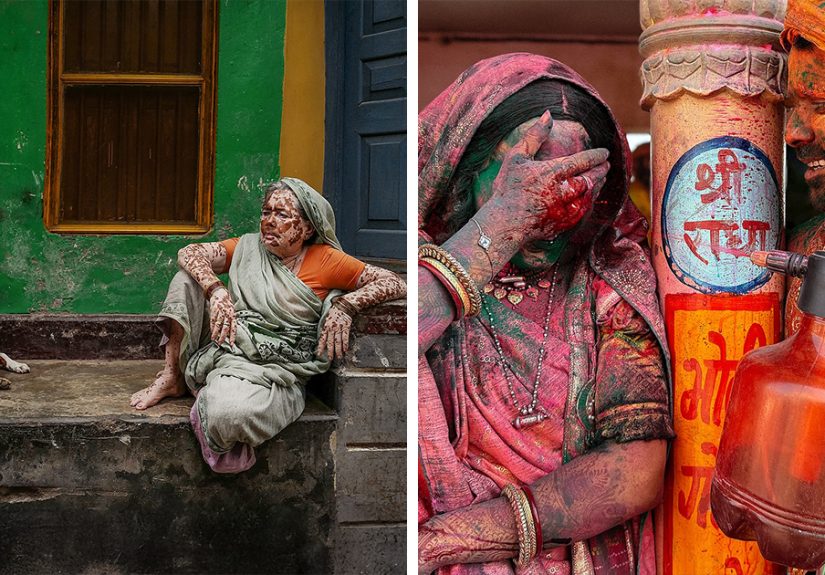
3) Festivals and Public Joy (Color, Chaos, and a Lot of Motion)
Some photos feel like they’re vibrating. Festivalsespecially those involving color, powder, water, crowds, and musiccan turn streets into
kinetic paintings. Holi, for example, is famously photographed because it’s visually explosive, but the best images still find something
human at the center: a grin, a flinch, a hand reaching out, a moment of connection inside the storm.
4) Faces, But Not “Portrait Mode” Faces
Street photography isn’t always about formal portraits. Often the face is just one element in a wider scenepart of a story that includes
signage, textures, movement, and background characters doing their own thing.
The result is more honest and less “Hey, I’m a photographer, please give me your best face.” The street doesn’t wait for your angle.
5) Children Doing What Children Do Best: Ignoring the Universe
Kids in street photos often bring surprise because they move differentlyclimbing, running, inventing games with whatever objects exist.
They also don’t perform adulthood, which means their moments feel raw and unedited.
6) Animals as Full-Time Citizens
In many Indian street scenes, animals aren’t background decorationthey’re participants. Dogs sleeping near doorways, cows navigating traffic,
horses being washed, birds hovering near food stalls. These details add texture and sometimes humor, but they also show how shared spaces really work.
7) Light That Turns Ordinary Geometry Into Theater
Street photographers chase light the way some people chase Wi-Fi. Harsh sun creates bold shadows. Late afternoon gives soft contrast.
A narrow lane can become a spotlight. When light and gesture meet, you get a “how is this real?” momentand yes, it’s real. You just missed it.
8) The Comedy of Coincidence
The street has an underrated sense of humor: a billboard that argues with a passerby, a gesture that mirrors a painted figure, a perfectly timed
glance that makes a serious scene suddenly playful. Humor works best when it doesn’t punch downwhen it’s about timing and irony, not embarrassment.
9) Black-and-White as a Truth Serum
Color can be hypnotic, but black-and-white strips scenes to shape, contrast, and emotion. In a strong collection, you’ll often see both: color for
celebration and atmosphere; monochrome for structure, mood, and visual clarity.
10) Quiet Moments That Stop the Scroll
The real power move in a big set of striking images is the quiet photothe one where nothing “big” happens, but everything feels real:
someone resting on steps, an elderly person paused near a doorway, a commuter staring out of a bus window like they’re thinking about every decision
they’ve ever made since 2009.
How a Street Photographer Finds Order in All That Chaos
When you look at a strong “100 photos” collection, it can feel like the photographer has access to secret cheat codes. In reality, the process is
more like a disciplined form of noticing.
Street photographers often work with a few core habits:
- Pick a stage, then wait for actors. Find a strong background first (clean light, good geometry), then wait for people to enter the frame.
- Work close enough to feel present. Many street images succeed because they don’t look like they were taken from across the planet with a telescope.
- Layer your scene. Foreground, middle ground, backgroundeach layer adds story and depth when the timing clicks.
- Follow patterns, not random chaos. A bus stop repeats human behavior. A market repeats transactions. A temple entrance repeats arrivals and departures.
- Edit like a storyteller. The “stunning” part often happens after shootingwhen you choose images that speak to each other instead of shouting alone.
Vohra’s long-run approach suggests something important: consistency beats novelty. You don’t need a once-in-a-lifetime moment every day.
You need to show up often enough that ordinary life reveals its weird little masterpieces.
The Ethics of Street Photography (Because Humans Are Not Props)
Street photography lives in public spaces, which makes it legally and ethically complicated. “Legal” and “kind” are not synonyms. A powerful photo
is not automatically a respectful one.
If you’re creating or publishing street photosespecially images of recognizable peoplethese guidelines will keep your work strong and your conscience
less itchy:
Photograph with context, not stereotypes
Ethical visual storytelling means resisting easy narratives. Good documentary and street work avoids reducing people to caricatures of poverty,
“color,” or shock value. Images should add understanding, not strip dignity.
Don’t stage what you’re presenting as real
Street photography can include collaboration, but you should be honest about what’s candid and what’s directedespecially if your work is framed as
documentary or journalistic in spirit.
Be extra careful with vulnerable moments
Ask yourself: If this were my relative on a rough day, would I want this image going viral? There’s your answer.
Know the difference between editorial/fine art and commercial use
In the U.S., rules around releases and usage can change dramatically depending on whether you’re selling a print, publishing a photo essay, or using a
person’s face to promote a product. When in doubt, learn the basics of releases and usage rights before you publish widely.
Bottom line: the best street photography doesn’t steal moments. It witnesses themwith craft, courage, and basic human decency.
How to Create Your Own “100 Stunning Street Photos” Project (Without Moving to India)
You don’t need a subcontinent to start a compelling street series. You need a consistent practice and a clear idea of what you’re hunting for.
Here are a few project prompts that work in any city or town:
1) The “One Corner, Many Stories” challenge
Pick one locationone intersection, one market entrance, one benchand return at different times and days. Watch how the cast changes. Shoot for
patterns: who waits, who rushes, who sells, who watches.
2) The “Hands at Work” series
Photograph hands doing things: exchanging money, tying knots, cooking, repairing, sweeping, lifting, sorting. Hands reveal labor and care without
needing faces in every frame.
3) The “Public Transportation Opera”
Buses, trains, and stations are theaters of micro-emotion: exhaustion, impatience, affection, boredom, quiet pride. If your city has public transit,
you have stories.
4) Edit like you mean it
The secret sauce of a “100 best shots” collection is restraint. Don’t keep ten versions of the same idea. Keep the one that has the cleanest frame,
the strongest gesture, the best light, or the clearest story.
Bonus: The Experience of Chasing Street Photos in India (A 500-Word Reality Check, With Wonder)
Photographing India’s streetswhether you’re a lifelong local or a visitoroften feels like trying to drink from a waterfall. Not because it’s “too much”
in a bad way, but because the sensory information arrives all at once: honks, bells, voices, footsteps, heat, steam, incense, diesel, chai, frying snacks,
a sudden burst of laughter, and then a quiet moment where someone adjusts a scarf in perfect light like the universe briefly hired a cinematographer.
The first thing many photographers learn is that your camera isn’t the hardest partyour attention is. A street scene can be brilliant and gone in two seconds.
You start scanning differently: watching the light hit a wall, noticing the geometry of a doorway, spotting a patch of shade that could turn into a stage.
You wait, and you feel ridiculous waiting, and thensomeone walks into the frame carrying something impossibly balanced on their head like gravity is optional.
Markets teach you speed. There’s movement in every direction: vendors calling out, customers negotiating, hands exchanging change, scooters threading through
gaps that do not look scooter-sized. You learn to simplifyone subject, one gesture, one clean backgroundbecause if you try to capture everything, you end up
capturing nothing. The best street photographers aren’t photographing “busy.” They’re photographing meaning inside busy.
Then there are festival days, when the streets feel like they’ve been promoted from “daily life” to “full-volume celebration.” Color is everywhereon clothing,
on walls, on faces, in the air. If you’re photographing something like Holi, you quickly discover that your gear wants a vacation. You also discover that joy moves
fast. It’s not posed. It’s not waiting for you. You’re not directing; you’re surfing.
But the most memorable street-photo experiences aren’t always the loud ones. Sometimes it’s an early morning lane where the world is still waking up: a sweeping
motion, a kettle steaming, a dog curled near a doorway, a soft shaft of sunlight. Or it’s a bus ride where passengers lean toward the window, not performing for
the camerajust living. Those images can feel like quiet proof that the country isn’t a single mood. It’s a thousand moods, rotating all day.
And yes, there’s the human side: the quick eye contact, the curious stare, the occasional smile that says, “What are you doing?” Street photography in India
often rewards humility. If you approach people like scenery, the work feels shallow. If you approach the street like a shared spacewhere dignity mattersthe
photographs start to carry more than aesthetics. They carry respect. The best “100 photos” sets don’t just show you India. They show you what it looks like
when someone pays attention for a long time and treats everyday life like it deserves to be remembered.