Table of Contents >> Show >> Hide
- Why Comedy Horror Works (Even When It Really Shouldn’t)
- 15 Hilarious Moments That Prove Screams and Laughs Are Cousins
- 1) Shaun of the Dead (2004): “Kill the Queen!” (No, Not Like That.)
- 2) Zombieland (2009): Bill Murray’s Cameo Is a GiftThen a TragedyThen a Joke Again
- 3) Tucker & Dale vs. Evil (2010): “These Kids Started Killing Themselves All Over My Property!”
- 4) The Cabin in the Woods (2011): “I Am Never Gonna See a Merman. Ever.”
- 5) Evil Dead II (1987): The Possessed Hand vs. Ash Williams (A One-Man Grudge Match)
- 6) Braindead/Dead Alive (1992): “I Kick Ass for the Lord!” (Divine Intervention, but Make It Kung Fu)
- 7) What We Do in the Shadows (2014): “We’re Werewolves, Not Swearwolves.”
- 8) Beetlejuice (1988): The “Day-O” Dinner Party Possession
- 9) Gremlins (1984): The Gremlins’ Movie Theater Sing-Along
- 10) Gremlins (1984): The Bar Scene Is Chaos With a Drink Menu
- 11) The Return of the Living Dead (1985): “Send… More… Paramedics.”
- 12) Drag Me to Hell (2009): The Seance Goes Off the Rails (Featuring One Unforgettable Goat)
- 13) Young Frankenstein (1974): “Puttin’ on the Ritz” (Monster Cabaret, But Make It Classy)
- 14) An American Werewolf in London (1981): The Dead Friend Who Won’t Stop Dropping By
- 15) Little Shop of Horrors (1986): The Dentist Who Loves Pain (Way Too Much)
- What Makes These Funny Horror Moments Stick
- Experiences: Why Comedy Horror Feels Like the Most Fun Kind of Scary (Extra 500+ Words)
- Final Take
Comedy horror is the movie equivalent of laughing while your phone autocorrects “I’m fine” into “I’m dying.” It’s the sweet spot where a film can
jump-scare you, gross you out, and still land a punchline so perfectly timed you forget you were just bracing for impact.
This list spotlights 15 genuinely funny, famously memorable moments from comedy horror moviesscenes that prove a scream and a cackle can share the same
lungs without filing a restraining order. Expect mild spoilers (because describing “the funny part” without describing the funny part is just literary
edging).
Why Comedy Horror Works (Even When It Really Shouldn’t)
At its best, comedy horror doesn’t “ruin” fearit weaponizes it. The tension sets the table; the joke flips it. The genre thrives on three tricks:
misdirection (you tense up for terror and get a punchline), release (laughter resets your nervous system so the next scare
hits harder), and absurd specificity (the more oddly real the characters act during chaos, the funnier the chaos becomes).
A great horror comedy scene also respects both halves of the mashup. The horror is staged like horrorlighting, timing, sound designwhile the comedy comes
from character logic, social awkwardness, or slapstick escalation. In other words: it’s not “jokes with monsters,” it’s “monsters with impeccable comedic
timing.”
15 Hilarious Moments That Prove Screams and Laughs Are Cousins
1) Shaun of the Dead (2004): “Kill the Queen!” (No, Not Like That.)
In the Winchester pub, the gang fights off a zombie attack in a way that feels both desperate and weirdly… choreographed. The jukebox blasts Queen’s
“Don’t Stop Me Now,” and suddenly the violence becomes rhythmicpool cues swing on the beat, chaos syncs to a pop anthem, and someone shouts “Kill the
Queen!” while meaning “turn off the jukebox.” It’s funny because the scene is shot like an action set piece, but the characters still argue like people
who can’t stop being themselves even during the apocalypse.
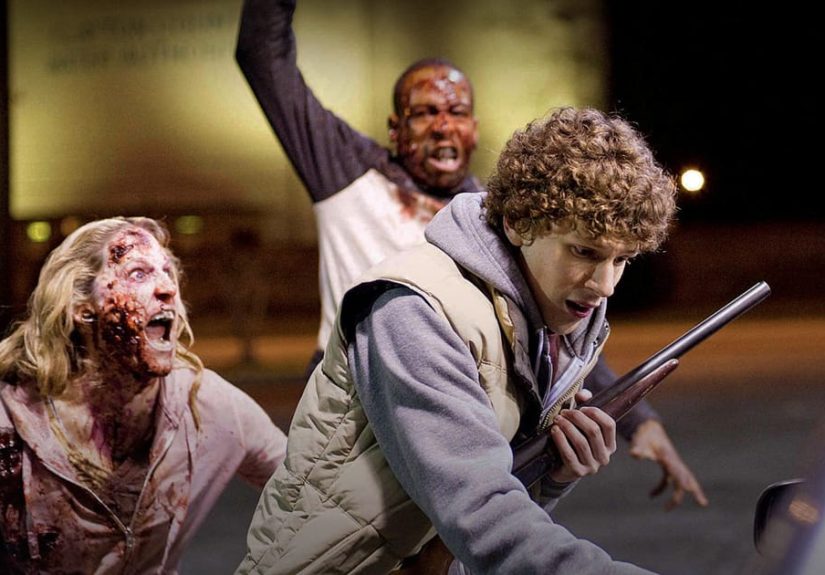
2) Zombieland (2009): Bill Murray’s Cameo Is a GiftThen a TragedyThen a Joke Again
The gang stumbles into a celebrity mansion and discovers Bill Murray living his best post-apocalyptic life. The comedy is layered: Murray is casually
charming, the characters are starstruck in the middle of disaster, and then the moment takes an abrupt turn when a misunderstanding turns deadly. Even the
aftermath keeps squeezing laughs out of discomfortright down to Murray’s famously deadpan “regrets” line that winks at his filmography. The scene works
because it’s played straight, like the movie itself can’t believe it got Bill Murray and is trying not to spook him.
3) Tucker & Dale vs. Evil (2010): “These Kids Started Killing Themselves All Over My Property!”
Few movies flip a horror trope as cleanly as this one. Two well-meaning “scary hillbillies” keep getting mistaken for murderers by panicked college kids.
The result is a chain reaction of slapstick misunderstandings that escalates into total mayhemhighlighted by the now-legendary “doozy of a day” speech to
law enforcement. The genius is perspective: horror cinematography and tense framing are used to sell the wrong interpretation, while Tucker and
Dale remain sincerely confused and increasingly horrified by how accident-prone these “victims” seem.
4) The Cabin in the Woods (2011): “I Am Never Gonna See a Merman. Ever.”
The movie treats horror like a workplace, complete with betting pools and office banter about what monster will “win.” That makes one complaintsomeone
sulking that he’ll never see a mermanabsurdly relatable. The payoff is brutal and perfect: the wish is granted in the worst possible way. It’s comedy
horror at its most surgical: plant a joke, build a mythos around it, then let the punchline arrive on a wave of “oh no, not like that.”
5) Evil Dead II (1987): The Possessed Hand vs. Ash Williams (A One-Man Grudge Match)
Bruce Campbell turns physical comedy into survival horror. When Ash’s hand becomes possessed, it attacks him with petty dedicationslapping him around,
sabotaging him, and generally acting like a roommate who “forgot” to do dishes for the 40th time. The scene’s brilliance is how committed it is: the
camera treats the struggle like a genuine fight, while the choreography is pure slapstick. Even the visual gags get in on itright down to the kind of
prop humor that rewards sharp-eyed viewers.
6) Braindead/Dead Alive (1992): “I Kick Ass for the Lord!” (Divine Intervention, but Make It Kung Fu)
If you’ve ever wanted a priest to solve a zombie problem with martial arts confidence, congratulations: this scene is your spiritual home. The line lands
because it’s delivered with total sincerityno wink, no ironyjust holy bravado and cemetery chaos. It’s splatter comedy at full volume: outrageous gore,
cartoonish energy, and a moment so quotable it practically dares you not to repeat it at inappropriate times.
7) What We Do in the Shadows (2014): “We’re Werewolves, Not Swearwolves.”
The mockumentary format makes supernatural drama feel like mundane roommate conflict, which is already funny. But the werewolves’ insistence on politeness
takes it to another level. Their mantradelivered like a self-help affirmation for creatures with anger issuesturns a classic monster rivalry into a
social faux pas. The joke is that even in a world of vampires and full moons, everyone still wants to be seen as “nice.”
8) Beetlejuice (1988): The “Day-O” Dinner Party Possession
A dinner party is supposed to be awkwardsmall talk, uncomfortable chairs, somebody oversharing about their new “vision board.” Beetlejuice
upgrades that awkwardness into supernatural choreography, forcing the guests into a perfectly bizarre musical number set to “Day-O (The Banana Boat Song).”
The humor comes from contrast: stiff, status-obsessed adults suddenly moving in synchronized weirdness, faces trapped between “help” and “why are my arms
doing this.” It’s joyful, unsettling, and iconic for a reason.
9) Gremlins (1984): The Gremlins’ Movie Theater Sing-Along
There’s something inherently hilarious about tiny monsters acting like rowdy, over-caffeinated childrenespecially when they’re organized enough to run a
projector. The theater moment lands because it’s strangely wholesome: gremlins watch a classic cartoon, sing along like they’ve been practicing all week,
and for a brief beat they’re just… a terrible audience. Then, of course, the movie remembers it’s also a horror film, and the tone swerves again.
10) Gremlins (1984): The Bar Scene Is Chaos With a Drink Menu
If the theater scene shows the gremlins’ “community theater” side, the bar scene reveals their inner spring-break demons. They gamble, flirt, smoke,
perform, and generally behave like a swarm of sentient bad decisions. The comedy is in the detailseach gremlin seems to have a job, a hobby, and a
commitment to nonsense. It’s a packed visual gag machine that never stops moving long enough for your brain to say, “Wait, how are they this coordinated?”
11) The Return of the Living Dead (1985): “Send… More… Paramedics.”
Zombies are usually portrayed as mindless, but this movie gives them a horrifying upgrade: they’re clever enough to use a radio. The line “Send more
paramedics” is funny because it’s strategic, chilling, and weirdly politelike a customer service request from a creature that definitely wants to eat
your face. The repetition becomes its own running gag, a bleak comedic rhythm that makes the situation feel more hopeless every time it comes back around.
12) Drag Me to Hell (2009): The Seance Goes Off the Rails (Featuring One Unforgettable Goat)
Sam Raimi understands that fear and laughter live in the same jumpy space. During the seance, the tension ramps up into classic “everything is escalating”
horroruntil the moment takes a hard left into outrageous. The possessed goat is the kind of choice that should be silly (because it is), but it’s staged
with such intensity that the absurdity becomes the release valve. You laugh because you’re overwhelmed, and the movie knows it.
13) Young Frankenstein (1974): “Puttin’ on the Ritz” (Monster Cabaret, But Make It Classy)
Mel Brooks turns gothic horror aesthetics into a showbiz setup. The scene works because it commits to the bit: the monster isn’t just a creature, he’s a
stage partner. The comedy comes from the sheer audacity of ittap-dancing in a world built from old Universal monster shadowsand from the way the number
keeps trying to stay polished while everything threatens to collapse into panic.
14) An American Werewolf in London (1981): The Dead Friend Who Won’t Stop Dropping By
This movie is famous for its transformation, but its dark humor is equally sharp. The recurring visits from a dead friend have a uniquely uncomfortable
punch: he’s chatty, practical, and increasingly decomposed. The joke is that the supernatural is treated like an ongoing inconveniencean “I hate to bring
this up, but…” conversationexcept the person bringing it up is literally falling apart. It’s bleak, funny, and strangely human.
15) Little Shop of Horrors (1986): The Dentist Who Loves Pain (Way Too Much)
Horror comedy loves a villain who’s terrifying and ridiculous at the same time, and the sadistic dentist delivers both. The musical number turns a
nightmare scenariosomeone with power over you enjoying your sufferinginto a gleeful performance. The humor comes from the commitment: he’s not “kind of”
evil; he’s Broadway evil. It’s the kind of scene that makes you laugh and wince simultaneously, which is basically the genre’s mission statement.
What Makes These Funny Horror Moments Stick
If you line these scenes up, patterns emerge:
- They treat the horror seriously. Even when the joke is ridiculous, the scene is shot with real tension, which gives the comedy leverage.
-
They let characters stay human. People argue, misunderstand, perform, or obsess over petty detailseven when the dead are clawing at the
door. - They build a “rule,” then break it. “This is a zombie movie” becomes “this is a zombie movie with a jukebox choreography problem.”
-
They use specificity. A merman complaint. A polite werewolf mantra. A zombie making an operational request. The more oddly precise, the
funnier the fallout.
The best comedy horror movies don’t just deliver jokes; they create a tone where you expect the unexpected. You lean in for dread, and the movie
hands you a punchlineoften while still holding the knife.
Experiences: Why Comedy Horror Feels Like the Most Fun Kind of Scary (Extra 500+ Words)
Watching comedy horror tends to become an “experience movie” in a way that pure horror and pure comedy don’t always manage. That’s because the emotional
rhythm is physical: your body tightens during a scare, then laughter unspools the tension like letting air out of a balloon. It’s not just entertainment;
it’s a nervous-system roller coaster with better one-liners.
In group settingsfriends on a couch, roommates who claim they “don’t scare easily,” a packed theater where everyone pretends they’re calmcomedy horror
becomes communal. One person’s laugh gives permission for someone else to exhale. Then the next scare hits, and suddenly you’re all synchronized again,
reacting as one messy organism. It’s a rare genre where silence and noise both feel correct: you’re quiet because you’re tense, then loud because the movie
hands you a safe landing.
It also creates a special kind of memory: people don’t just remember “the plot,” they remember moments. The instant the jukebox becomes a battle
partner. The second a seemingly throwaway complaint (“I’ll never see a merman”) becomes a cosmic joke with teeth. The scene where a movie proves it can
be disgusting and funny in the same breath, and you realize you’re laughing even though you’re kind of horrified at yourself. Those moments stick because
they feel like the film is sharing a secret with you: “Yes, this is terrifying. And yes, it’s also absurd. Aren’t you glad you noticed?”
Comedy horror is also a gateway genre for viewers who are horror-curious. If someone wants the adrenaline of scary movies but hates the emotional drain of
relentless dread, horror comedy offers training wheels that are still covered in blood. You get the language of horrorcreaking doors, looming shadows,
sudden violencebut the film keeps checking in with you through humor, like a friend at a haunted house saying, “You’re good, you’re good… okay now RUN.”
That balance can make people braver, or at least willing to try more titles without feeling punished by the experience.
On rewatch, these movies often get funnier, not weaker. Pure horror can lose some bite once you know where the scares live, but comedy horror gains
layers: you start noticing background gags, small reaction shots, and the precision of the setup. You catch how the camera frames a “serious” moment so
the punchline lands like a trapdoor. You notice how the soundtrack is used not just to build fear but to direct comedy, turning violence into
choreography or transforming a mundane argument into peak absurdity.
Most of all, comedy horror offers a uniquely satisfying feeling: you survived. You watched something dark, weird, and intenseand you left with a grin.
The laughs don’t cancel the scares; they redeem them. It’s like the genre is saying, “The world is terrifying, but we can still make fun of it while we
run.” And honestly, that might be the healthiest coping mechanism a movie can teach.
Final Take
The funniest horror comedy moments don’t happen instead of fearthey happen because fear is present, loud, and ready to be flipped. These 15 scenes
endure because they’re specific, committed, and unafraid to make you laugh at the exact moment your brain is yelling, “This is not the time!”
If you’re building a watchlist, mix eras and styles: a tightly written modern horror comedy, a practical-effects splatter classic, a musical oddity, and a
few genre-benders that refuse to behave. The best part of comedy horror is that it never asks you to choose between screaming and laughing. It just
insists you do both.