Table of Contents >> Show >> Hide
- Start Here: The Tiny Nursery Game Plan
- 15 Small Nursery Ideas That Make Every Inch Count
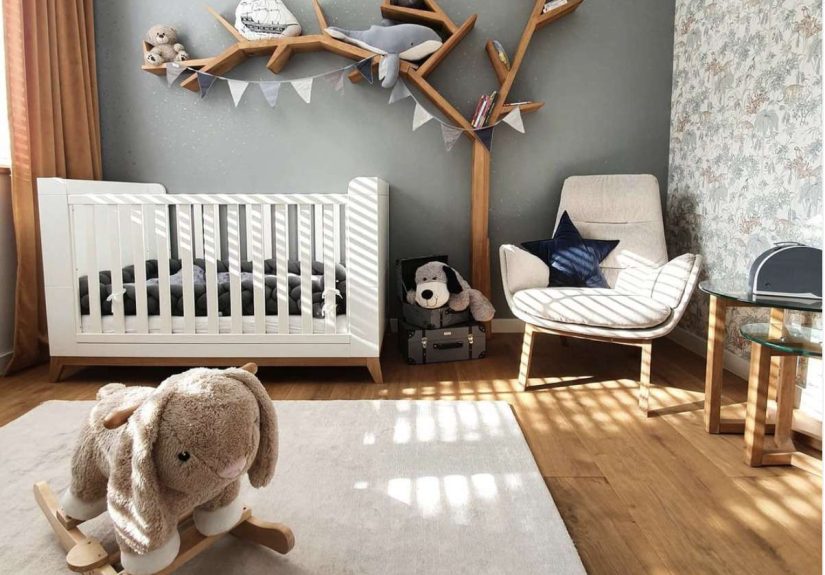
- 1) Choose a mini crib (or a compact crib) without sacrificing style
- 2) Replace a separate changing table with a dresser-top changing station
- 3) Go vertical with floating shelves (but keep them practical)
- 4) Add a pegboard or rail system for grab-and-go organization
- 5) Use a rolling cart as a “night shift” survival station
- 6) Put the closet to work with a nursery “closet command center”
- 7) Use under-crib storage like it’s prime real estate (because it is)
- 8) Swap bulky baskets for hanging storage (hooks, door organizers, and side-crib pockets)
- 9) Pick a compact glider or a stylish chair-and-ottoman duo
- 10) Use light, airy colors to visually expand the room
- 11) Create one “wow” moment with wallpaperthen keep the rest calm
- 12) Use mirrors strategically to bounce light (and fake more space)
- 13) Choose a rug that’s the right size (tiny rugs make rooms feel smaller)
- 14) Use wall-mounted lighting to free surfaces and reduce clutter
- 15) Style with “two jobs” decor: pretty + functional
- Keeping a Small Nursery From Turning Into a Tiny Storage Unit
- Real-Life Experiences: Small Nursery Field Notes (500+ Words)
- Conclusion
Tiny nursery? Big dreams? Same. The good news: you don’t need a sprawling “Pinterest mansion” to build a nursery that’s functional, calm, and genuinely cute. A small space nursery just asks you to be a little smarterlike choosing furniture that earns its keep, using vertical storage, and styling with intention (instead of stacking three laundry baskets and calling it “texture”).
Below are 15 small nursery ideas that make a room feel larger, work harder, and stay easier to tidyplus a real-life, been-there section at the end for the parts no one posts (like where the burp cloths actually go when you’re half-asleep).
Start Here: The Tiny Nursery Game Plan
1) Think in zones, not square footage
Most nurserieseven big onesare basically three micro-areas: sleep, change, and feed/comfort. In a small room, you’re not adding more furniture; you’re making each zone efficient and close enough that you’re not doing a midnight obstacle course.
2) Measure the “awkward stuff”
Measure door swings, closet doors, window clearance, and the space you need to open drawers. Many small nursery layouts fail because the dresser opens… directly into the crib. (A classic.)
3) Prioritize safety and sanity
Anchor heavy furniture, follow manufacturer instructions, and keep the sleep space simple and clear. The goal is “calm + safe,” not “museum exhibit that collapses at 2 a.m.”
15 Small Nursery Ideas That Make Every Inch Count
1) Choose a mini crib (or a compact crib) without sacrificing style
A mini crib can be a game-changer in a tiny nurseryespecially if your room is narrow or doubles as an office. You get a real crib footprint without taking over the entire floor. Bonus: compact cribs often look cleaner and more modern, which visually “opens” the room.
- Try this: Leave 18–24 inches of clearance on at least one side so you can actually reach the crib without contorting.
2) Replace a separate changing table with a dresser-top changing station
In a small nursery, duplicate furniture is the enemy. A sturdy dresser can store diapers, clothes, swaddles, and those tiny socks that disappear like they’re unionizing. Add a changing pad on top, and you’ve saved an entire piece of furniture.
- Try this: Use drawer dividers for diapers, creams, and tiny accessories so you’re not rummaging one-handed.
3) Go vertical with floating shelves (but keep them practical)
Floor space is precious; wall space is often underused. Floating shelves can hold books, a monitor, baskets, and decor without the bulk of a bookcase. The trick is to keep them curatedtoo many small items can look cluttered fast.
- Try this: Put everyday essentials on lower shelves (within adult reach), and keep “cute-only” items higher.
4) Add a pegboard or rail system for grab-and-go organization
Pegboards aren’t just for garages anymore (which is honestly great news for pegboards). In a small space nursery, a pegboard near the changing area keeps wipes, diaper cream, small toys, and grooming items visible and accessiblewithout crowding the dresser top.
- Try this: Use matching containers on the board so it looks intentional, not like a mini supply closet exploded.
5) Use a rolling cart as a “night shift” survival station
A slim rolling cart can hold diapers, burp cloths, spare pajamas, pacifiers, and a water bottle for you (because you’re also a person). Roll it beside the chair for feeds, then tuck it away when company comes over and you want to appear like you have it all together.
- Try this: Top tier = most-used items. Bottom tier = backups and “just in case.”
6) Put the closet to work with a nursery “closet command center”
If your nursery is really tight, the closet can act like a mini storage room. Add a second hanging rod for baby clothes, shelf dividers, and labeled bins for diapers, linens, and next-size outfits. This reduces visible clutter in the room itself.
- Try this: Keep a bin labeled “Too Small” and another labeled “Next Up” so you’re not re-sorting every week.
7) Use under-crib storage like it’s prime real estate (because it is)
Under-crib space can hold extra sheets, blankets, diapers, or a stash of wipes. Sliding bins make it easy to access without dragging out a whole storage tote like you’re packing for a camping trip.
- Try this: Choose shallow bins with lids to keep dust under control.
8) Swap bulky baskets for hanging storage (hooks, door organizers, and side-crib pockets)
Hanging organizersbehind doors, on closet doors, or on the side of a changing areastore small essentials without eating floor space. It’s the tiny nursery equivalent of discovering an extra drawer you didn’t know you had.
- Try this: Use pockets for socks, bibs, creams, pacifiers, and teething toys.
9) Pick a compact glider or a stylish chair-and-ottoman duo
Yes, you want a comfortable seat. No, it doesn’t have to be the size of a loveseat. A small chair that fits in a corner can still be cozy, especially with a lumbar pillow and a petite side table (or a wall shelf) for bottles and books.
- Try this: If space is super tight, choose an ottoman that tucks under the chair.
10) Use light, airy colors to visually expand the room
Light neutrals, soft pastels, and warm whites reflect light and help a small nursery feel bigger. You can still add personality with texture (knit blankets, woven baskets, a cozy rug) and a few high-impact accents.
- Try this: A mostly monochrome palette makes the room feel more seamless and less “busy.”
11) Create one “wow” moment with wallpaperthen keep the rest calm
A feature wall (or removable wallpaper) behind the crib or dresser gives you a designer look without crowding the room with decor. In a small space, one strong focal point is more powerful than ten tiny ones.
- Try this: Choose a pattern with breathing room (not ultra-dense) so it doesn’t shrink the space visually.
12) Use mirrors strategically to bounce light (and fake more space)
Mirrors can make a small nursery feel brighter and larger by reflecting light. In tight rooms with one window, that extra bounce can make a surprising differenceespecially when paired with light paint and simple window treatments.
- Try this: Place a mirror on a wall perpendicular to the window to reflect daylight deeper into the room.
13) Choose a rug that’s the right size (tiny rugs make rooms feel smaller)
It sounds backward, but a too-small rug can visually “shrink” the room. A properly sized rug anchors the space and makes it feel intentional, like you planned this nursery on purpose (even if you definitely didn’t).
- Try this: In many small nurseries, a rug that extends under the front legs of the crib and dresser looks most cohesive.
14) Use wall-mounted lighting to free surfaces and reduce clutter
Table lamps eat up valuable dresser and nightstand space. Wall sconces (hardwired or plug-in) provide soft light for nighttime feeds and diaper changes without sacrificing storage.
- Try this: Add a dimmer or smart bulb so you can keep lighting low and soothing at night.
15) Style with “two jobs” decor: pretty + functional
In a small nursery, every item should earn its spot. Picture ledges can display books with covers facing out (instant art). Baskets can hold toys while adding texture. Hooks can be cute and practical. Decor that works is the secret to a nursery that stays tidy.
- Try this: Rotate a few seasonal prints or book covers to refresh the room without buying more stuff.
Keeping a Small Nursery From Turning Into a Tiny Storage Unit
Use the “one in, one out” rule
If you bring in a new baby gadget, donate or store something that’s no longer used. Small nurseries don’t have room for “maybe someday” piles.
Label bins like you’re training your future self
Labels make it easier for you (and anyone helping you) to put things back where they belong. When you’re exhausted, you will not “remember” which basket is for blankets and which is for burp cloths. Labels remember for you.
Store by frequency, not by category
The things you use daily should be closest to where you use themdiapers near the changing station, extra pajamas near the crib, feeding supplies near the chair. “Organized” is nice. “Organized for real life” is better.
Real-Life Experiences: Small Nursery Field Notes (500+ Words)
Let’s talk about the part of small nursery design that no one puts in the pretty photos: living in it. A tiny nursery isn’t just a decorating challengeit’s a lifestyle. It’s you, at 2:17 a.m., performing a flawless one-handed diaper change while whispering “please don’t wake up, please don’t wake up,” like it’s an ancient spell. It’s realizing your “minimal aesthetic” is mostly just you refusing to buy a fourth storage bin because you physically cannot fit it through the door.
One of the biggest lessons people learn (usually after assembling furniture at midnight) is that a small space nursery works best when you plan for motion. Not vibesmotion. Can you open the dresser drawer without bumping your hip on the crib? Can you reach wipes with one hand? Can you step back far enough to rock a baby without knocking over a lamp? If the room is tight, your layout has to feel like a smooth path, not a maze. This is why corner placement becomes your best friend: a chair in a corner, a changing station along a wall, and a crib where you have the safest, easiest access. Corners aren’t dead space in a nursery; they’re VIP seating.
Another real-life discovery: clutter is louder in a small nursery. In a big room, one pile of laundry is a “little mess.” In a small room, it’s a full-blown visual headline. The most successful tiny nurseries aren’t the ones with the cutest wallpaperthey’re the ones with a simple system for putting things away quickly. A rolling cart that holds the nighttime essentials? That’s not just organization, that’s sanity. A bin labeled “Too Small” so you can toss outgrown onesies immediately instead of creating a sad mountain of tiny jeans? That’s not a label, that’s a peace treaty.
Small nurseries also teach you what you actually use. The first week, you think you need everything within arm’s reach. The third week, you realize you mainly need diapers, wipes, two backup outfits, burp cloths, and a good place to sit. The rest is negotiable. That’s when “two jobs” decor becomes your secret weapon. The basket isn’t just cute; it holds blankets. The picture ledge isn’t just pretty; it stores books. The dresser isn’t just storage; it’s also the changing station. When everything has a purpose, the room feels calmerbecause it is calmer.
And here’s the truth no one tells you: you’ll change your mind. Maybe you thought the crib had to be centered perfectly on the wall, and then you learn that being able to open a drawer matters more than symmetry. Maybe you planned a whole corner “reading nook” and then your baby decides the only acceptable place to read is in the hallway under the light that makes you look like a sleep-deprived extra in a zombie movie. Small nursery design is flexible design. If you can move the cart, rotate a bin, swap a lamp for a sconce, or turn the closet into a command center, you’re winning.
The best small nursery I’ve ever seen wasn’t fancy. It was light and warm, with a compact crib, a dresser-top changing pad, a couple of floating shelves, and a pegboard that kept the essentials tidy. The parents said their “decorating philosophy” was: “If we can find it at 3 a.m., it belongs here.” Honestly? That should be embroidered on a throw pillow.
Conclusion
A small nursery doesn’t limit youit sharpens your choices. When you focus on smart layout, vertical storage, multi-functional furniture, and calm styling, you get a space that feels bigger, works better, and stays easier to maintain. Pick a few high-impact upgrades (like a dresser-top changing station or floating shelves), build simple systems (like labeled bins and a rolling cart), and let the room support real lifenot just photos.