Table of Contents >> Show >> Hide
- 1. Modern Maps and New Nations
- 2. The Rise of the United States as a Global Power
- 3. Modern International Organizations and Global Cooperation
- 4. Everyday Travel: Passports and Border Controls
- 5. Daylight Saving Time and New Work Rhythms
- 6. Women’s Expanded Role in Work and Voting Rights
- 7. Modern Labor Movements and Bigger Government
- 8. New Ideas in Politics: From Wilsonian Idealism to Radical Movements
- 9. Technology and Warfare: Tanks, Planes, and Submarines
- 10. Chemical Weapons and International Bans
- 11. Modern Medicine: Blood Banks, Surgery, and Rehab
- 12. Mental Health Awareness: From “Shell Shock” to PTSD
- 13. Mass Media, Propaganda, and the Spin Cycle
- 14. The Culture of Remembrance: Monuments and Memorial Days
- 15. Changes in Family Life and Gender Norms
- 16. The Global Economy and New Financial Systems
- 17. Science, Technology, and the “Military–Innovation Pipeline”
- 18. How We Think About War Itself
- Reflections: Why WWI Still Matters in Daily Life
- 500-Word Experience Section: Imagining Everyday Life in a World War I Legacy
- Conclusion
World War I is often called the “forgotten war,” overshadowed by the Hollywood-level drama of World War II. But if you could magically delete WWI from history (please don’t), your daily life would look wildly different. From the passport in your drawer to the medicines in your cabinet and even the way your government works, the Great War quietly rewired the modern world.
Below, we’ll walk through 18 surprisingly direct ways World War I still shapes how we live today in politics, technology, healthcare, culture, and even how we tell our own stories online. Think of it as a time-travel tour with less mud and more perspective.
1. Modern Maps and New Nations
If you look at a political map of Europe or the Middle East today, you’re basically looking at the ghost of World War I. When the war ended, four major empires collapsed: the German, Austro-Hungarian, Ottoman, and Russian empires. Their lands were carved up into new countries, borders were redrawn, and entire regions were reimagined. Nations such as Czechoslovakia and Yugoslavia emerged, while the Middle East was divided into new states under British and French influence.
These postwar borders still influence everything from elections and trade to territorial disputes. Many current tensions in Eastern Europe and the Middle East trace directly back to those lines drawn in negotiators’ rooms a century ago.
2. The Rise of the United States as a Global Power
Before World War I, the United States was powerful but not yet the default “global leader.” The war changed that. U.S. industry boomed by supplying weapons, food, and materials to the Allies. By the war’s end, America shifted from being a debtor nation to a major creditor and economic powerhouse.
This economic rise paved the way for the U.S. role in international institutions, global finance, and diplomacy. The idea of the U.S. as a central player in world affairs from peace talks to global security has its roots in the Great War era.
3. Modern International Organizations and Global Cooperation
World War I was so catastrophic that leaders decided, “We should really not do this again.” The result? The League of Nations, the first large-scale international organization aimed at keeping the peace. While the League ultimately failed, it laid the groundwork for the United Nations after World War II and for various treaties regulating warfare, borders, and diplomacy.
Today’s habit of dealing with global crises through international conferences, peacekeeping missions, and multilateral agreements traces back to that first, imperfect attempt to organize world peace.
4. Everyday Travel: Passports and Border Controls
Before WWI, international travel for many Europeans and Americans could be shockingly casual. Passports were not always required. That changed quickly once governments needed to track people crossing borders for security, conscription, and espionage concerns.
The standardized passports, visas, and border controls you encounter at airports today are direct descendents of wartime and postwar policies. Every time you go through customs, you’re participating in a system refined because of WWI.
5. Daylight Saving Time and New Work Rhythms
Love it or hate it, Daylight Saving Time became widely adopted during World War I to conserve fuel and boost productivity by making better use of daylight hours. Governments realized they could literally reset clocks to stretch energy resources and coordinate train timetables and factory work more efficiently.
Modern debates about whether to “spring forward” and “fall back” are another reminder that WWI-era energy and labor needs still shape how we schedule our days.
6. Women’s Expanded Role in Work and Voting Rights
With millions of men at the front, women stepped into roles in factories, offices, farms, and transportation. They drove ambulances, built weapons, and maintained essential infrastructure. This large-scale mobilization of women’s labor made it impossible to pretend they were “unsuited” for public life.
In the United States and several other countries, this helped accelerate women’s suffrage movements. The 19th Amendment granting American women the right to vote was ratified in 1920, just two years after the war. Modern conversations about gender equality at work and in politics still draw from that turning point.
7. Modern Labor Movements and Bigger Government
World War I forced governments to manage economies on a scale they had never attempted. States took control over railroads, food supplies, prices, and industrial production. Workers, facing intense demands and risks, organized and pushed for better wages, hours, and protections.
That tug-of-war between powerful centralized governments and organized labor laid foundations for modern welfare systems, social safety nets, and labor rights. Today’s debates over minimum wage, workplace protections, and government regulation still echo issues first sharpened during the Great War.
8. New Ideas in Politics: From Wilsonian Idealism to Radical Movements
The war scrambled political ideologies. Woodrow Wilson’s call for “self-determination” and collective security reshaped international rhetoric, even if reality didn’t always match the speeches. At the same time, suffering and disillusionment helped fuel revolutions and radical movements, from Bolshevism in Russia to new forms of nationalism and fascism later on.
Modern political debates about national sovereignty, international law, and intervention should a country get involved in foreign wars or not? grew out of the lessons and scars of WWI.
9. Technology and Warfare: Tanks, Planes, and Submarines
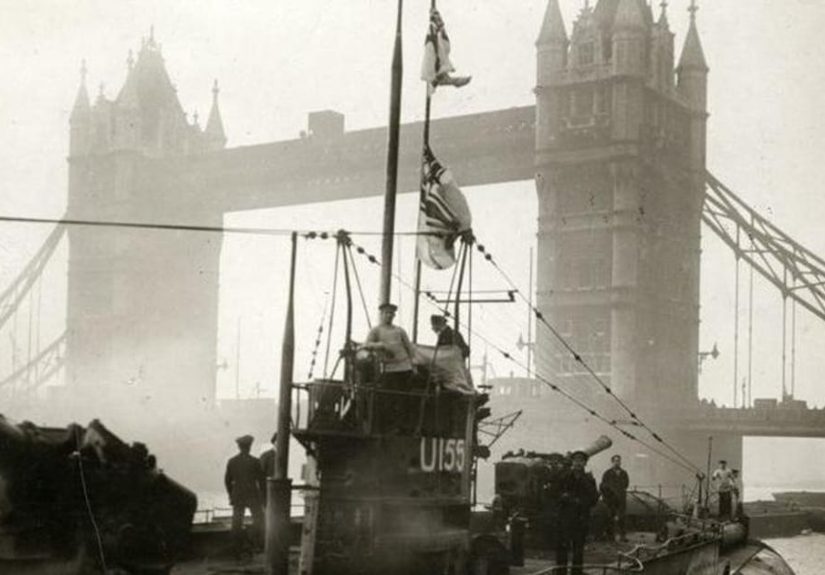
World War I wasn’t just trenches and mud; it was also a high-tech arms race for its time. Tanks, aircraft, submarines, machine guns, and advanced artillery all leaped forward under the pressure of war.
These technologies didn’t stay on the battlefield. Aviation research, for instance, accelerated commercial flight. Submarine warfare changed naval strategies and international law. The idea that technological innovation can swing the balance of power and that civilian industries and universities should feed the military R&D pipeline became a permanent part of modern life.
10. Chemical Weapons and International Bans
Poison gas was one of WWI’s most terrifying innovations. Chlorine, phosgene, and mustard gas caused horrific injuries and long-term health issues, even when they didn’t kill outright.
The revulsion sparked by gas attacks led to some of the earliest international agreements restricting weapons of mass destruction. Conventions and treaties banning chemical warfare set a precedent for later bans on biological and nuclear weapons. When you hear modern news about “chemical weapons conventions,” you’re hearing the echo of Ypres and the gas masks of WWI.
11. Modern Medicine: Blood Banks, Surgery, and Rehab
The massive number of wounded soldiers forced medical professionals to innovate quickly. The war saw the development and scaling-up of blood transfusion services, mobile X-rays, better triage systems, antiseptic techniques, and reconstructive surgery including early plastic surgery for disfigured faces.
Rehabilitation centers, prosthetics, and long-term care for veterans also expanded. Today’s emergency medicine procedures, trauma care protocols, and reconstructive surgeries carry the fingerprints of WWI doctors desperately trying to save lives in field hospitals.
12. Mental Health Awareness: From “Shell Shock” to PTSD
Before WWI, psychological trauma from combat was often dismissed as weakness or cowardice. During the war, the sheer number of soldiers suffering breakdowns introduced the term “shell shock” into public vocabulary.
Over time, this led to deeper study of combat trauma, eventually evolving into the modern diagnosis of post-traumatic stress disorder (PTSD). Current conversations about mental health, from veterans’ care to workplace stress, are built on a century of research that began with those shaking, haunted soldiers in WWI trenches.
13. Mass Media, Propaganda, and the Spin Cycle
World War I was one of the first conflicts where governments used mass media systematically to shape public opinion. Posters, newspapers, films, and speeches were coordinated to boost morale, encourage enlistment, and demonize the enemy.
That wartime propaganda machine pioneered techniques still used in modern marketing and political communication: emotional appeals, simplified narratives, catchy slogans, and visual branding. Whenever you scroll past a sharply targeted political ad or a “We can do it” style campaign, you’re seeing descendants of WWI-era messaging.
14. The Culture of Remembrance: Monuments and Memorial Days
More than 16 million people died in World War I, and communities everywhere grappled with how to process that loss. The result was an unprecedented wave of memorials, monuments, and rituals of remembrance from local monuments listing the dead to national ceremonies on Armistice/Remembrance Day.
Our modern habits of public commemoration silent minutes, national days of remembrance, and large memorials in city centers were deeply shaped by the need to mourn the Great War.
15. Changes in Family Life and Gender Norms
WWI left literal and emotional holes in families. Many children grew up without fathers or with parents struggling with physical or psychological wounds. At the same time, women who had managed households, finances, and jobs during the war often didn’t want to snap back into strictly traditional roles afterward.
These shifts helped normalize the idea of women working outside the home and sharing decision-making power. The modern family with more flexible gender roles and expectations reflects those upheavals.
16. The Global Economy and New Financial Systems
War is expensive, and World War I was spectacularly so. Governments borrowed heavily, printed money, and restructured tax systems to pay for the conflict. Debts, reparations, and inflation shaped international finance for decades after the armistice.
The war also accelerated the shift of economic influence toward the United States and pushed nations to coordinate more closely on trade and monetary policy. Today’s global economic institutions and the idea that financial crises can ripple worldwide owe a lot to the lessons learned from the post-WWI economic chaos.
17. Science, Technology, and the “Military–Innovation Pipeline”
WWI showed that science and technology weren’t just helpful in war they were decisive. Governments partnered with universities and private companies to develop better weapons, communications equipment, vehicles, and medical tools.
That pattern of military-funded innovation later gave us radar, jet engines, and eventually the internet. Whenever you hear about research grants tied to “national security,” you’re seeing the continuation of a trend that took off during the Great War.
18. How We Think About War Itself
Finally, World War I permanently changed how people imagine war. The scale of death and the grinding trench stalemate shattered romantic ideas of glorious battles. Writers, poets, and historians produced searing accounts that emphasized trauma, futility, and moral ambiguity.
Modern skepticism toward war the instinct to question motives, weigh costs, and worry about unintended consequences took shape in the aftermath of WWI. Our cultural vocabulary of “quagmires,” “forever wars,” and “no more war” marches owes a huge debt to those disillusioned veterans and observers.
Reflections: Why WWI Still Matters in Daily Life
From time zones and passports to vaccines and voting rights, the First World War acts like a hidden operating system running in the background of modern life. You might not think about it every day, but its code is everywhere.
The war didn’t just redraw maps; it rewired institutions, reshaped expectations, and showed how deeply connected the world had become. In many ways, the “modern era” with its global media, interdependent economies, and powerful national states begins in the trenches, factories, and hospital wards of 1914–1918.
500-Word Experience Section: Imagining Everyday Life in a World War I Legacy
It’s one thing to list the legacies of World War I. It’s another to feel them. To really sense how the Great War still shadows ordinary life, imagine a single day and trace how often its fingerprints show up.
You wake up to an alarm on your phone that’s synced to a standardized national time zone a system reinforced during WWI so railroads, factories, and military units could coordinate precisely. On certain days of the year, you may grumble about changing the clocks for Daylight Saving Time, a policy widely adopted during the war to save fuel and stretch daylight for work.
At breakfast, you scroll through the news. Headlines debate international alliances, sanctions, and peacekeeping missions. The logic behind those institutions grows from the post-WWI conviction that unregulated rivalries between great powers can spiral into disaster. That idea pushed governments to create forums where nations could argue with words first instead of artillery.
Maybe you pass a local war memorial on your commute: a stone monument with names etched in neat rows. It might feel like background scenery, but a century ago, that list represented personal grief for almost every family in the area. The way we publicly honor service and sacrifice parades, ceremonies, national moments of silence took shape in the aftermath of the Great War’s mass casualties.
At work or school, women and men share spaces that WWI helped open up. Women who entered factories, offices, and transport jobs during the war didn’t all go back home afterward. Their presence in public life strengthened arguments for equal political rights, including the vote. When you attend a meeting led by a woman CEO, vote for a woman candidate, or take a class from a woman professor, you’re living in a world partly built by wartime necessity turning into long-term change.
Later, you might visit a doctor or mental health professional. Modern emergency care blood banking, surgery techniques, triage systems matured rapidly during WWI. So did our understanding of psychological trauma. The language of PTSD, anxiety, and depression has its roots in attempts to make sense of “shell shock” among veterans. Each time someone seeks therapy or receives trauma-informed care, it reflects knowledge first wrestled from the chaos of trench warfare and front-line hospitals.
Perhaps you travel for a vacation or business trip. You dig out your passport, pass through security, and answer a few questions at border control. Those routines, now almost boring, were shaped by wartime worries about spies, deserters, and smuggling. The modern passport system was essentially standardized in the postwar years, turning your identity document into a key that works (or doesn’t) around the world.
Even your entertainment choices are touched by WWI. War novels, movies about disillusioned soldiers, political thrillers built around secret treaties and shifting alliances all draw on narrative patterns born from the Great War’s confusion and heartbreak. The idea that war is tragic, morally messy, and psychologically scarring, rather than glorious and simple, became mainstream through the literature and art of that period.
By the time you go to bed, you’ve navigated a world of passports, time zones, healthcare systems, democratic institutions, and international news all shaped in some way by a conflict that ended more than a hundred years ago. World War I may be “history,” but it’s also infrastructure: invisible, essential, and very much alive in how we organize our societies and imagine our future.
Conclusion
World War I rarely gets top billing in popular culture, but its impact is everywhere you look. It transformed borders and economies, accelerated technology and medicine, reshaped gender roles, and permanently altered how we think about war, trauma, and global responsibility.
The next time you check your passport, vote in an election, scroll past photos of war memorials, or read about international peace talks, remember: you’re seeing the living legacy of a conflict that promised to be “the war to end all wars” and instead became the war that quietly defined the modern world.