Table of Contents >> Show >> Hide
- Why bother with toe work?
- Quick safety checklist (aka “keep it helpful, not heroic”)
- The 19 toe stretches and exercises
- 1) Seated Toe Extension Stretch (the “toe pull-back”)
- 2) Big Toe Up/Down + Gentle Circles
- 3) Toe Splay (spread ’em wide)
- 4) Toe Squeeze (make a “toe fist,” then release)
- 5) Toe Raise–Point–Curl Trio
- 6) Towel Scrunches (toe curls)
- 7) Marble Pickups (tiny-gym for toes)
- 8) Toe Piano (lift one toe at a time)
- 9) Toe Yoga: Big Toe Press
- 10) Toe Yoga: Four-Toe Press
- 11) Foot Doming (Short-Foot Exercise)
- 12) Resisted Toe Flexion (band curls)
- 13) Resisted Toe Extension (band lifts)
- 14) Plantar Fascia Focus Stretch (cross-leg toe pull)
- 15) Bottom-of-Foot + Toe Stretch (toes pressed into the ground)
- 16) Toe Squat / Toe Tuck Stretch (the “oh wow, my toes exist”)
- 17) Golf Ball / Tennis Ball Roll (sole + toe base massage)
- 18) Toe Walks (tiptoe stroll)
- 19) Heel Walks (toes up, heels down)
- Pick a routine (so you actually do it)
- When to see a professional
- Conclusion
Your toes are basically the unsung interns of your body: they show up early, do all the tiny detail work,
and only get noticed when something goes wrong (usually in the middle of a grocery store aisle).
The good news? A little toe TLC can go a long way for comfort, balance, and foot function.
This guide walks you through 19 practical toe stretches and strengthening exercises you can do at homemany with
nothing more than a towel, a rubber band, or a suspiciously brave handful of marbles. You’ll also get simple
routines, progressions, and “please don’t do that” tips so you can help your toes without angering them.
Why bother with toe work?
Toes help you balance, stabilize your arches, and push off the ground when you walk or run. When toe mobility or
strength is limitedthink stiff big toe, cramping, or toes that don’t like to spreadyour body often “cheats” by
shifting load elsewhere. That can feel like achy feet, tired calves, or the classic “why does my arch hate me today?”
situation.
Toe exercises are commonly recommended for problems like toe cramps, hammertoes, bunion irritation, and plantar
fascia discomfortusually as part of a broader plan that includes footwear changes, gradual activity, and sometimes
professional care. The goal isn’t to become a toe acrobat; it’s to restore comfortable motion and build small-muscle
endurance where it matters.
Quick safety checklist (aka “keep it helpful, not heroic”)
- Use a “gentle stretch” feeling, not sharp pain. Mild tension is fine; stabbing, burning, or numbness is not.
- Move slowly. No yanking, no bouncing, no trying to “crack” your toes like glow sticks.
- Start small. If you’re cramp-prone, begin with light range-of-motion and short holds, then build up.
- Skip these if you have a fresh injury (fracture, severe sprain), a new wound, or a recent surgeryfollow your clinician’s plan instead.
- If you have diabetes, neuropathy, poor circulation, or persistent swelling, check with a clinician before starting a new foot routine.
The 19 toe stretches and exercises
Do these barefoot or in socks on a non-slip surface. If one move feels great and another feels terrible, that’s normal.
Keep the winners, modify or skip the grumps.
1) Seated Toe Extension Stretch (the “toe pull-back”)
Best for: tight toes, stiff forefoot, plantar fascia tension.
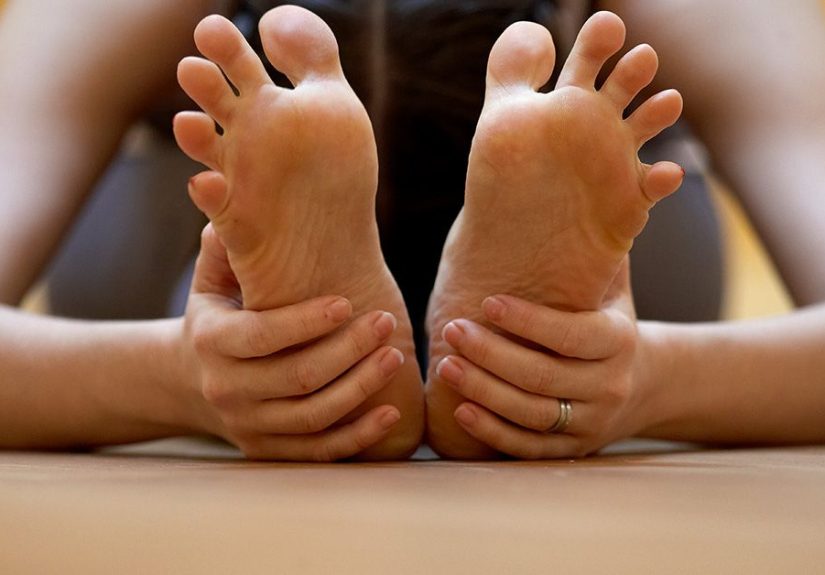
- Sit and cross one ankle over the opposite knee.
- Hold the base of your foot with one hand.
- With the other hand, gently pull your toes back toward your shin until you feel a stretch under the toes/ball of foot.
- Hold 20–30 seconds. Breathe like you mean it.
Do: 2–3 rounds per foot.
2) Big Toe Up/Down + Gentle Circles
Best for: big toe stiffness, “push-off” discomfort, tight shoes aftermath.
- Sit and stabilize your foot with one hand.
- With the other hand, gently move the big toe up, then downslowly.
- Add small, controlled circles if it feels comfortable.
Do: 8–10 reps each direction, 1–2 sets.
Tip: If side-to-side motions feel pinchy at the joint, stick to up/down and tiny circles.
3) Toe Splay (spread ’em wide)
Best for: toe mobility, bunion irritation from crowding, “my toes forgot they can separate.”
- Sit or stand with feet flat.
- Spread all toes apart as far as you comfortably can.
- Hold 3–5 seconds, then relax.
Do: 10 reps per foot.
Make it harder: loop a light rubber band around your toes for resistance.
4) Toe Squeeze (make a “toe fist,” then release)
Best for: cramping, toe control, waking up intrinsic foot muscles.
- Press toes down and “squeeze” them toward each other (like you’re gripping sand).
- Hold 2–3 seconds.
- Release and spread toes gently.
Do: 10–12 reps.
5) Toe Raise–Point–Curl Trio
Best for: toe cramps, hammertoe tendencies, overall toe coordination.
- Raise: keep toes on the floor and lift your forefoot/arch slightly (or lift toes while keeping the ball of the foot downchoose what feels smooth).
- Point: point toes forward (plantarflex) like you’re reaching for the end of the bed.
- Curl: curl toes under gently.
- Hold each position about 5 seconds.
Do: 10 cycles.
6) Towel Scrunches (toe curls)
Best for: arch support muscles, toe strength, foot fatigue.
- Place a small towel on the floor.
- Keeping heel down, scrunch the towel toward you using only your toes.
- Reset towel and repeat.
Do: 10–20 scrunches per foot.
Make it harder: place a light object on the far end of the towel.
7) Marble Pickups (tiny-gym for toes)
Best for: toe dexterity, intrinsic foot strength, coordination.
- Put 10–20 marbles (or small objects) on the floor with a bowl nearby.
- Pick up one at a time using your toes and drop into the bowl.
- Switch feet.
Do: 10–20 pickups per foot.
8) Toe Piano (lift one toe at a time)
Best for: toe independence, motor control, “my toes move as one unit.”
- Foot flat on the floor.
- Try lifting only the big toe, keeping the others down.
- Then lift the four smaller toes, keeping the big toe down.
- If you can, lift toes one-by-one like you’re playing a very quiet concert.
Do: 6–10 reps each pattern.
9) Toe Yoga: Big Toe Press
Best for: balance support, running/walking push-off, foot stability.
- Keep all toes long and relaxed.
- Press the big toe gently into the floor while the other four toes stay lifted (as best you can).
- Hold 3 seconds, relax.
Do: 8–10 reps per foot.
10) Toe Yoga: Four-Toe Press
Best for: arch control, toe coordination.
- Lift the big toe while pressing the other four toes down.
- Hold 3 seconds, relax.
Do: 8–10 reps per foot.
11) Foot Doming (Short-Foot Exercise)
Best for: arch strength, “collapsed” feeling feet, stability.
- Foot flat, toes relaxed (don’t curl them).
- Gently draw the ball of the foot toward the heel to “lift” the arch slightly.
- Hold 3–5 seconds, then release.
Do: 8–12 reps, 1–2 sets.
Common mistake: toe curling. Keep toes longthink “arch elevator,” not “toe claw.”
12) Resisted Toe Flexion (band curls)
Best for: strengthening toe flexors without gripping the floor.
- Loop a light resistance band over the toes and anchor the other end (or hold it).
- Curl toes down against the band’s pull.
- Return slowly.
Do: 10–15 reps, 1–2 sets.
13) Resisted Toe Extension (band lifts)
Best for: balancing toe strength (especially if you “claw” a lot).
- Anchor a band under your foot, loop it over the top of your toes.
- Lift toes upward against resistance.
- Lower slowly.
Do: 10–15 reps, 1–2 sets.
14) Plantar Fascia Focus Stretch (cross-leg toe pull)
Best for: arch tightness, morning heel/arch stiffness.
- Sit and cross one ankle over the opposite knee.
- Pull toes back toward your shin until you feel the arch stretch.
- Hold for 3–5 deep breaths, then relax.
Do: 2–3 rounds per side.
15) Bottom-of-Foot + Toe Stretch (toes pressed into the ground)
Best for: toe and sole flexibility, gentle “wake-up” stretch.
- Stand with feet together or hip-width.
- Step one foot back so the heel lifts and the toes press into the floor.
- Feel a gentle pull along the bottom of the foot and toes.
- Hold 20–30 seconds, switch sides.
16) Toe Squat / Toe Tuck Stretch (the “oh wow, my toes exist”)
Best for: toe joint extension, tight toe fronts (often from stiff shoes).
- Kneel or stand and tuck toes under so the pads of toes press into the floor.
- Sit back slightly (or keep hands on a chair for support).
- Hold 10–20 seconds, come out slowly.
Do: 2–3 gentle holds.
Modify: do it with hands on a counter so you control the load.
17) Golf Ball / Tennis Ball Roll (sole + toe base massage)
Best for: foot cramping, arch tightness, general “my feet worked overtime.”
- Place a golf or tennis ball under the ball of your foot.
- Roll slowly from the toe base toward mid-arch and back.
- Pause on tender spots and breathe.
Do: 1–2 minutes per foot.
18) Toe Walks (tiptoe stroll)
Best for: toe and calf endurance, foot stability.
- Stand tall, hold a wall or chair if needed.
- Walk forward on your tiptoes for 10–20 steps.
- Rest, repeat.
Do: 2–3 passes.
19) Heel Walks (toes up, heels down)
Best for: balancing foot muscles, shin/ankle control.
- Lift toes up so you’re walking on heels.
- Take 10–20 small steps.
- Keep it controlledno speed-walking like you’re late for a meeting.
Do: 2–3 passes.
Pick a routine (so you actually do it)
The 5-minute “Desk-to-Feet Reset”
- Toe splay (10 reps)
- Toe piano (6 reps each pattern)
- Towel scrunches (10 scrunches)
- Seated toe extension stretch (2 holds of 20 seconds)
The “Runner / Walker Push-Off Builder” (8–10 minutes)
- Toe yoga (big toe press + four-toe press, 8 reps each)
- Foot doming (10 reps)
- Toe walks (2 passes)
- Ball roll (1 minute per foot)
The “Cramp Calmer” (when toes are being dramatic)
- Toe raise–point–curl trio (6–8 cycles)
- Toe squeeze (10 reps)
- Gentle toe extension stretch (2 holds of 20 seconds)
- Short, easy walk for blood flow (2–5 minutes)
When to see a professional
Toe work is great for everyday stiffness and mild discomfort. But it’s time to get medical guidance if you have
persistent pain that doesn’t improve after 2–3 weeks, significant swelling, numbness/tingling, an obvious deformity
getting worse, signs of infection, inability to bear weight, or a recent injury. Also, if you suspect a condition
like a fracture, gout flare, or severe arthritis, skip the DIY experiment and get evaluated.
Conclusion
Strong, mobile toes support the rest of your foot like a good foundation supports a house: you don’t think about it
until it’s not doing its job. Try a handful of the exercises above, pick a routine you’ll actually repeat, and
build gradually. Your future selfwalking, running, or just standing in linewill appreciate the upgrade.
of Real-World Toe Experiences (What People Notice)
Here’s the funny thing about toe exercises: most people start them because of a “big” problem (pain, cramps, or
stiffness), but the first improvements often show up in tiny, everyday moments. People commonly report that their
feet feel less “worked” at the end of the dayespecially if they stand a lot, wear tight shoes, or bounce between
supportive sneakers and fashion footwear that looks amazing but treats toes like sardines.
One frequent experience is the “brain-to-toe connection” reboot. At first, toe yoga can feel impossiblelike your
big toe and the other four formed a union and negotiated to move only as a single unit. With a week or two of
practice, many people notice they can separate the movements a little more. That small change often translates to a
steadier feeling when balancing on one leg, walking downstairs, or pushing off during brisk walks.
Another common pattern: the towel scrunch seems easy… until it isn’t. People are often surprised by how quickly the
bottom of the foot gets tired, even with just 10 scrunches. The “burn” is usually the small intrinsic muscles doing
their job. After a couple of weeks, the same folks tend to notice they can do more reps without cramping or
compensating by gripping with the whole leg. It’s not glamorous progress, but it’s very real.
If someone deals with morning arch stiffness, they often find that the seated toe extension stretch becomes a
favorite because it’s quick and measurable: pull toes back, feel the line of tension under the foot, breathe, and
stand up feeling a little less creaky. People who walk a lot may also like ball rolling because it’s the rare
“exercise” that feels like a reward. (Pro tip from the real world: keep the pressure moderate. If you grind into
pain, your foot may tense up and you’ll lose the relaxing effect.)
Toe splay and toe separators are another “surprise win” category. People often describe an initial weird sensation
of space between toesalmost like the foot is wearing a fancy new outfit. Over time, spreading drills can make
shoes with a wider toe box feel noticeably more comfortable, and some people become more aware of how much certain
shoes compress their toes. That awareness alone can reduce flare-ups: they start choosing toe-friendly footwear for
long days and saving the narrow stuff for short stints.
The biggest shared lesson? Consistency beats intensity. People who do a few minutes most days tend to do better than
those who go all-in once a week and then limp away from their “toe bootcamp.” Keep it gentle, keep it regular, and
let your toes slowly remember what they were built to do: move, spread, stabilize, and help you get where you’re
goingwithout throwing a tantrum.