Table of Contents >> Show >> Hide
- What “Evergreen Groundcover” Really Means (So You’re Not Mad in February)
- How to Choose the Right Groundcover (A 2-Minute Reality Check)
- 21 Evergreen Groundcovers (Organized for Real Gardens and Real People)
- Sun-Loving, Dry-Tolerant, Rock-Garden Ready
- Flower-Covered Carpets for Cottage and Pollinator Gardens
- Woodland Shade Champions (Dry Shade Included)
- 11) Japanese Pachysandra (Pachysandra terminalis)
- 12) Allegheny Spurge (Pachysandra procumbens)
- 13) Barrenwort (Epimedium × perralchicum ‘Frohnleiten’)
- 14) Bigroot Geranium (Geranium macrorrhizum)
- 15) Coral Bells / Hairy Alumroot (Heuchera villosa and hybrids)
- 16) Wintergreen / Teaberry (Gaultheria procumbens)
- Evergreen Texture for Modern Landscapes (Clean Lines, No Fuss)
- Native-Forward and Wildlife-Friendly (Without Looking “Wild”)
- Planting Tips That Make Groundcovers Actually Work
- of Real-World Groundcover “Experience” (What Gardeners Learn the Fun Way)
- Conclusion
If your garden had a “lazy-but-still-looks-amazing” setting, evergreen groundcovers would be the button.
They’re the living carpet that can fill bare spots, soften hard edges, hold soil on slopes, and make your yard
look intentionally designedeven when you’re just trying to keep weeds from auditioning for a starring role.
This guide rounds up 21 evergreen (or reliably semi-evergreen) groundcovers that fit nearly every vibe:
modern minimal, cottage chaos (the good kind), woodland shade, rock garden, pollinator paradise, and even
“I just want something green that won’t argue with me.”
What “Evergreen Groundcover” Really Means (So You’re Not Mad in February)
“Evergreen” can be wonderfully literalor a little… situational. Many groundcovers stay green year-round in
mild-winter regions, but turn “semi-evergreen” (partly brown or dormant) where winters are harsher. That’s not
failure; that’s botany plus weather.
The goal is consistency: plants that keep coverage, protect soil, and bounce back quicklyso your beds don’t
look like a scene from a gardening crime documentary every winter.
How to Choose the Right Groundcover (A 2-Minute Reality Check)
1) Match the plant to the site, not the site to the plant
If you pick a shade-lover for a scorching driveway edge, it won’t “toughen up.” It will quietly decline while
you swear you watered it. Start with your light level (full sun, part sun, shade), then your soil moisture (dry,
average, damp), then your patience level.
2) Decide what job you want it to do
- Weed control: dense, fast coverage (with good boundaries).
- Erosion control: spreading roots or mats that hold soil on slopes.
- Stepping-stone/paver gaps: low growers that don’t mind a little foot traffic.
- Winter interest: evergreen leaves, berries, or winter blooms.
3) Respect the “spreads fast” label
Some groundcovers are enthusiastic. In the right place, that’s a feature. In the wrong place, it’s a three-year
relationship with your shovel. If you live near natural areas, prioritize natives or well-behaved selections, and
be extra cautious with plants known to spread aggressively in parts of the U.S.
21 Evergreen Groundcovers (Organized for Real Gardens and Real People)
Sun-Loving, Dry-Tolerant, Rock-Garden Ready
1) Creeping Thyme (Thymus serpyllum)
A classic for sunny spots and paver cracks, creeping thyme forms aromatic mats and can handle dry, lean soil.
In mild winters it stays green; in colder climates it may look less thrilled until spring.
- Best for: stepping stones, rock gardens, edging, sunny slopes
- Light: full sun
- Pro tip: sharp drainage is non-negotiablethink gritty, not swampy.
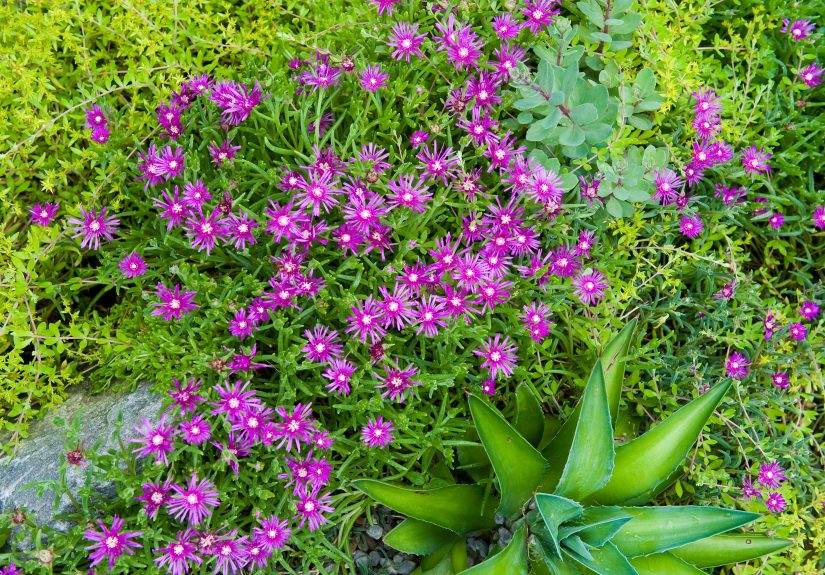
2) Ice Plant (Delosperma cooperi)
This succulent groundcover brings neon-bright flowers and a tidy spreading habit in warm-winter regions. Farther
north, it can be semi-evergreen and may not be reliably hardy everywhereso it’s best where winters don’t play
hardball.
- Best for: hot, sunny beds; xeriscapes; rock gardens
- Light: full sun
- Pro tip: overwatering is how you “love it to death.” Let it dry between watering.
3) Two-Row Stonecrop (Sedum spurium)
Sedums are the poster plants for “low water, high payoff.” Sedum spurium spreads by rooting where stems touch
soil and likes well-drained, even poor, soils. Great coverage, minimal drama.
- Best for: sunny borders, tough strips, green roofs, rock gardens
- Light: full sun to light shade
- Pro tip: if your soil stays wet, fix drainage or choose something else.
4) Creeping Juniper (Juniperus horizontalis)
If you want evergreen coverage that laughs at wind and cold, creeping juniper is a top-tier choice. It’s a
low, procumbent evergreen shrub that handles rocky, sandy sites and stabilizes slopes beautifully.
- Best for: slopes, foundations, coastal-ish exposure, low-maintenance structure
- Light: full sun
- Pro tip: give it space; it’s not a “tiny accent,” it’s a “living blanket.”
5) Bearberry Cotoneaster (Cotoneaster dammeri ‘Coral Beauty’)
A dense, prostrate evergreen shrub with a spreading habit that works on banks and walls. It’s popular for
coverage and berries, but check local guidancesome cotoneasters can be problematic in certain regions.
- Best for: slopes, cascading over walls, evergreen structure
- Light: full sun to part shade
- Pro tip: prune lightly to keep edges clean and prevent it from swallowing neighbors.
6) Candytuft (Iberis sempervirens)
White spring flowers, tidy mounds, and a crisp look that fits modern beds and cottage borders alike. In warm
climates it’s evergreen; in colder areas it can be semi-evergreen and may look a bit scruffy after rough winters.
- Best for: edging, rock garden pockets, “clean lines” gardens
- Light: full sun to part sun
- Pro tip: shear lightly after bloom to keep it compact and avoid legginess.
Flower-Covered Carpets for Cottage and Pollinator Gardens
7) Creeping Phlox / Moss Phlox (Phlox subulata)
This is the spring fireworks show you can plant. Creeping phlox forms a low mat, spreads nicely, and blooms
heavily in spring. Leaves often retain some green through winter, especially in milder conditions.
- Best for: sunny borders, slopes, rock gardens, cottage gardens
- Light: full sun
- Pro tip: it loves dry-ish, well-drained soil once establishedavoid soggy sites.
8) Cheddar Pinks (Dianthus gratianopolitanus)
A compact, fragrant bloomer with a tidy, mat-forming habit. Dianthus brings that “little tuft of evergreen
blue-green foliage” look that reads polished all year, then throws flowers in late spring.
- Best for: borders, rock gardens, small-space beds, cottage style
- Light: full sun
- Pro tip: deadhead to extend bloom and keep the plant looking sharp.
9) Bugleweed (Ajuga reptans)
Ajuga forms dense carpets, often with dramatic foliage colors, and sends up spring flower spikes. It’s
semi-evergreen in many climates and can spread quicklygreat for filling space, less great if you like strict
boundaries.
- Best for: part shade beds, underplanting, quick coverage
- Light: sun to shade (best color often in part sun)
- Pro tip: avoid overly wet conditions to reduce crown rot issues.
10) Spotted Deadnettle (Lamium maculatum)
Lamium is a shade-garden workhorse: low, spreading, and brightening dark corners with silver-variegated leaves.
It’s a mat-former that roots as it goes, making it useful for coverage under shrubs.
- Best for: shade borders, underplanting, woodland edges
- Light: part shade to shade
- Pro tip: choose named varieties for better behavior and stronger garden performance.
Woodland Shade Champions (Dry Shade Included)
11) Japanese Pachysandra (Pachysandra terminalis)
One of the most widely used evergreen groundcovers for shade, pachysandra creates a uniform green carpet in
part shade to full shade. It spreads by rhizomes and appreciates good air circulation.
- Best for: deep shade beds, under trees (with decent soil prep)
- Light: part shade to full shade
- Pro tip: avoid overhead watering to reduce leaf disease issues; thin crowded patches.
12) Allegheny Spurge (Pachysandra procumbens)
Want a native-leaning pachysandra alternative? Allegheny spurge is a woodland groundcover with handsome mottled
leaves and a spreading (but not frantic) habit. It looks right at home under deciduous trees.
- Best for: naturalistic woodlands, shaded foundations, under trees
- Light: part shade to shade
- Pro tip: let leaf litter act as mulchthis plant appreciates “forest-floor” conditions.
13) Barrenwort (Epimedium × perralchicum ‘Frohnleiten’)
Epimedium is what you plant when you’re tired of fighting dry shade. It forms clumps that knit together over
time, with spring flowers and tough, handsome foliage that holds up under trees once established.
- Best for: dry shade, under shallow-rooted trees, woodland paths
- Light: part shade to shade
- Pro tip: a late-winter cleanup (removing old leaves) makes spring growth look extra fresh.
14) Bigroot Geranium (Geranium macrorrhizum)
A semi-evergreen, weed-resistant groundcover with aromatic leaves that color up in fall. It spreads into a thick
mat and plays well in mixed plantings where you want coverage without a monoculture look.
- Best for: dry shade, under shrubs, low-maintenance massing
- Light: sun to part shade
- Pro tip: it’s one of the easiest “bridge plants” between sun and shade beds.
15) Coral Bells / Hairy Alumroot (Heuchera villosa and hybrids)
Heucheras form mounded clumps with evergreen to semi-evergreen foliage, depending on variety and climate.
Heuchera villosa is a North American native species known for strong garden performance in eastern regions,
often functioning like a leafy groundcover in masses.
- Best for: shade gardens, mixed borders, color-focused foliage design
- Light: part shade (morning sun, afternoon shade is a happy place)
- Pro tip: plant in well-drained soilcrowns hate sitting in winter wet.
16) Wintergreen / Teaberry (Gaultheria procumbens)
If you want evergreen leaves plus bright red berries, wintergreen is a charming woodland groundcover. It’s native
to eastern North America and spreads slowly into patchesmore “polite roommate” than “couch-surfer takeover.”
- Best for: woodland gardens, acidic soils, winter interest plantings
- Light: filtered shade to part shade
- Pro tip: it prefers acidic, well-drained soil; if your soil is alkaline, it may sulk.
Evergreen Texture for Modern Landscapes (Clean Lines, No Fuss)
17) Mondo Grass (Ophiopogon japonicus)
Mondo grass creates a sleek, grass-like evergreen look and reads instantly “designed.” It forms clumps and
slowly spreads by rhizomes, making it a tidy choice for borders, pathways, and shade-to-part-shade beds.
- Best for: modern borders, underplanting, walkway edges
- Light: part shade to shade (tolerates more sun with moisture)
- Pro tip: use it as a living “mulch line” around shrubs for a crisp, finished edge.
18) Creeping Lilyturf (Liriope spicata)
Liriope spicata is tough, adaptable, and widely usedespecially where you want coverage under trees or on
slopes. It’s evergreen in warmer regions and can brown back in colder winters, but still holds soil and coverage.
- Best for: banks, tree roots, low-maintenance massing
- Light: part shade to shade (tolerates sun with irrigation)
- Pro tip: edge it like you mean itrhizomes will wander if you let them.
19) Japanese Sedge ‘Evergold’ (Carex oshimensis ‘Evergold’)
For a softer, more refined “evergreen grass” look, ‘Evergold’ offers arching, variegated foliage that brightens
shade and looks great in contemporary plant palettes. Evergreen through most of its range; in colder spots,
it may need a late-winter cutback.
- Best for: modern shade gardens, containers, path edges
- Light: part shade
- Pro tip: it dislikes hot, humid summersgive it good air flow and avoid baking sites.
Native-Forward and Wildlife-Friendly (Without Looking “Wild”)
20) Bearberry / Kinnikinnick (Arctostaphylos uva-ursi)
A low evergreen shrub that forms a dense mat, bearberry is a great fit for sandy, rocky, or well-drained sites.
It offers spring flowers and berries, and once established it can be remarkably drought-tolerant.
- Best for: sunny slopes, sandy soils, coastal-style gardens, native plantings
- Light: full sun to part shade
- Pro tip: skip fertilizer; lean soil helps it stay compact and healthy.
21) Periwinkle (Vinca minor) Use With Caution
Vinca minor is popular because it’s evergreen, fast to root along trailing stems, and flowers in spring (often
with repeat blooms). But in parts of the U.S., it’s considered invasive and is best avoided near natural areas.
If you already have it, keep it contained with hard edging and regular trimming.
- Best for: contained shade beds where aggressive spread won’t escape
- Light: part shade to shade (tolerates sun with moisture)
- Pro tip: if you want a similar look with fewer worries, consider Allegheny spurge instead.
Planting Tips That Make Groundcovers Actually Work
Prep like you mean it
Groundcovers fail most often because they’re tossed onto compacted soil, sprinkled with hope, and expected to
perform miracles. Loosen soil, add organic matter where needed, and remove perennial weeds before planting.
A strong start means faster fill-in and fewer “why is this patch still bare?” moments.
Spacing is strategy
Tight spacing gives faster coverage but costs more. Wider spacing costs less but requires patience and better
weed control early on. If you’re planting a slope, slightly tighter spacing usually pays off because erosion
doesn’t wait for your plants to grow up.
Edge early, edge often
If you choose a spreading groundcover, install edging or define boundaries at planting time. It’s much easier to
guide a plant’s enthusiasm than to undo it later.
of Real-World Groundcover “Experience” (What Gardeners Learn the Fun Way)
Groundcovers look effortless in photos, but in real gardens they behave like any living thing: they love some
situations, tolerate others, and flat-out refuse a few. The most common lesson gardeners report is that the
“right plant, right place” rule matters more with groundcovers than with almost anything else. A shrub in the
wrong spot might limp along for a while. A groundcover in the wrong spot tends to either (1) thin out and invite
weeds to move in, or (2) spread like it just discovered it’s late for a meeting.
The second big lesson is that soil prep isn’t optional. When gardeners skip prep, groundcovers don’t form that
thick, weed-suppressing mat people are dreaming about. Instead, you get scattered plants separated by open soil
which weeds interpret as an engraved invitation. The fix is boring but effective: loosen soil, remove existing
roots and runners from perennial weeds, and add compost where drainage or structure needs help. Then water
consistently for the first season so roots go deep and coverage accelerates.
Another consistent “experience note” is that evergreen doesn’t always mean “looks perfect in winter.” It often
means “stays present.” Plants like candytuft, creeping phlox, and liriope can stay green in mild winters but
look ragged after freeze-thaw cycles or harsh winds. Gardeners who stay happiest are the ones who plan for a
quick late-winter cleanup: trim browned tips, rake out debris, and let spring growth reset the look. Ten minutes
of cleanup can make a bed look like it got a professional makeover.
People also learn that mixing textures is the secret to making groundcovers look designed rather than like a
green blanket tossed over everything. Pair fine textures (mondo grass, sedges, creeping thyme) with bold leaves
(heuchera, hellebores) or glossy evergreens (wintergreen). In modern landscapes, repeating one or two textures in
drifts creates that calm “architectural” vibe. In cottage gardens, combining a flowering mat (creeping phlox) with
evergreen mounds (candytuft or dianthus) keeps the border lively beyond bloom season.
Finally, there’s the containment lessonespecially with classic spreaders. Gardeners who choose vigorous
groundcovers and install strong edging early tend to love them. Gardeners who don’t… learn to love edging later.
If you want fast coverage, pick a plant that spreads, but also pick a boundary: a path, a bed edge, a mow strip,
or a hard border. Groundcovers aren’t trying to be naughty. They’re just doing their job with enthusiasm.
Conclusion
Evergreen groundcovers are one of the smartest ways to make a garden look fuller, cleaner, and more
low-maintenance year-round. The winning formula is simple: match the plant to your light and soil, pick a
groundcover that suits your garden style (and your tolerance for “spreading”), and give it a strong start with
decent prep and a clear edge. Do that, and you’ll get the kind of living carpet that makes your whole landscape
feel finishedwithout requiring you to become a full-time weed negotiator.