Table of Contents >> Show >> Hide
- Quick Jump
- Kitchen Countertop Organization Ideas
- 1) Create “Countertop Zones” (So Stuff Stops Migrating)
- 2) Corral the Daily Essentials on a Tray
- 3) Add a Two-Tier Counter Shelf (Hello, Vertical Space)
- 4) Install Under-Cabinet Hooks for Mugs (Free the Counter)
- 5) Use a Wall Rail System for Utensils, Towels, and Small Bins
- 6) Try a Magnetic Stove-Top Shelf for Spices (If You Have a Flat Surface)
- 7) Move Knives Off the Counter (Safely)
- 8) Build a “Hidden Appliance” Setup: Appliance Garage or Lift-Up Cabinet
- 9) Use a Slim Rolling Cart as a Countertop Extension
- Bathroom Countertop Decluttering Ideas
- Entryway & Drop Zone Counter Solutions
- Home Office & Desk Surface Storage
- Laundry & Utility Counter Organization
- Living Room & Sideboard Surfaces
- Bedroom & Vanity Surface Storage
- How to Make These Storage Ideas Actually Stick
- Real-World Experiences: What Happens When You Declutter Countertops (500+ Words)
- Conclusion
Countertops are basically magnets. Not for metaljust for stuff. Mail. Chargers. A mystery key. Three half-used candles
(because you’re “curating ambiance”). And somehow… a single Lego that exists only to find your bare foot.
The good news: you don’t need a full remodel to win the war on countertop clutter. You need two things:
vertical thinking (up the wall, under cabinets, inside doors) and smart corralling
(bins, trays, stations, and “homes” for the things that keep wandering out like rebellious teenagers).
Below are 21 practical, real-life storage ideas for kitchen counters, bathroom vanities, entry consoles, desks, laundry surfaces,
and every other flat area that’s secretly begging for mercy.
Kitchen Countertop Organization Ideas
Kitchen counter space is prime real estate. Treat it like beachfront property: only the VIPs get to stay.
Everything else needs a better address.
1) Create “Countertop Zones” (So Stuff Stops Migrating)
Pick 2–3 zones: Prep (keep it mostly empty), Cooking (oil, salt, utensils),
and Beverage (coffee/tea). When each category has a zone, random items look obviously out of place
which is exactly what you want.
- Example: A coffee zone gets the machine + canister + mugs; everything else goes in cabinets or drawers.
- Bonus: You’ll stop “setting things down for a second” and accidentally creating a museum exhibit.
2) Corral the Daily Essentials on a Tray
A tray is like a polite fence. It tells clutter, “You may exist, but only within these boundaries.”
Use it for oils, salt, pepper, and your most-used utensilsor for the coffee lineup.
- Choose a tray with a lip so bottles don’t slide around.
- One tray per zone keeps counters visually calmer and easier to wipe down.
3) Add a Two-Tier Counter Shelf (Hello, Vertical Space)
If you’re storing things on the counter, stack them smartly. A two-tier shelf/riser creates “another floor”
without taking extra surface area. Use it for spices, oils, canisters, or your morning mug lineup.
This is especially helpful in small kitchens where cabinet space is limited and you need your go-to items within reach
without turning the counter into an obstacle course.
4) Install Under-Cabinet Hooks for Mugs (Free the Counter)
Mugs on the counter look cozy until they become a ceramic traffic jam. Under-cabinet hooks move mugs upward and keep them grab-ready.
It’s a small change that instantly makes the countertop feel bigger.
- For renters: use removable adhesive hooks rated for the weight.
- Limit it to your everyday mugsseasonal “World’s Okayest Elf” mugs can live elsewhere.
5) Use a Wall Rail System for Utensils, Towels, and Small Bins
A rail system with hooks and containers turns blank wall space into storage. Hang utensils, a small basket for tea packets,
or a paper towel holder. This keeps frequently used items off counters while staying within arm’s reach.
It’s one of the cleanest ways to add kitchen storage without changing cabinetsespecially if you’re short on drawers.
6) Try a Magnetic Stove-Top Shelf for Spices (If You Have a Flat Surface)
If your stove has a metal back or a compatible surface, a magnetic shelf can hold spices and oils
without stealing counter space. It’s basically a “mini ledge” that keeps cooking essentials close.
- Keep it to heat-safe items and avoid anything that could melt or warp.
- Stick to a small set of “most used” spices for a tidy look.
7) Move Knives Off the Counter (Safely)
Knife blocks eat counter space. Two common alternatives:
a wall-mounted magnetic strip (great for visibility) or
a drawer knife organizer (great for a minimalist counter).
- Magnetic strip: mount near prep zone for quick access.
- Drawer organizer: keeps blades protected and counters clear.
8) Build a “Hidden Appliance” Setup: Appliance Garage or Lift-Up Cabinet
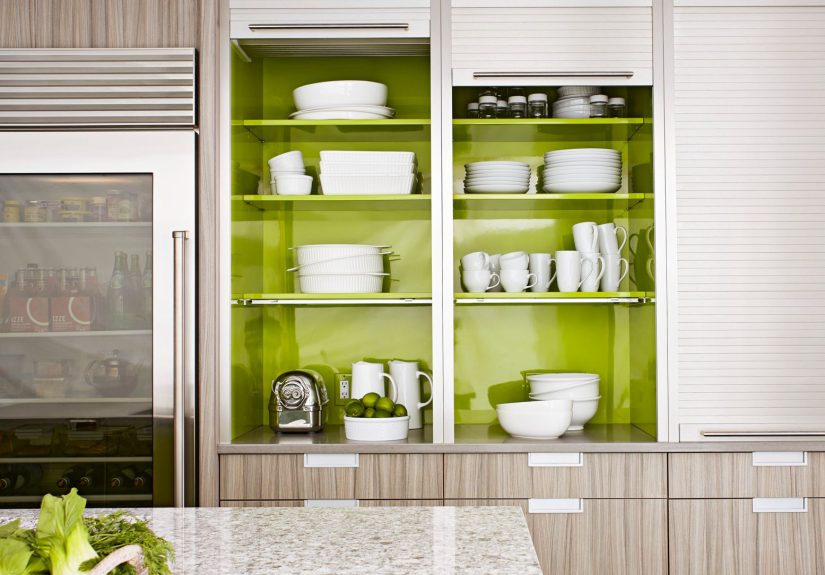
If you love appliances but hate looking at them, an appliance garage (a cabinet that hides gadgets with easy access)
is a game-changer. Store the toaster, blender, or mixer behind a doorbonus points if you can plug them in inside the cabinet.
No full remodel? A simple cabinet with a lift-up door and a power strip can mimic the same effect.
9) Use a Slim Rolling Cart as a Countertop Extension
A narrow cart can become a coffee bar, snack station, or baking supply towerfreeing up the counter without sacrificing convenience.
Roll it where you need it, tuck it away when you don’t.
- Example: Top shelf = coffee gear; middle = mugs/filters; bottom = snacks or extra canisters.
- Choose one with locking wheels so it doesn’t wander off during espresso time.
Bathroom Countertop Decluttering Ideas
Bathroom counters get cluttered fast because everything feels “daily.” The trick is separating true daily essentials
from “I used this once in 2023 and it still lives here.”
10) Put Everyday Items in a Vanity Tray (Not All Over the Vanity)
A tray makes skincare look intentional instead of chaotic. Keep your daily routine on one tray and store everything else
in drawers or under the sink.
- One tray = cleanser, moisturizer, SPF, deodorant, and maybe the one fancy serum you swear changed your life.
- If it doesn’t fit, it’s a cluenot a challenge.
11) Add a Two-Tier Counter Caddy for Small Bathrooms
When drawer space is limited, go vertical. A two-tier caddy holds cotton rounds, hair ties, and go-to products
while keeping the footprint small.
This works especially well in shared bathrooms where everyone needs a “lane” and the counter can’t handle group projects.
12) Mount Soap and Lotion Dispensers (Bye-Bye Bottle Crowd)
Counter bottles multiply like they’re on a mission. Wall-mounted dispensers keep soap, lotion, or even shampoo off the counter
and make cleaning around the sink easier.
- Great for kids’ bathrooms and guest baths.
- Bonus: fewer nearly-empty bottles hanging around for emotional support.
13) Use a Medicine Cabinet Like a Pro (Not a Storage Haunted House)
A medicine cabinet can replace counter clutter if you set it up intentionally:
add small bins inside for categories like “teeth,” “shaving,” and “daily skincare.”
- Magnetic strips inside can hold tweezers, nail clippers, and bobby pins.
- Clear mini containers prevent the “pile behind the mirror” phenomenon.
Entryway & Drop Zone Counter Solutions
The entry counter (or the nearest flat surface to your front door) is where mail and keys go to start a new life
as “a permanent installation.”
14) Create a Wall-Mounted Mail Station (So Paper Stops Camping Out)
Use a wall pocket, file sorter, or slim shelf with labeled slots: To Do, To File,
To Shred. When paper has a system, it stops taking over every surface.
- Open mail standing up. Sitting down is how you end up building a paper fortress.
- Keep a small shredder nearby if you canjunk mail disappears faster.
15) Use a “Landing Pad” Bowl + Key Hooks (One Combo, Two Wins)
Install hooks for keys and a small bowl/tray underneath for sunglasses, earbuds, or that one membership card
you always forget exists until you’re already in the parking lot.
The countertop stays clear because the drop zone is defined. Also, your future self will stop whispering,
“Where are my keys?” like it’s a dramatic movie trailer.
16) Add a Charging Drawer or Hidden Power Strip
Chargers are clutter factories. Instead of draping cords across counters, create a charging drawer (or a basket shelf)
with a power strip inside. Devices charge out of sight, and the counter stays free.
- Use cable clips to keep cords tidy and prevent “cord spaghetti.”
- Label cords if multiple people share the station. Peace treaties are optional but helpful.
Home Office & Desk Surface Storage
Desks are countertops with ambition. The goal is the same: keep the working surface open so your brain can breathe.
17) Use a Monitor Riser with Drawers (Instant Desktop Real Estate)
A monitor riser lifts your screen and adds storage underneath for notebooks, pens, sticky notes, and small tech.
It’s ergonomic and clutter-reducinglike a two-for-one deal your desk actually needs.
- Store “daily use” office supplies in the drawers, not in scattered cups.
- Keep only one pen cup on the surface if you must. One. Not a pen metropolis.
18) Hang a Pegboard or Grid Panel Above the Desk
Going vertical is the fastest way to reclaim desk space. A pegboard/grid panel can hold headphones, scissors,
charging cables, and small bins for stationery.
It’s also flexiblemove hooks and containers as your needs change (or as your hobbies multiply).
Laundry & Utility Counter Organization
Laundry counters love collecting half-empty detergent bottles and lonely dryer sheets. Let’s fix that.
19) Add an Over-Washer Shelf (So Supplies Leave the Counter)
A shelf above the washer/dryer holds detergent, stain remover, and baskets for clothespins or lint rollers.
You get counter space back and the room instantly looks more “laundry room” and less “chemical storage experiment.”
- Use clear bins for small items so they don’t disappear.
- Label baskets: “Stain,” “Delicates,” “Socks That Lost Their Soulmate.”
20) Use Wall Hooks + a Small Sorting System
Hooks for reusable bags, aprons, or cleaning gloves keep them off counters. Add a slim hamper sorter
(or stacking bins) so laundry doesn’t land on the nearest flat surface.
The best part: sorting becomes automatic, which means laundry day is slightly less of a plot twist.
Living Room & Sideboard Surfaces
Sideboards, console tables, and “that shelf by the couch” are prime clutter hotspots. They need boundarieskind boundaries.
21) Use Decorative Boxes and Baskets to Hide the Tiny Chaos
Remotes, matches, coasters, game controllers, and cables can live neatly in lidded boxes or baskets.
You keep the surface styled, while the “stuff” gets stored.
- Rule: One box for “TV things,” one basket for “charging things.”
- If a category doesn’t exist yet, that means it’s time to define one.
Bedroom & Vanity Surface Storage
Dressers and vanities are basically countertops in disguise. If they’re cluttered, the whole room feels messyeven if the bed is made.
Bonus Idea A) Use a Valet Tray for Daily Pocket Items
A small valet tray catches rings, watches, wallet, and earbuds in one spot. It looks intentional,
prevents “where did I put that?” panic, and keeps your dresser from becoming a random-item runway.
Bonus Idea B) Store Beauty Tools Vertically (So They Don’t Sprawl)
Hair tools and brushes sprawled across a vanity are a countertop clutter classic. Use a heat-safe canister,
vertical organizer, or drawer insert so everything stands upright and contained.
How to Make These Storage Ideas Actually Stick
Decluttering countertops isn’t about hiding everything you own. It’s about reducing decisions.
When your stuff has a home, your counter stops being the default.
- Keep the “daily” items visiblebut grouped and limited.
- Store the “weekly” items nearbyin a drawer, cabinet, or bin.
- Relocate the “rarely” itemshigh shelves, storage closets, or labeled bins.
- Set a reset habit: 2 minutes at night to return strays to their homes.
Real-World Experiences: What Happens When You Declutter Countertops (500+ Words)
Here’s the part nobody tells you: the hardest thing about decluttering countertops isn’t buying organizersit’s
changing the tiny daily behaviors that created the clutter in the first place. In real homes, the “mess” usually
isn’t laziness; it’s friction. You come in the door with five things in your hands, the counter is closest,
and your brain says, “Temporary!” (Spoiler: nothing is more permanent than temporary countertop storage.)
One common scenario: the kitchen counter becomes the unofficial mailroom. It starts innocenttwo envelopes and a coupon.
Then you add a school flyer, a receipt you might need, and a package return label you definitely need.
A week later, you’re living beside a paper dune. The fix that tends to work isn’t “try harder.” It’s a
wall-mounted sorter right where you drop things. People notice that when paper has a vertical home,
the counter stops feeling like the only option. And the moment you add one labeled slot called “Deal With This,”
your brain relaxes. It’s not ignoring the task; it’s containing it.
Another real-life pattern: the bathroom counter becomes a “routine sprawl zone.” Every product feels daily because
you see it daily. But when you build a tray-based routinejust the essentials for the morning and eveningthe
counter starts looking calm even if you still own the same amount of stuff. The tray acts like a stage: only the
main cast gets screen time. Everything else goes backstage (drawers, bins, under-sink storage). People often report
an unexpected benefit: cleaning becomes faster because you’re wiping around one tray instead of twelve loose bottles.
And that faster cleaning makes it more likely you’ll keep the system going. Momentum is underrated.
Kitchens have their own drama: small appliances. Many households keep the toaster, blender, air fryer, and stand mixer
out because they’re used “sometimes.” But “sometimes” is the sneakiest categoryit’s frequent enough to justify
staying out, but not frequent enough to deserve prime counter space. When people switch to an appliance garage
approach (even a simple cabinet zone with a power strip), the counter feels instantly bigger. The funny part is
that most folks don’t miss seeing appliances; they miss the convenience. So the winning setup is usually
“hidden but easy”a cabinet shelf you can reach without unloading ten other things, or a rolling cart that parks
near the cooking zone. Convenience is what keeps habits alive.
Home offices are where surface clutter turns into mental clutter. A desk covered in chargers, pens, sticky notes,
and random adapters creates a constant low-grade distraction. People who add a monitor riser with drawers often say
it feels like their desk got “bigger,” even when it literally didn’t. It’s the same surfacejust organized so the
eye isn’t tripping over visual noise. And the best experience-based tip here is simple: give every small item a
container with a name. “Cables.” “Writing.” “Shipping.” When you name the category, you stop making micro-decisions
about where something goes. You just put it where it belongs.
Finally, a truth from the trenches: the most successful countertop decluttering systems include a reset ritual.
Not a big one. Not a life overhaul. Just a tiny nightly sweeptwo minutes to put stray items back into zones, trays,
drawers, or baskets. People who stick to this don’t have “perfect homes.” They have a repeatable routine that prevents
the slow creep of clutter. And once you feel that clear-counter calm for a week, you’ll protect it like it’s your
favorite streaming password.
Conclusion
Decluttering countertops is less about hiding your life and more about designing it: creating zones, using vertical space,
and giving everyday items a home that’s easier than the counter. Start with one surfacejust oneand build momentum.
Your future self will thank you every time you make coffee without moving a pile of “temporary” stuff first.