Table of Contents >> Show >> Hide
- How this ranking works
- The ranking
- 22) Sharpay Evans (High School Musical)
- 21) Amber Von Tussle (Hairspray)
- 20) Meredith Blake (The Parent Trap)
- 19) Taylor Vaughan (She’s All That)
- 18) Big Red (Bring It On)
- 17) Chris Hargensen (Carrie)
- 16) Nellie Oleson (Little House on the Prairie)
- 15) Cordelia Chase (Buffy the Vampire Slayer)
- 14) Quinn Fabray (Glee)
- 13) Summer Roberts (The O.C.)
- 12) Georgina Sparks (Gossip Girl)
- 11) Maddy Perez (Euphoria)
- 10) The Ashleys (Recess)
- 9) Cheryl Blossom (Riverdale)
- 8) Alison DiLaurentis (Pretty Little Liars)
- 7) Nancy Downs (The Craft)
- 6) Tracy Flick (Election)
- 5) Courtney Shayne (Jawbreaker)
- 4) Blair Waldorf (Gossip Girl)
- 3) Chanel Oberlin (Scream Queens)
- 2) Heather Chandler (Heathers)
- 1) Regina George (Mean Girls)
- What these characters say about the “mean girl” trope
- of Real-Life Experiences: Surviving a Mean Girl Moment (Without Becoming One)
- Final thoughts
Every era gets the mean girl it deserves. Sometimes she’s a perfectly-coiffed queen bee with a burn book and a smile
that could cut glass. Sometimes she’s a “best friend” who compliments your outfit while quietly launching a social
coup in the group chat. And sometimesplot twistshe’s you, after two iced coffees and one too many “per my last email.”
This ranking isn’t about who’s the prettiest, richest, or most likely to win “Best Hair in a Humidity Crisis.”
It’s about a mix of cultural impact, creative cruelty, social power, quotability, and whether their meanness feels
like a costume, a coping mechanism, or a full-time job with benefits.
How this ranking works
- Power: Can they control a roomor a whole schoolwithout raising their voice?
- Damage: Are they petty, poisonous, or genuinely dangerous?
- Icon factor: Do we still reference them years later?
- Complexity: Are they more than a one-note bully?
- Comeuppance (or growth): Do they evolve, implode, or just… graduate into HR?
The ranking
22) Sharpay Evans (High School Musical)
Sharpay is what happens when ambition gets called “mean” because it wears pink and asks for what it wants. Yes, she’s
competitive. Yes, she’s theatrical. But her “villainy” is mostly insisting the show should be good and the
understudies should stop flirting on company time. Honestly? Theater kids have done worse for less.
21) Amber Von Tussle (Hairspray)
Amber is a classic “popular girl with a microphone” who treats kindness like it’s off-brand. She’s nasty, entitled,
and deeply threatened by anyone who doesn’t fit her narrow definition of “acceptable.” What makes her memorable is
how the story uses her meanness to spotlight bigger social uglinessand how fast her confidence crumbles when the
spotlight shifts.
20) Meredith Blake (The Parent Trap)
Meredith isn’t a teen queen beeshe’s the grown-up mean girl who brings “I’m not yelling, I’m projecting” energy to
a vineyard. Her crime is trying to delete kids from a family plan. She’s not the most vicious on this list, but she
earns a spot because she’s the blueprint for the “polite smile, private menace” archetype.
19) Taylor Vaughan (She’s All That)
Taylor is high school status anxiety in human form: stylish, sharp-tongued, and allergic to being upstaged. She’s
mean in a way that feels practicallike she’s defending a tiny kingdom made of popularity points. She’s not the
darkest villain here, but she’s painfully recognizable, which is its own kind of power.
18) Big Red (Bring It On)
Big Red’s meanness comes with a competitive edge and a trail of sabotage. She’s the kind of leader who smiles for
the yearbook and quietly sets the program on fire behind the scenes. She’s not around long, but the consequences of
her choices hang over everyone elsemean girl legacy, delivered like a booby-trapped pom-pom.
17) Chris Hargensen (Carrie)
Some mean girls rule through social finesse. Chris rules through cruelty, plain and loud. She’s not witty; she’s
ruthless. Her bullying isn’t “teen drama”it’s a match near gasoline. The character’s impact is less about style and
more about the terrifying truth: sometimes the meanest person is simply committed to being cruel.
16) Nellie Oleson (Little House on the Prairie)
If you think mean girls are a modern invention, Nellie would like a wordand she’d like it delivered by a servant.
She’s a vintage mean girl: spoiled, snobby, and convinced the universe is her personal stage. Her bite is often
played for moral lessons, but the entitlement is timeless (and exhausting).
15) Cordelia Chase (Buffy the Vampire Slayer)
Early Cordelia is the sharpest tongue at school, but what earns her rank is the arc: she’s mean, yes, but also
honest, funny, and eventually brave in a way that makes her more than a stereotype. She’s proof that “mean girl”
doesn’t have to be a life sentencesometimes it’s a starting point.
14) Quinn Fabray (Glee)
Quinn is the cheerleader mean girl with layersstatus, insecurity, pressure, and the desperate need to look
unbothered while her life is, in fact, very bothered. She can be cruel, especially when she’s protecting her image,
but the show lets us see how the crown weighs. She’s not always likable, but she’s rarely simple.
13) Summer Roberts (The O.C.)
Summer starts as the “popular girl” who can be dismissive and cutting, but she grows into someone with genuine heart
and self-awareness. Her early mean streak feels like social armoran accessory she eventually outgrows. She’s here
because she embodies a common truth: sometimes “mean” is just “immature with good eyeliner.”
12) Georgina Sparks (Gossip Girl)
Georgina isn’t just meanshe’s chaotic. She shows up like a plot twist in heels, detonates secrets, and leaves before
anyone can process what just happened. She’s less “queen bee” and more “social arsonist,” which makes her
unforgettable even when she’s morally indefensible.
11) Maddy Perez (Euphoria)
Maddy’s meanness is complicated: she’s bold, protective, and sometimes brutally dismissive, but the show positions
her inside a messy ecosystem of trauma, loyalty, and survival. She can be icy and intimidating, yet she’s also
emotionally raw. She’s not a cartoon villainshe’s a person who sometimes weaponizes charisma.
10) The Ashleys (Recess)
Sometimes mean girls come in a matching set. The Ashleys are childhood social hierarchy distilled into coordinated
outfits and synchronized judgment. They’re snobby, exclusionary, and hilariously committed to looking down on
everyone. Their meanness is “kid-safe,” but the vibe is accurate: cliques start early.
9) Cheryl Blossom (Riverdale)
Cheryl is a Southern Gothic mean girl dropped into a comic-book fever dream. She’s imperious, dramatic, and capable
of extraordinary crueltyand extraordinary loyaltysometimes in the same episode. What makes her iconic is the sheer
intensity: she doesn’t enter a room, she arrives like a thunderclap in designer boots.
8) Alison DiLaurentis (Pretty Little Liars)
Alison’s power comes from mystery and manipulation. She’s the friend you fear losing and fear keeping. Her meanness
isn’t randomit’s strategic, like she’s always three moves ahead. The show builds an entire mythology around the
aftermath of her social reign, which is basically the mean girl equivalent of leaving a crater.
7) Nancy Downs (The Craft)
Nancy is a darker, more volatile variation of the archetype: the outsider who gains power and starts treating people
like targets. Her meanness escalates into something dangerous, and that’s the pointwhen insecurity and power mix
without boundaries, cruelty can stop being social and start being catastrophic.
6) Tracy Flick (Election)
Tracy isn’t mean in the traditional “popular bully” wayshe’s mean through ambition, relentless self-belief, and a
willingness to steamroll anyone who questions her. She’s the kind of character who makes people uncomfortable
because she’s not nice and she’s not sorry. Her “meanness” is often other people’s resentmentturned into a weapon.
5) Courtney Shayne (Jawbreaker)
Courtney is bubblegum cruelty with a criminal edge. She’s stylish, commanding, and so casually vicious it’s almost
comedicuntil it isn’t. Jawbreaker’s whole brand is candy-colored darkness, and Courtney is the center: a mean girl
whose hunger for control turns friendship into a hostage situation.
4) Blair Waldorf (Gossip Girl)
Blair is the rare mean girl who feels like a fully written protagonist: brilliant, insecure, romantic, ruthless, and
endlessly strategic. She’s mean because she’s terrified of being powerless, and she’s powerful because she refuses
to be forgotten. The headbands are iconic, but the real signature is the way she turns social dynamics into chess.
3) Chanel Oberlin (Scream Queens)
Chanel is mean girl satire turned up to maximum volume. She’s absurdly elitist, hilariously cruel, and so committed
to being iconic that empathy never makes it onto her schedule. What elevates her is the camp: she’s not pretending
to be a good person. She’s pretending to be a brandand the punchline lands because she’s terrifyingly confident.
2) Heather Chandler (Heathers)
Heather Chandler is the mean girl blueprint: untouchable, adored, and absolutely vicious. She doesn’t just run the
schoolshe defines what the school is allowed to be. Her cruelty is elegant, efficient, and devastating, and the
film’s dark satire makes her reign feel like a warning label on social hierarchy. If Regina is a hurricane, Heather
is a guillotine.
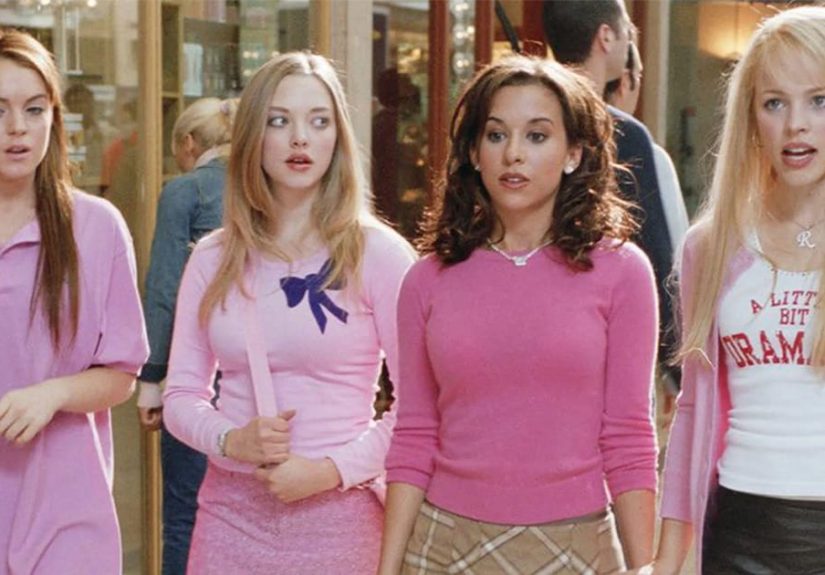
1) Regina George (Mean Girls)
Regina isn’t just a character; she’s a cultural reference point. She rules through charm, intimidation, and the
terrifying precision of knowing exactly what people want to hearand what they’re scared to be. She can destroy you
with a compliment, weaponize friendship, and still look like she’s doing you a favor. And because the story lets us
see her insecurity beneath the crown, she becomes more than “evil.” She becomes inevitable.
What these characters say about the “mean girl” trope
The best mean girl characters aren’t just bullies in cute outfits. They’re a commentary on power: who gets it, who
wants it, and what people do to keep it. Sometimes the story uses them as villains so the hero can shine. Sometimes
it uses them as mirrorsreflecting insecurity, competition, beauty standards, and the weird social economy of being
young and watched.
And to be clear: pop culture didn’t invent bullying. But it did give it costumes, scripts, and catchphrases. That’s
why these characters stick. They’re not just “mean.” They’re memorable.
of Real-Life Experiences: Surviving a Mean Girl Moment (Without Becoming One)
Most of us don’t have a literal burn book. We have something worse: a group chat with typing indicators. The modern
mean girl experience often looks harmless on the surface“just joking,” “don’t be so sensitive,” “I didn’t mean it
like that”but it lands with the same force as the classic movie version. You walk away replaying the conversation,
wondering if you imagined the insult, and then realizing you didn’t… you just witnessed a professional-level
backhanded compliment.
The first time you run into it, you usually try to earn your way out. You become nicer, funnier, quieter, smaller.
You start editing yourself like you’re a draft that needs approval. That’s the trap these characters illustrate so
well: mean girls don’t always want you gone. Sometimes they want you orbitingclose enough to validate them, far
enough to never compete.
I’ve learned that the most effective response is rarely a dramatic clapback (tempting, thoughespecially if you’ve
memorized the entire Mean Girls script like it’s emergency CPR). The effective response is boring clarity. Ask
simple questions. “What did you mean by that?” “Can you say that another way?” “Is this feedback or a joke?” Mean
behavior thrives on speed and confusion. Calm questions slow it down and force it into daylight, where it usually
looks ridiculous.
Another lesson: boundaries are not speeches. You don’t have to deliver a monologue about respect while violins swell
in the background. You can just opt out. Leave the conversation. Change the subject. Stop sharing personal details
with someone who collects them like ammunition. The most freeing moment is realizing you don’t have to win the
popularity gameyou can decline to play and still be a whole person.
And yes, the uncomfortable truth: everybody has a “mean girl” moment in them. Stress, insecurity, competition,
jealousythose feelings don’t make you evil, they make you human. The difference is what you do next. The characters
ranked here are cautionary tales and (sometimes) complicated portraits. In real life, growth looks like apologizing
without excuses, praising people without comparing, and resisting the little dopamine hit of being “above” someone
else for five seconds.
If you’ve ever felt targeted by a mean girl, here’s the good news: their power depends on your attention. Build your
circle with people who don’t treat friendship like a ladder. Choose rooms where you’re not an accessory. And if you
catch yourself turning into Regina on a rough daytake a breath, drink some water, and remember: being kind is free,
and it ages better than sarcasm.
Final thoughts
Mean girl characters keep showing up because power struggles keep showing upat school, at work, online, everywhere.
The fun part is watching fiction exaggerate it. The useful part is recognizing it. And the best part? Real life
rarely comes with a narrator, but you can still choose a better ending than “and then everyone got subtweeted.”