Table of Contents >> Show >> Hide
- Why Hanging Chairs Are Having a Moment
- Common Types of Indoor and Outdoor Hanging Chairs
- 25+ Hanging Chair Ideas for Every Space
- How to Choose the Right Hanging Chair
- Hanging Chair Safety 101
- Real-Life Hanging Chair Experiences: What Owners Wish They’d Known
- Conclusion: Create Your Own Hanging Chair Haven
If you’ve ever sat in a hanging chair, you know it’s dangerously easy to “test” it for five minutes and wake up an hour later wondering what year it is. These cozy cocoon seats make any corner feel like a mini vacation spot, whether you have a big backyard, a tiny apartment balcony, or just one odd corner in your living room begging for a personality upgrade.
This guide rounds up 25+ ideas for indoor and outdoor hanging chairs inspired by Remodelaholic-style DIY creativity and today’s most popular egg chairs, hammock swings, and boho macramé seats. Along the way, you’ll get practical tips on how to choose, hang, and care for your chair so you can actually relax in itwithout worrying that the ceiling might join you on the floor.
Why Hanging Chairs Are Having a Moment
Hanging chairs aren’t new, but their latest wave of popularity makes sense. They tick several boxes at once:
- They create instant “destination” corners. A basic room becomes a cozy reading nook, meditation corner, or teen lounge spot just by hanging one chair and tossing in a throw pillow.
- They fit indoors and outdoors. Today’s designs come in weather-resistant resin wicker, metal frames, and durable fabrics that work on porches, patios, sunrooms, and bedrooms alike.
- They feel indulgent but don’t always cost a fortune. You can splurge on sculptural designer egg chairs, but there are plenty of budget-friendly options at big-box stores and online retailers, plus clever DIY versions made from repurposed wood chairs or pallets.
- They’re incredibly photogenic. For better or worse, hanging chairs look great on Instagramespecially when styled with plants, string lights, and a cozy blanket.
Common Types of Indoor and Outdoor Hanging Chairs
Before you pick a spot, it helps to know what kind of hanging chair fits your lifestyle, your space, and your willingness to assemble things without swearing.
1. Egg Chairs with a Stand
These are the rock stars of patios and balconies. A woven, egg-shaped basket hangs from a curved metal stand, typically with plush cushions. Many models support around 250–350 pounds and are designed for both indoor and outdoor use.
Best for: Renters, balcony owners, anyone who doesn’t want to drill into a ceiling or beam.
2. Ceiling-Mounted Hammock Chairs
These fabric or rope chairs hang from a single anchor point in the ceiling. They are compact, boho-friendly, and perfect for small indoor spaces. They must be attached to a properly sized beam or joist with strong hardware rated for the expected load.
Best for: Reading nooks, kids’ rooms, quiet corners in living rooms or bedrooms.
3. Full-Body Hammock Swings
Think hammock chair meets cocoon. These have more fabric and allow you to stretch out, sometimes even lie almost flat. They can mount from the ceiling, a sturdy tree, or a stand.
4. Macramé and Boho Swing Chairs
All about vibe: cotton rope, fringe, and circular seats that look fantastic with layered rugs and plants. Many are rated for indoor or covered outdoor use but shouldn’t live outside in harsh weather.
5. Double and Family-Size Hanging Chairs
Larger egg chairs or double swings are designed for two people or one sprawled-out nap champion. They require more floor space and a stronger stand or anchor point but create a cozy loveseat feel.
25+ Hanging Chair Ideas for Every Space
Below are more than 25 ways to use hanging chairs indoors and outdoors, mixing store-bought pieces with DIY-friendly ideas to match a Remodelaholic-style home.
Indoor Hanging Chair Ideas
- Window Reading Nook Egg Chair
Place a single egg chair by a large window with a floor lamp, side table, and a small bookshelf. Add layered pillows and a throw blanket and you’ve just turned an unused corner into the most popular seat in the house. - Bedroom Retreat Hammock Chair
Hang a hammock chair in a bedroom corner for a quiet reading or journaling space. Keep a basket of books or skincare nearby so it feels like a mini spa corner. - Boho Macramé Chair in a Studio Apartment
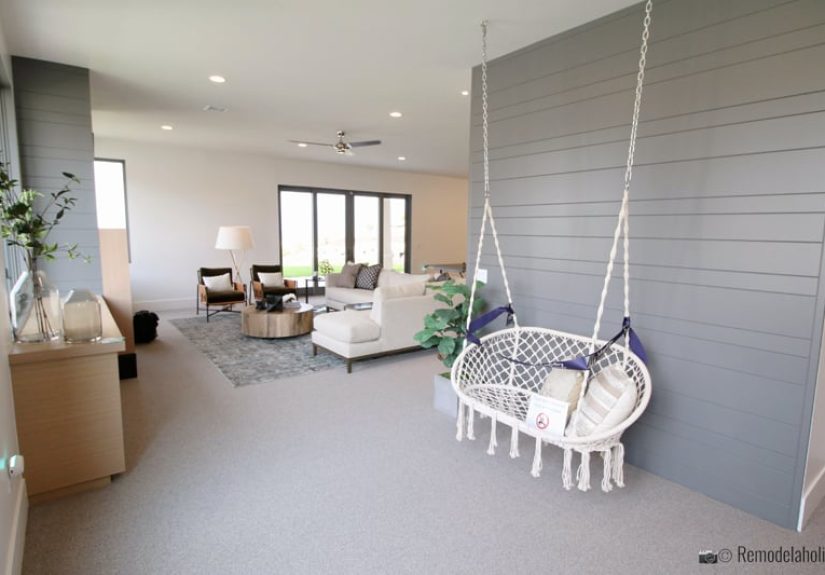
In a small studio, a ceiling-mounted macramé chair gives you extra seating without using up much floor space. Use a round jute rug underneath to visually define the “lounge zone.” - Kids’ Cloud Corner
Install a smaller hanging chair for kids with a high weight rating and strong hardware. Surround it with soft rugs, stuffed animals, and wall decals so the chair feels like a floating cloud. Always follow manufacturer age and weight guidelines. - Teen Hangout with LED Lights
Teens love a cozy spot to text and scroll. Pair an indoor egg chair with LED string lights wrapped around the stand or ceiling beam. Add oversized headphones and they’re set. - Minimalist Living Room Accent Chair
Choose a neutral-toned egg chair with slim metal stand and clean lines. It works as both sculpture and seating, adding height and movement to a room that’s otherwise all straight lines and boxy sofas. - Sunroom Swing Pair
If you’re lucky enough to have a sunroom, hang two matching chairs facing each other with a small table between them. It becomes an instant coffee chat zone. - Reading Chair in a Home Office
A hanging chair in your office gives you a change of posture for brainstorming and reading. It’s also a nice “office closed” signalwhen you’re in the chair, you’re off duty.
Outdoor Hanging Chair Ideas
- Front Porch Welcome Chair
Hang a chair near the front door to give your porch a relaxed, lived-in feel. Choose weather-resistant rattan or resin wicker with UV-protected cushions for longevity. - Covered Patio Egg Chair Corner
A hanging egg chair with a stand tucked into a patio corner instantly softens hard surfaces like concrete and brick. Add a small outdoor rug and a lantern-style floor lamp for nighttime lounging. - Balcony Oasis with One Compact Chair
For condos or apartments with tiny balconies, choose a slimmer egg chair or a hammock chair to keep traffic paths clear. Take careful measurements before buyingmany egg chairs are wider than they appear in photos. - Poolside Lounge Pod
If you have space, set up a freestanding double egg chair near the pool for a shaded lounge spot. Look for rust-resistant metal frames and fast-drying cushions designed for outdoor use. - Garden Hideaway Under a Tree
A classic hanging swing from a big tree branch makes a storybook-style garden seat. Have a professional verify the branch is healthy and strong enough, and use outdoor-rated rope or chain and hardware. - Fire Pit Conversation Zone
Surround a fire pit with a mix of stationary chairs and a couple of hanging egg chairs on stands. The gentle motion is perfect for late-night conversations and stargazing. - Patio Dining + Swing Chair Combo
Add one hanging chair just off the main dining area. It becomes the coveted after-dinner seat for whoever finishes dessert first. - Glamping-Style Backyard Corner
Combine a hanging chair with a patterned outdoor rug, lanterns, planters, and a small side table to create a “glamping lounge” in one corner of your yard. - Side Yard Secret Spot
If the front and back yards are busy, use a narrow side yard for a more private retreat with a single hanging chair, some shade-loving plants, and gravel or pavers underfoot. - RV or Camper Patio Setup
When you’re parked for a while, a portable egg chair with stand creates a comfy “front porch” outside your RV or camperno drilling required. - Outdoor Movie Night Seat
Use a hanging chair as the VIP seat for backyard movie nights. Position it where you have a clear view of the screen and add a blanket for cool evenings. - DIY Upcycled Chair Swing
Following the Remodelaholic spirit, turn an old wooden chair into a hanging swing by removing the legs, reinforcing the seat, and adding rope or chain to a sturdy support. Paint it a fun color and hang it from a porch beam or tree.
How to Choose the Right Hanging Chair
1. Decide Where It Will Live
Start with location. Indoor chairs can be lighter and focus on comfort fabrics, while outdoor chairs should prioritize weather resistance, UV protection, and rust-resistant frames. Covered porches or sunrooms give you the most flexibilityyou can use indoor-outdoor hybrid designs there.
2. Measure Everything (Twice)
Egg chairs and double swings have a larger footprint than they look online. Measure:
- Floor space (width and depth) for the stand or swing arc
- Ceiling height and clearance above the chair
- Distance from walls and railings so the chair can swing without smacking anythingor anyone
3. Check Weight Capacity and Hardware
Look for a clearly listed weight capacity250 pounds is common for single chairs, while many heavy-duty options support 300 pounds or more. Make sure all included chains, hooks, carabiners, and stands are rated to match or exceed that capacity.
4. Choose the Right Materials
- Resin or PE wicker: Great for outdoors, especially when paired with a powder-coated steel frame.
- Metal frames: Look for rust-resistant finishes for outdoor chairs.
- Fabrics: Outdoor cushions should be fade- and mildew-resistant; solution-dyed acrylic or treated polyester fabrics hold up better in sun and rain.
- Rope or macramé: Beautiful indoors; outdoors they do better on covered porches where they’re protected from constant moisture.
5. Factor in Comfort and Style
Try to find chairs with high-back support, headrest pillows, and thick cushions. Deeper seats feel cozier but can be harder to get out of for some people. Style-wise, it’s hard to go wrong with a neutral chair and interchangeable pillowseasy to swap out as trends change.
Hanging Chair Safety 101
Hanging chairs are meant to be relaxing, not adrenaline sports. A few basic rules keep them safe and sturdy.
Indoor Hanging Chair Safety
- Always anchor into a joist or beam. Drywall anchors alone are not enough. Use a stud finder to locate joists, and if the spacing doesn’t align with your perfect aesthetic, pick safety over symmetry.
- Use rated hardware. Look for heavy-duty eye bolts or hanging kits specifically rated for swings or hammock chairs, not lightweight plant hooks.
- Spread the load when possible. Some DIYers add a sturdy 2×4 bridging multiple joists in the attic and connect the chair to that board to distribute weight.
- Follow all manufacturer instructions. If a chair or stand says “indoor only,” believe it.
Outdoor Setup and Care
- Protect from wind. In very windy areas, move lightweight chairs under cover or lay them down when storms are forecast.
- Store or cover cushions. Even outdoor fabrics last longer if you store cushions in a deck box during heavy rain or over the winter.
- Inspect regularly. Check for rust, fraying ropes, loose bolts, and weakened wood at least a few times a season. Replace parts at the first signs of trouble.
Real-Life Hanging Chair Experiences: What Owners Wish They’d Known
Hanging chairs look dreamy in photos, but real owners quickly learn the little quirks that don’t show up in the product description. Here’s a “lived-in” look at what to expectso your chair becomes a long-term favorite, not a short-lived impulse buy.
1. Measure for Movement, Not Just the Chair
One of the most common surprises is how much room a hanging chair actually needs. It’s not enough that the stand fits; you also need swing clearance. That gorgeous egg chair on your tiny balcony might technically fit, but if you have to suck in your stomach every time you slide past it to close the door, you’ll start resenting it.
Smart owners measure a circle around the chair’s widest point and leave a bit of extra space for gentle rocking. If you’re placing it near a railing or wall, sit in the chair once it’s assembled and test the motion before you commit to a rug or side table placement.
2. Assembly Is Easier with Two People (and a Sense of Humor)
Many hanging chairs arrive in multiple boxes with hardware that looks like a small robot kit. Most stands are simple enough to set up, but holding a heavy egg basket while aligning bolts can be awkward solo. Having a second person to hold parts steady saves time and avoids scratched floors, stripped bolts, and grumpy muttering.
If you’re ceiling-mounting, a helper is almost essential. One person stands on the ladder managing the drill and hardware while the other double-checks measurements, holds tools, and confirms you’re actually in the joist you thought you found.
3. Cushions Make or Break the Experience
Even the most stylish chair can feel underwhelming if the cushion is thin or slippery. Many owners upgrade or add extra cushions after a few weeks of use. Look for cushions with removable covers for easy washingespecially outdoors, where pollen, sunscreen, and snacks all conspire against fabric.
Indoors, you can treat the chair like a mini sofa: mix lumbar pillows for lower-back support, a small head pillow, and a throw blanket. Outdoors, opt for fewer but thicker cushions so they don’t blow away at the first gust of wind.
4. Pets Will Probably Adopt It
If you have pets, assume your hanging chair is now a pet throne. Cats love perching on the edge to watch the world. Dogs will learn that the cushiest spot in the house is the one that was technically “not for them.” Consider washable covers or a dedicated pet blanket if you want to keep fur under control.
Also, be mindful of nervous pets. The gentle sway that’s relaxing to humans can be unsettling for some animals, so introduce them slowly and never force a pet into the chair.
5. Noise HappensBut You Can Fix It
Over time, some chairs start to squeak or click. The good news: a bit of silicone spray or lubricant on metal joints usually quiets things down. For ceiling-mounted chairs, small rubber or felt washers between metal hardware pieces can reduce noise and vibration.
Outside, wind can cause empty chairs to knock against stands or railings. Anchoring the chair with a simple strap when not in use keeps it from banging around during storms.
6. Weather Is the Ultimate Boss Outdoors
Sun, rain, and temperature swings are unavoidable outdoorseven for weather-resistant furniture. Owners who get the longest life from their chairs usually follow three habits:
- They place the chair in at least partial shade.
- They bring cushions inside or into a deck box when not in use for long stretches.
- They give the chair a quick seasonal checkuptightening bolts, cleaning the frame, and washing covers.
These small habits keep an outdoor hanging chair looking fresh years longer than one that’s left exposed year-round without maintenance.
7. The Chair Changes How You Use the Space
One of the best “side effects” of a hanging chair is how it shifts the way you use a room or outdoor area. A corner that was previously a dead zone suddenly becomes your favorite morning coffee spot. A balcony you rarely stepped onto becomes a nightly reading nook. A kids’ playroom gets a cozy zone that encourages quiet time as much as active play.
Because hanging chairs are such strong visual anchors, they also help define zones in open-concept spaces. Your eye is naturally drawn to the floating seat, and it subtly tells your brain, “This is where we relax.” That’s a powerful design trick for making homes feel more functional and inviting.
Conclusion: Create Your Own Hanging Chair Haven
Indoor and outdoor hanging chairs are more than just trendy furniturethey’re mood shifters. They create small sanctuaries in everyday spaces, encourage you to slow down, and make even a modest porch or apartment corner feel special.
Whether you choose a store-bought egg chair with a stand, a minimalist hammock chair, or a DIY swing crafted from an old wooden seat in classic Remodelaholic fashion, the key is to match the chair to your space, install it safely, and style it in a way that invites you to actually use it. Measure carefully, choose durable materials, check weight ratings, and don’t skimp on cushions.
Get those details right and your hanging chair won’t just look good in photosit’ll become the spot where you read, nap, chat, and unwind for years to come.