Table of Contents >> Show >> Hide
- Container Gardening Basics (So Your Pots Don’t Turn into Plant Drama)
- 29 Flower Pot Ideas for Lovely Blooms and Foliage
- Classic Terracotta with a Mediterranean Mix
- Monochrome Pot + One-Color Plant Palette
- Color-Blocked Painted Pots for Instant Pop
- A Tall Urn with a Dramatic “Thriller” Centerpiece
- Self-Watering Planter for Thirsty Bloom Machines
- Hanging Basket “Waterfall” of Blooms
- Window Box That Looks Like a Bouquet with Roots
- Strawberry Pot… Without Strawberries (Or With Them!)
- Tiered Planter for Small Spaces
- Galvanized Tub “Mini Meadow”
- Half-Barrel Planter for Big, Lush Combinations
- Concrete Cylinder Planters for Modern Drama
- DIY Hypertufa Trough for a Rustic Micro-Landscape
- Vintage Tea Tin or Enamel Pot Herb + Flower Mix
- Boot Planter for Whimsical Curb Appeal
- Colander Planter for Natural Drainage (And Instant Charm)
- Railing Planters for Balcony Color
- “Shady Character” Pot: Foliage-First Design
- “Hot Patio” Pot: Heat-Loving, Sun-Proof Blooms
- Succulent Bowl with Mixed Shapes
- Indoor Statement Planter with a Single Big Leaf Star
- Cachepot “Wardrobe Change” System
- Citrus-in-a-Pot with Underplanting
- Pollinator Pot for Bees and Butterflies
- Moonlight Pot: White Flowers + Silver Foliage
- Bold Foliage Pot: Purple + Lime Contrast
- Spring-to-Summer Transition Pot (Bulbs + Annuals)
- Four-Season Evergreen Pot with Winter Interest
- Edible-Flower Pot (Pretty and Snackable)
- “One Plant, Many Pots” Repetition for a Polished Look
- Mixed Texture “Green-Only” Pot (Foliage as the Star)
- Keep Your Flower Pots Looking Good (Not “Before-and-After but Backwards”)
- Conclusion
- Real-World Container Gardening Experiences (Lessons People Learn the Fun Way)
A great flower pot is basically a stage, and your plants are the performerssome are divas (looking at you, thirsty petunias),
some are quiet background legends (hello, sweet potato vine), and some show up once a year like a surprise celebrity cameo (spring bulbs).
The best part? Container gardening lets you edit your “cast” whenever you feel like it. No backhoe. No commitment issues.
Just pots, plants, and the very satisfying feeling of making your porch look like it has its life together.
Below are 29 flower pot ideas designed to help you get more color, texture, and long-lasting greenerywhether you’ve got a sprawling backyard
or a balcony that’s basically “one chair and a dream.” You’ll also find practical tips so your lovely blooms and foliage stay alive long enough
for you to brag about them.
Container Gardening Basics (So Your Pots Don’t Turn into Plant Drama)
Pick the right pot (size mattersplants have feelings)
Bigger pots hold moisture longer, stay cooler in summer, and forgive you when you forget to water for exactly one day too many.
Small pots dry fast and are best for drought-tolerant plants, tiny herbs, or “I enjoy watering twice a day” personalities.
Drainage: the unglamorous hero
If your container doesn’t have drainage holes, it’s not a planterit’s a bathtub. Most flowering plants hate wet feet.
If you’re using a decorative cachepot (no hole), keep plants in a nursery pot inside it and empty excess water after watering.
Use potting mix, not garden soil
Garden soil compacts in containers, which can smother roots. A quality potting mix stays lighter, drains better, and holds moisture in a
way that doesn’t feel like either a desert or a swamp.
Design like a pro: thriller, filler, spiller
This classic container “recipe” works because it creates instant structure. A thriller adds height (upright, dramatic),
a filler adds body (mounding), and a spiller cascades over the edge (trailing, flowy, very photogenic).
Repeat a color or leaf shape to make the mix look intentional, not like plants fell in by accident.
Match plants by sun and water needs
Put sun-lovers together, shade-lovers together, and “I need water constantly” plants away from succulents that prefer to dry out.
Your future self will thank you (and your plants will stop sending passive-aggressive signals like yellow leaves).
29 Flower Pot Ideas for Lovely Blooms and Foliage
-
Classic Terracotta with a Mediterranean Mix
Terracotta breathes, looks timeless, and pairs beautifully with silvery foliage. Try lavender (in suitable climates),
rosemary, dusty miller, and white alyssum. Keep it sunny and avoid overwateringthis vibe is “sun-drenched patio,” not “rainforest.” -
Monochrome Pot + One-Color Plant Palette
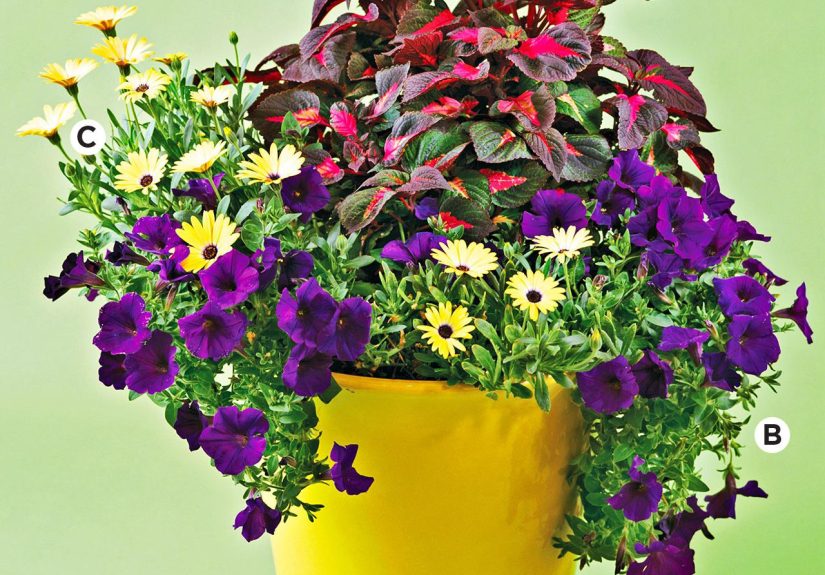
Choose a pot in matte white, charcoal, or black, then plant a single color family: all-purple (salvia, petunias, coleus),
all-white (bacopa, calibrachoa, dusty miller), or all-pink. This looks high-end even if your budget is “garage sale chic.” -
Color-Blocked Painted Pots for Instant Pop
Paint inexpensive pots in two or three bold blocks of color (outdoor paint + sealant), then plant contrasting blooms:
orange marigolds with purple verbena, or hot pink petunias with lime-green foliage. The pot becomes part of the design, not just the container. -
A Tall Urn with a Dramatic “Thriller” Centerpiece
Use a tall urn or pedestal pot and add a vertical star like a spike dracaena (in warmer seasons), cannas, or ornamental grass.
Surround it with mounding begonias or geraniums, then trail ivy or sweet potato vine over the edge for that “fancy hotel entrance” effect. -
Self-Watering Planter for Thirsty Bloom Machines
If you love lush annuals (impatiens, petunias, calibrachoa) but hate daily watering, use a self-watering container.
They’re especially helpful on sunny patios where pots dry out fastjust don’t use them for plants that prefer dry soil, like many succulents. -
Hanging Basket “Waterfall” of Blooms
Go full cascade: trailing petunias, bacopa, and lobelia for cool tones; or lantana and calibrachoa for heat-loving color.
Add a bit of upright interest with a compact salvia or coleus in the center. Hang where you’ll actually see itnot in the Witness Protection Program. -
Window Box That Looks Like a Bouquet with Roots
Mix textures and bloom shapes: upright snapdragons, mounding geraniums, and trailing bacopa or ivy.
Keep the palette tight (two to three main colors), and choose plants that can handle shallow soil. Bonus points for spillers that tumble dramatically. -
Strawberry Pot… Without Strawberries (Or With Them!)
Those side-pocket pots are perfect for mini herb gardens (thyme, oregano, trailing rosemary) or a succulent tower.
You can still do strawberriesjust plant from the bottom pockets upward and keep watering consistent so the top doesn’t hog all the moisture. -
Tiered Planter for Small Spaces
Use a tiered stand or stacked planter to grow different “chapters” of color: shade coleus on one level, bright begonias on another,
and trailing plants spilling down. It’s basically a vertical garden that says, “Yes, I planned this,” even if you didn’t. -
Galvanized Tub “Mini Meadow”
A wide galvanized tub makes a great mass planting container. Drill drainage holes, elevate slightly, and fill with sun-loving annuals:
zinnias, cosmos, and marigolds with ornamental grasses for movement. The look is abundant and casualin the best “summer field” way. -
Half-Barrel Planter for Big, Lush Combinations
A half whiskey barrel is roomy and holds moisture well. Add a bold centerpiece like a dwarf hydrangea (where appropriate),
underplant with begonias or calibrachoa, and edge with trailing greenery. Great for a “one container, maximum impact” strategy. -
Concrete Cylinder Planters for Modern Drama
Concrete planters are heavy (wind-resistant!) and look sleek with architectural plants: snake plant (indoors), agave (warm climates),
or ornamental grasses outdoors. Pair with a simple color schemewhite flowers + dark foliage looks especially sharp against concrete. -
DIY Hypertufa Trough for a Rustic Micro-Landscape
Hypertufa planters look like aged stone but are lighter than solid concrete. They’re perfect for tiny rock-garden scenes:
sedums, hens-and-chicks, small grasses, and creeping thyme. Add a few stones and it becomes a whole miniature world. -
Vintage Tea Tin or Enamel Pot Herb + Flower Mix
Repurpose a sturdy vintage container (and add drainage holes). Plant compact herbs like basil or chives,
then tuck in edible flowers like nasturtiums. It’s functional, pretty, and makes you feel like you live in a cottagecore montage. -
Boot Planter for Whimsical Curb Appeal
Use an old rain boot (yes, really) as a quirky planterjust add drainage. Great for small trailing flowers like alyssum or lobelia.
Place it near steps or a garden path for a “surprise and delight” moment that doesn’t require an entire landscaping crew. -
Colander Planter for Natural Drainage (And Instant Charm)
A metal colander already has holesline it with landscape fabric, then plant trailing flowers and foliage.
Hang it or set it on a pedestal. It’s the easiest “I am a creative person” DIY you’ll do all year. -
Railing Planters for Balcony Color
Railing planters are perfect when floor space is limited. Choose plants that handle wind and sun:
geraniums, lantana, or compact petunias. Use a consistent color palette down the railing for a clean, cohesive look. -
“Shady Character” Pot: Foliage-First Design
For shade patios, lean into foliage: coleus, ferns, heuchera (coral bells), and caladium.
Add a small pop of bloom (begonias do great) but let leaves do the heavy lifting with color and texture. -
“Hot Patio” Pot: Heat-Loving, Sun-Proof Blooms
If your containers bake in afternoon sun, choose plants that won’t faint dramatically: lantana, verbena, portulaca, salvia,
and ornamental grasses. Mulch the surface lightly and water deeply so roots actually get what they came for. -
Succulent Bowl with Mixed Shapes
Combine rosette succulents, spiky forms, and trailing varieties in a shallow bowl. Keep the soil gritty and let it dry between waterings.
This is a great “set it and mostly forget it” containeraka the holy grail of busy schedules. -
Indoor Statement Planter with a Single Big Leaf Star
For indoors, one bold plant can be the whole design: monstera, fiddle-leaf fig (if you’re brave),
or a rubber plant. Pair with a simple pot and let the foliage be the artwork. Add a smaller trailing plant nearby for softness. -
Cachepot “Wardrobe Change” System
Keep plants in nursery pots and drop them into a nicer outer pot (cachepot). This makes seasonal swaps ridiculously easy:
spring bulbs, summer annuals, fall mums, winter greens. You get nonstop fresh looks with less repotting mess. -
Citrus-in-a-Pot with Underplanting
In warmer regions (or with winter protection), dwarf citrus makes a gorgeous container centerpiece.
Underplant with trailing thyme or low annuals. The glossy leaves look great year-round, and the flowers smell amazing when they bloom. -
Pollinator Pot for Bees and Butterflies
Plant nectar favorites like zinnias, salvia, lantana, and alyssum. Choose single-flower varieties when possible so pollinators can access nectar.
Place it near seating and enjoy the tiny garden visitors (who, unlike humans, never criticize your design choices). -
Moonlight Pot: White Flowers + Silver Foliage
For evening patios, white blooms glow at dusk. Combine white petunias, bacopa, and nicotiana with dusty miller or silver falls dichondra.
It’s elegant, calming, and makes your outdoor space feel like it has a lighting designer. -
Bold Foliage Pot: Purple + Lime Contrast
Go foliage-heavy with purple coleus or purple basil, plus lime sweet potato vine or chartreuse heuchera.
Add small blooms (white calibrachoa works nicely) for sparkle. This combo looks “designer” from spring through fall. -
Spring-to-Summer Transition Pot (Bulbs + Annuals)
Plant tulips or daffodils in fall, then tuck cool-season pansies around them. After bulbs fade, replace pansies with warm-season annuals.
You get a container that evolves instead of fizzling out after one glorious week. -
Four-Season Evergreen Pot with Winter Interest
For year-round structure, use a small evergreen (dwarf conifer or boxwood in suitable climates) as the anchor.
Rotate seasonal accents around itbulbs in spring, annuals in summer, ornamental kale in fall, and cut greens in winter. -
Edible-Flower Pot (Pretty and Snackable)
Mix edible blooms like nasturtiums and violas with herbs like thyme and chives. Add marigolds for color (some varieties are used as garnish).
It’s a container garden that earns its keepbeauty plus “I grew this” bragging rights. -
“One Plant, Many Pots” Repetition for a Polished Look
Instead of one chaotic mixed container, repeat the same plant in several identical pots: all geraniums, all lavender, or all ferns.
Repetition looks intentional and upscalelike you hired a stylist for your front steps. -
Mixed Texture “Green-Only” Pot (Foliage as the Star)
Skip flowers entirely and build a texture pot: ferns + ivy + hosta (shade) or ornamental grass + rosemary + trailing vine (sun).
This stays attractive even when blooms take a break, and it photographs beautifully in every season.
Keep Your Flower Pots Looking Good (Not “Before-and-After but Backwards”)
Water smarter
Stick a finger into the soilif the top inch feels dry, water thoroughly until it drains out the bottom.
In hot weather, some containers need daily watering. Morning watering is usually best so plants aren’t wet and stressed overnight.
Feed lightly but consistently
Container plants use up nutrients faster than in-ground plants. A slow-release fertilizer at planting time plus occasional liquid feeding
(especially for heavy bloomers) helps keep flowers coming without turning leaves into “all foliage, no party.”
Deadhead and pinch for more blooms
Removing spent flowers encourages many annuals to keep blooming. Pinching leggy growth (especially early) helps plants branch out and look fuller.
Rotate for even growth
If your pot gets sun from one direction, rotate it every week or so. Otherwise, plants lean like they’re trying to eavesdrop on the neighbors.
Conclusion
The best flower pot ideas balance two things: design (color, texture, shape, and style) and plant reality (sun, water, drainage, and space).
Once you get those basics right, you can have endless fun: modern concrete statements, overflowing cottage-style tubs, tidy monochrome moments,
and foliage-first arrangements that look great even when flowers take a day off. Start with one container you can see every day, make it beautiful,
and let your confidence grow right alongside the blooms.
Real-World Container Gardening Experiences (Lessons People Learn the Fun Way)
Ask anyone who’s been container gardening for more than one season, and you’ll hear a familiar theme: the plants teach you fast.
One of the most common experiences is realizing how wildly different pots behave in the same yard. A small terra-cotta pot in full sun can dry out
so quickly that you swear the water evaporates out of spite, while a large resin planter a few feet away stays evenly moist for days. Many gardeners
start out thinking, “I’ll just water everything the same,” and then discover that containers are more like pets with distinct personalitiessome are
low maintenance, some are needy, and some act fine until the exact day you leave town.
Another frequent “aha” moment is learning that great-looking combinations are usually built around compatibility, not just color. People often buy
whatever looks pretty at the garden center, then wonder why one plant thrives while another sulks. The experience most gardeners share is that
pairing sun-and-water needs makes everything easier: petunias and calibrachoa are happy together because they like similar light and consistent moisture,
while succulents are much better off living in their own gritty, drier container. Once you group plants by what they actually want, your pots start
looking fuller and healthier with less effortand fewer dramatic leaf drops.
There’s also the very relatable lesson of “pots are décor… until the wind happens.” Many gardeners can tell you about the first time a lightweight pot
toppled over during a storm, sending soil (and confidence) across the patio. After that, people tend to choose heavier containers for exposed spots,
or they add weight low in the pot and place tall “thriller” plants where they won’t catch every gust. The same goes for hanging baskets: they’re gorgeous,
but they can dry out faster than you think, especially on hot, breezy days. A lot of gardeners learn to keep a small watering can nearby or switch to
self-watering designs when life gets busy.
Seasonal swapping is another experience that surprises beginnersin a good way. Once you’ve done it once, it’s hard to go back. Many gardeners start
using a “wardrobe change” approach: spring bulbs and pansies, then summer annuals, then fall mums, then winter greens. It’s not about spending more;
it’s about reusing the same pots as a rotating display. People often say this is the moment their entryway starts looking “styled” instead of “random.”
Even small habitslike repeating the same pot in a set, or sticking to two main colorscan make a space feel intentionally designed.
Finally, there’s the experience of learning what “success” really looks like in containers. It’s not perfection; it’s adjusting. Maybe the shade pot
needs more foliage and fewer flowers. Maybe the sunny patio container needs heat-tough plants instead of delicate ones. Maybe the giant statement planter
needs fewer varieties so each plant can shine. The most experienced container gardeners aren’t the ones who never failthey’re the ones who treat each pot
like a small experiment. And the best part is that experimenting in a pot is forgiving: you can move it, edit it, refresh it, and try againno digging up
half the yard required.