Table of Contents >> Show >> Hide
- Myth #1: “You have to pre-rinse dishes for the dishwasher to work.”
- Myth #2: “Dishwashers waste water and energyhandwashing is greener.”
- Myth #3: “Rinse aid is pointless (or ‘just chemicals’). Pods do everything.”
- Quick “Do This, Not That” Dishwasher Reality Check
- FAQs: Common Questions People Whisper to Their Dishwashers
- Extra: Real-World Dishwasher Experiences (The Stuff That Actually Happens)
- Conclusion
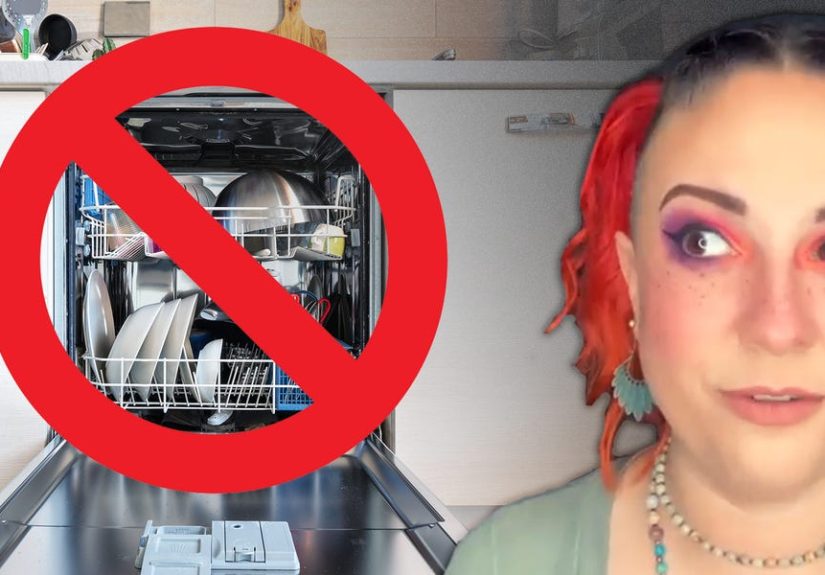
Dishwashers are one of the few household appliances that can turn chaos into order with the push of a button.
And yet, they’re constantly being micromanaged like a reality show contestant: “Did you rinse that?” “Is that facing the right direction?”
“Are we sure this cup can handle the top rack?”
The truth is, modern dishwashers are smarter (and more efficient) than most of the “rules” we learned years ago.
A lot of the advice floating around is based on older machines, older detergents, or the universal human habit of repeating something
that sounds correct. Let’s bust three common dishwasher mythswithout breaking your favorite wine glass in the process.
Myth #1: “You have to pre-rinse dishes for the dishwasher to work.”
This is the biggest dishwasher myth of them all, and it’s remarkably persistent. Somewhere along the way, “scrape the chunks”
evolved into “hand-wash everything until it’s basically cleanthen let the dishwasher enjoy a relaxing warm rinse for vibes.”
Why this myth won’t die
In the past, older dishwashers and older detergents weren’t always up for modern cooking habits (hello, baked-on cheese).
Pre-rinsing became a survival tactic. But today’s dishwashers are designed to deal with real food soilespecially when you load properly,
use quality detergent, and keep the machine maintained.
What actually happens when you pre-rinse too much
Many dishwashers use sensors to estimate how dirty a load is and adjust the cycle. If you scrub everything spotless first,
the machine may “think” it has an easy job and shorten or soften the wash. Translation: you did extra work, and the dishwasher may do less.
There’s also a detergent chemistry angle. Many dishwasher detergents rely on enzymes and other cleaning agents that perform best
when there’s something to grab ontofood residues, starches, proteins, oils. If you remove most of the soil, you can get worse results,
especially on glassware and plastics that love to hold onto film.
What to do instead: scrape, don’t scrub
- Scrape off large leftovers (bones, seeds, big globs of rice, etc.).
- Skip the full rinse unless something is truly excessive (like a bowl of congealed oatmeal that has entered a new geological era).
- Load with intention: angle items so water drains, don’t nest bowls, and keep the spray arms spinning freely.
But what about “baked-on” food?
If you have a pan that looks like it survived a small volcano, you have a few options before you reach for the scrub brush:
- Use a cycle that matches the mess (heavy duty, pots & pans, or “soil-sensing” cycles if available).
- Try a short soak for truly burnt-on residuesoaking is often more efficient than aggressive scrubbing.
- Check the basics: filter cleanliness, correct detergent, and proper loading often solve “mystery dirty dish” problems.
Bottom line: your dishwasher is not a delicate flower that requires pre-rinsed plates. It’s a pressure-spraying, detergent-powered cleaning machine.
Let it do the job you bought it to do.
Myth #2: “Dishwashers waste water and energyhandwashing is greener.”
This myth feels intuitive because dishwashers use water you can hear. Handwashing feels “lighter” because the water disappears down the drain
one moment at a time. But that steady stream can add up fastespecially if you wash with the tap running.
Modern dishwashers are surprisingly water-efficient
Many newer dishwashers, especially efficient models, use far less water than most people expect.
Instead of continuously running fresh water, they spray and recirculate water strategically, then refresh it when needed.
That’s why a dishwasher can clean a full load without acting like a backyard sprinkler.
Efficiency programs and standards exist for a reason: modern dishwashers can reduce water use compared to typical handwashing,
and they’re designed to do it consistently (even when the cook in the house “rinses one plate” for seven minutes).
How to make your dishwasher even more efficient
The dishwasher itself may be efficientbut your habits determine whether you’re getting the best performance per gallon.
Here’s how to keep the efficiency promise:
- Run full loads (but don’t overload). A well-loaded full rack beats two half-loads almost every time.
- Use eco/energy-saving cycles when your dishes aren’t heavily soiled. These cycles often use less water and lower temps.
- Skip heated dry when you can and crack the door to air-dry. (Bonus: fewer “mystery droplets” on plastics.)
- Don’t pre-rinse under running water. If you’re trying to save water, don’t spend it auditioning dishes for a soap commercial.
A realistic comparison: the “running tap trap”
If you handwash with the faucet runningespecially at a comfortable (not-too-cold) temperatureyou can burn through a lot of water
without noticing. Dishwashers, on the other hand, tend to be consistent and contained. That’s why efficiency agencies often recommend
using a dishwasher (properly) as an eco-friendly choice.
Bottom line: for many households, a modern dishwasher is not a water hog. In practice, it’s often a water-saving allyespecially when compared to
handwashing with a running tap.
Myth #3: “Rinse aid is pointless (or ‘just chemicals’). Pods do everything.”
Rinse aid has an unfortunate name. It sounds like something you add to help the dishwasher rinse. Reasonable!
But rinse aid is really about drying and spot preventionand it’s one of the easiest upgrades for clearer glasses and less residue.
What rinse aid does (in plain English)
Rinse aid reduces the surface tension of water so it sheets off dishes instead of clinging in droplets.
Fewer droplets means fewer mineral spots and better dryingespecially in hard water areas and on plastics that love to stay damp forever.
“But my detergent pod says ‘with rinse aid’!”
Some pods include a small amount of rinse-aid-like ingredients, and for certain water conditions, that might be enough.
But many manufacturers still recommend a dedicated rinse aid in the dispenser for consistently better drying and fewer spots.
If you regularly see cloudy film, spots, or water pooling on glassware, rinse aid is often the simplest fix.
The hard water factor: why your glasses look “meh”
If you have hard water, minerals can leave behind a chalky film or tiny spotsespecially on glass.
Rinse aid helps, but it’s not magic. You may also need to:
- Adjust detergent amount (too much can cause film; too little can leave grease).
- Clean the filter and spray arms regularly.
- Consider a water softener if your water is extremely hard and you’re constantly battling buildup.
What about using vinegar instead of rinse aid?
Vinegar can reduce spotting in the short term, but it’s acidicand repeated exposure can be rough on certain dishwasher components
and may contribute to wear over time. If you want a steady, low-drama solution for drying and spots, a proper rinse aid is usually the safer bet.
(Save the vinegar for salad dressing, science fair volcanos, and the occasional deep-cleaning projectnot as a permanent dishwasher diet.)
Bottom line: rinse aid isn’t “pointless.” It’s a targeted tool for drying performance, spot reduction, and clearer glasswareespecially if your water is hard
or your dishwasher struggles with residue.
Quick “Do This, Not That” Dishwasher Reality Check
Do this
- Scrape food offleave the light residue.
- Load so water can reach surfaces (no tight stacks, no nesting bowls).
- Use a quality detergent and the right amount.
- Clean the filter periodically (yes, it’s grossno, it’s not optional forever).
- Use rinse aid if you want better drying and fewer spots.
- Choose eco cycles for everyday loads.
Not that
- Don’t pre-rinse under running water like you’re training for the Dish Olympics.
- Don’t overload and block spray arms.
- Don’t assume “more detergent” equals “more clean.”
- Don’t rely on vinegar as a long-term substitute for rinse aid.
- Don’t run two half-loads “just because.”
FAQs: Common Questions People Whisper to Their Dishwashers
Should I run hot water at the sink before starting the dishwasher?
If your kitchen tap takes a long time to get hot, running it briefly until warm can help the dishwasher start with hotter water
which can improve cleaning. But balance that with water waste: the better long-term fix may be insulating hot water lines,
adjusting your routine, or using the dishwasher’s built-in options (like heavy cycles) when needed.
Why do my glasses look cloudy?
Cloudiness can come from hard water minerals, detergent residue, or etching (permanent damage to glass).
Rinse aid and proper detergent dosing help with residue and spots. If it’s etching, you’ll want to reduce detergent,
avoid over-washing delicate glass, and consider a gentler cycle.
Do I need a “sanitize” cycle for everyday dishes?
For normal daily use, a standard hot wash with detergent is typically plenty for routine household dish cleaning.
Sanitize cycles can be useful in certain situations (like extra hygiene needs), but they usually use higher temperatures
and may increase energy use. Use them when they match your needsnot as a default setting because it sounds heroic.
Why does my dishwasher smell weird?
The usual suspects: food trapped in the filter, gunk in the door gasket, or buildup in spray arms.
Clean the filter, wipe seals, and run an occasional cleaning cycle. Smells are often maintenance-related, not a sign that the appliance is haunted.
Is it okay to wash everything in the dishwasher?
Not everything. Some items (certain woods, delicate knives, cast iron, some nonstick pans, and anything with loose glued parts)
may be better off handwashed. When in doubt, check the manufacturer guidance for the item.
Extra: Real-World Dishwasher Experiences (The Stuff That Actually Happens)
To make these dishwasher myths feel less like abstract “tips” and more like real life, here are a few common household scenarios
that show how dishwasher habits play out in the wild. If any of these feel familiar… congratulations, you live in a normal home.
1) The “Pre-Rinse Marathon” That Never Ends
In a lot of kitchens, pre-rinsing starts as a quick habit: a fork gets a rinse, a plate gets a rinse, and suddenly someone is standing at the sink,
scrubbing like the dishwasher is an easily offended guest. The funny part? The dishwasher is built for food soil. When people stopped pre-rinsing
and switched to “scrape and load,” many noticed two things: they saved time, and their dishwasher actually cleaned betterespecially on sauces,
starches, and oily residues. The big “aha” moment usually comes when they realize the machine wasn’t failing; the routine was just overcomplicating
everything. It’s the cleaning version of buying a treadmill and then walking everywhere because “the treadmill might get lonely.”
2) The Half-Load Habit (a.k.a. “We’ll Just Run It Again Later”)
Another classic experience: the dishwasher runs when it’s half full because people want one specific item (a favorite mug, a lunch container,
the only decent spatula). Then it runs again later because dinner happened. Over time, households that switched to “wait for a fuller load”
(or kept a small backup of the most-used items) tended to use fewer cycles overall. The dishes still got clean, but the routine got smoother:
less detergent used, fewer rinse-aid refills, and fewer “why are we always loading the dishwasher?” arguments.
3) The Mystery of the Cloudy Glasses
Cloudy glasses are the moment people start negotiating with their dishwasher like it’s a moody roommate: “What do you want from me?”
Often, the fix is surprisingly basic. Someone tries rinse aid for the first time and suddenly their glassware looks less like it’s been dusted
with chalk. In hard water areas, this can feel like a magic trick. Other times, people realize they’ve been overdosing detergent or running heavy
cycles constantly, which can contribute to residue and, in some cases, etching. The experience tends to teach a simple lesson: more aggressive
washing isn’t always bettersmart washing is better.
4) The Funky Smell That Turned Out to Be… the Filter
Dishwasher odor stories usually end the same way: someone finally checks the filter and immediately regrets having eyes.
After a quick clean (and maybe a moment of silence), the smell improves dramatically. This experience is common because many people don’t realize
dishwashers have filters that need occasional attention. Once households add “clean filter” to a periodic routine, they often see fewer bits of food
stuck on dishes, fewer odors, and better performance overall. It’s not glamorous, but it’s effectiveand it’s cheaper than blaming the dishwasher
and shopping for a new one out of frustration.
5) The “Rinse Aid Is a Scam” Phase (Until Drying Gets Better)
Plenty of people swear they’ll never buy rinse aiduntil they get tired of rewashing spotted glasses or towel-drying everything after the cycle.
When they finally try it, the change can be immediate: fewer spots, faster drying, and less water clinging to dishes. The most common outcome isn’t
that rinse aid becomes “mandatory,” but that it becomes a practical toolespecially when the goal is convenience. And that’s the real theme behind
all these experiences: dishwashers work best when you let the machine do what it was designed to do, instead of forcing it to follow old rules
from older technology.
Conclusion
Dishwasher myths stick around because they sound logicaland because many of us learned them when dishwashers were less efficient and detergents were
less advanced. But modern dishwashing is not about pre-rinsing everything, running water like it’s free, or skipping tools (like rinse aid) that exist
for a reason. Scrape instead of scrub, run smart cycles, load for spray access, and maintain the machine. Your reward is cleaner dishes, lower hassle,
and fewer kitchen debates that begin with the phrase, “Who loaded the dishwasher like this?”