Table of Contents >> Show >> Hide
- Way #1: Understand What Your Parents Are Really Worried About (Then Address It Like a Pro)
- Way #2: Build a “Trust Resume” (So Dating Feels Like the Next Step, Not a Random Surprise)
- Way #3: Bring a Safety-and-Rules Plan (Because Parents Love Plans Almost as Much as They Love Snacks)
- Common Mistakes That Make Parents Say “Absolutely Not”
- of Realistic Experiences (What Teens Say Actually Helped)
- Conclusion: The Goal Isn’t Just “Yes”It’s Trust
Main keyword: convince your parents to let you date
If you’ve ever tried to bring up dating with your parents, you already know the vibe can go from “normal Tuesday” to
“emergency family meeting” in about 0.3 seconds. One minute you’re just existing, the next your mom is googling
“What is rizz?” and your dad is suddenly an expert in “not until you’re 30.”
Here’s the truth: most parents aren’t trying to ruin your life for sport. They’re usually worried about safety,
distraction, heartbreak, pressure, and whether you’ll remember your curfew exists. The good news? You can absolutely
make a strong casewithout whining, arguing, or turning it into a courtroom drama.
Below are three realistic, parent-friendly ways to convince your parents to let you datewritten for real life, where
parents have rules, you have feelings, and everyone has opinions.
Way #1: Understand What Your Parents Are Really Worried About (Then Address It Like a Pro)
Parents rarely say, “I’m afraid you’ll grow up too fast and I won’t be able to protect you.” They say:
“No.” Or, “You’re not ready.” Or the classic, “We’ll talk about it later” (which secretly means “maybe never”).
Your job is to figure out the why behind the no. Because you can’t solve a problem you don’t understand.
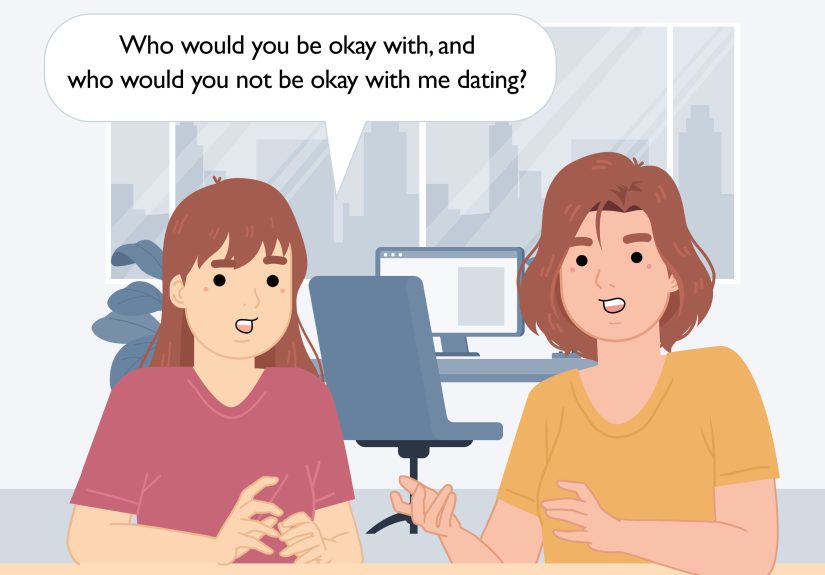
Step 1: Ask questions that don’t sound like a trap
Try something like:
- “Can I ask what your biggest concerns are about me dating?”
- “What would you need to see from me to feel more comfortable?”
- “Is this about age, safety, school, trust… or all of it?”
These questions do two powerful things: (1) they show maturity, and (2) they turn the conversation from “permission
battle” into “problem-solving.” Parents are way more likely to say yes to a plan than to a demand.
Step 2: Translate their concerns into a checklist you can answer
Most parent concerns fall into a few categories:
- Safety: Where are you going? Who’s there? How will you get home?
- Trust: Will you follow rules, be honest, and communicate?
- Priorities: Will grades, chores, sports, or responsibilities drop?
- Pressure: Will you handle boundaries, respect, and uncomfortable situations?
- Values: Does dating fit your family’s beliefs and expectations?
When you talk to your parents, don’t just say, “I’ll be fine.” That’s not a planit’s a vibe. Instead, respond to the
exact worry with an exact solution.
Example: Turn “No” into a conversation
Parent: “Dating is distracting.”
You: “I get that. What if we make a rule that my grades can’t drop below ___, and if they do, I take
a break from dating until I’m back on track?”
Parent: “I don’t trust other kids.”
You: “That makes sense. I can do group hangouts in public places first, and you can meet the person
before anything becomes more serious.”
You’re not trying to “win.” You’re trying to show your parents that you understand the responsibility that comes with
datingand you’re willing to do it safely.
Way #2: Build a “Trust Resume” (So Dating Feels Like the Next Step, Not a Random Surprise)
Parents don’t usually say yes to dating because you want it badly. They say yes because you’ve shown you can handle
freedom without your life turning into a flaming group chat.
Think of dating like leveling up in a game. You don’t get the cool gear by yelling at the screen. You get it by
completing quests. Your “trust resume” is basically proof that you can manage independence.
What goes on a trust resume?
- Reliability: You do what you say you’ll do.
- Communication: You keep parents informed without drama.
- Responsibility: School, chores, commitments stay solid.
- Decision-making: You show good judgment online and offline.
- Respect: You can disagree without being disrespectful.
Quick wins that actually matter to parents
If you want to convince your parents to let you date, start improving the “everyday trust” stuff for a few weeks:
- Meet curfew (or be early once in a whileparents notice).
- Handle your responsibilities without being chased down.
- Keep grades steady (or show a plan to improve them).
- Be honest about where you are, who you’re with, and what you’re doing.
- Show good digital habits (no secret accounts, no sketchy messages, no “it’s complicated” energy).
This isn’t about being “perfect.” It’s about proving you’re consistent. Trust is built in small moments, and parents
make big decisions based on patterns.
Use the “trial period” strategy (without sounding like a lawyer)
A lot of parents feel better with a gradual plan instead of an instant full-access “I’m dating now, deal with it.”
Try proposing a limited trial:
- Phase 1: Group hangouts only, in public, with a set return time.
- Phase 2: One-on-one dates in public places, shorter time windows.
- Phase 3: More flexibilityif you’ve followed rules consistently.
Then set a check-in: “Can we try this for one month and see how it goes?” That feels safer to parents than a permanent
yes with zero structure.
Important: Don’t ask for freedom you’re not ready to manage. If you ask for one-on-one dates but can’t handle a curfew, your argument collapses.
Way #3: Bring a Safety-and-Rules Plan (Because Parents Love Plans Almost as Much as They Love Snacks)
If you want a parent-approved yes, you need parent-approved details. The more your plan answers their worries, the
more likely they are to say yes. This is the most convincing move of all: show them you can date in a way that
protects your safety, your priorities, and your family’s trust.
What to include in your dating plan
Think of this as your “responsible dating blueprint.” Include:
- Where: public places (movies, coffee shops, school events, parks in daytime, mall, etc.).
- When: clear start/end times and a curfew you agree to.
- Who: parents know the person’s name and basic info; ideally they meet them.
- How you’ll get home: parent pickup, trusted adult, or approved transportation.
- Phone expectations: you answer texts/calls, and you share location if that’s a family rule.
- Boundaries: you know your limits and you’ll respect the other person’s limits too.
Add an “exit plan” (this is mature, not paranoid)
Parents worry about you being stuck in an uncomfortable situation. Solve that fear directly:
- Agree on a code word you can text if you want to be picked up, no questions asked.
- Promise you won’t get in a car with someone you don’t trust or someone driving unsafely.
- Commit to checking in at a specific time.
This is the kind of practical safety planning that makes parents exhale. And when parents exhale, you get more freedom.
Choose the right time and delivery
Timing matters. Don’t bring up dating when your parents are stressed, rushing, or already annoyed because someone
forgot to take out the trash (and yes, “someone” is sometimes you).
Pick a calm moment. Be respectful. And keep your tone steady. The goal is to sound like a young adult building trust,
not a tiny lawyer cross-examining the jury.
A sample script you can actually use
“I want to talk about dating. I know you might have concerns, and I don’t want to ignore them. I’m willing to follow
clear rules. Could we try a gradual planstarting with group hangouts in public placesand do a check-in after a few
weeks to see if I’m handling it responsibly?”
If your parents say “not yet,” don’t explode. Ask, “What would need to change for it to be a yes later?” That keeps
the door open.
Common Mistakes That Make Parents Say “Absolutely Not”
- Arguing like it’s a debate team final: Loud doesn’t equal convincing.
- Comparing yourself to other kids: “But everyone else can!” is parent-repellent.
- Being vague: “We’re just hanging out” sounds like “I don’t want you to ask questions.”
- Breaking trust first: Sneaking around makes future yeses way harder.
- Turning it into a mood swing: Parents are more open to calm consistency than emotional whiplash.
If you’ve already messed up in the past (it happens), be honest. Own it. Then explain what’s different now and what
you’ll do to rebuild trust. Parents respect accountability more than perfection.
of Realistic Experiences (What Teens Say Actually Helped)
Experience 1: The “I’ll show you, not just tell you” approach.
One teen (let’s call her Maya) knew her parents were worried about grades dropping. Instead of begging, she quietly
improved what she could control: homework done before screen time, weekend chores finished without reminders, and
keeping her phone on the charger at night instead of glued to her hand. After a few weeks, she brought dating up
againbut this time she led with, “I’ve been working on being more consistent. If I keep my grades at ___ and stay on
top of responsibilities, can we try group dates?” Her parents didn’t say yes immediately, but they stopped saying
“no forever.” She got a “maybe” and a set of conditions. That was a winbecause it created a path forward.
Experience 2: The “meet the person first” compromise.
Another teen (Jordan) had parents who were nervous about who he might date. He offered something parents rarely hear:
“You can meet them.” He invited the person to a casual hangout at his house with snacks and a board gamelow pressure,
not a “formal interview.” His parents got to see how the person acted, how they spoke, and whether they seemed
respectful. That one move lowered the fear level by about 70%. After that, his parents agreed to short daytime dates
in public places, as long as he shared plans and stayed reachable.
Experience 3: The “trial period with a check-in” strategy.
Luis had strict parents and a history of pushing curfew. So he didn’t ask for a huge change. He asked for a test:
“Can we try this for three weeks? I’ll be home by ___, I’ll keep you updated, and I won’t let school slip. If I mess
up, we pause and reset.” His parents agreed because it felt controlled and reversible. The key was that Luis treated
the trial seriouslyno “just five more minutes,” no ignoring texts, no vague plans. At the end of three weeks, the
check-in felt like a progress report. His parents actually loosened the rules a little because he’d proven he could
handle them.
Experience 4: The “I heard you” conversation.
One teen (Alyssa) had a parent who didn’t want her dating because of “pressure” and “getting hurt.” Instead of rolling
her eyes, Alyssa said, “I get why you’re worried. I don’t want to be in a situation where I feel pressured either.
Can we talk about boundaries and what to do if something feels wrong?” That surprised her parentin a good way. They
ended up having a practical talk about public dates, checking in, and a code word if she ever needed a ride home. Her
parent still had rules, but Alyssa felt supported instead of policed, and her parent felt included instead of shut out.
These experiences have one thing in common: the teens didn’t try to “outsmart” their parents. They tried to build
trust, reduce fear, and make dating look like a responsible next stepnot a risky leap into chaos.
Conclusion: The Goal Isn’t Just “Yes”It’s Trust
Convincing your parents to let you date isn’t about having the perfect speech or winning an argument. It’s about
showing that you understand their concerns and that you’re ready to handle dating with honesty, boundaries, and good
judgment.
Use these three ways:
(1) understand their real worries,
(2) build a trust resume over time, and
(3) bring a safety-and-rules plan that makes them feel confident.
And if the answer is still “not yet,” you didn’t failyou collected information. Ask what needs to change, work on it,
and revisit the conversation later. Trust is built in layers, and so is freedom.