Table of Contents >> Show >> Hide
- Before You Start: Figure Out What Kind of Closet Door You Have
- Safety Notes (Because Doors Are Heavier Than They Look)
- Way 1: The Quick Reset (Lift, Tilt, and Pop It Back In)
- Way 2: Clean + Adjust (The Fix That Stops Repeat Off-Track Drama)
- Way 3: Replace Rollers/Guides or Repair the Track (The “Fix It For Real” Fix)
- Troubleshooting: Why Your Closet Door Keeps Coming Off the Track
- Preventive Maintenance (So You Don’t Become a Full-Time Closet Door Mechanic)
- When to Call a Pro
- Real-World Experiences: What Usually Happens (and What Actually Works)
Sliding closet doors are basically the cats of home hardware: elegant, moody, and fully capable of knocking
themselves off the track just to prove they can. One minute you’re grabbing a hoodie, the next you’re
holding a door like it’s a very awkward dance partner.
The good news: in most cases, you can put a closet door back on the track in under an houroften in under
ten minutesusing tools you already own. Below are three reliable fixes, from the quick “pop it back in”
move to the “let’s replace the rollers so this never happens again” approach. We’ll keep it practical,
specific, and just funny enough to make your door feel judged into behaving.
Before You Start: Figure Out What Kind of Closet Door You Have
“Closet door” can mean a few different setups. The steps below focus on the most common: sliding bypass doors
(two doors that slide past each other). But the logic still helps if you’ve got mirror panels or a bottom-rolling system.
Common sliding closet door styles (and why it matters)
-
Top-hung (hanging) bypass doors: Most of the weight rides on rollers at the top track; the bottom
usually has a guide to keep the door from swinging. -
Bottom-rolling mirror doors: Wheels ride in the bottom track; the top is a guide. These often derail
when the bottom track is dirty or dented. - One-door systems: Same concepts, fewer opportunities for the doors to argue with each other.
Tools and supplies you’ll be glad you grabbed
- Phillips screwdriver (and possibly a flathead)
- Vacuum with a crevice tool + an old toothbrush (the VIP combo)
- Flashlight
- Silicone spray or dry lubricant (skip greasy oils that attract grime)
- Soft rag, mild cleaner
- Level (optional but helpful)
- Replacement rollers/guide (only for Way #3)
- Helper (strongly recommended for heavy or mirrored doors)
Safety Notes (Because Doors Are Heavier Than They Look)
-
Clear the area: Shoes, toys, and laundry piles make great ankle traps. Also, don’t let the door
land on your foot. It will win. - Protect the floor and the door: Lay down a blanket or rug where you can rest the door if you remove it.
- Mirrored doors: Treat like glassbecause they are. Use gloves, go slow, and get a second person.
Way 1: The Quick Reset (Lift, Tilt, and Pop It Back In)
Use this when the closet door is mostly on the track but has slipped out of the groove, is hanging crooked,
or the bottom has wandered out of the guide like it’s exploring.
Best for
- Door jumped out after a bump, tug, or “motivational shove”
- Door is crooked but hardware looks intact
- You want the fastest fix with the fewest tools
Step-by-step: put a sliding closet door back on track
-
Move the door to a “workable” position. Slide it near the middle of the opening so you have room to lift.
If it won’t slide, gently wiggle itdon’t force it like you’re trying to start a lawnmower. -
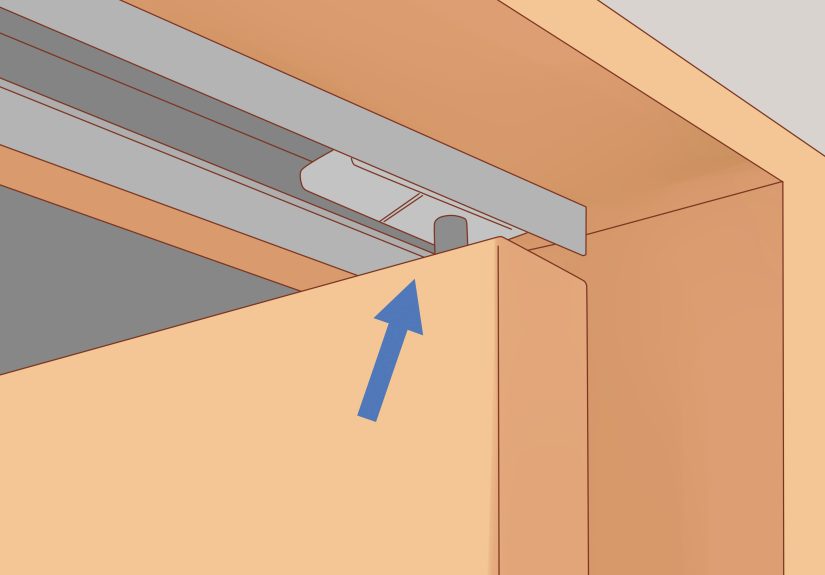
Lift straight up. Most sliding doors have enough vertical play to lift and disengage the bottom guide
or free the rollers to re-seat. Grip both sides of the door frame, lift upward, and keep it steady. -
Tilt the bottom toward you (slightly). A small anglethink “I’m opening a giant book”usually lets you
align the rollers with the track groove. -
Re-seat the rollers in the track. While lifting, nudge the top of the door so the rollers sit inside
the proper channel. Then slowly lower the door back down. -
Make sure the bottom guide is doing its job. If there’s a floor guide (often a small plastic or metal bracket),
the door should sit between the guide fins. If the guide is bent, loose, or missing, the door will keep trying to escape. -
Test with slow slides first. Slide the door back and forth gently. If it starts climbing out again,
stopWay #2 is your next move.
Pro tip: If you’re dealing with bypass doors (two doors), re-hang the rear door first if one door needs to be
removed and reinstalled. It’s easier to align everything when the “back” door is already in place.
Way 2: Clean + Adjust (The Fix That Stops Repeat Off-Track Drama)
If your sliding closet door keeps coming off the track, the cause is usually boringbut fixable: dirt in the track,
loose screws, or rollers that are out of adjustment. This is the “tune-up” that makes the door glide like it remembers
it’s a door, not a shopping cart with one bad wheel.
Best for
- Door repeatedly derails
- Door sticks, scrapes, or wobbles
- Track looks dusty, hairy, or suspiciously crunchy
Step 1: Remove the door (optional, but often easier)
- Slide the door to a spot where you can lift comfortably.
-
Lift up firmly, then tilt the bottom out toward you and pull the bottom free of the guide/track.
Lower the door carefully and set it on a blanket.
Step 2: Clean the track like you mean it
- Vacuum first (crevice tool gets the gritty stuff).
- Scrub corners with a toothbrush and mild cleaner for built-up grime.
- Wipe dry so you’re not lubricating a mud pie.
Step 3: Inspect the track and hardware
- Look for dents, bends, or lifted screws. A small bend can nudge rollers out of the groove.
- Tighten loose screws along the track and roller brackets.
- Check the floor guide for cracks or looseness. A loose guide lets the door swing and derail.
Step 4: Adjust the rollers (the secret sauce)
Most sliding closet doors have roller adjustment screws that raise or lower one side of the door. The goal is
simple: make the door hang straight, ride fully in the track groove, and avoid rubbing on the floor or frame.
- Find the adjustment screw near the roller assembly (often accessible on the face or edge of the door frame).
-
Turn the screw a little at a time. If one side drags, raise that side slightly. If the door feels “too tall” to seat
back into the track, lower (retract) the rollers before re-hanging. - Aim for even gaps and smooth sliding. A level helps, but your hands can usually feel when the door is stable.
Step 5: Lubricate the right way
Use a silicone-based spray or dry lube on the track and rollers. Avoid thick grease or oily sprays that attract
dustbecause the track will happily become a dirt magnet and you’ll be back here again, reading this article like it’s a sequel.
Reinstall and test
- Lift the door, set the rollers into the track, then swing the bottom into place.
- Confirm the bottom sits in the guide or bottom track correctly.
- Slide slowly, then normally. If it still hops out, move to Way #3.
Way 3: Replace Rollers/Guides or Repair the Track (The “Fix It For Real” Fix)
If your closet door rollers are worn, cracked, flat-spotted, or seized, the door can jump off the track no matter how
clean everything is. A damaged guide or bent track can cause the same chaos. This is the solution when you’re tired of
repeating Way #1 like a household ritual.
Best for
- Rollers don’t spin freely or look worn
- Door constantly derails even after cleaning and adjustments
- Track is bent, damaged, or pulling away from the header
Step 1: Identify the correct replacement parts
Closet door rollers aren’t one-size-fits-all. Match:
- Wheel shape: convex (rounded) vs. concave (grooved) wheels must match the track profile.
- Mount style: top-hung hangers vs. bottom rollers.
- Offsets and dimensions: many kits use different offsets for front vs. rear doors in bypass systems.
If you’re not sure, remove one roller and bring it to a hardware store, or compare it to replacement part diagrams from a
reputable hardware manufacturer.
Step 2: Remove the old rollers (typical process)
- Remove the door and set it on a stable surface (blanket on the floor, or sawhorses if you’re fancy).
- Locate the roller assemblies at the top (or bottom, depending on your door type).
- Unscrew the assembly. Some designs slide out of a slot; others are held by one or two screws.
Step 3: Install new rollers and prep for re-hanging
- Install the new assemblies in the same position as the old ones.
-
Before re-hanging, retract the rollers (lower the door height) so the door can fit into the track without
a wrestling match. - Re-hang the door, then adjust roller height until the door is plumb, stable, and glides smoothly.
Step 4: Replace or realign the floor guide (don’t skip this)
The floor guide keeps bypass doors from swinging and popping out. If it’s cracked, missing, or misaligned, the door will
keep derailing even with brand-new rollers. Reposition it so the door panels sit neatly between the guide fins, then tighten
securely.
Step 5: If the track is the villain, fix the track
- Tighten track screws into solid framing (not just drywall).
- Check level and alignment: a sagging top track can encourage rollers to climb out.
-
Replace a bent track if it’s visibly damaged. Track kits often come with matching hangers and guides,
which can be worth it for consistent fit. - Add stops so the door can’t slam into the end and bounce out of the groove.
Specific example (bypass hardware): Many residential bypass track systems are designed so you hang the
rear door first, then the front door, and finish by aligning/attaching an adjustable door guide and tweaking hangers for
squareness. That sequence matters because it prevents the two doors from fighting for the same space.
Troubleshooting: Why Your Closet Door Keeps Coming Off the Track
1) “It goes back on… then immediately pops off again.”
- Rollers are too high/low on one side (adjust them evenly)
- Floor guide is loose or missing
- Track has a dent or bend where the door derails
2) “It scrapes the floor.”
- Lower the door via roller adjustment
- Check for carpet buildup or thick rug interfering with the bottom track/guide
3) “It wobbles like it’s on a cruise ship.”
- Tighten the track screws and roller bracket screws
- Replace worn rollers
- Confirm the guide is centered and snug
4) “It sticks in one spot.”
- Clean the track (seriously, that one sticky spot is usually grime)
- Inspect for dents
- Check rollers for flat spots or seized bearings
Preventive Maintenance (So You Don’t Become a Full-Time Closet Door Mechanic)
- Monthly: quick vacuum of the track, especially if you have pets.
- Every 6 months: tighten screws and apply a light silicone/dry lube.
- Any time the door feels “off”: adjust rollers before it derails completely.
When to Call a Pro
DIY is greatuntil it isn’t. Consider professional help if:
- The door is heavy glass/mirror and you can’t safely handle it
- The track is pulling away from the header or framing is damaged
- You suspect the door frame is warped or the opening is severely out of square
Real-World Experiences: What Usually Happens (and What Actually Works)
Closet door fixes are rarely “one perfect step.” They’re more like tiny detective stories where the suspect is either
dust, loose screws, or a roller that has seen better decades. Here are a few common real-life scenarios
homeowners run intoand the fix that tends to end the drama.
Experience #1: The “I’m Late for Work” Derailment
Someone slides the door a little too aggressively (because mornings), it hops out of the track, and suddenly your wardrobe is
behind a tilted panel that refuses to budge. In this situation, Way #1 is usually the hero: lift the door, tilt the bottom out
slightly, and re-seat the rollers. The key is to slow down at the endlowering the door gently keeps the rollers from landing
half-in, half-out. People often think they need tools, but the quick reset works because most doors are designed with a bit of
vertical play for installation and adjustment. The “aha” moment is realizing you’re not forcing the door back; you’re guiding it
back into the groove like a shopping cart wheel that finally decides to behave.
Experience #2: The Door That “Fixed” Itself… Until Tonight
This is the classic: you pop it back on, it slides fine for a day, and then it’s off track again the next time someone closes it
with enthusiasm. That’s usually a Way #2 situation. Homeowners describe this as “it feels loose” or “it wobbles at the bottom.”
The repeat derail is often caused by a loose floor guide, a track screw backing out, or rollers that are slightly out of height
alignment. A five-minute vacuum and a few turns of a screwdriver can make a shocking difference. The best part? Once the track is
clean and the rollers are adjusted so the door hangs straight, the door typically stops trying to audition for an escape room.
Experience #3: The Older Condo Door That Has Opinions
In older homes and apartments, the closet opening may not be perfectly square anymore. Some doors will “ride” toward the edge of
the track and pop out at the same spot every time. People often blame the door itself, but the root cause can be a slightly bent
track lip, worn rollers with flat spots, or hardware that’s just tired. This is where Way #3 shines: replacing rollers (and, if
needed, the guide) can make an old door slide like new. The biggest tip from real-world fixes is to match the replacement roller
shape to the track profileconvex vs. concave matters more than you’d think. Once the right rollers are installed and adjusted,
the door stops “climbing” out of the groove. And if the track is visibly damaged, replacing the track kit can be the cleanest,
most permanent reset.
Experience #4: The Invisible Enemy (Pets, Hair, and Mystery Gunk)
If you have pets, the bottom track is basically a tiny hallway that collects fur, dust, and whatever your vacuum missed. Many
homeowners only discover the problem after the door starts grinding and then derails. The fix is rarely complicated: vacuum,
toothbrush scrub, wipe dry, then a light silicone spray. Once the track is clean, the door glides instead of bouncing. It’s a small
maintenance habit that prevents the “why is the door doing that?” conversation from happening again.
Bottom line: most “off-track” closet doors aren’t brokenthey’re out of tune. Start with the quick reset, graduate to cleaning and
roller adjustment, and if the door still misbehaves, replace the rollers/guide so you can get back to using your closet for clothes
instead of accidental carpentry.