Table of Contents >> Show >> Hide
- Before You Report: A 60-Second Reality Check
- Way #1: Call 311 (or Your City’s Non-Emergency Line)
- Way #2: Use a City App or Online Portal (The “Report + Track” Route)
- Way #3: Contact the Agency That Can Ticket or Tow (Parking Enforcement / Parking Authority)
- What to Document (Without Becoming the Neighborhood Paparazzi)
- Common Scenarios and the Best Reporting Choice
- FAQ: Quick Answers That Save You Time
- Conclusion
- Real-World Experiences: What Reporting Illegal Parking Actually Feels Like
Illegal parking is the small daily chaos that turns a calm Tuesday into a full-body sigh: the car in the bike lane,
the SUV parked like it paid rent on the sidewalk, the mystery sedan blocking your driveway as if it’s auditioning
for a role in “Fast & Inconsiderate.”
The good news: in most U.S. cities, you have multiple legit ways to report illegal parking without playing
“Parking Cop: The Musical” in the street. The better news: if you report it the right waywith the right details
and through the right channelyou’re far more likely to get a ticket, a tow, or at least a quick response.
Below are three practical methods that work across the United States, plus a simple checklist to help you pick the
best option for your situation, and real-world examples so you don’t waste time yelling into the void.
Before You Report: A 60-Second Reality Check
“Illegal parking” can mean anything from “annoying but probably not urgent” to “this is a safety hazard right now.”
Before you report, use this quick filter so your request lands with the right team (and the right priority).
1) Is it a safety hazard or blocking emergency access?
- High priority: blocking a fire hydrant, crosswalk, sidewalk access, bus stop, or traffic lane.
- High priority: blocking a driveway so you can’t get in/out (especially if you need emergency access).
- High priority: parked in a bike lane where cyclists are forced into traffic.
2) Is it on public street or private property?
- Public street: city parking enforcement, police non-emergency, or 311-type systems usually apply.
- Private property (apartment lot, store lot, HOA road): the property owner/manager typically has the power to towcities often won’t.
3) Is it an “immediate problem” or a “repeat pattern”?
- Immediate problem: you need a response today (or within hours).
- Repeat pattern: same corner, same bad behavior, every Friday at 6 p.m.you want targeted enforcement.
Now, let’s talk about the three best ways to report illegal parkingstarting with the one that usually gets a human
being involved the fastest.
Way #1: Call 311 (or Your City’s Non-Emergency Line)
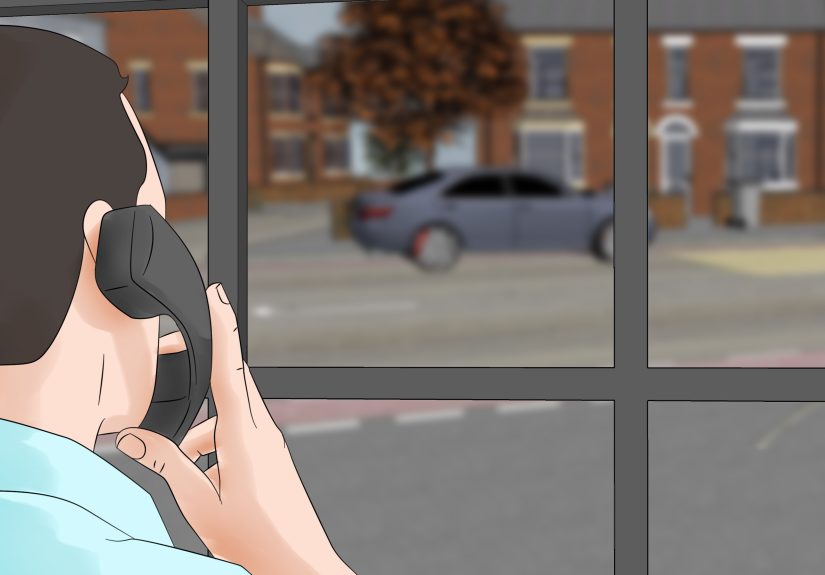
If you want the “I need this handled” option, calling is still king. Many cities route non-emergency issues through
311 (or an equivalent local number). Some situationslike a blocked drivewaymay be routed to police
dispatch in certain cities, even if it’s not a life-or-death emergency.
When calling is the best move
- The car is blocking your driveway and you need access in/out.
- The vehicle is blocking a fire hydrant or creating a safety hazard.
- You’re not sure which department handles it and want the operator to route it correctly.
- You need to explain nuance (“It’s a construction trailer, unhitched, left overnight, and it’s eating the entire block.”).
What to say (copy/paste this script into your brain)
Keep it factual and fast. A useful report sounds like:
“Hi, I’d like to report illegal parking. The vehicle is a [color/make/model] with plate [plate].
It’s located at [address or cross-streets]. It’s currently [blocking driveway / hydrant / bike lane].
The violation started around [time] and it’s still there now.”
Pro tips that increase the odds of action
- Be specific about the location. Use address + cross street + side of the street if possible.
- Describe the violation clearly. “Blocking hydrant” gets more traction than “parked badly.”
- Stay calm. You’re reporting a problem, not auditioning for a courtroom drama.
- Ask for a reference or service-request number if the system provides one.
Example: New York City’s 311 system lists common illegal parking categories like blocking hydrants, crosswalks, bike lanes,
sidewalks, bus stops, and accessible (disabled) parking spacesplus details they ask you to include, like vehicle description
and license plate.
Example: San Francisco routes many illegal-parking and blocked-driveway requests through 311 so enforcement can ticket or tow,
depending on the situation.
Don’t guess which number applies in your city. A safe rule of thumb:
use 311 if your city has it, and if you’re not sure, search your city name + “parking enforcement” or “illegal parking report.”
If there’s an immediate hazard, follow local guidancesome places direct driveway-blocking calls to police dispatch.
Way #2: Use a City App or Online Portal (The “Report + Track” Route)
If calling feels like emotional labor (it is), apps and online portals can be the best low-friction optionespecially for
repeat issues and non-urgent violations. Many U.S. cities have a dedicated 311 app/website, and others use platforms that let you
submit a photo, pin the location on a map, and track the request status.
When apps/portals work best
- You’re reporting a recurring problem area (double-parking near a school, chronic bike-lane blocking).
- You want a written record of what you reported and when.
- The issue is annoying, but not a “drop everything” hazard.
- You’re reporting from a noisy place where phone calls are pointless.
How to file a report that doesn’t get ignored
- Pinpoint the location precisely. Drag the map pin if the GPS is off by half a block.
- Add the “who/what/where” details. Plate number and a short description help enforcement identify the correct vehicle.
- Use a clear photo if permitted and safe. Prioritize safety and privacy; don’t escalate conflict.
- Choose the most accurate category. “Blocking driveway” beats “other” every time.
- Add timing. “Happens daily 7:30–8:15 a.m.” helps with targeted enforcement.
Real examples you’ve probably heard of
- NYC311 (app + website) for many non-emergency complaints, including illegal parking.
- SF311 (app + website) for issues like blocked driveways and illegal parking.
- BOS:311 / Boston 311 for reporting non-emergency issues, including parking complaints.
- Find It, Fix It (Seattle) for reporting selected city issues through an app.
- MyLA311 (Los Angeles) for many city service requests and issue reporting.
- SeeClickFix (used by many municipalities) for non-emergency reporting in participating cities.
One big advantage of apps: they create a paper trail. If your neighborhood has a chronic illegal-parking hotspot,
multiple well-documented reports over time can help a city justify targeted enforcement (like sending an officer during peak hours).
Way #3: Contact the Agency That Can Ticket or Tow (Parking Enforcement / Parking Authority)
Sometimes 311 is the front desk, and you need the person with the keys. Many cities have a specific parking enforcement unit,
transportation department, or parking authority that handles ticketing, towing, booting, and impounds.
When going direct is smartest
- Your city is known for routing parking issues to a parking authority (common in bigger metros).
- You need enforcement action, not general “service request” triage.
- You’re dealing with a repeat offender and want the right team to see the history.
- The violation involves towing/impound rules that parking enforcement handles every day.
Examples of direct-to-enforcement channels
- San Francisco: the city directs blocked-driveway/illegal-parking enforcement requests through 311 and transportation enforcement channels.
- Chicago: the city provides guidance for reporting illegally parked vehicles and driveway blocking, including 311 options.
- Philadelphia: the Philadelphia Parking Authority provides a line/online option to request parking enforcement.
- Washington, D.C.: parking enforcement services are provided through the city’s public works framework.
- Houston: ParkHouston provides an online “parking violation request” process and also routes help through 311.
If you don’t know whether your city uses a parking authority, search:
[City Name] + “parking authority enforcement request” or [City Name] + “report parking violation”.
If your city has both 311 and a parking authority, 311 often routes your report to that authority anywayso use the channel that’s
easiest for you unless you specifically need the authority’s dispatch.
What to Document (Without Becoming the Neighborhood Paparazzi)
Your goal is to help enforcement identify the vehicle and understand the violationquickly. You’re not filming a docuseries.
In most cases, the details below are enough.
- Exact location: address, cross street, and side of the road (north/south/east/west) if possible.
- License plate: include the state if you can.
- Vehicle description: color, make, model, body type (sedan/SUV/van/truck), and any standout features.
- Type of violation: “blocking hydrant,” “double parked,” “in bike lane,” “blocking driveway,” etc.
- Timing: when you noticed it, and whether it’s still there.
- Optional photo: only if safe, legal, and non-confrontational.
A smart privacy rule: report through official channels, not social media. Posting photos with visible plates to “shame” someone
can escalate conflict and isn’t necessary for enforcement to act.
Common Scenarios and the Best Reporting Choice
Car blocking a fire hydrant
Treat this as high priority. Use a call-based option (311 or the relevant non-emergency number) if possible.
In some cities, you can report this directly through 311 systems, and the request is routed to responders when available.
If it’s an active emergency (smoke, fire, someone in danger), call 911no hesitation.
Car blocking your driveway
This one varies by city. Some municipalities treat a vehicle fully parked in a private driveway as trespassing and direct
residents to police dispatch; other cities route it through 311/parking enforcement and may tow if warranted.
Your best move is to follow your local city guidance and choose the fastest official channel.
Vehicle in a bike lane
If it forces cyclists into traffic, it’s a safety hazard. Use 311 (call or app) or the enforcement unit that handles street safety.
For repeat locations (delivery drivers in the same lane daily), app/portal reports with consistent timing help cities target enforcement.
Someone parked in an accessible (disabled) space without authorization
Misuse of accessible parking undermines mobility access and can be enforced through local parking rules.
Report through 311/parking enforcement with the space location and plate. If the space is on private property (like a shopping center),
notify management as wellmany properties coordinate towing or enforcement.
Abandoned vehicle vs. “just sitting there”
“Abandoned” has a legal definition that varies by local rules (time stationary, condition, plates, etc.).
Many cities have separate categories for abandoned vehicles, and the process can take longer than standard ticketing.
Use the app/portal when available so you can track statusand avoid duplicate reports unless the city requests them.
FAQ: Quick Answers That Save You Time
Should I confront the driver?
Usually, no. It can escalate fast. If you feel safe leaving a polite note, keep it short (“Please don’t block drivewaytowing enforced”),
but don’t argue in the street. Let official channels handle it.
Will a report guarantee a ticket or tow?
Not always. Enforcement depends on officer availability, priority level, and local policy. But clear reports with good details
improve the oddsand repeated, well-timed reports can build a case for targeted enforcement.
How long does it take?
Response time varies wildly. Some cities handle urgent hazards quickly, while non-urgent requests may take days (or longer).
The channel you choose matters: calls often work faster for immediate hazards; portals are better for tracking and patterns.
Can I report anonymously?
Many 311/code-report systems allow anonymous or minimal-info reporting, but rules vary by city. If anonymity matters to you,
check the reporting form’s privacy options or ask the operator what’s required.
What if it’s on private property?
Contact the property owner/manager or security. They usually have the authority to tow under local rules and posted signage.
Cities often can’t ticket/tow on private lots unless there’s a specific agreement or a public-safety issue.
Conclusion
Reporting illegal parking doesn’t have to be dramatic. Pick the channel that matches the problem:
(1) call 311/non-emergency for urgent hazards and complex situations,
(2) use apps/portals for trackable reports and recurring issues,
and (3) contact parking enforcement directly when your city’s parking authority is the real decision-maker.
The secret sauce is simple: give precise location, plate + vehicle description, and a clear explanation of the violation.
Do that, and your report stops being “a complaint” and becomes “actionable information.”
Real-World Experiences: What Reporting Illegal Parking Actually Feels Like
Let’s be honestreporting illegal parking is rarely your favorite hobby. Nobody wakes up and thinks,
“Today, I will contribute to civic order.” It’s usually more like, “I would like to leave my house without performing
a three-point turn over a curb. Please and thank you.”
In neighborhoods with tight parking, the most common experience is the “quick report, quick relief” moment.
Someone blocks a driveway during school pickup, you file a 311 request with the exact address and plate, andsometimes
enforcement arrives before your coffee cools. When that happens, it feels like the city and you are briefly on the same team,
like a buddy-cop movie where the buddy is a parking officer and the “cop” is your completely reasonable desire to use your driveway.
But there’s also the “track it and wait” experience, especially with online requests. You submit a report for the same car that
parks in the bike lane every morning, and the first few reports feel like tossing paper airplanes into a hurricane.
Then, one day, you notice enforcement posted up at exactly 8:05 a.m.the peak time you kept noting in your reportsand suddenly
the lane is clear. That’s the long-game win: apps and portals may not feel dramatic in the moment, but they can help cities see patterns
and allocate enforcement where it actually matters.
Another common experience is learning (the hard way) that “illegal” depends on location and context. A car on a public street is one thing.
A car in a private apartment lot is another. People often report a vehicle in a private space and get a response that boils down to,
“We can’t ticket that here.” It’s frustratingbut it’s also a clue: the correct move is usually calling property management or security,
because they have the authority to tow when the city doesn’t. The best reports come from knowing who owns the problem.
Then there’s the “please don’t make me a villain” momentwhen you’re reporting something that’s genuinely hazardous,
like a blocked hydrant, and you worry you’re being petty. You’re not. Blocking emergency access is one of those issues where
the stakes are real, even when everything looks calm. People who report hazards often describe the same feeling afterward:
relief, plus a tiny spark of “Wow, adulting is weird.”
Finally, you’ll run into the “human factor” experience: sometimes the car is gone before enforcement arrives.
That doesn’t mean your report was pointless. It means the system is dealing with moving targets, limited staffing,
and a city’s worth of competing priorities. If the behavior repeats, that’s when your documented history matters.
Over time, consistent reporting turns random frustration into a clear patternsomething your city can actually enforce.