Table of Contents >> Show >> Hide
- Why These Stories Hit So Hard (Even When They’re Anonymous)
- The 30 Most Terrifying Story Patterns Netizens Share
- 1) “It Was Self-Defense… But My Brain Didn’t Get the Memo”
- 2) The Bar Fight That Turned Into a Funeral
- 3) “I Thought It Was Unloaded”
- 4) The Car Crash That Wasn’t Just a Crash
- 5) A “Prank” With a Permanent Ending
- 6) The Home Intruder Scenario Nobody Wants
- 7) “I Was a Soldier. It Was My Job. It Still Haunts Me.”
- 8) The “Wrong Person” Tragedy
- 9) Domestic Violence, Escalation, and the Aftermath
- 10) “I’m Not a Monster… But I Did a Monster Thing”
- 11) The Workplace Accident With a Name and a Family
- 12) Medical Error and Moral Fallout
- 13) “I Called 911. They Died Anyway.”
- 14) The “Mercy” Debate That Isn’t Theoretical
- 15) The Chain Reaction: One Death, Many Ruined Lives
- 16) “I Didn’t Mean to… But I Also Didn’t Stop”
- 17) The Night You Can’t Remember Clearly
- 18) The Teen Years That Don’t Let Go
- 19) “The Jury Said Not Guilty. My Conscience Didn’t.”
- 20) The Person Who Looks Fine (But Isn’t)
- 21) “Everyone Keeps Asking Me to Talk About It”
- 22) The Case That Went Viral
- 23) “I Heard Them Make a Sound I’ll Never Forget”
- 24) The Family Member Who Didn’t Make It
- 25) “I Became the Villain in Someone Else’s Story”
- 26) The Prison Years That Don’t End the Memory
- 27) “I Keep Rewriting the Scene”
- 28) The Moment You Realize You’re Capable of It
- 29) “I Thought I’d Feel Something Different”
- 30) The Aftermath That Turns Into a Second Crisis
- What Psychology and Public Health Help Explain
- What the Law Cares About (And Why That Can Feel Cold)
- How to Read These Stories Without Letting Them Eat You Alive
- Conclusion
- Extra: of Netizen-Style “Aftermath” Experiences (And What They Reveal)
- SEO Tags
Content note: This article discusses death, violence, trauma, and the psychological aftermath of killing (including self-defense, accidents, combat, and criminal acts). It avoids graphic details and focuses on human impact, accountability, and recovery.
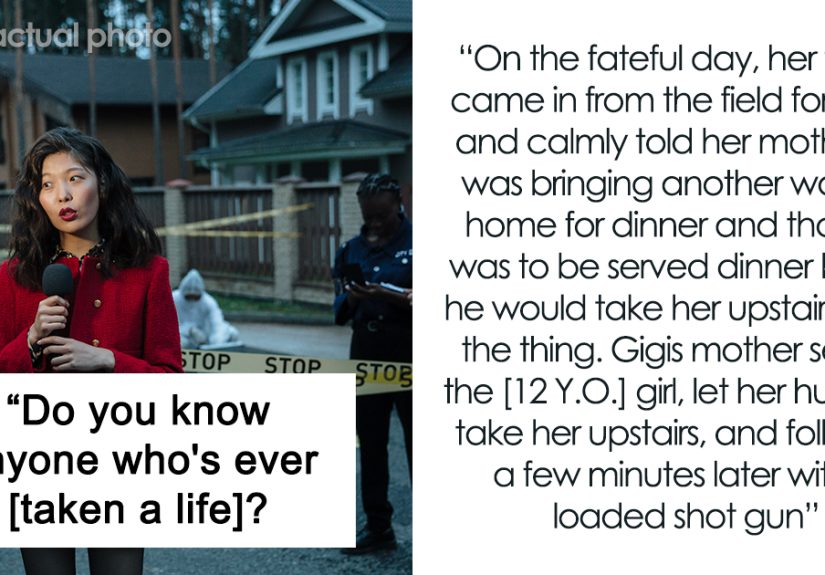
The internet has a strange superpower: it can turn whispers into megaphones. And when “netizens” start sharing stories about the heaviest thing a person can dotake a lifethe comments don’t just feel scary. They feel existential. Because the most terrifying part usually isn’t the moment itself. It’s what comes after: the guilt, the adrenaline crash, the legal fallout, the sleepless nights, the permanent “before and after” line in someone’s life.
Below are 30 of the most chilling types of stories that show up again and again in online threadstold as patterns, not as sensationalized play-by-plays. Think of these as a map of what netizens say “taking a life” can look like in the real world: messy, complicated, often heartbreaking, and never as cinematic as movies pretend.
Why These Stories Hit So Hard (Even When They’re Anonymous)
Online confession culture often feels like a modern campfire: people gather around the glow of a screen to share the kinds of truths they can’t say at work, at dinner, or sometimes even to themselves. When the topic is homicidewhether criminal, accidental, or legally justifiedthree forces collide:
- Law: “What happened?” becomes “What can be proven?” and “What charges apply?”
- Mind: The brain may replay the event through intrusive memories, nightmares, avoidance, hypervigilance, or emotional numbingsymptoms often associated with traumatic stress.
- Morals: Even if the law says “justified,” a person can still feel deep guilt or shame. Some clinicians describe this as “moral injury”distress that comes from actions (or inaction) that violate one’s core values.
Netizens don’t always use those terms. But their stories often describe the same thing: the moment doesn’t end when the heart stops beating. It keeps echoingthrough court dates, family reactions, relationship strain, and a mind that won’t hit “close tab.”
The 30 Most Terrifying Story Patterns Netizens Share
Important: These are paraphrased patterns commonly seen in online discussions. Details are intentionally generalized to avoid harm, glamorization, or doxxing.
1) “It Was Self-Defense… But My Brain Didn’t Get the Memo”
A person describes acting to survivethen immediately experiencing panic, shaking, vomiting, and weeks of replaying the split-second decision. The “right” choice can still feel wrong at 3 a.m.
2) The Bar Fight That Turned Into a Funeral
Someone talks about an argument that escalated faster than anyone expected. The terrifying part isn’t just the outcomeit’s the realization that a few seconds of rage can delete a lifetime.
3) “I Thought It Was Unloaded”
Netizens often share stories of negligent handling where a “harmless” moment becomes irreversible. Many describe a lifelong loop of “If only I’d checked one more time.”
4) The Car Crash That Wasn’t Just a Crash
A driver survives, someone else doesn’t. Even without malicious intent, survivors describe crushing guilt, legal consequences, and a fear of driving that can last for years.
5) A “Prank” With a Permanent Ending
Online threads sometimes include youthful stupidityreckless stunts, dangerous dares, or thoughtless choices. The horror is realizing you can’t “un-prank” a death.
6) The Home Intruder Scenario Nobody Wants
These stories are often told with trembling ambiguity: relief at being alive, disgust at what happened, and dread of being judged by strangers who think they know what they’d do “in that situation.”
7) “I Was a Soldier. It Was My Job. It Still Haunts Me.”
Combat-related accounts often mention nightmares, moral conflict, and a disconnect between public praise (“hero”) and private distress (“I can’t forget faces”).
8) The “Wrong Person” Tragedy
Sometimes a person describes mistaking a situationmisreading a threat, reacting too quickly, or acting on bad information. The terror is living with the knowledge that certainty can be an illusion.
9) Domestic Violence, Escalation, and the Aftermath
Threads may include stories where ongoing abuse ends in deathsometimes in self-defense, sometimes in a moment of breaking. The chilling part is how often the story begins long before the final event.
10) “I’m Not a Monster… But I Did a Monster Thing”
Some posts describe a person wrestling with identity collapse: “If I did this, what am I?” That question can become more haunting than any punishment.
11) The Workplace Accident With a Name and a Family
Industrial incidents appear in netizen stories as a special kind of horror: everyone was “just doing their job,” and someone didn’t go home. People describe hearing the sound forever.
12) Medical Error and Moral Fallout
Healthcare-adjacent stories often focus on the weight of responsibility when a mistake contributes to death. The fear isn’t only lawsuitsit’s losing trust in your own hands.
13) “I Called 911. They Died Anyway.”
Some netizens share accounts where they caused harm accidentally and tried to help immediatelyonly to lose the person. The nightmare is the helplessness: doing everything “right” too late.
14) The “Mercy” Debate That Isn’t Theoretical
Occasionally, threads include ethically complex end-of-life decisionspeople describing actions they believed reduced suffering. Even when motives are compassionate, the emotional toll can be brutal.
15) The Chain Reaction: One Death, Many Ruined Lives
These stories focus on ripple effects: children without parents, families shattered, communities divided, and the person responsible realizing they didn’t just end one lifethey altered dozens.
16) “I Didn’t Mean to… But I Also Didn’t Stop”
Some accounts describe freezing or failing to intervene. The horror isn’t a direct actit’s the feeling of being complicit through inaction, and the shame that follows.
17) The Night You Can’t Remember Clearly
Netizens sometimes describe intoxication or blackouts around a fatal incident. Terrifying doesn’t even cover it: not knowing exactly what you did can become its own prison.
18) The Teen Years That Don’t Let Go
Stories where the person was very young when it happened are especially chilling. People describe growing up with a secret that matures with themlike a shadow that keeps learning new tricks.
19) “The Jury Said Not Guilty. My Conscience Didn’t.”
Legal outcomes and emotional outcomes don’t always match. Some netizens describe being cleared in court while still feeling condemned in their own mind.
20) The Person Who Looks Fine (But Isn’t)
A recurring theme: outward normalcy. People go to work, laugh at jokes, post memeswhile privately unraveling. The terror is how invisible profound trauma can be.
21) “Everyone Keeps Asking Me to Talk About It”
Some describe being pressured by friends, media, or family to explain the event. The terrifying part is becoming a story for other people’s curiosity while you’re still bleeding internally.
22) The Case That Went Viral
Netizens sometimes mention the unique nightmare of online judgment: strangers picking apart your worst day like it’s a movie plot hole, ignoring that real lives don’t have neat arcs.
23) “I Heard Them Make a Sound I’ll Never Forget”
Without going graphic, many accounts mention sensory flashbackssounds, smells, or small visual details that return uninvited. A mind can turn a moment into a lifetime subscription.
24) The Family Member Who Didn’t Make It
Accidental deaths involving relatives can be especially harrowing. The story becomes a double wound: grief for the person lost and guilt for being the cause.
25) “I Became the Villain in Someone Else’s Story”
Even in self-defense or accidents, the deceased’s loved ones may see only one thing: you’re the reason they’re gone. Living with that hatred can be psychologically corrosive.
26) The Prison Years That Don’t End the Memory
Accounts from incarceration often describe time as punishment, but not as erasure. Many say the memory doesn’t fadesometimes it sharpens in the quiet.
27) “I Keep Rewriting the Scene”
A classic netizen pattern: obsessive counterfactuals. “If I had done X, they’d still be alive.” This kind of mental replay can mirror symptoms seen in trauma and complicated guilt.
28) The Moment You Realize You’re Capable of It
Some posts aren’t about justification or innocencethey’re about shock at the self. People describe a terrifying inner discovery: under certain conditions, they did what they never imagined they could.
29) “I Thought I’d Feel Something Different”
A number of netizens describe emotional numbness, delayed grief, or a hollow “nothing.” The terror is not feeling like yourselflike your emotions got unplugged.
30) The Aftermath That Turns Into a Second Crisis
Many stories end with a hard truth: the event can trigger depression, substance misuse, relationship breakdowns, or suicidal thoughts. For some, surviving the moment is only the beginning of the fight.
What Psychology and Public Health Help Explain
Netizens may use blunt language (“I’m broken,” “I’m haunted,” “I can’t move on”), but research and clinical resources offer frameworks that can make these reactions less mysterious:
- Traumatic stress responses can include intrusion (unwanted memories), avoidance, negative mood changes (like guilt or shame), and heightened arousal (like irritability or sleep problems). These patterns are widely used in clinical descriptions of PTSD.
- Moral injury isn’t exactly the same as PTSD. People often describe it as a wound to their sense of selfwhen what happened violates deeply held values (even if it was unavoidable).
- Survivor guilt can appear when someone lives and someone else dieseven if the survivor “did everything right.” The mind can insist on responsibility simply because it needs an explanation.
And zooming out, public data resources show that deaths by violence and injury are not rare, which means many communities contain hidden stories like theseoften unspoken, often unresolved.
What the Law Cares About (And Why That Can Feel Cold)
Netizen stories frequently clash with the legal system because law focuses on definitions: homicide, manslaughter, self-defense, justification. In legal terms, “homicide” is broader than “murder” and can include killings that are not criminal, depending on intent and circumstances. That distinction matters in courtbut it doesn’t always soothe a conscience.
Many posters also discover a brutal reality: even if a killing is ruled justified, the process can still be punishinginvestigations, interviews, attorney fees, public scrutiny, and the permanent shift in how others see you.
How to Read These Stories Without Letting Them Eat You Alive
- Don’t treat confessions as entertainment. Behind the screen are real lossesoften multiple losses.
- Be wary of certainty. Anonymous posts can omit details, distort timelines, or reflect trauma-driven memory gaps.
- Notice the themes, not the “gotchas.” The most valuable takeaways are about prevention, de-escalation, and supportnot internet verdicts.
- If you feel overwhelmed, step back. Doomscrolling true-crime-adjacent content can intensify anxiety and intrusive thoughts.
Conclusion
The scariest thing about these netizen stories isn’t that humans can do harm. We already know that. The scariest thing is how often the stories sound ordinary at the start: a drive home, an argument, a job shift, a split-second decision. Then one moment becomes a lifelong aftermath.
If there’s a responsible way to sit with this topic, it’s this: take prevention seriously (especially de-escalation and safe decision-making), take trauma seriously (including guilt and moral injury), and take help seriouslybecause sometimes the “after” is where people need saving.
Extra: of Netizen-Style “Aftermath” Experiences (And What They Reveal)
One of the most consistent things netizens describe isn’t the act itselfit’s the strange, stubborn aftermath that refuses to behave like a movie ending. People talk about leaving a police station and noticing the world looks insultingly normal: the same traffic lights, the same fast-food signs, the same group chat notifications. That normalcy can feel terrifying, like reality is gaslighting you. “How is everyone just… continuing?” they ask. But of course they are. The world doesn’t pause for private catastrophes.
Many posters describe a physiological “comedown” that hits hours later. Hands that won’t stop shaking. A stomach that won’t hold food. A mind that replays tiny fragmentssomeone’s shoes, a sound, a particular phraseon a loop. Even those who insist the act was necessary (self-defense, line of duty, combat) often describe a new relationship with silence. Quiet rooms become loud. Sleep becomes a negotiation: “If I close my eyes, will it start again?”
Another common netizen experience is social whiplash. Some people get support. Others get distance. Friends don’t know what to say, so they say nothing. Family members either tiptoe around the subject or bulldoze right through it, demanding details like they’re entitled to them. A few posters mention becoming hyper-aware of judgmentreal or imaginedreading meaning into every raised eyebrow, every pause in conversation. The event becomes a secret that changes how they sit in a chair, how they answer “How’ve you been?” and how they interpret kindness. Even compliments can feel unbearable, because praise doesn’t erase the memory.
Netizens also talk about identity rupture. Before, they had a stable story about themselves: “I’m a good person,” “I’m careful,” “I’m not violent.” After, that story needs revision. Some people try to patch it with denial (“It wasn’t me”), others with self-hatred (“I’m evil”), and others with compartmentalization (“That was a different life”). The healthiest-sounding postsrare, but powerfuldescribe a slower process: accountability without self-destruction, grief without performance, and a willingness to seek professional help without treating therapy like a courtroom.
Finally, a number of netizens mention an uncomfortable truth: they needed support and didn’t know where to find it. They weren’t asking for absolution; they were asking for a way to keep living without becoming a danger to themselves. That’s the part the internet can’t reliably provide. Threads can offer empathy, but they can also amplify shame. If these stories teach anything practical, it’s that the aftermath deserves real, trained helpnot just replies and upvotes.