Table of Contents >> Show >> Hide
- Before You Change Anything: A 15-Minute Plan That Saves Hours
- 33 Clever Small Walk-In Closet Ideas
- 1) Double your hanging space with a second rod
- 2) Use slim, matching hangers
- 3) Install a valet rod for outfit planning
- 4) Add a fold-down or foldaway hanging rail
- 5) Put your “A-team” at eye level
- 6) Use shelf dividers to stop sweater avalanches
- 7) Mix open shelves and closed storage
- 8) Add drawers for small items (your future self will thank you)
- 9) Go vertical with shelves to the ceiling
- 10) Put hooks on unused wall space
- 11) Turn the back of the door into a storage wall
- 12) Use clear bins where you tend to “forget” things
- 13) Label like you mean it
- 14) Add a small hamper (or two) to protect your floor
- 15) Use a shoe strategy: shelves, cubbies, or bins
- 16) Store boots upright to save space
- 17) Create a “landing strip” shelf
- 18) Add a charging station (yes, in your closet)
- 19) Use a mirror to make the closet feel larger
- 20) Choose better lighting (it changes everything)
- 21) Light the rod or shelves for boutique vibes
- 22) Use a clear or compact vanity moment
- 23) Try a rolling cart for flexible storage
- 24) Put rarely used items deeper, not higher
- 25) Use uniform containers for calmer visuals
- 26) Make corners work with L-shaped hanging or corner shelves
- 27) Add pull-out baskets for “grab-and-go” categories
- 28) Use a “maybe” bin to stop decision fatigue
- 29) Try the reverse-hanger method to declutter
- 30) Rotate seasonally (your closet is not a museum)
- 31) Build in adjustability (your wardrobe will change)
- 32) Consider a modular closet system for tight footprints
- 33) Give the floor a job (but not “pile storage”)
- How to Keep a Small Walk-In Closet Organized Long-Term
- of Real-Life Closet Experience (So You Can Skip the Regrets)
- Conclusion
A small walk-in closet is basically a tiny room with big opinions. It wants to be a boutique. You want it to be a stress-free “grab outfit, exit like a movie star” zone.
Somewhere in the middle is the sweet spot: a closet that works hard, looks good, and doesn’t eat your mornings.
The secret isn’t owning fewer things (though… it helps). It’s using space like a strategist: vertical height, wall depth, door backs, awkward corners, and the “why is this here?” floor pile.
Below are 33 practical, design-forward ideasmany inexpensivethat can make a small walk-in closet feel bigger, calmer, and far more functional.
Before You Change Anything: A 15-Minute Plan That Saves Hours
Measure, then decide your “storage mix”
Small walk-ins succeed when you match storage to your wardrobe. If you mostly hang shirts and dresses, prioritize rods. If you fold knits and denim, prioritize shelves and drawers.
Quick rule: give everyday items eye-level space and put occasional items higher or deeper in.
Pick a simple organizing logic (and stick to it)
Choose one main system: by category (tops, pants, dresses), by function (work, gym, weekend), or by color within categories.
Closets fall apart when your system changes every Tuesday.
Decide what “clutter-proof” looks like for you
If you hate visual clutter, go for more closed storage (drawers, bins with lids). If you’re “out of sight, out of mind,” lean into open shelves plus clear bins and labeled zones.
33 Clever Small Walk-In Closet Ideas
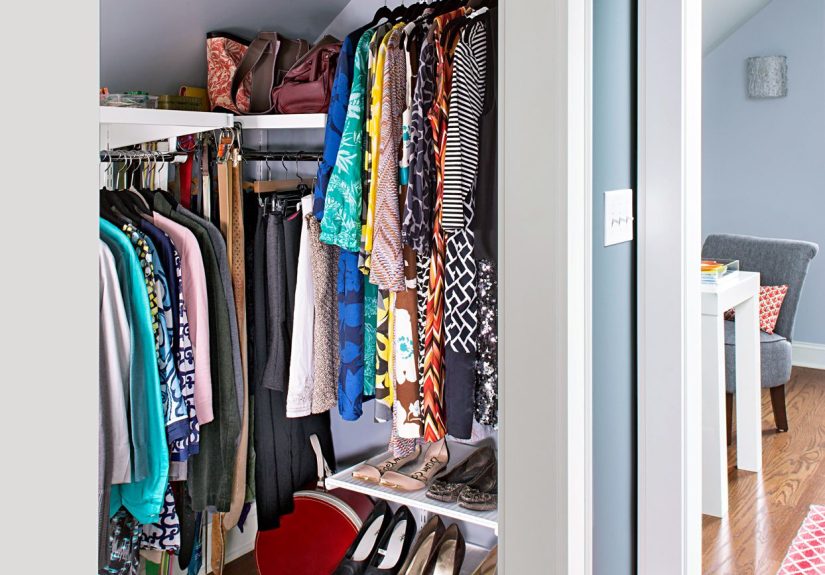
1) Double your hanging space with a second rod
Add a lower rod beneath the main one for shirts, blouses, and folded-over pants. You’ll instantly “create” a second closet without needing a second closet.
2) Use slim, matching hangers
Matching hangers reduce visual noise and create a cleaner line. Slim hangers also free up precious incheslike a tiny closet diet that doesn’t ruin your weekend.
3) Install a valet rod for outfit planning
A pull-out valet rod is perfect for staging tomorrow’s outfit, steaming items, or hanging a “maybe” piece you’re deciding on. It’s a small upgrade with big daily payoff.
4) Add a fold-down or foldaway hanging rail
If wall space is tight, a foldaway rail gives you temporary hanging space for prep, laundry, or air-dryingthen disappears when you don’t need it.
5) Put your “A-team” at eye level
Store the clothes you wear most where your eyes naturally land. Make the top shelves for off-season items and special-occasion pieces you see less often.
6) Use shelf dividers to stop sweater avalanches
Shelf dividers keep stacks from slumping into each other. They’re especially helpful for knits and jeans, where one tug can cause a whole pile to wobble dramatically.
7) Mix open shelves and closed storage
Open shelves make access easy; closed bins and drawers hide the messy stuff. Combining both keeps your closet functional without turning it into a visual to-do list.
8) Add drawers for small items (your future self will thank you)
Socks, underwear, tees, workout geardrawers keep them contained and easy to find. Use dividers so your drawers don’t become “fabric soup.”
9) Go vertical with shelves to the ceiling
High shelves are perfect for luggage, seasonal bins, and keepsakes (the stuff you don’t need daily). Just label bins so you’re not playing “mystery tote” later.
10) Put hooks on unused wall space
Hooks can hold hats, bags, belts, or tomorrow’s outfit. If you’ve got a blank wall, you’ve got storage potential.
11) Turn the back of the door into a storage wall
Over-the-door racks and pockets are great for accessories, scarves, and shoes. The door is already therelet it earn its keep.
12) Use clear bins where you tend to “forget” things
Clear bins work well for accessories and off-season items because you can see what’s inside without opening everything like a raccoon in a pantry.
13) Label like you mean it
Labels aren’t just cutethey prevent “temporary piles” from becoming permanent residents. Keep labels simple: “Gym,” “Swim,” “Winter Hats,” etc.
14) Add a small hamper (or two) to protect your floor
Closets get messy fast when laundry has nowhere to go. A slim hamper or two-bag sorter keeps the floor clear and your sanity intact.
15) Use a shoe strategy: shelves, cubbies, or bins
The best shoe storage depends on your space: vertical shelves for visibility, cubbies for tidy lines, or clear boxes for stacking. Pick one method so shoes don’t migrate.
16) Store boots upright to save space
Boots collapse, spread out, and steal room. Boot shapers, simple inserts, or vertical storage keeps them in one footprint.
17) Create a “landing strip” shelf
Reserve a small shelf or tray for daily essentialswatch, keys, wallet, sunglasses. It reduces morning scavenger hunts.
18) Add a charging station (yes, in your closet)
A small charging shelf for a smartwatch, phone, or portable steamer keeps cords contained. Just keep liquids away from outlets and don’t overload the space.
19) Use a mirror to make the closet feel larger
A full-length mirror expands the visual space and improves functionality. Bonus: you can check outfits without sprinting to the bedroom mirror mid-sock.
20) Choose better lighting (it changes everything)
Bright, even lighting makes a small closet feel bigger and helps you tell navy from black. Motion-sensor LED strips are an easy upgrade with high impact.
21) Light the rod or shelves for boutique vibes
LED lighting under shelves or along rods adds visibility and style. It also makes your closet feel intentional, not like a storage cave with hangers.
22) Use a clear or compact vanity moment
If you have a sliver of floor space, a small vanity shelfor even a clear (lucite-style) tablecreates a getting-ready zone without visually crowding the room.
23) Try a rolling cart for flexible storage
A slim rolling cart can hold hair tools, accessories, or folded items. Roll it out when you need it, tuck it back when you don’t.
24) Put rarely used items deeper, not higher
In tiny walk-ins, ultra-high shelves can be annoying. If you have depth, store occasional items toward the back (still labeled), and keep daily items front and center.
25) Use uniform containers for calmer visuals
Matching bins create a streamlined look and help prevent “random chaos energy.” If you’re going for a serene closet, this is the fastest aesthetic win.
26) Make corners work with L-shaped hanging or corner shelves
Corners are often wasted. Consider corner shelves for bags, folded items, or baskets, or extend hanging around the corner if your layout allows.
27) Add pull-out baskets for “grab-and-go” categories
Pull-out wire or fabric baskets are great for scarves, gym gear, or casual tees. They’re easy to access and keep categories contained.
28) Use a “maybe” bin to stop decision fatigue
Unsure about an item? Put it in a “maybe” bin with a date. If you don’t miss it by the deadline, it’s probably safe to donate.
29) Try the reverse-hanger method to declutter
Start with hangers turned backward. When you wear something, flip that hanger forward. After a set time, what’s still backward is a strong clue you can let it go.
30) Rotate seasonally (your closet is not a museum)
Keep the current season accessible and store off-season items in labeled bins up top. Fewer items in active rotation makes the closet feel instantly bigger.
31) Build in adjustability (your wardrobe will change)
Adjustable systemstracks, modular shelves, movable rodslet you reconfigure later without redoing everything. It’s the “future-proofing” your closet deserves.
32) Consider a modular closet system for tight footprints
DIY-friendly modular systems can combine rods, shelves, and drawers in one clean layoutoften with better vertical use than a random mix of furniture pieces.
33) Give the floor a job (but not “pile storage”)
If you have floor space, use it intentionally: a narrow shoe shelf, a small bench, or a tucked-in hamper. The goal is functionnot a new habitat for stray sweaters.
How to Keep a Small Walk-In Closet Organized Long-Term
Use a one-in, one-out rule
If something new comes in, something old goes out. This keeps your storage system stableand prevents “mysterious growth” of clothes you swear you didn’t buy.
Do a 5-minute weekly reset
Hang up strays, return accessories, empty the “landing strip,” and toss donations into a dedicated bin. Small closets stay nice when maintenance is small and consistent.
of Real-Life Closet Experience (So You Can Skip the Regrets)
Here’s what people don’t tell you about small walk-in closets: the layout matters, but your habits matter more. I’ve seen “perfect” closets fail because the owner didn’t want
to open a bin, label a shelf, or commit to a system longer than a weekend. The most successful tiny walk-ins all share the same vibeeverything has a home, and that home is easy
to use when you’re tired, rushed, or half-awake.
One of the most common mistakes is overbuilding the hanging area. It feels logicalclothes hang, so add rods everywhere. But in real life, you also have shoes, bags, workout gear,
pajamas, accessories, and the random “event outfit” that lives in your closet like it pays rent. The fix is balance: one double-hang section for shirts and pants, one longer-hang
section for dresses and coats, plus shelves or drawers for everything else. When that mix is right, the closet suddenly feels calmer.
Another lesson: lighting is not optional. People try to organize a dim closet with one sad overhead bulb and then wonder why they keep buying “almost the same” black sweater.
Motion-sensor LED strips are a game-changer because they make the closet feel welcoming, not like a storage unit. When you can actually see what you own, you use more of it.
That alone reduces clutter because you stop “replacing” items you already have.
Then there’s the emotional side. Small closets punish indecision. If you keep clothes that don’t fit, don’t match anything, or make you feel “meh,” they still take up the exact
same amount of space as the items you love. The reverse-hanger method (or even a simple three-month trial) removes the drama. You’re not asking, “Do I love this?” You’re asking,
“Did I wear this?” Tiny closet, tiny question, big clarity.
Finally: make it frictionless. If you toss belts on a shelf because you don’t have a hook, you’ll keep doing it. If your socks live in a bin that requires digging, you’ll start
“temporarily” leaving them out. Small walk-ins thrive on lazy-friendly organizationhooks at arm height, drawers that glide, baskets you can pull, and zones that match how you
actually get dressed. The goal isn’t perfection. It’s a closet that stays functional even on chaotic morningsbecause those are the mornings that count.
Conclusion
A small walk-in closet doesn’t need more square footageit needs smarter decisions. Use vertical space, choose a storage mix that matches your wardrobe, improve lighting, and give
every category a home you’ll actually use. Do that, and your closet becomes less of a daily battle and more of a quiet little helper that gets you out the door faster (and with
fewer missing shoes).