Table of Contents >> Show >> Hide
- Before You Start: A 5-Minute Wall Art Game Plan
- 34 Creative Wall Art Ideas to Fill Blank Spots with Personality
- 1) Go oversized with one statement piece
- 2) Try a diptych or triptych
- 3) Use a dramatic mirror as wall “art”
- 4) Hang a textile wall piece for warmth
- 5) Add picture ledges for a low-commitment gallery
- 6) Lean art on a mantel or console for an effortless look
- 7) Build a clean grid gallery wall
- 8) Create a salon-style gallery wall (aka “collected over time”)
- 9) Group art by theme for instant cohesion
- 10) Make a photo wall that looks like art, not a yearbook
- 11) Paint a dark backdrop behind your gallery wall
- 12) Mix mediums for a “3D gallery” effect
- 13) Create a gallery wall of empty frames
- 14) Frame kids’ artwork like it belongs in a gallery (because it does)
- 15) Hang art from a picture rail (or add a modern hanging system)
- 16) Use a peg rail for rotating display
- 17) Mount vintage plates or platters as wall decor
- 18) Hang a basket wall for texture
- 19) Make a “hat wall” that’s equal parts fun and functional
- 20) Display musical instruments like sculpture
- 21) Add sculptural wall objects
- 22) Try a macramé or woven wall hanging
- 23) Use shadow boxes for meaningful collections
- 24) Frame fabric for high-impact pattern
- 25) Frame pressed botanicals or leaves
- 26) Add a wall-mounted planter display
- 27) Paint a chalkboard (or wipeable) art zone
- 28) Paint a color-block “frame” behind your art
- 29) Add an easy DIY mural (abstract shapes = instant confidence)
- 30) Use peel-and-stick wallpaper as a “panel” feature
- 31) Make a removable decal moment
- 32) Create washi-tape “frames” for photos or mini prints
- 33) Let lighting do double duty as wall decor
- 34) Turn functional storage into a styled wall vignette
- Quick Renter-Friendly Hanging Tips (No Wall Trauma Required)
- Real-World Experiences: What People Learn After Decorating Blank Walls (So You Don’t Have To)
- Conclusion
A blank wall is basically your home’s way of saying, “So… are we going to do something fun here, or are we committing to
Beige Museum of Regret?” The good news: you don’t need an art degree, a giant budget, or a mysterious “eye for design”
that only appears after three iced coffees.
What you do need is a plan for scale, a little courage, and permission to treat your walls like a storybookone that includes
your taste, your weird little treasures, and maybe that one vacation photo where everyone looks surprisingly awake.
Below are 34 creative wall art ideas to fill blank spots with personality, plus practical hanging tips so you don’t end up with
“hole confetti” and a rapidly fading will to decorate.
Before You Start: A 5-Minute Wall Art Game Plan
Pick your “anchor” first
Start with the biggest visual decision: one large statement piece, a mirror, or the center of a gallery wall. Anchors calm the space.
Everything else becomes supporting cast instead of a chaotic audition.
Use the two-thirds rule
Above a sofa, bed, or console, wall art usually looks best when it’s about two-thirds the width of the furniture (give or take).
It keeps the wall from feeling top-heavy or oddly tiny.
Hang at human height
A common guideline is to place the center of your main piece around 57–60 inches from the floor (roughly eye level for most adults).
For gallery walls, aim for the “center of gravity” of the group rather than one frame.
Dry-run your layout (your wall will thank you)
Use painter’s tape, paper templates, or a floor layout first. Your future selfwho will not be patching and repainting six holes at midnightwill be grateful.
34 Creative Wall Art Ideas to Fill Blank Spots with Personality
1) Go oversized with one statement piece
A single large artwork (canvas, framed print, original painting, or photography) instantly fills visual space and looks intentional.
If you’re unsure what style you like, start with a large photo you love and upgrade the frame.
2) Try a diptych or triptych
Two- or three-panel sets feel “designer” without being fussy. Bonus: they’re great over beds and sofas where one giant piece might feel too heavy.
3) Use a dramatic mirror as wall “art”
Mirrors bounce light, visually expand a room, and add shape. An arched mirror softens boxy spaces; a grid mirror adds structure; a vintage one adds instant character.
4) Hang a textile wall piece for warmth
Think woven wall hangings, tapestries, or even a beautiful scarf stretched on a frame. Textiles add softnessespecially in rooms that have lots of hard surfaces.
5) Add picture ledges for a low-commitment gallery
Picture ledges (or narrow floating shelves) let you lean and layer frames, swap art seasonally, and avoid measuring 17 frame corners like it’s a math final.
6) Lean art on a mantel or console for an effortless look
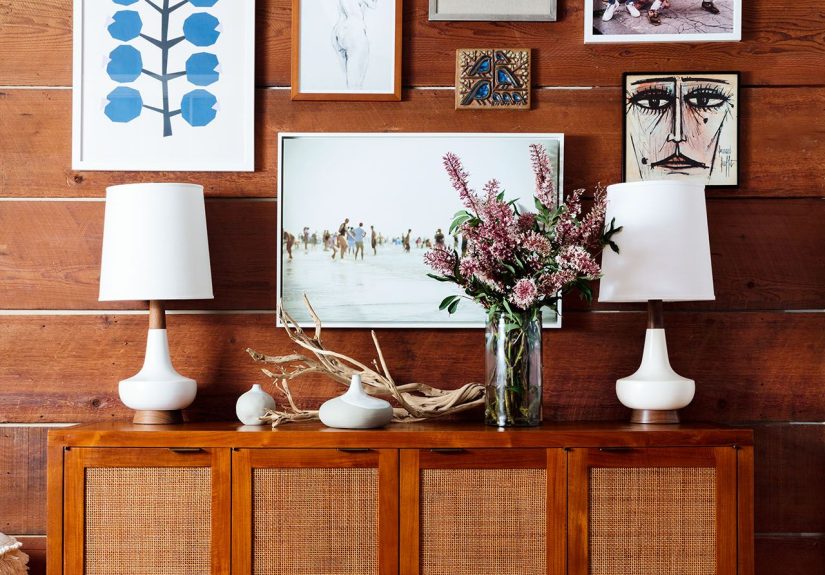
Propping frames against the wall gives you that relaxed, collected vibe. Layer a large piece behind a smaller one, add a candle or vase, and you’re done.
7) Build a clean grid gallery wall
A symmetrical grid is the easiest route to “polished.” Use same-size frames and consistent spacing. It’s especially good for modern spaces and small hallways.
8) Create a salon-style gallery wall (aka “collected over time”)
Mix frame sizes, orientations, and styles. Start with one strong center piece and build outward. This looks best when you keep at least one unifying element:
a color palette, a theme, or a frame finish.
9) Group art by theme for instant cohesion
Themes can be subtle (all landscapes, all line drawings, all coastal photos) or personal (concert posters, travel sketches, family recipes).
Theme makes “mixed” feel curated, not cluttered.
10) Make a photo wall that looks like art, not a yearbook
Choose a consistent edit: black-and-white, warm-toned, or a muted palette. Matching frames and mats make even random phone photos feel elevated.
11) Paint a dark backdrop behind your gallery wall
A deep charcoal, navy, forest green, or even a warm chocolate shade makes frames and mats pop. It’s a bold move that instantly looks intentional.
12) Mix mediums for a “3D gallery” effect
Add a small mirror, a mini shelf, a sculptural object, or a wall sconce inside the gallery arrangement. The texture breaks up “flat frame fatigue.”
13) Create a gallery wall of empty frames
Yes, empty. Thrift a bunch of frames, paint them in one color (or a tight palette), and hang them as a sculptural collection. It’s artsy, affordable, and surprisingly chic.
14) Frame kids’ artwork like it belongs in a gallery (because it does)
Use simple frames with consistent mats, or rotate art using clip frames. It turns scribbles into “personal history,” and it’s one of the easiest ways to add heart to a room.
15) Hang art from a picture rail (or add a modern hanging system)
Picture rails and adjustable hook systems let you rearrange without new holes. They’re great for rentals and for people who change their minds a lot (hi, it’s us).
16) Use a peg rail for rotating display
A wooden peg rail can hold frames, small baskets, hats, or decor. It’s part art, part storage, and perfect for entryways or kitchens.
17) Mount vintage plates or platters as wall decor
A plate wall adds shine and pattern. Keep it classic with blue-and-white, or go eclectic with mixed color and finish. Great for dining rooms and kitchens.
18) Hang a basket wall for texture
Woven baskets add dimension and warmth. Mix sizes and weaving styles, and keep your palette tight (all natural, or natural + black accents) for a designer look.
19) Make a “hat wall” that’s equal parts fun and functional
Straw hats, felt hats, or even ball caps can become a wall moment. Use attractive hooks and vary heights for movement.
20) Display musical instruments like sculpture
Guitars, ukuleles, or even a vintage banjo can be hung safely with proper mounts. It’s personal, unexpected, and it doubles as “go play something” motivation.
21) Add sculptural wall objects
Think metal wall art, carved wood panels, ceramic wall pieces, or modern geometric sculptures. These are perfect when you want impact without another rectangle frame.
22) Try a macramé or woven wall hanging
This is an easy way to soften bedrooms and living roomsespecially if your furniture is minimal or modern and the room feels a little too “sharp.”
23) Use shadow boxes for meaningful collections
Frame matchbooks, postcards, baby shoes, concert wristbands, shellsanything small that tells a story. Shadow boxes make personal items look intentional instead of “junk drawer chic.”
24) Frame fabric for high-impact pattern
A scrap of vintage textile, a beautiful napkin, a bandana, or wallpaper sample can become art when framed. This is a fantastic trick for adding color without painting.
25) Frame pressed botanicals or leaves
Press flowers (or buy botanical prints) and create a small set. It’s classic, calm, and works in almost any stylemodern, traditional, cottage, you name it.
26) Add a wall-mounted planter display
Small wall planters, propagation tubes, or mounted vases bring life to blank spots. Keep it simple: one style of vessel, consistent spacing, and plants that fit your light levels.
27) Paint a chalkboard (or wipeable) art zone
Great for kitchens, mudrooms, and kids’ spaces. Use it for menus, doodles, quotes, or seasonal drawings. You’ll never be “done,” and that’s the point.
28) Paint a color-block “frame” behind your art
Create a painted rectangle, arch, or stripe behind a piece of art to make it look larger and more dramatic. This trick is especially helpful when your artwork is smaller than the wall needs.
29) Add an easy DIY mural (abstract shapes = instant confidence)
Murals don’t have to be complicated. Abstract blobs, stripes, arches, or simple landscapes can look modern and intentionalespecially with a limited color palette.
30) Use peel-and-stick wallpaper as a “panel” feature
Apply removable wallpaper in a rectangular section, inside molding trim, or behind shelves. It’s renter-friendly personality with a surprisingly high-end finish.
31) Make a removable decal moment
Wall decals can mimic murals, add playful shapes, or create a headboard-style focal point behind a bed. Perfect for rentals and for commitment-phobes (no judgment).
32) Create washi-tape “frames” for photos or mini prints
Use washi tape to outline frame shapes and stick photos inside. It’s fun, inexpensive, and ideal for dorms, offices, or kids’ rooms. Plus, removing it is delightfully drama-free.
33) Let lighting do double duty as wall decor
Wall sconces (hardwired or plug-in) add structure and a “designed” feelespecially flanking a mirror, artwork, or bed. They’re functional art that makes the whole wall glow.
34) Turn functional storage into a styled wall vignette
Hooks, small wall baskets, and slim shelves can be arranged as a mini composition. Add one framed print nearby, keep finishes consistent, and you’ve got a wall that works hard and looks good doing it.
Quick Renter-Friendly Hanging Tips (No Wall Trauma Required)
- Adhesive strips/hooks: Use the right weight rating, clean the wall first, and follow removal instructions slowly.
- Picture ledges: One or two anchor screws can replace 10–20 nail holes from individual frames.
- Lean + layer: Mantels, consoles, and shelves are your best friends if you don’t want to hang much.
- Removable wallpaper/decals: Big impact, easy to switch, and ideal for commitment-free style.
Real-World Experiences: What People Learn After Decorating Blank Walls (So You Don’t Have To)
Here’s the funniest part about wall art: the wall is never the problem. The problem is the moment you realize you have to choose between
“looks curated” and “I grabbed this because it was on sale and now it lives here forever”. In real homes, most decorating “mistakes”
are actually perfectly normal experimentsjust with a hammer involved.
One common experience: people start small, then wonder why the wall still looks empty. That’s usually a scale issue, not a taste issue.
If your artwork is too tiny for the wall (especially above a sofa or bed), the space feels unfinished. The fix is almost always the same:
go larger, group pieces together, or add a backdrop (paint or wallpaper panel) so the art has a stronger presence. When homeowners switch
from “one small frame” to “one big piece” (or a tight trio), the room suddenly looks like it has a plan.
Another predictable plot twist: the “gallery wall spiral.” You lay frames on the floor, it looks amazing, and then you hang them… and somehow
it looks like the wall is slowly sliding off a cliff. The floor is forgiving; the wall is honest. People who are happiest with their gallery walls
usually do a dry run with paper templates or painter’s tape outlines. It’s not overkillit’s insurance. And if you ever want to feel
deeply alive, try holding a level while balancing a frame and negotiating with a stubborn hook. Truly exhilarating.
There’s also the “everything matches, but it feels cold” experience. Perfectly matching frames and identical prints can look polished,
but sometimes it reads a little like a hotel lobby that’s afraid of emotions. Mixing in texture fixes that fast: a small woven piece,
a sculptural object, a framed fabric swatch, or even a matte vs. glossy contrast. Variety makes a wall feel lived-in, not staged.
And finally: lighting. People often hang art, step back, and think, “Why does this look… sad?” It’s frequently because the wall is dim,
or the art is fighting glare from a nearby window. A plug-in sconce, a picture light, or even a nearby lamp can completely change how
the wall readssuddenly the art becomes a focal point instead of background noise.
The most reassuring real-life takeaway is this: your wall art doesn’t have to be perfect to be personal. The best walls evolve.
Start with one anchor piece you genuinely like, build around it slowly, and give yourself permission to swap things as your style changes.
Decorating isn’t a final exam. It’s more like a playlist: you keep what you love, you skip what you don’t, and every once in a while
you discover a new favorite you didn’t expect.
Conclusion
Blank walls aren’t a decorating failurethey’re an opportunity. Whether you choose one bold statement piece, a layered gallery wall, textured
baskets, renter-friendly wallpaper panels, or a rotating picture ledge, the goal is the same: make your home look like you live there.
Start with one idea, commit to the next small step, and remember: even the pros rearrange things (they just do it with better snacks).