Table of Contents >> Show >> Hide
- What Makes a Bathroom Feel Traditionally Timeless?
- 38 Traditional Bathroom Design Ideas
- 1. Embrace a Classic Black-and-White Palette
- 2. Choose a Symmetrical Double-Vanity Layout
- 3. Make a Clawfoot Tub the Star of the Room
- 4. Try a Roll-Top or Slipper Tub with a Shower Ring
- 5. Use Subway Tile in the Shower or Around the Room
- 6. Add Marble (or Marble-Look) for a Luxe Heritage Feel
- 7. Lay Small-Scale Hex or Mosaic Floor Tile
- 8. Install Beadboard or Tongue-and-Groove Wainscoting
- 9. Go for Raised-Panel or Picture-Frame Wall Molding
- 10. Choose a Furniture-Style Wood Vanity
- 11. Use a Pedestal Sink in Small Bathrooms
- 12. Consider a Console Sink with Exposed Legs
- 13. Choose Classic Chrome or Polished Nickel Fixtures
- 14. Add Warmth with Brass or Oil-Rubbed Bronze
- 15. Pick Vintage-Style Cross-Handle Faucets
- 16. Try a Bridge or Widespread Faucet
- 17. Flank the Mirror with Wall Sconces
- 18. Hang a Chandelier or Lantern Over the Tub
- 19. Layer Task, Ambient, and Accent Lighting
- 20. Use Framed Mirrors Instead of Plain Builder Glass
- 21. Stick to Soft, Neutral Wall Colors
- 22. Add Heritage Hues: Powder Blue, Sage, or Soft Gray
- 23. Bring in Traditional Wallpaper
- 24. Choose Classic Window Treatments
- 25. Add a Freestanding Linen Cabinet or Armoire
- 26. Build Recessed Niches and Shelves with Trim
- 27. Use Classic Hardware: Cup Pulls and Porcelain Knobs
- 28. Consider a Cast-Iron Radiator or Heated Towel Rail Look
- 29. Layer in Vintage Rugs Instead of Standard Bath Mats
- 30. Style with Glass Jars, Trays, and Apothecary Jugs
- 31. Create a Jewel-Box Traditional Powder Room
- 32. Blend Traditional Shell with Modern Comforts
- 33. Design a Kid-Friendly Traditional Bathroom
- 34. Plan an Accessible, Aging-in-Place Traditional Bath
- 35. Use Budget-Friendly Details to “Traditional-ize” a Plain Bath
- 36. Add Art, Plants, and Personal Collections
- 37. Refresh Seasonally with Textiles and Small Accessories
- 38. Avoid the Most Common Traditional Bathroom Mistakes
- Real-Life Experiences: What We Learn from Traditional Bathroom Makeovers
- Conclusion
If your dream bathroom looks less like a slick spa and more like a charming old hotel suite,
you’re in the right place. Traditional bathroom design is all about classic lines, time-tested
materials, and the cozy feeling that this room has always been part of the house (even if the
grout is still drying). In this guide, we’ll walk through 38 traditional bathroom design ideas
inspired by real homes, contractors, and designers so you can create a timeless retreat that
won’t feel dated two remodels from now.
What Makes a Bathroom Feel Traditionally Timeless?
Designers and contractors who specialize in “forever bathrooms” tend to say the same things:
stick to a functional layout, choose neutral and natural materials, and avoid super-trendy
shapes or finishes. Classic bathrooms lean into soft whites, creams, taupes, and muted blues,
simple tile patterns like subway or hex, and durable finishes such as polished chrome, brushed
nickel, and unlacquered brass. They also rely on layered lighting, quality fixtures, and a few
vintage-inspired details to keep the space warm and inviting rather than sterile.
With that foundation in mind, let’s dive into specific traditional bathroom ideas you can mix
and match to suit your space, budget, and style.
38 Traditional Bathroom Design Ideas
1. Embrace a Classic Black-and-White Palette
Black and white is the little black dress of bathroom design. You’ll see it in historic townhomes,
prewar apartments, and charming bungalows, and it still looks fresh today. Try a white vanity
with a black countertop, black-and-white patterned floor tile, and white subway walls. The contrast
adds drama while the limited palette keeps things cohesive and timeless.
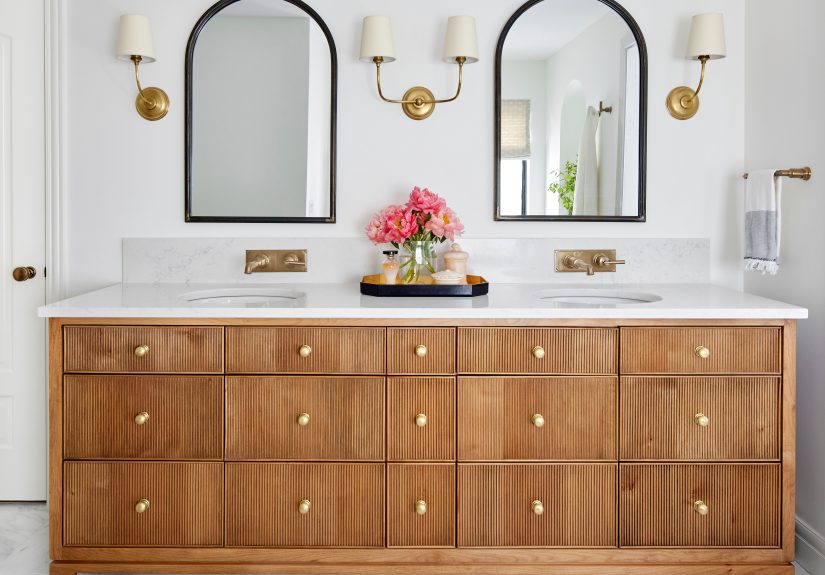
2. Choose a Symmetrical Double-Vanity Layout
Traditional bathrooms love symmetry. A double vanity with two matching mirrors and flanking sconces
instantly feels formal and classic. If you have the room, center the vanity on the wall and align
mirrors, lights, and hardware so everything looks balanced. It’s a small detail that makes the space
feel thoughtfully designed instead of thrown together.
3. Make a Clawfoot Tub the Star of the Room
If there was a mascot for traditional bathrooms, it would be the clawfoot tub. Whether it’s painted
on the outside or classic all-white cast iron, a freestanding tub creates a focal point that screams
“long baths, zero regrets.” Place it under a window, in front of a paneled wall, or beneath a chandelier
for maximum impact.
4. Try a Roll-Top or Slipper Tub with a Shower Ring
Want old-world charm and modern practicality? Add a shower ring above a freestanding roll-top or
slipper tub. Use a classic chrome or brass exposed shower set and a simple white curtain. It’s
functional, dramatic, and fits beautifully in older homes where a built-in tub might look out of place.
5. Use Subway Tile in the Shower or Around the Room
Subway tile has been around since the early 1900s, and for good reason: it’s inexpensive, durable,
and incredibly versatile. Laid in a traditional running bond pattern with white grout, it feels crisp
and historic. You can wrap the whole room, line the shower, or create a wainscoting effect behind the
vanity for that old-world bathhouse vibe.
6. Add Marble (or Marble-Look) for a Luxe Heritage Feel
Marble floors, shower walls, or countertops instantly evoke classic hotel bathrooms. If real marble
isn’t in the budget or maintenance plan, choose porcelain or quartz that mimics marble veining. Stick
to soft gray and white tones for a look that feels glamorous yet timeless, not flashy.
7. Lay Small-Scale Hex or Mosaic Floor Tile
Hexagon and basketweave mosaic floors are staples in vintage bathrooms. A simple white hex floor with
a subtle gray border looks like it’s been there since the 1920s (in a good way). For more personality,
add a contrasting border or small pattern in black or charcoal while keeping the rest of the room neutral.
8. Install Beadboard or Tongue-and-Groove Wainscoting
Beadboard and vertical tongue-and-groove paneling are fantastic for adding character to plain drywall.
Run them up to chair-rail or two-thirds of the wall height, then paint everything a soft white or cream.
Just make sure you use moisture-resistant materials and proper ventilation so the beauty lasts as long as
it looks like it has.
9. Go for Raised-Panel or Picture-Frame Wall Molding
For a slightly more formal look, use raised-panel or picture-frame wainscoting instead of beadboard.
This detail works especially well in larger bathrooms or primary suites connected to traditional
bedrooms and hallways. Paint the trim and panels in a satin finish for a tailored, polished look.
10. Choose a Furniture-Style Wood Vanity
Swap an ultra-modern floating cabinet for a furniture-style vanity with legs, paneled doors, and classic
hardware. Stained wood in walnut, cherry, or oak brings warmth and a sense of history, while a marble
or marble-look top keeps it from feeling heavy.
11. Use a Pedestal Sink in Small Bathrooms
Pedestal sinks are timeless, delicate, and perfect for traditional powder rooms or tight spaces where
a bulky vanity would feel cramped. Pair one with a framed mirror, wall sconces, and a narrow storage
cabinet or vintage shelf nearby so you don’t sacrifice function.
12. Consider a Console Sink with Exposed Legs
A console sink with metal legs offers a similar airy feel but adds a little sparkle with its chrome or
brass framework. It’s a great compromise if you want traditional lines but prefer something slightly more
open than a cabinet vanity.
13. Choose Classic Chrome or Polished Nickel Fixtures
When in doubt, go chrome. It’s durable, easy to clean, and plays nicely with almost any tile or paint
color. Polished nickel adds a warmer, richer tone while still feeling traditional. Stick to simple,
gently curved fixtures rather than ultra-angular styles to keep things classic.
14. Add Warmth with Brass or Oil-Rubbed Bronze
For a slightly more old-world or European feel, choose brushed brass, unlacquered brass, or oil-rubbed
bronze fixtures. Use them on faucets, towel bars, and lighting, then mix in neutral tile and paint so
the finishes can shine without overwhelming the room.
15. Pick Vintage-Style Cross-Handle Faucets
Cross handles immediately read “traditional.” Look for faucets with porcelain “Hot” and “Cold” labels,
curved spouts, and classic backplates. They pair beautifully with pedestal sinks, console sinks, and
undermount basins in stone countertops.
16. Try a Bridge or Widespread Faucet
Bridge faucets, where the hot and cold taps connect above the deck, are a charming nod to the past.
Widespread faucets with three separate pieces offer a slightly more tailored, formal look. Either will
give a traditional vanity some architectural interest.
17. Flank the Mirror with Wall Sconces
Side-mounted sconces at about eye level create flattering, shadow-free light for grooming and feel much
more classic than a single bar over the mirror. Choose fixtures with fabric shades, fluted glass, or
metal detailing that echoes your faucet finish.
18. Hang a Chandelier or Lantern Over the Tub
Nothing says “old-world luxury” like a chandelier over a soaking tub. Crystal, lantern-style metal, or
simple drum pendants can all work. Just be sure to follow local electrical codes for clearance and
wet-area ratings. It should look fancy, not risky.
19. Layer Task, Ambient, and Accent Lighting
Traditional doesn’t mean dim. Combine a central ceiling fixture, vanity sconces, and possibly toe-kick
or niche lighting to create a cozy, flattering glow. Aim for warm-white bulbs so the space feels soft
and inviting, not like a dentist’s office.
20. Use Framed Mirrors Instead of Plain Builder Glass
Swapping a frameless sheet mirror for one (or two) framed mirrors is one of the quickest ways to make
a bathroom feel traditional. Look for wood, metal, or painted frames that echo other finishes in the
room. Arched or scalloped shapes add extra character.
21. Stick to Soft, Neutral Wall Colors
Cream, warm white, greige, and soft taupe create a calm backdrop and flatter skin tonesgreat for a
bathroom you actually get ready in. Neutral walls also make it easier to change out towels and rugs
later without rethinking the whole color palette.
22. Add Heritage Hues: Powder Blue, Sage, or Soft Gray
If you want more color, traditional bathrooms wear muted shades beautifully. Think powder blue, sage
green, or soft French gray. These colors feel pulled from historic paint decks and pair well with white
trim, marble, and classic fixtures.
23. Bring in Traditional Wallpaper
Florals, stripes, toile, and damask patterns are all right at home in a traditional bathroom. Use
wallpaper above wainscoting, behind the vanity, or in a powder room for a jewel-box effect. In full
baths, make sure to choose a moisture-resistant product and maintain good ventilation.
24. Choose Classic Window Treatments
Roman shades, café curtains, and simple tailored panels feel more traditional than minimalist roller
shades. Linen or cotton fabrics in solids, stripes, or small-scale prints add softness and privacy
without blocking natural light. Bonus points if the fabric picks up colors from your tile or wallpaper.
25. Add a Freestanding Linen Cabinet or Armoire
Built-ins are great, but a freestanding cabinet or painted armoire adds furniture-like charm and
extra storage. Use it for towels, toiletries, and cleaning supplies you’d rather not look at all day.
Glass doors with neatly folded towels instantly make the room feel hotel-ready.
26. Build Recessed Niches and Shelves with Trim
Recessed niches in the shower or over the tub look cleaner than hanging metal caddies and can be
trimmed out with classic moldings for a traditional look. Combine them with a small ledge or built-in
bench in stone or tile for both function and style.
27. Use Classic Hardware: Cup Pulls and Porcelain Knobs
Drawer pulls and cabinet knobs might be small, but they pack a big stylistic punch. Cup pulls, simple
round knobs, and porcelain or glass knobs instantly give a vanity a traditional twist, especially when
paired with paneled doors and inset drawers.
28. Consider a Cast-Iron Radiator or Heated Towel Rail Look
In older homes, restoring or installing a cast-iron radiator (or a modern version that mimics the look)
keeps things feeling authentic. In other spaces, a wall-mounted heated towel rail in chrome or brass
gives that classic European hotel vibeand dry, warm towels never hurt.
29. Layer in Vintage Rugs Instead of Standard Bath Mats
A traditional Persian or kilim-style rug instantly elevates a bathroom. The pattern hides minor spills,
and the color adds depth to an otherwise neutral space. Just use a rug pad and make sure the rug can
handle occasional moisture.
30. Style with Glass Jars, Trays, and Apothecary Jugs
Replace plastic bottles and random baskets with glass apothecary jars, ceramic canisters, and simple
trays. Store cotton balls, bath salts, and soaps in pretty containers to give your countertop a curated,
old-school pharmacy feel instead of a cluttered drugstore shelf.
31. Create a Jewel-Box Traditional Powder Room
Powder rooms are the perfect place to go a little over the top. Think wall-to-wall patterned wallpaper,
a petite pedestal sink, ornate mirror, and dramatic sconces. Because the room is small, a bold traditional
design feels exciting, not overwhelming, and guests will always comment on itin a good way.
32. Blend Traditional Shell with Modern Comforts
You don’t have to live like it’s 1925 to get the look of 1925. Many designers pair a traditional “shell”
(moldings, tiles, classic fixtures) with modern conveniences such as a concealed toilet, heated floors, or
a frameless shower screen. The result is a transitional bath that feels timeless but lives like a brand-new
space.
33. Design a Kid-Friendly Traditional Bathroom
Traditional doesn’t mean precious. Use classic materials that can take a beating: porcelain tile, quartz
counters, and chrome fixtures. Bring in fun through striped shower curtains, colorful towels, and art that
can be swapped out as kids grow. The bones stay traditional; the accessories do the growing up.
34. Plan an Accessible, Aging-in-Place Traditional Bath
Grab bars, curbless showers, and wider doorways can still look classic. Choose grab bars that match your
faucet finish, use timeless tile, and incorporate built-in benches and niches instead of clunky add-ons.
Traditional style and accessibility can absolutely coexist when planned from the beginning.
35. Use Budget-Friendly Details to “Traditional-ize” a Plain Bath
Not ready for a full gut job? Focus on high-impact details: swap out chrome builder faucets for classic
cross-handle versions, add framed mirrors, change hardware, install a new light fixture, and hang a Roman
shade. Even a basic tub/shower combo can look more traditional with a fabric shower curtain and a vintage
rug.
36. Add Art, Plants, and Personal Collections
Traditional bathrooms feel layered and personal, not sparse. Hang framed botanical prints, landscapes, or
vintage sketches in inexpensive frames. Add a potted fern or ivy on a windowsill, and style a small tray
with perfume bottles or collected seashells. Just keep clutter in check so the space feels curated, not
chaotic.
37. Refresh Seasonally with Textiles and Small Accessories
One of the joys of a traditional, neutral “base” is that you can change the mood with textiles. Swap towels,
bath mats, and small decor items a couple of times a year. Think crisp white and blue in summer, rich
burgundy or forest green in winter. The architecture and tile stay the same; the vibe gets a little wardrobe
change.
38. Avoid the Most Common Traditional Bathroom Mistakes
The biggest pitfalls? Overdoing ornamentation, skimping on storage, ignoring ventilation, and mixing too
many metal finishes. Traditional doesn’t mean fussy: choose a few strong details and repeat them rather
than throwing every “old-fashioned” idea at the wall. Make sure you still have good lighting, enough
counter space, and somewhere to stash everyday essentials.
Real-Life Experiences: What We Learn from Traditional Bathroom Makeovers
Talk to homeowners and contractors who’ve lived through a traditional bathroom renovation and you’ll hear
a few recurring themes. First, almost no one regrets choosing classic materials. People who went with white
tile, neutral marble- or stone-look surfaces, and simple fixtures tend to say that their bathrooms still look
fresh years laterwhile their friends’ ultra-trendy spaces are already begging for a makeover.
Second, layout and storage matter more than almost anything else. A symmetrical double vanity with decent
drawers beats a beautiful but impractical single sink every time for couples and families. Many people wish
they’d added an extra linen cabinet, a deeper vanity drawer, or a taller medicine cabinet. The lesson: treat
storage as a design feature, not an afterthought. Traditional design actually helps herefurniture-style
vanities, built-in niches, and wall cabinets naturally fit the style and give you more room to hide the
everyday clutter.
Third, lighting can make or break the look. Homeowners who swapped a single overhead fixture for a combination
of sconces, ceiling lights, and dimmers almost always say the room feels bigger and more expensive. The
traditional detailsshaded sconces, lantern-style pendants, classic finishesstill deliver loads of character,
but the space works better for everything from morning makeup to nighttime baths. It’s a reminder that “pretty”
and “practical” aren’t enemies; in a good traditional bathroom, they’re partners.
Another big takeaway is the importance of respecting your home’s architecture. In an early-1900s house, for
example, keeping the original door style, trim profiles, and window proportions while updating tile, plumbing,
and insulation tends to yield the best results. Owners who tried to force ultra-contemporary elements into a
very traditional shell often felt something was “off,” even if each item looked good on its own. The most
successful projects use traditional details that feel like a natural extension of the rest of the house.
Finally, nearly everyone underestimates how much they’ll use and appreciate the small luxuries: a properly
placed towel hook, a heated towel rail, a niche at the right height, or a bench in the shower. These touches
don’t shout for attention, but they quietly make everyday routines easier and more enjoyable. When combined
with classic finishes and thoughtful lighting, they create the kind of traditional bathroom you look forward
to using every daynot just the one you photograph right after the contractor leaves.
Conclusion
Traditional bathroom design isn’t about recreating a museum exhibit; it’s about borrowing the best ideas from
the pastsymmetry, quality materials, classic patternsand blending them with how you actually live now. Start
with a simple, timeless backbone: neutral tile, enduring fixtures, and a well-planned layout. Then layer on
the personality with lighting, hardware, textiles, and art. Do that, and your bathroom will still feel
beautifully “you” long after this year’s trends have come and gone.