Table of Contents >> Show >> Hide
- Why I Don’t Automatically Throw Out Dying Plants
- 1. I Take Cuttings or Divide the Healthy Parts
- 2. I Compost the Healthy Parts and Feed the Next Round
- 3. I Turn Leaves and Faded Growth Into Free Mulch or Leaf Mold
- 4. I Save Seeds, Seed Heads, and Beautiful Bits for Future Gardens and Decor
- Common Mistakes I Avoid When Repurposing Dying Plants
- Final Thoughts
- My Real-Life Experience Repurposing Dying Plants
Every gardener knows the moment. You walk outside with your coffee, ready for a peaceful little plant check-in, and one of your once-glorious green babies is suddenly giving Victorian ghost energy. The basil is leggy. The marigolds look tired. The pothos is flopping like it pays no rent. It is tempting to declare the whole situation a loss, toss everything in the yard-waste bin, and move on.
I do not do that.
As an experienced gardener, I have learned that a “dying” plant is not always a dead end. Sometimes it is a propagation opportunity. Sometimes it is future compost. Sometimes it is free mulch. And sometimes it is the beginning of next season’s seed stash or the prettiest dried arrangement in the house. In other words, I treat declining plants less like garbage and more like unfinished business.
If you have ever wondered how to repurpose dying plants without turning your home and garden into a botanical graveyard, here are the four methods I use most often. They save money, reduce waste, improve soil, and make me feel like a very smug garden wizard in old sneakers.
Why I Don’t Automatically Throw Out Dying Plants
Before I repurpose anything, I ask one important question: what kind of “dying” are we talking about? There is a big difference between a plant that is naturally finishing its life cycle and one that is collapsing from disease or pests.
A healthy annual at the end of the season can still give you seeds, mulch material, compost ingredients, or usable cuttings. A stretched-out houseplant may still have perfectly viable nodes for propagation. A fading flower bed can become future organic matter for the soil. But a plant with obvious fungal disease, bacterial rot, or a nasty pest infestation should be handled more carefully. Some plant material belongs in the trash, not the compost pile.
That distinction matters. Smart gardening is not about saving every leaf out of sentiment. It is about knowing what still has value and using it well.
1. I Take Cuttings or Divide the Healthy Parts
This is my favorite move because it feels like cheating death in the most legal and satisfying way possible.
When a plant is fading, I first look for the parts that are still vigorous. On many houseplants, herbs, annuals, and tender perennials, that means healthy stems with nodes, fresh leaves, and no signs of rot or pest damage. If the roots are crowded but still healthy, division may be the better option. If the top growth is leggy but alive, cuttings are often the fastest rescue.
What I Look for Before Taking Cuttings
I do not snip randomly and hope the gardening gods sort it out. I look for firm, healthy growth and avoid flowers, seed heads, weak stems, and anything mushy or spotted. For soft-stem plants, I usually take a cutting a few inches long, remove the lower leaves, and make sure at least one node goes into the rooting mix or water.
Plants like pothos, coleus, mint, basil, tradescantia, begonias, and many geraniums are especially generous about this. If one of them starts looking rough, I can often turn one sad parent plant into several fresh starts. That is not decline. That is multiplication with dramatic flair.
How I Help Rescue Cuttings Succeed
Once I have my cuttings, I give them what they need instead of what I wish they needed. That usually means bright indirect light, warmth, evenly moist rooting medium, and a little patience. Not a flood. Not full blazing sun. Not an inspirational speech. Plants, sadly, do not respond to motivational yelling.
If I am dividing a plant, I keep as much healthy root attached as possible and pot the sections into fresh mix. This works beautifully for crowded perennials, some houseplants, ornamental grasses, and clumping herbs. A tired plant may be telling you it is not dying so much as begging for elbow room.
Repurposing dying plants through propagation is one of the best expert gardener tricks because it turns decline into continuity. You are not just saving a plant. You are extending its life in a cleaner, stronger form.
2. I Compost the Healthy Parts and Feed the Next Round
When a plant is too far gone to salvage as a living specimen, I move to my next favorite category: future soil food.
Healthy, disease-free plant debris can become excellent compost. Spent flowers, trimmed stems, old vegetable plants without disease, weed-free leaves, and clean garden clippings all have value. Instead of mourning the tired plant in front of me, I think about the tomatoes, zinnias, or hydrangeas it might help feed next season.
What Goes Into My Compost Pile
I compost clean garden material alongside kitchen scraps and carbon-rich browns. That means I balance soft green material with dry leaves, straw, or other coarse material so the pile does not become a wet, smelly swamp monster. I keep the pile moist but not soggy, and I give it air so the decomposition process can actually happen instead of just sulking in a corner.
If I have more leaves than fresh green material, I use those leaves as a carbon source and mix accordingly. If I have a small setup or live-space constraints, vermicomposting is a great backup. Worm bins are surprisingly efficient, and they turn plant-based scraps into rich castings that garden soil absolutely loves.
What I Never Compost
Here is where experience saves headaches. I do not compost plants with obvious disease, especially if I am using a basic home compost pile that may not get hot enough to kill pathogens. I also avoid seedy weeds, invasive roots, and badly infested plant material. If a plant looks like it lost a fight with mildew, blight, rot, or a pest convention, it does not earn a second act in my compost.
That may sound harsh, but it is actually the most responsible way to repurpose dying plants. Compost should improve the garden, not boomerang trouble back into it.
The beauty of composting is that it makes failure useful. That lush summer container that peaked in July and looked exhausted by September is not useless. It is tomorrow’s organic matter.
3. I Turn Leaves and Faded Growth Into Free Mulch or Leaf Mold
This method is wildly underrated. Gardeners spend real money on bagged mulch while perfectly good organic material is sitting right there, looking inconvenient.
Whenever I have healthy fallen leaves, dry stems, or spent non-diseased foliage, I look at them as raw material for mulch or leaf mold. Once shredded, leaves are one of the most practical soil-building resources in a home garden. They help suppress weeds, conserve moisture, soften the impact of temperature swings, and slowly feed the soil as they break down.
Why I Shred First
Whole leaves love to mat together like they are auditioning to become a soggy roof. Shredded leaves behave much better. They stay in place, break down faster, allow better air and water movement, and are easier to spread around beds, shrubs, and vegetable rows.
I use shredded leaves around perennials, between raised-bed crops, and in ornamental beds where bare soil would otherwise dry out too quickly. I also work partially broken-down leaf mold into garden beds when I want to improve structure without buying more amendments.
When This Works Best
This is especially helpful in fall, when the garden is winding down and the yard starts throwing organic matter at you like confetti. Instead of bagging it all and sending it away, I redirect it into the landscape. That saves time, cuts waste, and keeps nutrients on site.
I also like this method for gardeners who are not ready to manage a full compost pile. Mulch is the low-drama cousin of compost. You do not need a perfect ratio, a turning schedule, or a dedicated bin. You just need clean material, a shredder or mower, and the good sense not to pile it against plant crowns or stems like you are trying to mummify them.
Repurposing dying plants as mulch feels wonderfully practical. It says, “You may be finished blooming, but you are still on payroll.”
4. I Save Seeds, Seed Heads, and Beautiful Bits for Future Gardens and Decor
Not every fading plant belongs in the soil right away. Some deserve a second life in a seed envelope or a vase.
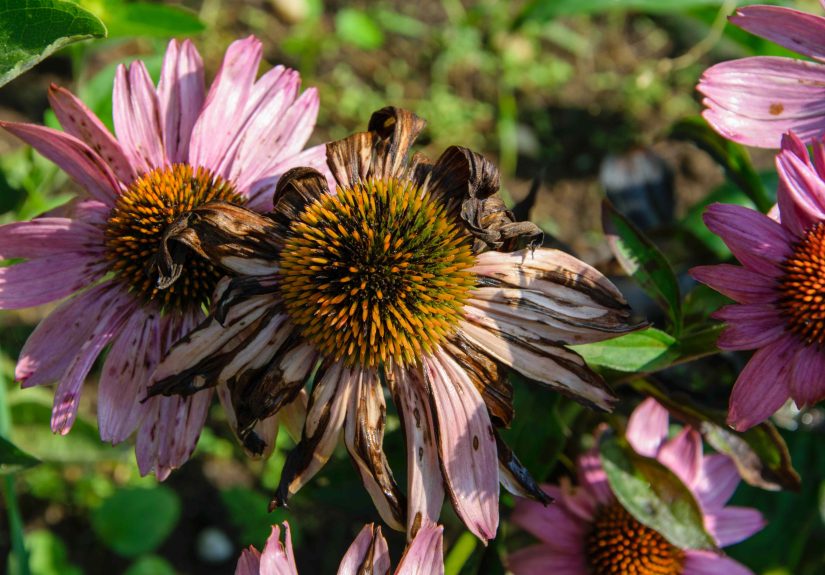
One of my favorite ways to repurpose dying plants is to let them finish their cycle and then harvest what they leave behind. Dry seed heads, mature pods, ornamental grasses, faded hydrangea blooms, marigold heads, zinnia centers, herb flowers, and sturdy stems can all be surprisingly useful.
How I Save Seeds
If a plant has gone past its pretty phase and into its crunchy phase, I pay attention. Dry pods on beans and peas, browned flower heads, and mature seed structures often mean the plant is ready to give back. I collect seeds only from healthy plants, let them dry fully, label everything, and store them in a cool, dry place.
This is one of the smartest ways to repurpose dying plants because it turns this year’s decline into next year’s start. It also helps me repeat varieties I loved and skip buying replacements when I already have perfectly good genetics sitting in a labeled jar.
How I Use Dried Blooms and Stems
I also air-dry flowers and interesting stems for arrangements, wreaths, seasonal displays, and simple indoor decor. Hydrangeas, statice, strawflower, lavender, globe amaranth, grasses, seed heads, and even branches with good structure can become part of a dried arrangement that looks intentional rather than funereal.
The trick is to cut material at the right stage. Too fresh, and it collapses. Too old, and it shatters. Once I hit the sweet spot, I bundle stems loosely and hang them upside down in a dry, dark, airy place. A week or two later, I have decor that cost me almost nothing and still carries a little garden personality indoors.
This method is especially helpful if you are emotionally attached to your plants but also trying to be practical. You are not keeping every dead stem because you have lost perspective. You are curating botanical leftovers like the tasteful garden genius you are.
Common Mistakes I Avoid When Repurposing Dying Plants
I Don’t Reuse Diseased Material Casually
If it is infected, I do not gamble with it. One careless compost toss can turn into next season’s problem.
I Don’t Save Seeds From Weak or Troubled Plants
If a plant struggled all season from poor vigor, I usually do not choose it as my seed parent. I want future plants from strong performers, not from a botanical cautionary tale.
I Don’t Smother Beds With Unshredded Debris
Mulch helps when it is applied correctly. Thick mats of wet leaves are not mulch. They are a moisture-trapping blanket with ambitions.
I Don’t Try to “Save” Every Plant
Experience has taught me that smart repurposing is better than sentimental clutter. Sometimes the kindest expert move is to salvage what is useful and let the rest go.
Final Thoughts
The best gardeners are not the ones who never lose plants. They are the ones who know how to respond when plants decline. Instead of seeing every fading leaf as failure, I see a set of options. Can I propagate it? Compost it? Mulch with it? Save seed from it? Dry it for later beauty?
That mindset changes everything. It reduces waste, builds healthier soil, saves money, and makes the garden feel more cyclical and forgiving. Plants do not always stay lush and photogenic forever. Frankly, neither do gardeners after August. But that does not mean the season is over. It just means the plant has changed jobs.
So the next time one of your plants starts looking tired, do not panic. Take a closer look. There may still be a lot of life, value, and usefulness left in it yet.
My Real-Life Experience Repurposing Dying Plants
Over the years, this approach has saved me from wasting money and from making one of the most common gardening mistakes: assuming every sad-looking plant is a total loss. Some of my best garden wins actually started with plants that looked one polite breeze away from retirement. I once had a container of coleus that had become so leggy and ridiculous that it looked less like a planting and more like a family argument. Instead of dumping it, I took several stem cuttings, rooted them, and ended up with a whole new batch of compact, healthy plants for the front porch. The original planting was past its prime, but the material inside it was still valuable.
I have had similar luck with basil, mint, pothos, and geraniums. In each case, the parent plant was clearly on the decline, but one or two healthy sections were enough to start over. That experience taught me to stop judging plants by their worst leaves. A crispy bottom leaf is not a verdict. It is just information.
Composting has probably changed my gardening more than anything else. In my early years, I treated spent plants like embarrassing evidence and hauled them away quickly. Now I look at a fading bed of annuals and see next season’s soil amendment. My flower beds have become richer over time because more organic matter stays in the system. Even when a crop disappoints me, it can still contribute to the next success. That makes the whole garden feel less wasteful and far more resilient.
Leaf mulch has been another game changer. One fall, I was staring at a mountain of leaves and debating whether to bag them all. Instead, I shredded them and used them around my vegetable beds and shrubs. By spring, the soil looked better, stayed moister, and needed less fussing. That was the moment I fully understood that a lot of what we call yard waste is really misplaced garden value.
Saving seeds and drying flowers added a more personal layer to the process. I love being able to save marigold or zinnia seed from plants that performed well, then grow them again the next year like old friends returning for another season. And dried stems, hydrangea heads, and ornamental grasses let me bring the garden indoors after the outdoor show is over. Repurposing dying plants is not just practical for me anymore. It has become part of how I garden thoughtfully, season after season, with less waste and a lot more creativity.