Table of Contents >> Show >> Hide
- Why Subway Customer Stories Hit Different
- The Subway Line Has an Unwritten Script (Until It Doesn’t)
- 40 Funny And Wholesome Posts About Customer Behavior (Subway Edition)
- What These Posts Reveal About Customer Behavior (Beyond the Laughs)
- How to Be the Customer Sandwich Artists Brag About
- Extra: of Subway-Style Experiences You’ll Recognize Immediately
- Conclusion
There are two kinds of places where human nature shines in 4K: the DMV… and the Subway sandwich line at 12:07 p.m. on a weekday.
Something about standing under fluorescent lights, staring at a wall of bread and toppings, turns normal people into poets, philosophers,
and occasionallyadorablyconfused time travelers who forgot how “toasted or not?” works.
That’s why online communities dedicated to Subway (often filled with Sandwich Artists and longtime fans) have become a quiet little corner of the internet
where customer behavior gets documented like a nature showexcept the gazelles are holding a phone, whispering “extra pickles,” and the lions are decision fatigue.
The best posts aren’t mean-spirited. They’re funny, oddly tender, and weirdly comforting: proof that even in a rush, people still surprise each other in good ways.
Below are 40 of the funniest and most wholesome “customer behavior” moments that pop up again and again in those groupstold in a fresh, story-style way that reflects
real patterns Subway workers and customers recognize. Think of these as the greatest hits of Subway line life: the quirks, the kindness, the accidental comedy,
and the small acts of humanity that happen between “What bread?” and “Any chips or a drink?”
Why Subway Customer Stories Hit Different
Subway is built for customization. You can walk in with a plan (“footlong on Italian, turkey, provolone, toasted, lettuce, tomato, banana peppers, oil and vinegardone”)
or you can freestyle your way into a sandwich you’ve never met before. That freedom is part of the brand’s DNA: made-to-order, lots of choices, fast-moving line.
But customization also creates mini social puzzles. The line is interactive. You have to answer questions in real time, sometimes while your brain is still booting up.
That’s when customer behavior gets… memorable. Not because people are “bad,” but because they’re humanhungry, distracted, trying to be polite, trying not to hold up the line,
and trying to remember if they like jalapeños or if jalapeños are the thing that hurt last time.
The Subway Line Has an Unwritten Script (Until It Doesn’t)
In many Subway locations, the flow is predictable: choose a sandwich (or a number/name on the modern “Series”-style menus), choose the size, pick bread, pick cheese,
decide on toasting, then vegetables, then sauces, then sides. When customers follow the rhythm, everything feels smooth. When they don’t, it’s not a disasterjust a comedy beat.
And because Subway employees do this dance all day, they notice the tiny social moments: who says please, who remembers to mention an allergy up front, who tips when the order is wild,
who tries to be helpful but accidentally invents a new sandwich category (“Can I get the cold-cut combo but, like… hot?”).
40 Funny And Wholesome Posts About Customer Behavior (Subway Edition)
-
The “I Trust You” Customer. They step up, glance at the toppings, and say, “Honestly? Make me something you’d eat.”
The Sandwich Artist lights up like they just got promoted to Chef Supreme. -
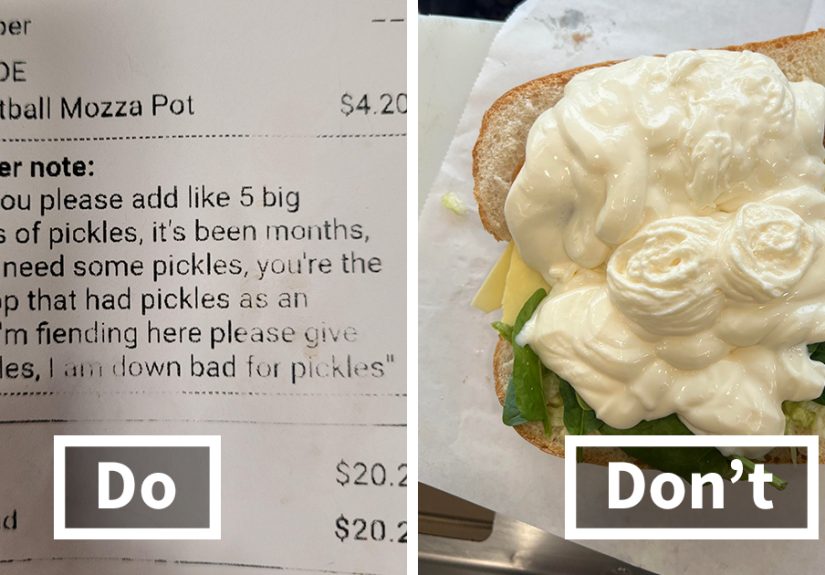
The Pickle Devotee. Not “extra pickles.” More like “Please add pickles until the sandwich achieves emotional support status.”
The wholesome part: they’re always grateful and never mad about the laws of physics. -
The Apology Letter on a Napkin. Someone brings in a scribbled note: “I get anxious ordering. Thank you for being patient.”
The comments section collectively becomes a warm blanket. -
The Kid Who Orders Like a Tiny CEO. Six years old, eye contact, clear instructions, polite “thank you,” and a confident “that’s perfect.”
Meanwhile, the adult behind them is buffering. -
The “Can You Cut It Like This?” Origami Request. They want it cut into triangles, then halves, then “like party sandwiches.”
The wholesome twist: they’re picking up for a team practice and trying to make everyone happy. -
The Unexpected Compliment. “I’ve been to five Subways this month, and you are the fastest and nicest.”
Sandwich Artist: 1. Customer kindness: 10. -
The Spreadsheet Orderer. They pull out a note app list with multiple subs labeled “Dad,” “Coach,” “Aunt Lisa (no onions).”
It’s chaotic… but also organized chaos, and the intention is love. -
The “I’m New Here” Sandwich Rookie. They genuinely don’t know what “toasted” means in Subway terms.
Everyone helps them like it’s a community service project. -
The Customer Who Says “Please” to Every Ingredient. “Lettuce, please. Tomatoes, please. Olives, please.”
By the end, the Sandwich Artist is basically making a gratitude sandwich. -
The “Surprise Me, But Not Spicy” Paradox. They want adventure, but also safety.
The Sandwich Artist navigates it like a therapist with tongs. -
The Tip Jar Poet. They drop in a dollar and say, “For the art.”
It’s corny. It’s cute. It works. -
The “My Mom Sent Me” Customer. They show you a text: “Get my usual.”
And the employee says, “Oh, I know her order,” like it’s a small-town sitcom. -
The Allergy-First Communicator. They calmly say, “I have an allergycan you change gloves and use clean utensils?”
Clear communication, mutual respect, and everyone wins. -
The Overthinker at the Sauce Stage. They stare at sauces like it’s a life decision.
Then they whisper, “What do you like?” as if asking for a trusted secret. -
The Person Who Thanks the Whole Line. Not just the cashiereveryone who touched the sandwich journey.
It’s like an awards ceremony for lunch. -
The “I’m Splitting This With My Sibling” Negotiator. “Could you cut it in half, and can you make both halves equal?”
It’s funny until you remember sibling peace is priceless. -
The Customer Who Brings a Drawing. A kid hands over a crayon picture of a sandwich with a smiley face.
The employee keeps it. The internet melts. -
The “I Forgot My Wallet” Honesty Moment. They’re embarrassed, they offer to leave, and the line behind them says,
“I got it.” It becomes a tiny faith-in-humanity story. -
The Regular With the Same Order Since 2011. The Sandwich Artist starts making it when they walk in.
The customer looks delighted every single time, like it’s magic. -
The “I’m Trying to Eat Better” Customer. They ask genuine questions about veggies, sauces, and portion ideas.
The wholesome part: no shame, just teamwork. -
The Customer Who Says “No Rush” and Means It. The line is long, the store is busy, and they’re calm.
That calm spreads like good seasoning. -
The “Please Don’t Judge Me” Combo. They request something odd (like a very simple sandwich) and laugh at themselves.
The employee responds with the universal service phrase: “You’re good.” -
The Compliment to the New Hire. “You’re doing great.”
The new hire stands taller. The comments section cheers. -
The “My Kid Only Eats This” Parent. The order is super specific, and the parent is stressed.
The Sandwich Artist treats it like a mission: make the kid happy, save the afternoon. -
The Customer Who Learns the Lingo. First time: confusion. Third time: “Footlong, toasted, all the veggies.”
Growth arc. Character development. Sandwich edition. -
The Last-Minute Cookie Add-On. Someone notices a kid staring at cookies and quietly adds one.
It’s small, sweet, and oddly emotional. -
The Customer Who Asks for a RecommendationThen Actually Tries It.
They don’t say “Hmm” and ignore you. They commit. Respect. -
The “I’m Deaf/Hard of Hearing” Smooth Communicator. They use notes or gestures, the staff adapts kindly,
and the whole interaction is a masterclass in respectful service. - The Customer Who Tips After a Complicated Order. It’s not requiredbut it feels like a thank-you card you can spend.
-
The “I’m Having a Rough Day” Customer. They admit it quietly.
The Sandwich Artist responds with gentleness: steady voice, extra patience, no judgment. -
The Customer Who Fixes Their Own Mistake. “Wait, I said wheat but I meant Italian. My bad.”
Accountability is refreshing everywhereeven at lunch. -
The Extra Napkins Hero. They ask for napkins like they’re preparing for a barbecue, not a sandwich.
The wholesome part: they’re bringing food to a messy toddler. -
The “I’m Picking Up for Coworkers” MVP. They label bags, double-check names, and thank the staff like they’re saving the office.
Because they are. -
The Customer Who Notices the Staff Is Swamped. “You’re doing greattake your time.”
That sentence should be framed. -
The “Can You Cut It Into Four?” Party Planner. It’s for a meeting tray, a team, a road trip.
And yes, it is weirdly satisfying when it’s done. -
The “I Want It Like the Picture” Customer (But Nicely). Instead of demanding, they ask, “Can we get it close?”
The staff tries harder because the vibe is respectful. -
The Person Who Treats the Sandwich Like a Canvas. They build a rainbow of veggies with pride.
The wholesome part: they’re excited about lunch, and that joy is contagious. -
The Customer Who Starts a Kindness Chain. One person pays for the next.
Suddenly Subway becomes a rom-com montage, but with chips. -
The “I’m Celebrating Something Small” Customer. “I just finished my last exam.”
The Sandwich Artist adds a cookie “for the victory.” -
The Customer Who Says the Quiet Part Out Loud. “Thank you. People don’t say that enough.”
It’s a simple line that makes the job feel human again.
What These Posts Reveal About Customer Behavior (Beyond the Laughs)
1) Choice overload is real
Subway looks simple until you’re actually ordering: bread type, size, protein, cheese, toast level, vegetables, sauces, sides.
That’s a lot of decisions to make in public, at speed. Many “funny” moments are just brains trying to be efficientdefaulting to jokes,
asking for recommendations, or freezing at the sauce stage like it’s a final exam.
2) Small kindness is the ultimate “secret menu”
The most wholesome posts share the same core theme: respect. Customers who communicate clearly, thank the staff, or stay calm when things go wrong
turn an ordinary transaction into a genuinely good experiencefor everyone. That’s not just feel-good talk; hospitality training materials emphasize
how tone, patience, and problem-solving shape service outcomes.
3) Clear communication matters most when it’s about safety
Food allergies and sensitivities show up in Subway discussions for a reason: customization is helpful, but shared prep areas can still create cross-contact risk.
The best customer behavior in these stories is proactive and calmmentioning an allergy early, asking about ingredient info, and requesting clean gloves or utensils
without turning it into a confrontation. The goal is clarity and teamwork, not panic.
4) Boundaries can be respectful
Not every viral story is cuddly. Sometimes posts point out rude behavior or unrealistic demands. The more thoughtful discussions focus on boundaries:
you can want a sandwich made a certain way without treating the person making it like a sandwich robot. The healthiest “customer is always right” mindset is
“the customer deserves respectand so does the staff.”
How to Be the Customer Sandwich Artists Brag About
- Start with the basics. Size + sandwich choice first. If you’re customizing, say your base order up front.
- Communicate allergies early. Mention it before ingredients touch the sandwich so the team can adjust safely.
- Be specific, not dramatic. “Light mayo” is clearer than “barely any but not dry but not wet.”
- Use kindness as your default seasoning. Please, thank you, and patience cost nothing and change everything.
- If your order is complex, own it. A quick “Thanks for doing this” goes a long way.
Extra: of Subway-Style Experiences You’ll Recognize Immediately
If you’ve ever stood in a Subway line, you’ve probably lived at least three of the stories aboveeven if you didn’t realize it.
There’s a particular kind of social theater that happens when you’re next in line, watching the person ahead of you build a sandwich at the speed of a documentary.
You tell yourself you’ll be faster. You rehearse in your head: “Footlong. Italian. Turkey. Provolone. Toasted. Lettuce, tomato, onion, banana peppers. Oil and vinegar.”
Then it’s your turn, the Sandwich Artist smiles, and your brain does a full reboot like a laptop that saw one too many browser tabs.
The funniest part is that Subway makes you feel both powerful and vulnerable at the same time. Powerful because you can customize everything.
Vulnerable because you have to customize everything. One day you walk in and you’re decisive: you know exactly what you want, you say it clearly, you keep the line moving,
and you leave feeling like a responsible adult who definitely has their life together. Another day you’re staring at sauces like you’re trying to solve a mystery:
“Is sweet onion sauce the one I love, or is that the one I regret? And is Baja Chipotle a personality trait now?”
Subway experiences are also weirdly communal. You might not talk to anyone in line, but you still share a moment. A kid asks for extra olives and the parent quietly negotiates
for “a normal amount” while the Sandwich Artist tries not to laugh. A tired nurse in scrubs orders something simple, and the person behind them offers to pay because,
“You look like you’ve had a day.” Someone drops their change, and three strangers do the synchronized “helpful crouch” to pick it up. None of it is dramatic,
but all of it feels like proof that people still notice each other.
Even the tiny mishaps can become wholesome if the vibe is right. Maybe you said “wheat” but meant “white,” and you catch it too late. If you’re kind about it, most staff will
help you fix it if they can. Or maybe you’re ordering for coworkers and you realize halfway through that you mixed up “no onions” and “extra onions”which, in office politics,
is basically a plot twist. In those moments, the best move is honesty and appreciation: “That one’s on methanks for your patience.”
It’s not about perfection; it’s about treating the interaction like a human interaction.
And then there are the surprisingly meaningful routines: the regular who comes in every Friday and gets the same sandwich, the employee who remembers the order,
the quick smile that says “I’ve got you.” Those tiny familiar patterns are why posts about Subway customer behavior can feel so comforting.
They’re funny, surebut they’re also reminders that everyday places still hold everyday kindness.
Conclusion
The online groups dedicated to Subway aren’t famous because they’re glamorous. They’re loved because they’re real. The posts are snapshots of small decisions,
small misunderstandings, and small kindnessesplayed out in the most ordinary setting imaginable: ordering lunch.
If you take anything from these 40 funny and wholesome customer behavior moments, let it be this:
you don’t have to be perfect in the Subway line. You just have to be humanclear when it matters, patient when it’s busy, and kind because it makes the whole world taste better.