Table of Contents >> Show >> Hide
- Why Funny Quarantine Signs Hit So Hard During Lockdown
- Types of Funny Quarantine Signs That Went Viral
- What These Funny Quarantine Signs Reveal About Us
- How to Create Your Own “Funny Quarantine Sign” Style Messages
- Conclusion: Spirits Intact, Even When the World Paused
- Experiences and Reflections Inspired by “40 Funny Quarantine Signs”
Remember those early days of quarantine when we were all learning how to bake sourdough, hoard toilet paper, and pretend
we understood what “flattening the curve” meant? Amid the anxiety and confusion, something surprisingly heartwarming
started popping up in windows, on front lawns, and outside local shops: funny quarantine signs. From handwritten notes
in shaky marker to professionally printed posters, people used humor to say, “Yes, this is scarybut we’re still here,
and we haven’t lost our spirits.”
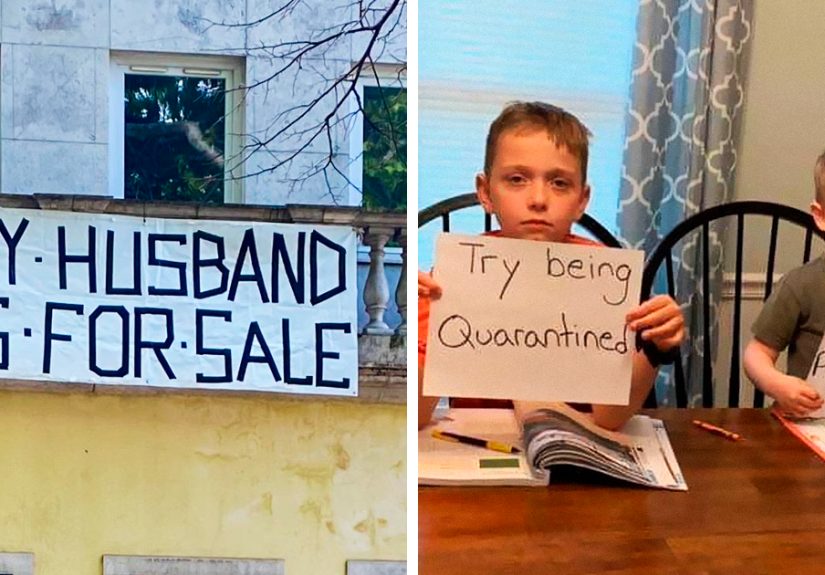
The viral collection “40 Funny Quarantine Signs By People Who Haven’t Lost Their Spirits Yet”, shared
widely by Bored Panda and other outlets, turned into a time capsule of lockdown life with a punchline. The jokes were
simplepuns about social distancing, sarcastic warnings about running out of snacks, or kids “selling” their parents to
the highest bidderbut they carried something powerful: a reminder that laughter was still allowed.
In this article, we’ll revisit the spirit of those 40 funny quarantine signs, explore why they resonated so much, look
at different types of signs that appeared all over the world, and reflect on the experiences and lessons they left
behind. Consider this your comic relief walk down memory laneno mask required.
Why Funny Quarantine Signs Hit So Hard During Lockdown
Humor tends to show up wherever humans are stressed, and quarantine was about as stressful as it gets. Overnight, our
routines shattered. Work, school, family, and social life collapsed into a single location: home. And when everything
gets overwhelming, cracking a joke is one of the fastest ways to take the emotional volume down a notch.
Funny quarantine signs worked because they were:
- Public – Anyone walking or driving by could see them and instantly feel less alone.
- Relatable – The jokes were usually about universal lockdown problems: boredom, kids, neighbors, pets, and Zoom meetings.
- Low-tech – You didn’t need a social media account or fancy design skills, just cardboard, tape, and a marker.
- Emotionally honest – Behind the jokes was a real message: “We’re scared too, but we’re trying to make the best of it.”
These signs were not just decoration. They were coping tools in disguise. In uncertain times, it felt reassuring to
see that the family across the street was also struggling with homeschooling or that the local coffee shop was joking
about caffeine being an “essential service.” Humor didn’t erase the crisis, but it made it feel a little more human and
a little less hopeless.
Types of Funny Quarantine Signs That Went Viral
While each sign had its own personality, certain themes showed up again and again. Think of them as unofficial genres
of quarantine comedy.
1. The “We’re Fine (But Barely)” Family Signs
Some of the funniest signs came from families trying to survive 24/7 togetherness. Parents wrote messages on windows
and fences about homeschooling disasters, overflowing laundry, and kids bouncing off the walls. A classic vibe was:
“Day 14 of quarantine: send coffee, snacks, and maybe a professional referee.”
These signs let parents admit that things were chaotic without sounding ungrateful or negative. The humor worked
because anyone with kids instantly understood the exhaustion and love behind the jokes.
2. Sarcastic Storefront and Restaurant Signs
Small businesses also joined the comedy club. Restaurants, coffee shops, bars, and corner stores updated their signs to
reflect the new reality. Instead of simple “closed” notices, you might see something like:
- “Yes, we’re open. No, you can’t come in. Welcome to 2020.”
- “Curbside pickup only. We promise not to judge your sweatpants from the window.”
- “Please stand six feet apart. If you can read this over my shoulder, you’re too close.”
These messages turned frustrating new rulesmasks, distance, limited capacityinto shared jokes. Customers felt seen,
and businesses showed that they were still part of the community, even behind locked doors.
3. Neighborhood Spirit and Support Signs
Not every sign was purely silly. Many were a mix of humor and heartfelt encouragement. People taped posters to windows
thanking delivery drivers, healthcare workers, teachers, and grocery staff. Some added jokes like “You’re essential…
unlike my sourdough starter” or “If you’re delivering packages, we love you more than ever.”
These signs reminded everyone that we were relying on each other. A little humor softened heavy gratitude into something
that felt warm and genuine, not cheesy.
4. Pet-Themed Quarantine Signs
Pets accidentally became quarantine coworkers, and they did not sign up for HR. Pet-themed signs pretended to speak
from the dog or cat’s perspective:
- “Our dog is thrilled we’re home all day. Our cat has filed a formal complaint.”
- “Please don’t knock. The dog thinks every delivery is the highlight of his career.”
These signs brought levity by making fun of how our pets reacted to the sudden constant company. For many people, the
dog walk was the only “outing” of the dayand a funny sign outside the house made that routine feel like an event.
5. Introvert vs. Extrovert Signs
Another popular category played on personality differences. Introverts jokingly announced that they had been “training
for this their whole lives,” while extroverts begged for someoneanyoneto scream small talk at them from the sidewalk.
These signs captured how uneven the quarantine experience was. For some, time alone at home felt almost peaceful. For
others, it was emotionally brutal. Laughing about it gave people permission to admit how they really felt.
6. DIY Crafty and Artistic Signs
Then there were the overachieversthe people who turned their signs into full-blown art projects. Painted plywood,
hand-lettered calligraphy, chalkboard illustrations, and window murals turned neighborhoods into open-air galleries.
Sometimes the message was a simple pun or a goofy drawing of a virus with a silly face. Other times, it was a whole
scene: superheroes in masks, cartoon nurses, or a parody of a movie poster with the tagline “Coming soon to a couch
near you.”
These signs did double duty: they kept people smiling and gave bored, anxious creators something positive to focus on.
What These Funny Quarantine Signs Reveal About Us
On the surface, a sign that says “Quarantine Day 27: The fridge is now a toxic relationship” is just a joke. Underneath,
though, it reveals a lot about how people handle stress, fear, and uncertainty.
These signs showed that:
- We use humor to regain control. When the world feels chaotic, laughing at itjust a littlecan make it feel less overpowering.
- We want to connect, even at a distance. A silly sign in a window is basically a socially distanced wave hello.
- We like to name the hard things. Jokes about anxiety, boredom, or family overload can be more honest than “I’m fine.”
- We’re capable of joy in dark moments. The signs didn’t ignore the seriousness of the pandemic; they simply refused to let it erase every smile.
In a way, these funny quarantine signs were mini social documents. Years from now, people will look back at photos of
them and instantly understand what life felt like: tense, weird, and somehow still full of creativity and kindness.
How to Create Your Own “Funny Quarantine Sign” Style Messages
Even though the strictest lockdown days are behind us, the spirit of those signs still works anytime life feels heavy.
You can borrow the same formula for yard signs, office posters, digital graphics, or social posts.
1. Start with a Shared Problem
The best quarantine jokes were rooted in experiences everyone recognized: long video meetings, endless dishes, mask
mishaps, or kids interrupting calls. When you create a sign, start with a shared reality people are already thinking
about. That’s what makes the joke land.
2. Exaggerate Just Enough
Comedy loves exaggeration. Maybe the kids aren’t literally climbing the ceiling, but saying “Send help; they’re using
the furniture as a jungle gym” captures the mood. Just don’t exaggerate in a way that punches down at people who are
struggling more than you are.
3. Keep It Short and Visual
A great sign reads like a punchline: quick, sharp, and easy to understand from the sidewalk or car. Add a little doodle
or symbol if you cana roll of toilet paper, a grumpy cat, or a tiny drawing of a crowded Zoom screen goes a long way.
4. Aim for Warm, Not Mean
The most beloved quarantine signs punched up at the situation, not at specific people or groups. They were playful,
not cruel. That warmth is a big part of why people shared them so widely and remembered them so fondly.
Conclusion: Spirits Intact, Even When the World Paused
The collection of 40 funny quarantine signs became more than just a gallery of clever one-liners. It
was proof that ordinary people, armed with cardboard and a marker, could boost morale across city blocks and social
feeds. Those signs made us laugh, but they also quietly reminded us: we’re resilient, we’re creative, and even in the
strangest times, we’re capable of showing up for each other with a smile.
We may never want to relive lockdown, but revisiting those funny quarantine signs is a way to honor how we got through
itone pun, one window note, and one shared chuckle at a time.
Experiences and Reflections Inspired by “40 Funny Quarantine Signs”
Looking back, many people can pinpoint a specific funny quarantine sign that stuck with them. Maybe it was one on
their own street, maybe it was a viral photo online, or maybe it was something they made with their kids on a rainy
afternoon when everyone was climbing the walls. These experiences help explain why the “40 Funny Quarantine Signs By
People Who Haven’t Lost Their Spirits Yet” collection felt so personal, even if we never met the people behind the
jokes.
One common experience was the “walk of discovery.” When indoor life shrank, daily walks became the main adventure. You
’d lace up your shoes, step outside, and see what was new: chalk drawings on sidewalks, teddy bears in windows, and, of
course, new signs. Some were freshly taped to glass, still wrinkled from hurried hands. Others looked like they’d
evolved over time, with scribbles added as the days blurred togetherextra hearts, tally marks for “quarantine days,”
or little updates like “Day 32: Still out of patience, but the plants look amazing.”
These small discoveries broke up the monotony. If you passed the same sign every day, it became part of your routine.
A sarcastic line about toilet paper shortages or a joke about video meetings might make you smile even when you were
tired, worried, or overstimulated. The sign didn’t fix the situation, but it gently nudged your mood a few degrees in
a better directionand sometimes that was enough.
For families, creating signs turned into a quarantine project. Parents who were suddenly teachers, activity planners,
and full-time entertainers found that letting kids design a window sign was both an art lesson and an emotional outlet.
Kids drew rainbows, superheroes in masks, and speech bubbles saying things like “Stay safe!” or “We miss our friends!”
Some added jokes only their household would understand. The finished sign, taped proudly to the window, became a little
billboard for the family’s shared experience of the moment.
Another memorable experience for many people involved seeing funny signs outside essential workplaces: grocery stores,
pharmacies, clinics, or takeout spots. Stepping into those spaces could feel nerve-racking. A witty sign on the door
something like “Please stand six feet apart. Yes, even if you’re excited about the snacks”cut the tension. It
signaled that the people inside understood what customers were feeling and were doing their best to make a tense
situation more bearable.
There were also quieter, more emotional experiences. Some people remember reading a funny sign and unexpectedly
tearing upnot because the joke was sad, but because it reminded them how much everyone was trying. Behind the jokes
were real people coping with job loss, health scares, family separation, or loneliness. The comedy was a thin layer
wrapped around very real fear. Seeing someone make an effort to laugh anyway could be deeply moving.
Online, the experience took another shape. Collections of funny quarantine signs became shareable comfort. Someone
would send a link in a group chat with a note like, “You have to see these, they’re exactly how I feel,” and suddenly
people scattered across different citiesor even countrieswere laughing at the same handwritten messages. That
digital togetherness mattered. It created a sense of “we” at a time when many of us were physically isolated in tiny
circles.
Even now, years later, the spirit of those signs carries over into how people cope with other stressful moments.
Workplace whiteboards, classroom bulletin boards, and neighborhood Facebook groups borrow the same blend of honesty and
humor: “We’re overwhelmed, but we’re still joking about it.” When you’ve lived through quarantine, a funny sign about
long meetings, empty shelves, or busy family schedules hits differently. It’s not just a jokeit’s a reminder of
everything you survived and the creativity that helped you get through it.
In the end, the experiences around those 40 funny quarantine signs are about more than the words on cardboard. They’re
about neighbors nodding at each other from a distance, delivery drivers smiling behind masks, kids pressing their
faces to windows to check whether anyone noticed their art, and strangers online sharing the same screenshot from a
Bored Panda post. The signs were small, but the feeling they createdconnection, relief, and shared resiliencewas
surprisingly big.