Table of Contents >> Show >> Hide
- How to Choose the Right Direction for Your Spare Room
- 41 Spare Room Ideas to Make the Most of Your Bonus Space
- 1. The “Hotel-Feel” Guest Room
- 2. Home Office That Actually Gets Used
- 3. Guest Room + Office Combo
- 4. Murphy Bed “Disappearing Bedroom”
- 5. Daybed Lounge with Storage
- 6. Two-Twin Guest Setup
- 7. Cozy Reading Room Library
- 8. Window Seat Reading Nook
- 9. Home Gym (No, Really)
- 10. Yoga + Meditation Studio
- 11. Home Theater / Movie Den
- 12. Game Room for All Ages
- 13. Music Room / Practice Space
- 14. Podcast or Content Studio
- 15. Art Studio
- 16. Sewing + Craft Room
- 17. Homework + Study Room
- 18. Teen Hangout Lounge
- 19. Playroom That Doesn’t Look Like a Toy Explosion
- 20. Nursery + Calm Night-Shift Corner
- 21. Dressing Room / Vanity Space
- 22. Walk-In Closet Without Remodeling
- 23. Laundry + Folding + Sorting Room
- 24. Laundry Room + Mini Office
- 25. Mudroom Overflow / Drop Zone
- 26. Back Kitchen / Pantry Room
- 27. Beverage Station + Coffee Bar
- 28. Wine Tasting / “Grown-Up Lounge” (Non-Rowdy Edition)
- 29. Hobby Workshop (No Garage Required)
- 30. Puzzle Room
- 31. Plant Room / Indoor Garden
- 32. Pet Room + Grooming Corner
- 33. Guest Room for Kids: Bunk-Ready
- 34. Mini Apartment-Feel Guest Suite
- 35. Quiet “Reset Room”
- 36. Learning Lab / Home Classroom
- 37. Board-and-Batten “Zoom Background” Room
- 38. Sports Viewing Room
- 39. Guest Room with a Sitting Chair by the Window
- 40. Storage Room That’s Actually Organized
- 41. “Two Rooms in One” Flex Space
- Design Moves That Make Any Spare Room Look Better (and Work Harder)
- of Real-Life “Spare Room” Experiences (What Actually Happens)
- SEO Tags
If your spare room currently functions as a museum for “things I’ll totally deal with later,” you’re not alone. Bonus rooms have a funny way of turning into the house’s emotional support closet. The good news: with a plan (and maybe one strong trash bag), that extra space can become the most useful room you ownwhether you need a calmer workday, a better guest setup, a hobby haven, or a place where your treadmill doesn’t double as a coat rack.
This guide rounds up 41 practical, design-forward ways to repurpose a spare roomplus simple strategies that make small spaces feel bigger, multipurpose rooms feel intentional, and “unused” space feel like a flex.
How to Choose the Right Direction for Your Spare Room
Before you buy a sofa bed or declare yourself a “home gym person,” do a quick reality check. The best bonus room is the one you’ll actually use.
- Start with frequency: What would you use weeklyworkout zone, office, hobby room, guest space, or storage with dignity?
- Match the room’s strengths: Great natural light? Think studio, office, reading lounge. Dark and quiet? Media room or music space. Awkward angles? Built-ins, storage, or a cozy nook.
- Plan for flexibility: If you need the room to do two jobs, design “zones” (sleep zone + work zone) and pick furniture that folds, rolls, or hides.
- Make comfort non-negotiable: If it’s for guests, prioritize sleep and storage. If it’s for work, prioritize ergonomics and lighting.
41 Spare Room Ideas to Make the Most of Your Bonus Space
Pick one idea and do it really wellor combine two with a smart layout. (Three functions is possible, but that’s when a room starts feeling like a Swiss Army knife with commitment issues.)
1. The “Hotel-Feel” Guest Room
Upgrade the basics: crisp bedding, layered pillows, a luggage rack or bench, and a bedside lamp. Add blackout curtains and a mirror so it feels like a real suite, not a crash pad.
2. Home Office That Actually Gets Used
Choose a desk size that fits your workflow (laptop-only vs. dual monitors), then anchor the room with storage you’ll maintain: drawers, shelves, or cabinet doors that hide visual clutter fast.
3. Guest Room + Office Combo
Use a sleeper sofa, daybed, or Murphy bed to keep the room functional on non-guest days. Place the desk near natural light and keep guest essentials in a lidded bin or closed cabinet.
4. Murphy Bed “Disappearing Bedroom”
A wall bed turns a spare room into a true flex spaceoffice by day, guest room by nightwithout the bed dominating the floor plan.
5. Daybed Lounge with Storage
A daybed reads like seating and sleeping, especially with big pillows. Choose a version with drawers underneath to store extra linens, board games, or seasonal stuff.
6. Two-Twin Guest Setup
Twin beds can feel surprisingly upscale (think boutique inn), plus they’re flexible for friends, kids, or mixed sleepers. Use matching lamps and a shared nightstand to keep it polished.
7. Cozy Reading Room Library
Add shelves (built-in or modular), a comfortable chair, and a lamp with warm light. Include one “book drop zone” (basket or small cart) to keep stacks from spreading like ivy.
8. Window Seat Reading Nook
If the room has a great window, build the whole vibe around it: bench cushion, curtains, and a tiny side table for coffee and a book. Bonus points for drawers underneath.
9. Home Gym (No, Really)
Start small: a mat, a mirror, adjustable dumbbells, and a fan. Wall hooks and a slim shelf keep gear organized so the room doesn’t instantly turn into “fitness storage.”
10. Yoga + Meditation Studio
Keep it simple: open floor, calming colors, soft lighting, and a closed cabinet for props. Add a Bluetooth speaker and a plantsuddenly you’re a person with a “practice.”
11. Home Theater / Movie Den
Go for comfort and sound: a plush sectional or deep chairs, blackout curtains, and a rug to reduce echo. Use dimmable lighting so popcorn refills don’t feel like a spotlight moment.
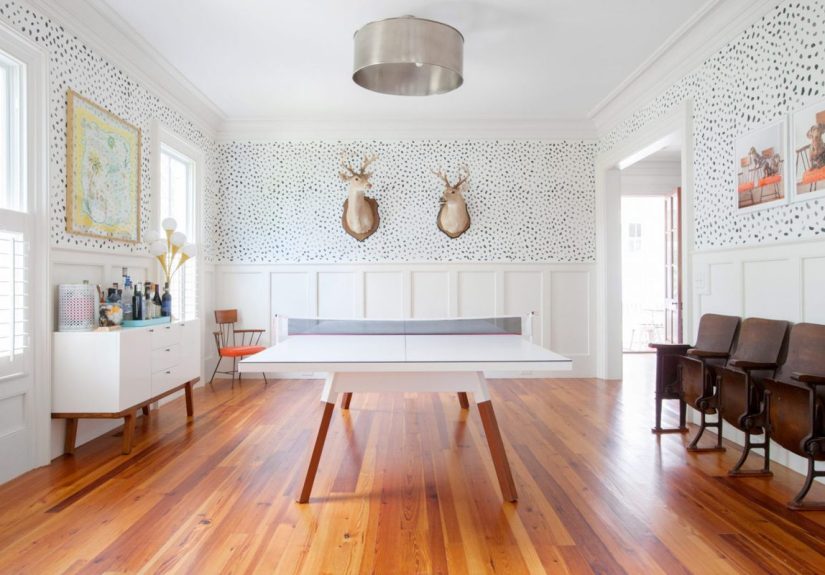
12. Game Room for All Ages
Choose one anchor: a card table, console setup, or board game wall. Add closed storage for controllers, decks, and pieces so “game night” doesn’t become “hunt night.”
13. Music Room / Practice Space
Use a rug, curtains, and soft furnishings to help with sound. Add a small stand for sheet music, a charging station, and wall hooks for headphones or instrument cases.
14. Podcast or Content Studio
You don’t need a full broadcast boothjust good lighting, a clean background, and sound control (curtains, rug, soft panels). Keep cords managed with a mounted power strip.
15. Art Studio
Set up a washable “mess zone” and a clean display zone. Use a rolling cart for supplies, and hang pegboard or shelves so your tools aren’t living in a drawer pile-up.
16. Sewing + Craft Room
Use a sturdy work table and bright lighting. Clear bins labeled by category (fabric, tools, paper) make cleanup realisticbecause creativity is fun, but finding your scissors is not.
17. Homework + Study Room
Give each kid (or each subject) a station: desk, task light, and a small drawer unit. Add a pinboard or whiteboard so school stuff stops colonizing the kitchen counter.
18. Teen Hangout Lounge
Think flexible seating (beanbags, modular chairs), charging access, and durable fabrics. Add a small snack station or mini fridge if it fits your household rules (and your grocery budget).
19. Playroom That Doesn’t Look Like a Toy Explosion
Closed storage is the cheat code: cabinets, bins, baskets, and labels. Create zones (books, building, pretend) so kids can reset the room without adult-level organization skills.
20. Nursery + Calm Night-Shift Corner
Prioritize a comfy chair, soft light, and storage near the changing area. Keep the room soothing with a simple palette and limit visual cluttersleep is already dramatic enough.
21. Dressing Room / Vanity Space
Add a mirror with flattering lighting, a small vanity, and a comfy stool. A slim dresser for accessories helps keep bathrooms from turning into makeup staging areas.
22. Walk-In Closet Without Remodeling
Use clothing racks, a tall mirror, and a dresser to create a boutique-feel setup. Matching hangers and bins make even a “temporary” closet look intentional.
23. Laundry + Folding + Sorting Room
If the spare room is near laundry, make it a folding hub: counter-height table, hampers, and shelves for detergent and linens. It’s shockingly life-improving.
24. Laundry Room + Mini Office
Pair a small desk with wall shelves so the room multitasks. A closed cabinet keeps papers away from lint, and a comfortable chair keeps the “quick email” from becoming neck pain.
25. Mudroom Overflow / Drop Zone
Add hooks, a bench, and shoe storage. Even if your real entry is small, the spare room can become the place where backpacks, coats, and sports gear livepeace restored.
26. Back Kitchen / Pantry Room
Turn extra space into storage for bulk items, small appliances, and party supplies. Add sturdy shelving and a cart so entertaining doesn’t require an Olympic-level kitchen shuffle.
27. Beverage Station + Coffee Bar
A small cabinet, mini fridge, and shelves for mugs can make mornings smoother and hosting easier. Keep it tidy with trays and labeled containers.
28. Wine Tasting / “Grown-Up Lounge” (Non-Rowdy Edition)
Create a calm, cozy sitting room: soft lighting, comfortable chairs, and a small table. It’s less about “theme” and more about making the room feel like a destination.
29. Hobby Workshop (No Garage Required)
Perfect for model kits, jewelry making, or tinkering. Use a sturdy table, task lighting, and wall storage. Put a mat down to protect floors and sanity.
30. Puzzle Room
A dedicated table means you can leave puzzles out without “cleaning” them into a box forever. Add a shelf for puzzle sorting trays and a good overhead light.
31. Plant Room / Indoor Garden
Great light? Turn it into a plant sanctuary with shelves, grow lights if needed, and trays to protect floors. A small watering station keeps the routine easy.
32. Pet Room + Grooming Corner
Create a pet-friendly zone with washable floors or rugs, a storage bin for supplies, and hooks for leashes. Add a small mat by the door for paw-wiping if it’s near an exit.
33. Guest Room for Kids: Bunk-Ready
Use bunk beds or a trundle for maximum sleep space. Keep toys in one contained storage unit so it stays guest-ready without a full room reset.
34. Mini Apartment-Feel Guest Suite
If you can, add a small sitting area and a place to make tea or coffee. A mirror, hooks, and a surface for a suitcase make the room feel thoughtfully planned.
35. Quiet “Reset Room”
Design a low-stimulation space: comfortable chair, soft throw, minimal decor, and warm lighting. It’s a great place to read, journal, or decompress after a loud day.
36. Learning Lab / Home Classroom
Use a big table, strong lighting, and a supply wall (bins + labels). Add a corkboard for schedules and projects so you’re not taping science posters to the fridge again.
37. Board-and-Batten “Zoom Background” Room
If you work from home, make the room camera-friendly: simple wall treatment, shelves with a few curated objects, and lighting that doesn’t make you look like a haunted flashlight story.
38. Sports Viewing Room
Comfort wins: cozy seating, a big rug, and blackout curtains. Add a slim console for snacks and gear, plus closed storage for remotes and cords.
39. Guest Room with a Sitting Chair by the Window
A lounge chair and small side table make the room feel hospitable, like guests have somewhere to land besides the bed.
40. Storage Room That’s Actually Organized
If storage is the honest best use, make it good storage: shelving, labeled bins, and a clear floor path. Add a small donation box so clutter has a one-way exit strategy.
41. “Two Rooms in One” Flex Space
Combine two functions on purposelike office + guest, gym + meditation, playroom + homeworkby using rugs, lighting, and furniture placement to create distinct zones.
Design Moves That Make Any Spare Room Look Better (and Work Harder)
Regardless of which idea you choose, these upgrades deliver the biggest “wow, this room is usable now” payoff:
- Use low-profile furniture in tight or low-ceiling spaces: It visually opens the room and keeps things from feeling cramped.
- Choose multi-functional furniture: Fold-down desks, ottomans with storage, and Murphy beds are the MVPs of flex rooms.
- Layer lighting: Overhead light + task lighting + one warm lamp creates comfort and function (and avoids the “interrogation room” vibe).
- Build in storage that matches the mess: If the room collects small items, use drawers and bins. If it collects bulky items, use shelves and labeled containers.
- Make guests feel cared for: A place to unpack, a bedside lamp, and a simple note with Wi-Fi info and house basics go a long way.
- Pick calming, flexible colors: Soft neutrals and cool tones tend to support rest, focus, and versatility across uses.
- Control sound: Rugs, curtains, and upholstered furniture reduce echoespecially important for offices, media rooms, and music spaces.
- Protect the floor: Workout mats, chair mats, and washable rugs keep a multipurpose room from taking damage as it evolves.
of Real-Life “Spare Room” Experiences (What Actually Happens)
In a lot of homes, the spare room begins with great intentions and ends with a door that stays closed. The room becomes a holding zone for “I’ll deal with it later” decisions: a treadmill that slowly turns into a towel rack, a stack of gift bags that multiplies like it’s on a mission, and a chair that somehow collects clothing even when nobody remembers putting it there. The first big shift usually happens when someone stops thinking of the room as extra and starts treating it like valuable square footagebecause it is.
One of the most common transformations is the office/guest combo. People often worry it will feel awkward, like the room can’t fully commit to either job. But when the layout is deliberate, it works beautifully. A desk placed near a window makes the workday more pleasant. A sleeper sofa or Murphy bed keeps the floor open when guests aren’t around. The trick is giving guest mode its own “kit”: fresh sheets in a labeled bin, a bedside lamp ready to plug in, and a clear surface for a phone and water. When visitors arrive, the room changes roles quicklywithout requiring a full home makeover panic.
Another real-life win is the hobby room. The biggest surprise isn’t how fancy it looksit’s how much time people suddenly spend doing the hobby. When supplies live in one spot and a project can stay out overnight, the activity stops feeling like a production. A dedicated craft table, a rolling cart, and good lighting can turn “I used to love doing this” into “I did this last weekend.” And because the mess is contained, the rest of the house stays calmer. Nobody is trying to clear a dining table just to cut paper or paint something.
Home gyms tend to succeed when they start small. Instead of buying a pile of equipment and hoping motivation shows up, many people begin with a mat, a mirror, and a shelf for basics. The room becomes a “yes space”easy to step into for 15 minutes. Over time, it earns upgrades: a fan, better storage, maybe one larger piece of equipment that fits the routine. The most helpful detail is often the least glamorous: a hook for resistance bands, a basket for towels, and a place to put a water bottle so the room feels ready when you are.
And then there’s the most underrated spare-room experience of all: the calm room. A simple chair, a soft lamp, a throw blanket, and a shelf of books can create a place that lowers the volume of the whole house. People underestimate how much a quiet room helps until it existsthen it becomes the spot for reading, thinking, cooling down, or just sitting without scrolling. The spare room stops being “extra” and starts being the space that makes everything else feel more manageable.