Table of Contents >> Show >> Hide
- Before You Start: What “Winter Survival” Looks Like for Crepe Myrtle
- 1) Ease Up on WaterThen Give One Last Deep Drink Before Freeze
- 2) Stop Fertilizing (and Resist the Urge to “Treat” It With Extra Nitrogen)
- 3) Mulch the Root Zone Like a Pro (No Mulch “Volcanoes,” Please)
- 4) Put the Pruners Down: Avoid Fall Pruning and Ban “Crape Murder” Forever
- 5) Give Extra Protection to Young, Newly Planted, and Potted Crepe Myrtles
- Quick “Do This Now” Checklist (Print-It-On-Your-Fridge Edition)
- of Real-World Crepe Myrtle Winter Prep Experiences
- Conclusion
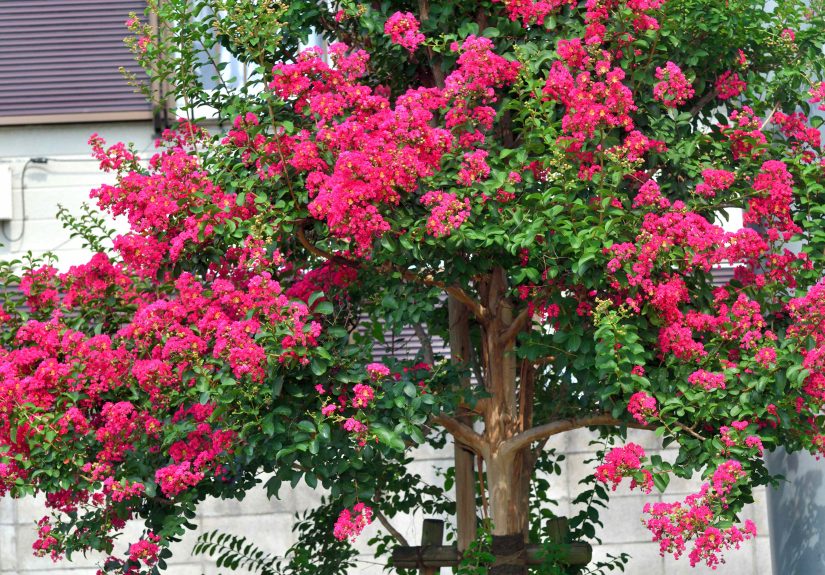
Crepe myrtles are basically the overachievers of warm-climate landscapes: they bloom for months, handle heat like a champ, and still manage to look classy when everything else is melting.
But winter? Winter is when your crepe myrtle quietly files a complaint.
The good news: helping a crepe myrtle survive winter isn’t complicated. The bad news: it’s very easy to “help” the wrong way (hello, surprise frost damage and the infamous haircut known as “crape murder”).
If you do a few smart things nowbefore real cold settles inyou’ll set your tree up for a healthier dormancy and a stronger comeback in spring.
Below are five practical, science-backed steps you can take this season, plus a real-world “what people actually do in their yards” section at the end.
Think of it as winter prep for a plant that would absolutely wear sunglasses indoors if it could.
Before You Start: What “Winter Survival” Looks Like for Crepe Myrtle
Crepe myrtle (also spelled “crape myrtle”) goes dormant in winter. Dormancy is your plant’s version of powering down: growth slows, leaves drop, and energy gets stored in roots and woody tissue.
Your job is to help it enter dormancy smoothlywithout pushing tender new growth, exposing it to temperature whiplash, or stressing it with unnecessary pruning.
Your exact “winter game plan” depends on three things:
- Your USDA hardiness zone (cold snaps in Zone 6 are a different sport than winter in Zone 9).
- Age of the plant (newly planted and young trees are more vulnerable).
- Where it’s growing (in-ground trees handle cold better than container-grown plants).
With that in mind, let’s get into the five best things you can do now.
1) Ease Up on WaterThen Give One Last Deep Drink Before Freeze
As temperatures cool, your crepe myrtle needs less frequent watering. You’re encouraging it to “harden off,” meaning it transitions from active growth into dormancy without staying overly lush and tender.
That said, don’t confuse “less often” with “never.” Dry roots heading into winter can increase stressespecially for younger plants or during dry falls.
What to do
- Gradually reduce irrigation as fall progresses and growth slows.
- Water deeply once before the ground is expected to freeze (or before sustained hard freezes are typical in your area).
- Focus water at the root zone (around the dripline, not hugging the trunk).
Specific examples
- Established in-ground crepe myrtle: If fall rains are normal, you may only need occasional deep watering during dry stretches.
- Newly planted (this year): Keep soil consistently moist (not soggy) until dormancy, then taper off.
- Container crepe myrtle: Pots dry out faster and roots are more exposed to cold, so monitor soil moisture even as the plant goes dormant.
Think of it like this: you’re not “feeding” the plant water for growthyou’re sending it into winter with a well-hydrated pantry.
2) Stop Fertilizing (and Resist the Urge to “Treat” It With Extra Nitrogen)
If there’s one winter-care rule that deserves to be printed on a mug, it’s this: don’t fertilize crepe myrtle late in the season.
Late fertilizationespecially with nitrogencan encourage soft new growth that doesn’t have time to toughen up before cold weather. That tender growth is the first to get zapped by frost.
What to do
- Stop fertilizing by late summer (exact timing varies by region; the goal is “no growth-pushing fertilizer heading into fall”).
- Skip “quick fixes” like high-nitrogen lawn fertilizer near the tree (roots can pick it up).
- Use compost thoughtfully (a thin top-dress in the root zone can be fine, but avoid turning fall into “spring 2.0”).
A quick reality check
Many established crepe myrtles don’t need much fertilizer at allespecially if your soil is decent and you mulch with organic material.
If growth and blooms have been poor for multiple seasons, the best “now” move is a soil test plan for spring, not a last-minute fertilizer Hail Mary.
Winter isn’t when you hype your plant up. Winter is when you let it nap.
3) Mulch the Root Zone Like a Pro (No Mulch “Volcanoes,” Please)
Mulch is one of the simplest, highest-impact tools for crepe myrtle winter careespecially in colder zones and for younger trees.
It helps moderate soil temperature swings, reduces moisture loss, and protects the most cold-sensitive part of the plant: the roots near the soil surface.
What to do
- Add 2–3 inches of organic mulch (wood chips, shredded bark, pine needles, leaf mold) over the root zone.
- Keep mulch several inches away from the trunk to discourage rot, pests, and disease.
- Widen the mulch ring if you canbroad coverage is more useful than a thick pile.
For colder areas and young trees
If you’re in a colder zone (or you planted this year), consider a slightly wider mulch area and maintain that insulating layer through the coldest months.
Your goal is steady conditionsnot “warm,” just steady.
Mulch should look like a cozy blanket on the soil. If it looks like a frosting sculpture climbing the trunk, it’s not cozyit’s chaos.
4) Put the Pruners Down: Avoid Fall Pruning and Ban “Crape Murder” Forever
Here’s the part where many well-meaning gardeners accidentally turn winter prep into winter problems:
heavy pruning in fall (or early winter) is usually a bad move.
Why? Pruning can stimulate new growth or leave fresh cuts vulnerable to cold injury. Plus, crepe myrtles don’t need yearly severe pruning to bloom well.
They bloom on new wood, yesbut “new wood” doesn’t mean “take it down to stumps and hope for the best.”
What to do instead
- Skip major pruning now. Save shaping for late winter, close to spring (timing varies by region, often January through March).
- Remove only what’s necessary: dead, diseased, or broken branches can be removed any time.
- Remove suckers at the base if they’re excessive and you’re maintaining a tree form.
What not to do (ever)
- No topping. No flat “buzz cut.” No “let’s make it shorter by lopping off all the tops.”
- No creating knobby stubs that sprout weak shoots and break later.
If your crepe myrtle is too big for the spot, the long-term fix is choosing a variety with a mature size that fitsor relocatingrather than turning it into a yearly “before and after” pruning horror show.
5) Give Extra Protection to Young, Newly Planted, and Potted Crepe Myrtles
Mature, established crepe myrtles often sail through winter (especially in Zones 7–9) with minimal fuss.
The plants that need the most attention are:
- New plantings (especially those planted late in the season)
- Young trees still developing hardy trunk tissue
- Container plants (roots are less insulated and more prone to freeze damage)
- Marginally hardy varieties grown near the edge of their cold tolerance
For young in-ground trees: protect the trunk and base
- Mulch generously over the root zone (still keep it off the trunk).
- Wrap the trunk with breathable material (think burlap or tree wrap) if your area gets hard freezes or strong winter winds.
- Avoid plastic wrap that can trap moisture and create problems.
For potted crepe myrtles: plan an overwintering spot
Containers are the “camping in winter” version of plant life. Even if the top is dormant, the roots can freeze harder and faster.
If you live where temps regularly drop below freezing, consider one of these strategies:
- Move the pot to a sheltered location (against a house wall, out of wind).
- Insulate the container (wrap the pot with burlap, bubble wrap under burlap, or use a larger outer pot with insulating material in between).
- Garage or unheated shed method: Once dormant, store in a cool, protected space where temperatures stay above extreme lows. Water lightly only when the soil is dry (dormant doesn’t mean “desiccated”).
Don’t forget spring removal
Whatever protection you addwraps, extra mulch, shelteringmake a note to remove or reduce it in early spring so the plant can warm up naturally and you don’t invite rot or pests.
Quick “Do This Now” Checklist (Print-It-On-Your-Fridge Edition)
- Water less often as growth slows, then give one last deep watering before freeze.
- Stop fertilizing so the plant hardens off instead of pushing tender growth.
- Mulch 2–3 inches over the root zone; keep mulch off the trunk.
- Don’t prune heavily now; wait until late winter/early spring for shaping.
- Protect young or potted plants with wrap, shelter, and smart insulation.
of Real-World Crepe Myrtle Winter Prep Experiences
In real neighborhoods, crepe myrtle winter care often looks less like a perfect textbook and more like a series of “I learned this the hard way” moments.
One of the most common stories goes like this: a gardener sees a warm fall week, assumes winter is far away, and gives the plant “one more boost” with fertilizer.
The tree responds with fresh, tender growthlike it’s trying to impress someonethen a sudden cold snap hits and the new shoots turn into sad, crispy evidence that the calendar always wins.
After that, most people become fiercely loyal to the “stop fertilizing earlier than you think” rule.
Another classic experience is the mulch lesson. Gardeners who mulch lightly (or not at all) in colder zones sometimes notice that their crepe myrtle leafs out later and unevenly in spring.
They may see dieback on branch tips or even regrowth mostly from lower trunk areas after a tough winter.
When they start using a consistent 2–3 inch mulch layerwide, not piledspring performance often improves, especially for young trees still establishing roots.
It’s not magic; it’s simply reducing the freeze-thaw stress that can whiplash shallow roots.
Container crepe myrtles come with their own set of stories, because pots make winter feel personal.
A common win is the “unheated garage” approach: once the plant is dormant, it gets tucked away somewhere protected from wind and extreme cold, then checked occasionally for dryness.
Gardeners who do this tend to report fewer “my plant died but I swear I did nothing wrong” momentsbecause the roots never took the full force of outdoor freezes.
The mistake, on the other hand, is keeping a potted crepe myrtle too warm and too wet indoors.
Warmth can break dormancy early, and wet soil can invite root issuesso the sweet spot is cool, sheltered, and lightly monitored.
And then there’s pruningthe crepe myrtle debate that never dies.
In many areas, people prune because their neighbors prune, and their neighbors prune because their neighbors prune… which is not a strong scientific argument.
Gardeners who stop fall pruning often notice something surprising: nothing bad happens.
The plant still blooms. The shape often looks more natural. And the branches are less likely to suffer cold injury from fresh cuts.
The real “aha” moment comes when someone replaces heavy pruning with selective late-winter shapingremoving crossing branches, thinning slightly for airflow, and keeping the structure strong.
The tree looks better, blooms well, and no longer resembles a collection of broom handles wearing flower hats.
Finally, the best “experience-based” advice is also the least glamorous: pay attention to your microclimate.
A crepe myrtle planted in an open, windy corner can suffer more winter stress than one near a fence or brick wall that blocks wind and holds a little warmth.
Gardeners who adjust with wind protection, smart mulching, and patient timing often find their trees bounce back more consistentlybecause winter care isn’t about doing the most.
It’s about doing the right things at the right time and letting dormancy do its job.
Conclusion
Crepe myrtle winter care is mostly about restraint and timing: taper water, stop fertilizing, insulate roots with proper mulch, hold off on major pruning, and protect the plants that need it most (young and potted).
Do those five things and you’re not just helping your crepe myrtle survive winteryou’re setting it up to come roaring back with better structure, healthier growth, and a bloom season that makes your neighbors suddenly “remember” they meant to ask what your secret is.