Table of Contents >> Show >> Hide
- Front Door & Porch Easter Decorations
- Mantel, Living Room & Shelf Styling
- Easter Table Decor & Dining Room Ideas
- Kitchen & Everyday “Easter-ish” Touches
- Egg Decorating & Mini DIY Details
- Kids’ Corner, Egg Hunt & Party-Ready Decor
- Outdoor & Garden Easter Decorating Ideas
- Experience Notes: What Actually Works When You’re Decorating for Easter
- Conclusion
Easter decorating is basically spring’s way of saying, “Hey, you survived winterhave a tulip and a tiny rabbit!”
Whether you lean minimalist (one vase, one bloom, inner peace) or maximalist (every surface gets a chick), the best Easter
home decor feels fresh, bright, and a little playful. The trick is simple: pick a color palette (pastels, botanicals,
crisp neutrals, or blue-and-white), repeat it in a few places, and sprinkle in egg-and-bunny “wink” moments so it reads
festive without turning your living room into a candy aisle.
Below are 52 Easter decorating ideas inspired by classic U.S. home and lifestyle publications and retailersthink wreaths,
Easter trees, table decor, egg crafts, porch moments, and small styling upgrades that make your home feel like spring moved in.
Mix-and-match, steal what you love, and skip what doesn’t spark joy (or fits in your storage bin).
Front Door & Porch Easter Decorations
Your entry sets the vibe. Aim for one “hero” piece (wreath, swag, or door basket), then support it with two smaller accents
(planters, a doormat, lanterns). That’s the sweet spot between “welcoming” and “I bought the entire seasonal aisle.”
-
Egg wreath with mixed textures.
Use faux speckled eggs, pastel ribbon, and greenery; keep it classy by sticking to two or three colors, then add one surprise texture like moss or rattan. -
Carrot bundle door swag.
Tie faux carrots (or paper carrots) with twine and tuck in eucalyptus or tulipsinstant “spring market” energy without the grocery bill. -
Basket-on-the-door moment.
Hang a shallow basket and fill it with faux grass, a bow, and a few blooms. Bonus: it stores flat-ish compared to a bulky wreath. -
Porch planters with “Easter candy” colors.
Think pansies, violas, and tulips in soft pinks, yellows, and purples. The flowers do all the work; you just pretend it was intentional. -
Layered doormat + outdoor rug.
Put a cheerful Easter doormat on top of a larger striped or neutral rug. It’s an easy “designer trick” that looks expensive and feels very adult. -
Lanterns with eggs and greenery.
Fill lanterns with faux eggs, sprigs of greenery, and a flameless candle. It’s cozy, safe, and won’t melt into a sad puddle. -
Bunny topiary (real or faux).
Use a bunny-shaped topiary or a simple potted shrub with bunny-ear picks. It’s whimsical without screaming “children’s party.” -
Simple spring garland on the railing.
Wrap greenery garland and tuck in pastel ribbon tails. Keep eggs minimallike jewelry, not a full costume. -
Welcome sign with a subtle nod.
Instead of “HOP HOP HOP” everywhere, try a “Hello Spring” sign and add a small bunny figurine at the base. Quiet confidence. -
Egg hunt “starting line” basket.
Place a pretty basket by the door filled with blank eggs, chalk markers, and tiny treat bagsdecor and functionality in one.
Mantel, Living Room & Shelf Styling
Mantels and shelves love themes: repeat shapes (eggs, arches, bunnies), heights (tall/medium/short), and materials (ceramic, wood, glass).
If your display feels chaotic, reduce the number of “characters” and keep the palette steady.
-
Botanical print swap.
Replace a couple of frames with spring botanicals (or printable art). It’s the easiest seasonal refreshlike a haircut for your wall. -
Cloche with moss + eggs.
Put a small nest, moss, and a few speckled eggs under a glass cloche for an instant centerpiece on a mantel or console table. -
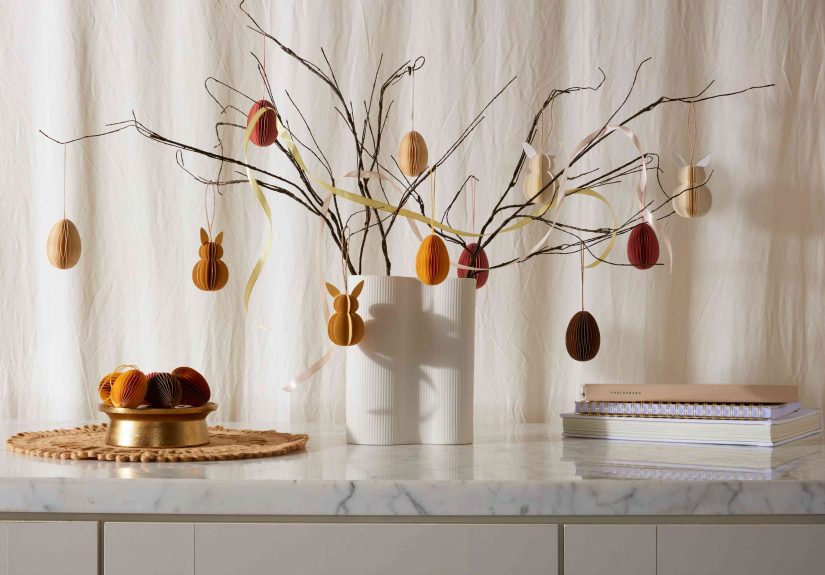
Mini “egg trees” on both ends.
Use branches in vases and hang lightweight decorative eggs. Keep them airythink “spring breeze,” not “ornament overload.” -
Pastel book stack accents.
Wrap a few books in pastel paper (temporary covers) and top with a ceramic bunny or a small bowl of eggs for a subtle holiday wink. -
Garland that reads spring, not one-day-only.
Try greenery + soft florals; tuck in small eggs that can be removed later. It’s “Easter-adjacent” and storage-friendly. -
Vintage-inspired bunny figurines.
Group three bunnies in different heights. Odd numbers feel curated; even numbers feel like a committee meeting. -
Neutral “farmhouse” Easter.
White ceramic rabbits, natural wood beads, and linen textures. It’s Easter decor for people who alphabetize their spice drawer. -
Pastel taper candles in mismatched holders.
Mix candleholder styles but keep candle colors consistent. It adds height and glow without requiring a full tablescape. -
Spring scent + decor pairing.
Add a lightly floral candle or diffuser near your display. Decor that smells like spring is basically a cheat code for atmosphere. -
Kid art “gallery rail.”
Clip Easter drawings (bunnies, eggs, chicks) onto twine with mini clothespins. It’s charming, personal, and freelike the best things in life. -
Tiered tray Easter vignette.
Use one tray, one theme: tiny eggs, a bunny, a mini vase of flowers, and a small sign. Stop there before the tray becomes a crowded elevator. -
Throw pillow “soft swap.”
Add two pastel or floral pillows to your sofa and call it a day. No one needs 11 seasonal pillows unless your couch is also a storage unit.
Easter Table Decor & Dining Room Ideas
The best Easter table settings feel layered, not cluttered: a base (tablecloth/runner), a middle (plates/napkins), and a focal point (centerpiece).
If you’re overwhelmed, start with florals and one Easter motifeggs or bunnies, not a full petting zoo.
-
Egg wreath centerpiece.
Make or buy a small egg wreath and set it flat on the table with a candle or vase in the center. It’s elegant, easy, and surprisingly high-impact. -
Hurricane vase “nest” centerpiece.
Fill a hurricane vase with moss and eggs, then place a smaller vase of tulips inside. Layered centerpieces look fancy even when they’re basically stacking. -
Blue-and-white spring table.
Swap pastels for classic blue-and-white dishes, then add yellow blooms. It reads fresh, timeless, and not at all “sugary.” -
Carrot bouquet in a pitcher.
Yes, carrots. Trim the tops, rinse, and arrange them with tulips or daffodils. Your centerpiece can be both decor and a humblebrag. -
Napkin bunny ears.
Fold linen napkins into bunny ears and tuck them into rings. It’s adorableand the kind of detail guests photograph before they eat. -
Place cards on eggs.
Use paint pens to write names on decorative eggs. Set each in a small egg cup or in a little “nest” of shredded paper. -
Wheatgrass runner.
Line the center of the table with trays of wheatgrass and tuck in eggs. It’s bright green, super springy, and feels like a garden party indoors. -
Chic candy bowl “scatter.”
Fill a clear bowl with pastel candy (or jelly beans) and surround it with a few small bud vases. It’s festive without being sticky everywhere. -
Mix patterns, keep one color anchor.
Floral plates + striped napkins can work if one color repeats across everything (like soft green or pale blue). Design is basically polite repetition. -
Mini baskets as napkin holders.
Place a small basket at each setting with a rolled napkin inside. Guests feel like they’re getting a present; you feel like a host with a plan. -
Garden-style “organic” centerpiece.
Use loose blooms (tulips, ranunculus, daffodils) in a low arrangement. A slightly undone look feels modern and relaxed. -
Edible centerpiece tray.
Arrange hot cross buns, pastel macarons, berries, and a few flowers on a serving board. It decorates the table and disappears by dessertideal. -
Tea cups as bud vases.
Use mismatched vintage teacups, each holding a few stems. It’s charming, easy, and a great excuse to thrift. -
Chocolate bunny “escort cards.”
Tie a little name tag to a chocolate bunny at each place. It’s cute, functional, and guarantees at least one guest will say, “This is too cute to eat,” then eat it. -
Pastel taper candles down the center.
Place candles in varied holders for height, then weave greenery around them. Use flameless tapers if kids are nearby (and your stress level is already high).
Kitchen & Everyday “Easter-ish” Touches
Easter decor doesn’t have to be a whole production. Small details in high-traffic areas (kitchen, entryway, powder room) deliver the most joy per square inch.
-
Spring dish towel swap.
Hang two Easter-themed or floral towels. It’s a tiny change that makes the kitchen feel festive every time you wash your hands. -
Countertop bunny bowl.
Use a small bowl for wrapped chocolates or fruit and add one tiny bunny figurine beside it. “Seasonal styling,” but make it practical. -
Pastel canisters or labels.
Temporary pastel labels on pantry jars (flour, sugar, tea) add a subtle seasonal cue without buying a whole new set of everything. -
Easter coffee station.
Add a spring mug, a small vase of flowers, and a bowl of mini eggs near the coffee maker. Morning caffeine, but with holiday sparkle. -
Fruit bowl makeover.
Mix citrus (lemons, oranges) with a few faux eggs tucked around the edge. Bright color + Easter hint = effortless. -
Window sill mini garden.
Line up small pots of herbs or bulbs. Add a tiny egg cup or bunny to one pot for a “found” detail that looks curated.
Egg Decorating & Mini DIY Details
Eggs are the MVP of Easter decor because they’re small, cheap, and weirdly photogenic. For the most polished look, pick one technique and repeat it in a cluster.
A dozen eggs in the same “style family” looks intentional; a dozen eggs each doing their own thing looks like a craft store exploded.
-
Marbled eggs for a “luxe” vibe.
Marbling techniques (like dye + a touch of oil) create a high-end look with minimal effort. Display them in a shallow bowl with moss. -
Decoupage floral eggs.
Cut tiny floral pieces from napkins, decoupage onto blown-out eggs, and seal. They look like heirloomswithout the heirloom price tag. -
Speckled “robin’s egg” finish.
Paint eggs pale blue or tan, then flick on darker paint speckles. It’s nature-inspired and works with modern, rustic, or coastal decor. -
Sticker + dye combo for kids.
Add stickers before dyeing, then peel for crisp shapes. It’s satisfying, low-mess, and makes everyone feel like an artist. -
Metallic accent eggs.
Add a thin band of gold or silver paint near the top. A little metallic detail makes eggs look “styled” instead of “science project.” -
Hand-lettered message eggs.
Use a paint pen for names, tiny phrases (“hello spring,” “hop to it”), or simple stripes. Great for place cards and vignettes. -
Natural-dye display bowl.
Use natural-ish colors (soft browns, blues, muted greens) and pile them in a wooden bowl. It feels calm, earthy, and grown-up. -
Egg “vase fillers.”
Put decorative eggs in a clear vase, then add flowers on top. It’s a one-vase centerpiece that looks like you planned it weeks ago. -
Mini nest clusters.
Make tiny nests (store-bought or DIY twigs) and place one egg in each. Group three nests on a tray with a candle for an easy coffee-table moment.
Kids’ Corner, Egg Hunt & Party-Ready Decor
If kids are involved, aim for decor that’s cheerful and durable. Put breakables higher up, keep choking hazards away from toddlers,
and let the “kid zone” be unapologetically fun. Easter is allowed to be silly.
-
Egg hunt signage.
Add simple “Start Here” and “Finish Line” signs. It turns the hunt into an event and helps prevent the “everyone sprinting in different directions” chaos. -
Basket wall hook display.
Hang baskets on hooks in the entry for a week leading up to Easter. It builds anticipation and looks adorable in photos. -
DIY paper garland (bunnies, eggs, carrots).
String paper shapes across a doorway or mantel. It’s budget-friendly and feels nostalgic in the best way. -
Color-coded egg hunt baskets.
Assign each kid a color (basket ribbon + matching eggs). It reduces “That one is mine!” arguments by approximately 72%. -
Craft table centerpiece.
Set a tray with markers, stickers, and egg cups for decorating. Decor that doubles as an activity is the hosting equivalent of multitasking. -
Balloon cluster in spring colors.
Keep balloons to one corner and one palette so it looks intentional. Add one bunny balloon and stop there before it becomes a parade. -
Take-home favor: tiny potted flowers.
Use small pots of pansies or mini succulents with a simple tag. It’s sweet, useful, and won’t melt in the car like chocolate sometimes does.
Outdoor & Garden Easter Decorating Ideas
Outdoor decor works best when it feels like spring, not like a theme park. Use living plants, natural materials, and light color accents.
Weatherproof anything that might fly away in a dramatic wind scene.
-
Garden path egg stakes.
Place small decorative egg stakes along a walkway (or DIY them with painted wooden cutouts). It guides guests and adds a playful touch. -
Patio brunch centerpiece.
Keep it low and sturdy: a bowl of eggs + a tight floral arrangement. Outdoors, stability is style. -
Spring wreath on a garden gate.
If you have a gate or fence, a wreath there feels like a secret garden invitation. -
Picnic-style egg hunt station.
Lay a blanket, set out baskets, and add one vase of flowers. It’s a cute “photo spot” that also functions as a rest zone.
Experience Notes: What Actually Works When You’re Decorating for Easter
Let’s talk reality. Online photos make Easter decorating look like a calm, pastel-scented dream. In real life, you’re trying to place a bunny figurine
while someone asks where the tape is and another person is “helping” by rearranging eggs into a suspiciously unbalanced tower. So here are the
experience-based lessons that make Easter home decor feel joyful instead of stressful.
First: decide what matters most to your household. If your family gathers in the kitchen, decorate theredon’t waste energy styling a formal dining
room that nobody enters except to store extra chairs. I’ve seen the happiest Easter setups come from focusing on two areas: an entry moment (front door,
porch planters, or a simple wreath) and a table moment (even a small breakfast nook). When you anchor those two spots, the whole home feels festiveeven if
the rest of the house is just “normal but with spring light.”
Second: pick one “signature” detail and repeat it three times. Maybe it’s speckled eggs, maybe it’s pale green, maybe it’s rattan, maybe it’s bunnies that
look like they have tiny, judgmental personalities. Repeat that detail in the entry, in the main living area, and on the table. This creates a cohesive
look without needing 47 new items. It also stops your decor from feeling like a random pile of cute stuff (which, to be fair, is also a valid aesthetic).
Third: height matters more than people think. When a centerpiece looks “flat,” it’s usually because everything is the same height. Adding a vase, a candle,
or even a stack of plates under a bowl can fix the visual problem instantly. The “tall/medium/short” formula is basically the secret handshake of
tablescaping. And if you’re worried about conversation, keep tall items on sideboards and use low arrangements on the table. Nobody wants to shout around
a bouquet the size of a shrub.
Fourth: if kids are involved, make the kid-friendly decor part of the plannot an accident. A craft garland, a basket station, or a designated “egg
decorating corner” gives children something festive they’re allowed to touch. That reduces the temptation to “test” whether the ceramic bunny is
breakable (spoiler: it is). I’ve also learned that anything edible on the table becomes decor for approximately 3.5 minutes. If you want an edible
centerpiece, embrace the chaos and choose items that still look good half-eatenfruit, buns, wrapped candynot a delicate sugar sculpture that will
emotionally devastate you.
Finally: make storage part of the design. The best Easter decorations are either multi-season (spring florals, natural textures, blue-and-white) or easy to
disassemble (garlands where you can remove eggs, vases you can repurpose). If you can’t imagine where something will live in July, it might not deserve a
spot in your cart. The goal is a home that feels like Easter arrived, not like Easter moved in permanently and now pays rent.
If you take just one lesson from experience, make it this: you don’t need more decoryou need a clearer plan. One palette, two key areas, three repeated
details, and a little room for the holiday to be delightfully imperfect. That’s how you get Easter magic without Easter exhaustion.
Conclusion
Easter decorating should feel like a celebration of springlight, warm, and welcoming. Start with one bold moment (a wreath or a table centerpiece),
then build with small, repeatable touches like eggs, florals, and soft color accents. Whether your style is modern, farmhouse, classic, or “my kids chose
neon glitter and I surrendered,” these ideas help you create a home that feels festive, comfortable, and ready for memories.