Table of Contents >> Show >> Hide
- 1. Declutter Consciously, Not Recklessly
- 2. Shop Your Home First (Your Recycling Bin Is Full of Organizers)
- 3. Choose Sustainable Storage That Earns Its Space
- 4. Build Low-Waste Stations in the Messiest Zones
- 5. Cut Paper, Digital Junk, and Visual Noise
- 6. Use Simple Habits to Keep Stuff (and Waste) From Creeping Back
- Conclusion: Make Organization Part of Your Climate Action
- Real-Life Experiences: How These Eco-Friendly Tips Work in Everyday Homes
If “organizing” for you has ever meant buying 47 plastic bins you don’t really need,
this one’s for you. A truly organized home isn’t just color-coded and Instagram-ready;
it quietly saves you money, cuts everyday stress, and sends less trash to the curb.
Eco-friendly organization is where smart systems meet sustainable choicesso your space
(and conscience) both feel a lot lighter.
Below are six practical, low-waste strategies that blend green living with real-world
organizing. No perfection pressure, no aesthetic policingjust doable systems you can
start today using what you already own (and yes, we’ll talk about those glass jars).
Tip 1
1. Declutter Consciously, Not Recklessly
Traditional decluttering advice sometimes sounds like, “Fill a giant trash bag. Repeat.”
That approach clears your closet but overloads landfills. An eco-conscious reset slows
down the process just enough to make better choicesand still gets clutter out of your way.
How to Declutter with a Low-Waste Mindset
- Sort with purpose: Create clear zones: Keep, Repair, Donate, Sell, Recycle, and only then Trash.
- Re-home usable items: Send clothes, decor, and duplicates to local charities, shelters, schools, libraries, or Buy Nothing / neighborhood groups.
- Handle “problem items” responsibly: Use e-waste, textile, and battery drop-offs instead of tossing them in your kitchen trash.
- Pause impulse purging: If an item is still useful, ask, “Can this serve a purpose here or for someone else?” before you bin it.
This method still clears clutterjust with less regret and far less waste.
Tip 2
2. Shop Your Home First (Your Recycling Bin Is Full of Organizers)
Before you buy matching bamboo everything, raid what you already have. You’ll be shocked
by how many “organizing products” are quietly living as food packaging, candle jars, and
shipping boxes.
Smart Reuse Ideas
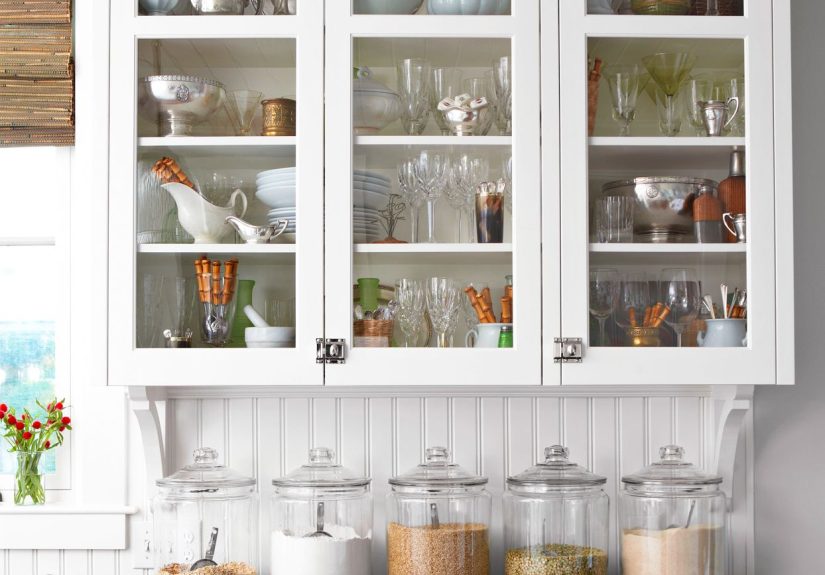
- Use glass jars for dry goods, snacks, screws, craft supplies, or bathroom essentials.
- Turn sturdy boxes (shoe boxes, subscription boxes) into drawer dividers or mail sorters.
- Repurpose tins and containers for teas, spices, sewing kits, or office bits.
- Save fabric scraps or old T-shirts as reusable cleaning cloths instead of buying paper towels in bulk.
The result: less packaging in the trash, more structure in your drawers, and money saved
for things that matter more than acrylic organizers.
Tip 3
3. Choose Sustainable Storage That Earns Its Space
When you truly need to buy storage, think like a minimalist with an environmental checklist.
You want pieces that will last, age well, and can move with you from room to room instead of
cracking, yellowing, and heading to the landfill.
What to Look For
- Durable materials: Glass, stainless steel, bamboo, responsibly sourced wood, organic cotton, or recycled plastics.
- Modular & flexible designs: Bins and baskets that can stack, slide, and switch rooms as your life changes.
- Timeless over trendy: Neutral colors and simple lines outlive micro-trends and reduce the urge to “re-do” every year.
- Repairable & recyclable: Choose items with replaceable parts or clear end-of-life paths.
One sturdy, well-made basket that you love and use for a decade is more “eco” than
five cheap bins that break by spring.
Tip 4
4. Build Low-Waste Stations in the Messiest Zones
Clutter piles up where your life is busiest: the entryway, kitchen, bathroom, and home office.
Turn those hot spots into streamlined “stations” that naturally cut waste.
Entryway
- A small basket for reusable bags so they’re grabbed, not forgotten.
- A hook or tray for reusable water bottles and coffee tumblers.
- A designated spot for outgoing items: returns, donations, library books.
Kitchen
- Clear jars or containers so you actually see what you own and avoid buying duplicates.
- A bin for produce that needs to be used soonyour “cook this first” zone.
- A small caddy for reusable cloths, napkins, and dish towels.
Bathroom
- Refillable bottles for soap, shampoo, and lotion instead of endless single-use plastics.
- A jar or pouch for used razor heads, dental care packaging, or other recyclables (where programs exist).
Home Office
- One tray or vertical file for active papers instead of 14 random stacks.
- A box or folder for documents to scan or shred, not “mystery piles”.
These micro-systems make it easier to live low-waste because the sustainable choice
becomes the convenient choice.
Tip 5
5. Cut Paper, Digital Junk, and Visual Noise
Paper clutter is sneaky: envelopes, flyers, manuals, “important” forms you never touch again.
Going mostly paperless is both eco-conscious and sanity-saving.
Eco-Friendly Decluttering for Information
- Switch to e-bills & e-statements: Most providers offer secure digital options.
- Unsubscribe ruthlessly: Those catalogs and promo flyers you never read? Cancel them.
- Scan essentials: Store warranties, medical info, and receipts in a clearly labeled cloud folder.
- Contain what remains: Use one small file box or accordion folder for originals you must keep.
Apply the same logic to your digital life: fewer random screenshots, more labeled folders.
It’s still clutterjust on a screen instead of a shelf.
Tip 6
6. Use Simple Habits to Keep Stuff (and Waste) From Creeping Back
The greenest organizing system is the one you’ll actually maintain. Forget 6-hour
“reset” marathons; build small rituals that quietly guard your home against clutter.
Maintenance Habits That Work
- One-in, one-out: Every new mug, hoodie, or throw pillow replaces an old one.
- Five-minute resets: Morning or evening, put things back in their zones.
- Weekly donate box: Keep a bin ready; when it’s full, drop it off.
- Seasonal audits: Review kitchen gadgets, decor, and linens before buying more.
- Smaller “default”: Tighter storage limits (one shelf, one bin) naturally cap how much you keep.
These tiny rules prevent clutter from rebootingand keep unnecessary purchases, packaging,
and waste in check.
Conclusion with SEO details
Conclusion: Make Organization Part of Your Climate Action
Eco-friendly organization isn’t about achieving a showroom-perfect pantry. It’s about
designing a home where everything has a purpose, most things have a story, and far fewer
things end up in the trash. Start where you are: donate thoughtfully, reuse creatively,
buy intentionally, and support systems that are easy to live with on your busiest days.
The payoff is big: less clutter to manage, less money wasted, less guilt on trash day, and
a calmer space that reflects what you actually valuenot what the algorithm tried to sell you.
sapo:
Tired of “getting organized” by buying more stuff? This guide shares six eco-friendly
organization strategies that actually reduce waste instead of creating it. Learn how to
declutter consciously, shop your home first, choose sustainable storage, build smart
low-waste stations, tame paper and digital clutter, and lock it all in with simple daily
habits. Practical, stylish, and planet-friendlyperfect for anyone who wants a cleaner home
and a lighter footprint.
Bonus ~500-word experience section
Real-Life Experiences: How These Eco-Friendly Tips Work in Everyday Homes
Let’s talk about how this looks off Pinterest and in real life, where people have children,
pets, Amazon boxes, and a suspicious number of travel mugs.
Take Maya, who lives in a 600-square-foot apartment and used to swear she
needed a bigger place. Her kitchen counters were buried, and every cabinet was a Tetris level
gone wrong. Instead of buying new containers, she lined up leftover pasta sauce jars for dry
goods, turned shoe boxes into drawer dividers, and put one basket by the door for all reusable
totes. Three months later, she wasn’t talking about movingshe was talking about how much food
she stopped wasting because she could finally see what she had. The “eco” part wasn’t a separate
project; it was baked into her system.
Then there’s the Thompson familytwo adults, two kids, one dog, and an Olympic-level
ability to generate laundry. Weekends used to vanish into cleaning marathons. When they added
a one-in, one-out rule for toys and set up a permanent donation bin in the garage, clutter levels
dropped fast. Clear pantry jars meant fewer forgotten snacks. Refillable soap and cleaning bottles
cut plastic waste and simplified shopping lists. Their biggest surprise wasn’t how tidy the house
looked; it was how much decision fatigue disappeared when there were simply fewer things to manage.
Alex and Jordan, who both work from home, attacked their paper chaos. They scanned
what mattered, recycled the rest, and limited physical files to one small box. A single desktop tray
became the landing zone for mail that needed action. They unsubscribed from catalogs, swapped sticky-note
storms for one shared digital list, and suddenly their office felt like a place to focus, not a storage unit.
The eco-windramatically less paper usewas inseparable from the mental clarity they gained.
Even small households see big impact. Nora, living solo, set a rule: no “organizing”
purchase unless it solves a specific problem and can be reused in three different ways. That guideline
alone stopped a stream of trendy, short-lived containers from entering her home. She invested in a few
long-lasting glass and metal pieces, reused jars for everything else, and noticed she took out the trash
(and recycling) less often. Her home feels calmer not because she owns certain products, but because
everything in it has been chosen on purpose.
These experiences share the same pattern: eco-friendly organization isn’t fragile or precious. It survives
spilled cereal, lost socks, busy jobs, and school mornings. It works because it respects how people
actually live. When your systems are simple, visible, and kind to the planet, you don’t have to constantly
“re-do” your home. It stays more peaceful, more functional, and a lot less wastefulexactly the kind of
everyday sustainability that quietly makes a difference.