Table of Contents >> Show >> Hide
- Why October Is Such a Great Time for Fall Bulb Planting
- 6 Flowering Bulbs to Plant in October for a Gorgeous Spring Garden
- How to Make These Spring-Blooming Bulbs Look Even Better
- Common Mistakes to Avoid When Planting Bulbs in October
- What Gardeners Learn After Planting Spring Bulbs in October
- Final Thoughts
If spring gardens had a trailer, it would be all drama: tiny shoots pushing through chilly soil, bright color after months of brown, and neighbors suddenly pretending they “were just out here anyway” while admiring your flower beds. The secret, of course, is that spring beauty starts in fall. More specifically, it starts when you’re outside in October with a trowel, a bag of bulbs, and the kind of optimism normally reserved for new planners and gym memberships.
Planting flowering bulbs in October is one of the smartest moves a gardener can make for next year’s landscape. In many parts of the United States, the soil is cool enough for strong root growth but not yet frozen solid, which gives spring-blooming bulbs time to settle in before winter. The result is a garden that wakes up earlier, blooms longer, and looks far more organized than the reality of your garage storage situation.
Below, you’ll find six of the best flowering bulbs to plant in October for a stunning spring garden next year, along with practical design tips, common planting mistakes to avoid, and real-world garden lessons that make the difference between a nice display and a “wait, did you hire someone?” display.
Why October Is Such a Great Time for Fall Bulb Planting
October hits a sweet spot for many spring-flowering bulbs. The weather is cooler, the soil is still workable, and bulbs can focus on growing roots instead of pushing leafy top growth too soon. That root-building stage is the quiet magic behind healthy spring flowers. By the time winter fully settles in, the bulbs are tucked in, anchored, and ready to use their cold dormancy period the way nature intended.
That said, “plant in October” is a useful guideline, not a law written in stone tablets by the Gardening Council of Destiny. In colder climates, gardeners may start in late September. In warmer regions, planting may stretch into late October or even later, as long as the ground has cooled and hasn’t frozen. A good rule of thumb is to plant spring bulbs when nights are consistently cool and the soil is no longer summer-warm.
Another reason October planting works so well is that garden centers are still stocked with fresh bulbs. You get better selection, firmer bulbs, and more variety than if you wait until the sad, picked-over clearance bin in November, where everything looks like it has already had a hard winter emotionally.
6 Flowering Bulbs to Plant in October for a Gorgeous Spring Garden
1. Crocus
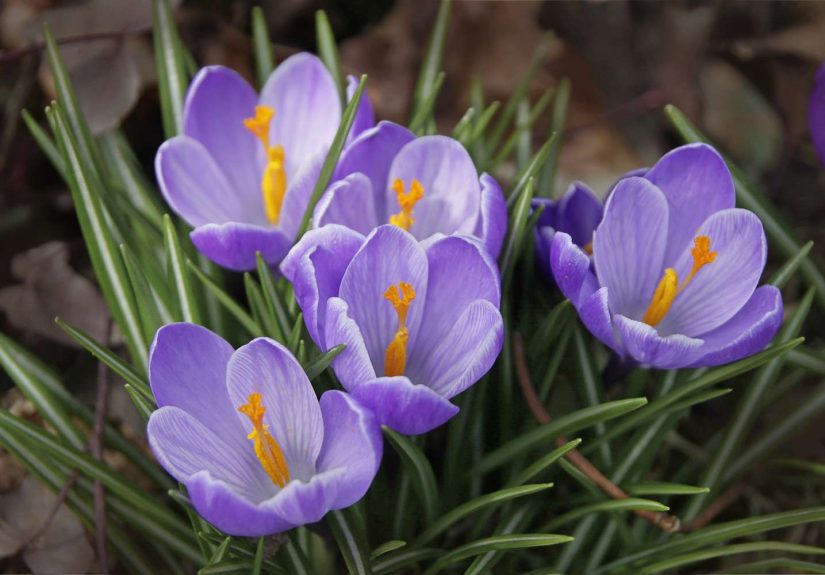
If you want your spring garden to wake up early and show off immediately, crocus is your overachiever. These small but mighty blooms are often among the first to appear, sometimes peeking through the last bits of snow like they have somewhere important to be. Their cheerful purple, gold, white, and striped flowers bring instant life to borders, pathways, rock gardens, and even lawns.
Crocus is perfect for gardeners who love a naturalized look. Plant it in drifts rather than in stiff little rows, and it will create the kind of relaxed, painterly effect that makes a garden feel established. Since the plants stay relatively low, they are especially effective near walkways and entrances, where their early flowers won’t get lost behind taller spring growers.
For best results, plant crocus in well-drained soil and a sunny to partly shaded location. It’s a great choice for spots that dry out in summer, since the corms prefer not to sit in soggy ground. If you want to tuck them into a lawn, remember this one important rule: don’t mow the foliage off too soon in spring. Let it yellow naturally so the plant can recharge for next year’s bloom.
2. Daffodils
Daffodils are the dependable stars of the spring bulb world. They’re bright, easy to recognize, easy to grow, and blessed with a level of resilience that makes them especially appealing to beginners. If tulips are the glamorous guests at the garden party, daffodils are the reliable friends who actually help clean up afterward.
These classic yellow, white, cream, and bi-color blooms are ideal for borders, cottage gardens, mixed beds, and naturalized plantings under deciduous trees. They pair beautifully with early perennials and shrubs, and they look best when planted in clusters instead of lonely single bulbs standing six inches apart like they’re in line at the DMV.
Daffodils are also a smart pick if deer or rabbits like to treat your yard like an all-you-can-eat buffet. Unlike some other spring bulbs, daffodils are less appealing to browsing animals, which is excellent news for gardeners who are tired of heartbreak with petals. Plant them in full sun to part shade, in soil that drains well, and let the foliage ripen after bloom before cutting it back. That last step matters more than many gardeners realize. The leaves may not be beautiful, but they are basically the bulb’s solar panels for next year.
3. Hyacinths
Hyacinths are for gardeners who want spring flowers with presence. These bulbs don’t just bloom; they announce themselves. Their tightly packed flower spikes come in shades of blue, pink, white, purple, and soft apricot, and their fragrance is strong enough to make a pathway, porch border, or front bed smell like spring itself has put on cologne.
Because hyacinths have such rich scent and bold texture, they shine in places where people will be close enough to appreciate them: near front walks, patios, windows, seating areas, or tucked into containers near the door. One small grouping can do a lot of work, which makes them ideal when you want a luxurious effect without planting half the county.
Give hyacinths a site with excellent drainage and plenty of light. They dislike wet feet, and like most bulbs, they perform best when planted deeply enough to stay insulated through winter and stable through spring growth. Many gardeners also wear gloves when planting hyacinths because the bulb skins can irritate sensitive skin. It’s not exactly a dramatic gardening scandal, but it’s a surprisingly useful detail to know before you spend the afternoon wondering why your hands are mad at you.
4. Grape Hyacinths
Despite the similar name, grape hyacinths are very much their own delightful little thing. Muscari produces charming clusters of bead-like blue, purple, or white flowers that really do resemble tiny bunches of grapes. They bloom in early to mid-spring and are especially effective for edging beds, filling small gaps, and weaving color through larger bulb displays.
Where grape hyacinths really earn their place is in repetition. Plant a few and they’re cute. Plant dozens and suddenly your garden looks intentional, layered, and charming in a way that suggests you drink tea from a real pot instead of a mug the size of a soup bowl. They also combine beautifully with daffodils and tulips, softening the bigger flowers with a low ribbon of color.
These bulbs are easygoing and adaptable, but they still want good drainage. Plant them in groups where they can spread and settle in over time. Because they are smaller than tulips and daffodils, they work beautifully in the front of borders or in spots that need an early-season lift before summer perennials take over. They’re also a great choice for gardeners who like a garden that becomes fuller and more generous-looking every year.
5. Tulips
Tulips are the showstoppers. No list of the best bulbs for fall planting would be complete without them, because when tulips are happy, they turn a spring garden into a full-blown event. Their range is wildly impressive: single, double, fringed, lily-flowered, parrot, species, early, late, pastel, jewel-toned, nearly black, candy-striped, you name it. Tulips are basically the fashion industry of the bulb world.
The trick with tulips is choosing the right role for them in your garden. If you want a formal, high-impact display, go for generous blocks of one color. If you want something softer and more romantic, mix complementary shades with daffodils, grape hyacinths, or forget-me-nots. Species tulips are especially useful for gardeners who prefer a naturalized look and want bulbs that may return more consistently in the right conditions.
Tulips do best in full sun and sharply drained soil. They hate sitting in winter wet, and heavy clay can be a problem unless you improve drainage or plant a bit shallower in dense soils. One common mistake is planting too sparsely. Tulips rarely look magical as lonely individuals. They look magical when planted in numbers, with enough density to create color that reads from across the yard. In other words, be brave. The shovel is already in your hand.
6. Ornamental Alliums
If you want structure, height, and a slightly theatrical finish to the spring bulb season, ornamental alliums are the answer. These bulbs bloom later than many other spring favorites, which makes them incredibly valuable for extending the display. Their globe-shaped purple, lavender, pink, blue, or white flower heads rise above the garden like botanical fireworks frozen in midair.
Alliums are excellent for adding vertical interest among lower spring bulbs and emerging perennials. They look especially striking threaded through cottage-style plantings, mixed borders, and modern gardens where repetition of rounded forms can create a clean, architectural rhythm. They also dry beautifully on the stem, so even after peak bloom they contribute shape and texture.
Another bonus: many ornamental alliums are less attractive to deer, which is always a beautiful sentence to read. Plant them in full sun with good drainage, and use them toward the middle or back of the border so their taller stems can rise above neighboring plants. If your goal is to keep the spring show going just a little longer, alliums are your closer, not your opener.
How to Make These Spring-Blooming Bulbs Look Even Better
Plant in drifts, not dots
One of the easiest ways to make a spring garden look more polished is to plant bulbs in loose clusters or sweeping drifts instead of evenly spaced single-file lines. Nature rarely arranges flowers like graph paper, and your garden will look softer and fuller when the bulbs are grouped in odd numbers and repeated through the bed.
Layer bloom times
For a longer season of color, combine early, mid-, and late-spring bloomers. Crocus starts the parade, daffodils and hyacinths pick up the pace, tulips take center stage, and alliums close the show with height and flair. That kind of sequence gives you weeks of interest instead of one quick burst and a dramatic emotional crash.
Hide fading bulb foliage with companion plants
Bulb flowers are glamorous in bloom, but their leaves can look a little tired afterward. The solution is not to cut the foliage off early. The solution is to plan around it. Thread bulbs through emerging perennials like hostas, catmint, hardy geraniums, or daylilies so fresh spring growth gradually hides the yellowing leaves while the bulbs recharge underground.
Prioritize drainage every single time
If there is one thing bulbs beg gardeners not to ignore, it is drainage. A raised bed, amended soil, or a sunny slope can make all the difference. Soggy soil is the fastest route to rot, disappointment, and a spring bed that looks suspiciously empty.
Common Mistakes to Avoid When Planting Bulbs in October
- Planting too early: Warm soil can encourage premature top growth instead of healthy rooting.
- Choosing soft or damaged bulbs: Always buy firm, healthy bulbs with no moldy spots or mushy areas.
- Ignoring bulb size: Bigger bulbs usually produce stronger flowers, especially with tulips and daffodils.
- Putting bulbs in wet soil: Even the prettiest bulb will fail if drainage is poor.
- Cutting foliage back too soon: Let leaves yellow naturally so the bulb stores energy for next year.
- Planting too few: A spring display gets its wow factor from repetition and mass, not from three brave tulips trying their best.
What Gardeners Learn After Planting Spring Bulbs in October
There is something deeply satisfying about planting bulbs in October because it asks you to trust a future you cannot see yet. The beds are cooling down, summer is clearly over, and the garden is not exactly in its glamorous era. In fact, this is the moment when many landscapes look a little tired. Perennials are flopping, annuals are fading, and the leaves are starting their yearly campaign to cover every square inch of your yard. Planting bulbs in that moment feels hopeful in the best way. You are working for a reward that will not arrive for months, and somehow that makes the whole thing sweeter.
Many gardeners also discover that bulbs teach patience better than almost anything else. You plant them on a crisp fall afternoon, maybe with cold fingers and a cup of coffee balanced nearby, and then absolutely nothing visible happens for a long time. Winter shows up. The garden sleeps. You begin to wonder whether you planted enough, whether you planted them deeply enough, whether the squirrels have hosted a tiny underground buffet. Then, one late winter or early spring morning, the first shoots appear. It feels less like a gardening result and more like good news.
Another common experience is realizing how much placement matters. The first year, a lot of gardeners put bulbs wherever there is room. By the second year, they start thinking more strategically. Crocus goes where it can be seen from the kitchen window. Daffodils line the walkway where they brighten rainy spring days. Hyacinths get moved closer to the front door because fragrance deserves a starring role. Tulips are planted where evening light can shine through the petals. Alliums land farther back, where their tall stems can rise above fresh perennial growth and look dramatically intentional instead of slightly random.
Gardeners also learn that abundance matters more than they expected. A handful of bulbs is nice. A big drift of bulbs is unforgettable. One tulip can be admired; fifty tulips can change the entire mood of a yard. The same goes for grape hyacinths, crocus, and daffodils. When planted generously, they create rhythm, movement, and the kind of spring display that makes even a quick trip to get the mail feel cinematic.
Then there is the lesson every bulb grower learns sooner or later: spring beauty comes with a bit of untidy aftermath. The leaves have to stay for a while. Beds can look awkward between the peak bulb show and the rise of summer perennials. But over time, gardeners stop seeing that as a flaw and start seeing it as part of the rhythm. A good garden is not a freeze-frame; it is a sequence. October bulb planting teaches you to think in seasons, not snapshots. It reminds you that the prettiest moments in a landscape are often made possible by work done when nobody is applauding.
And maybe that is why people who plant bulbs tend to become slightly evangelical about them. Once you have watched a bare spring bed suddenly fill with crocus, daffodils, tulips, and alliums you planted months before, it is hard not to want more. More color. More drifts. More fragrance. More reasons to head outside in early spring with your coffee and feel, just for a moment, like you absolutely nailed this gardening thing.
Final Thoughts
If you want a gorgeous spring garden next year, October is the time to make it happen. Start with a thoughtful mix of crocus, daffodils, hyacinths, grape hyacinths, tulips, and ornamental alliums, and you will have color from the earliest days of spring into late spring’s grand finale. Focus on healthy bulbs, good drainage, generous groupings, and bloom succession, and your garden will reward you with a display that feels lush, layered, and joyfully alive.
Best of all, bulb planting is one of those rare garden jobs that offers a huge payoff for relatively modest effort. A few hours now can create weeks of color later. That is a very good deal, even by gardener standards.