Table of Contents >> Show >> Hide
- Why kitchens get messy faster than other rooms
- 1) You Don’t Have the Right Balance of Open and Closed Storage
- 2) Uncoordinated Decor Creates “Visual Clutter”
- 3) Things Don’t Have a Designated Home (So They Live on the Counter)
- 4) Everyday Essentials Are Stored in Hard-to-Reach Places
- 5) Cluttered Countertops Are Doing Too Many Jobs
- 6) You’re Storing Everything in the Kitchen (Including Things That Don’t Belong There)
- A Simple Maintenance Plan: The “10-Minute Kitchen Reset”
- Real-Life Experiences: What It Looks Like When You Fix the System (About )
- Conclusion
Your kitchen is basically the headquarters of your home. It’s where coffee happens, lunches get packed, snacks get negotiated, and somehow… a single envelope can reproduce into a full paper ecosystem overnight. If your kitchen looks messy all the time, it’s rarely because you’re “bad at cleaning.” Professional organizers will tell you it’s usually a system problem: storage that doesn’t match your habits, items that don’t have a real home, and countertops that quietly become the family’s favorite dumping ground.
Below are six common reasons organizers see in real homes, plus practical fixes that don’t require you to become a minimalist monk who owns one plate and a single serene fork.
Why kitchens get messy faster than other rooms
Kitchens are high-traffic, high-decision spaces. You use them multiple times a day, often when you’re tired, hungry, rushed, or all three. That’s why “perfect organization” doesn’t stickunless it’s designed for real life. The goal isn’t showroom neat. The goal is a kitchen that resets easily and doesn’t fight you every time you try to put something away.
1) You Don’t Have the Right Balance of Open and Closed Storage
Open shelving looks great in photos… right up until it turns into a live exhibit of “Things We Own.” Organizers often see kitchens that rely too heavily on open storage, which makes normal, everyday items look like cluttereven when they’re technically “put away.”
What’s really happening
- Visual overload: Too many items in view reads as mess, even if it’s arranged.
- Dust and grease factor: Open shelves collect kitchen grime faster than you think.
- Open shelves become overflow: If cabinets are full, shelves become the backup plan.
Organizer-approved fixes
- Use open shelves for “pretty and predictable” items: A small set of matching mugs, cookbooks, or a few everyday plates you truly use.
- Hide the chaos behind doors: Pantry snacks, mismatched plastics, and small appliances belong in closed storage.
- Try the “one open zone” rule: Keep open storage to one area so it feels intentional, not accidental.
Example: If your open shelves hold eight different cereal boxes, a blender, three water bottles, and a random trophy (why?), swap to closed bins inside a cabinet. Put only matching glassware on the shelf. Suddenly the kitchen looks calmer without you cleaning a single crumb.
2) Uncoordinated Decor Creates “Visual Clutter”
This one surprises people: organizers often point out that a kitchen can be physically clean but still look messy if the visuals are chaotic. Too many colors, mismatched storage containers, and random countertop items create visual noise that makes your brain register “mess” on sight.
What’s really happening
- Mismatched containers multiply: Different shapes, sizes, and lid types look chaotic and waste space.
- Random countertop accessories: A mix of décor, tools, and packaging creates a “busy” look.
- Nothing looks intentional: When items don’t relate visually, everything feels like clutter.
Organizer-approved fixes
- Pick a simple “kitchen palette”: For example: black + white + wood, or stainless + clear + one accent color.
- Unify storage on purpose: Use matching bins for snacks, matching canisters for dry goods, and one label style.
- Corral small items: Put oils/spices on one tray, coffee supplies in one bin, and utensils in one crock (or better: a drawer insert).
Example: If you have six different styles of food containers, your cabinet will always look like it’s arguing with itself. Choose one main container type for leftovers and one for pantry staples. Your kitchen instantly looks more organizedwithout buying a single extra shelf.
3) Things Don’t Have a Designated Home (So They Live on the Counter)
Organizers love this simple truth: items that don’t have a home will always end up on a surface. If you regularly “set something down for a second” and it stays there for three business days, it’s usually because there’s no obvious place to put it.
What’s really happening
- “Floater” items: Scissors, batteries, coupons, lunchbox partsthings that wander because storage isn’t defined.
- Decision fatigue: If putting something away requires thinking, you won’t do it when you’re rushing.
- Drop-zone confusion: Mail, keys, and backpacks migrate into the kitchen because it’s central.
Organizer-approved fixes
- Assign homes by category: Baking supplies together. Breakfast supplies together. Cleaning supplies together.
- Create a true drop zone outside the kitchen: A bowl for keys, hooks for bags, and a mail sorter near the entry is a countertop-saving miracle.
- Use dividers and bins: A drawer without dividers is just a tiny, emotional roller coaster.
Example: If your kid’s lunchbox parts constantly pile up by the sink, create a “lunch station” bin in a low cabinet: lunch bags, containers, napkins, and snacks together. Now packing lunches becomes a grab-and-go routine instead of a scavenger hunt.
4) Everyday Essentials Are Stored in Hard-to-Reach Places
When daily-use items are annoying to put away, they won’t get put away. Organizers often see the “back-of-cabinet problem”: essentials hidden behind rarely used items, so people leave things out because it’s faster than playing cabinet Tetris.
What’s really happening
- Prime storage is wasted: The easiest shelves hold stuff you use twice a year.
- High shelves become black holes: If you can’t see it, you buy another one.
- Hard-to-reach storage discourages reset: You’ll leave the appliance out “just for now.”
Organizer-approved fixes
- Store by frequency: Daily items at waist/eye level. Weekly items slightly higher. Holiday/rare items up high or elsewhere.
- Use pull-out helpers: Lazy Susans, tiered risers, and pull-out bins make deep cabinets usable.
- Zone the kitchen: Put pots near the stove, cutting boards near prep space, mugs near coffee/tea.
Example: If you use olive oil, salt, and a cutting board daily, but they’re stored behind the waffle maker you use twice a year, your counter will always be crowded. Move the waffle maker to a high shelf or another closet. Give daily tools the “good parking spots.”
5) Cluttered Countertops Are Doing Too Many Jobs
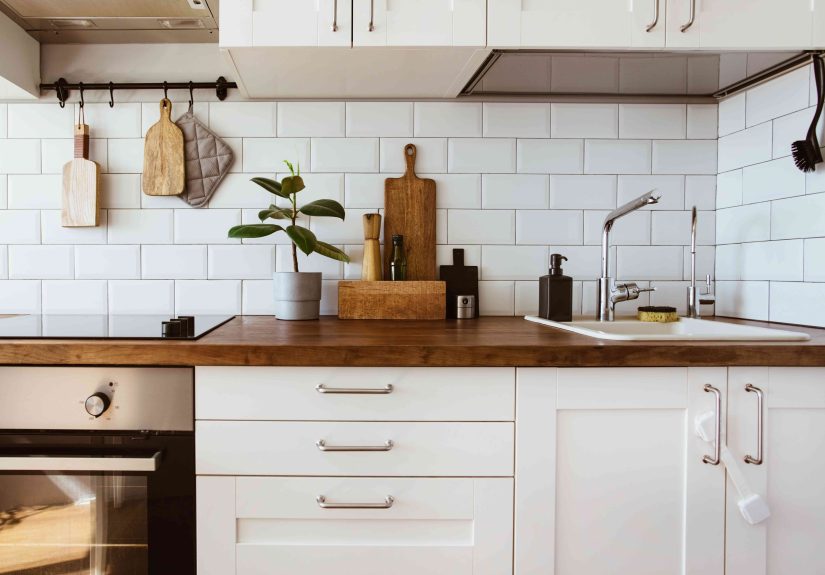
Organizers routinely point to countertops as the #1 visual reason kitchens look messy. Counters are supposed to be workspacenot storage, not a mailroom, and definitely not the official habitat of fifteen small appliances.
What’s really happening
- Appliance creep: One coffee maker becomes coffee maker + toaster + air fryer + blender + stand mixer.
- Paper piles appear: Mail, school forms, receipts, and “important” papers drift into the kitchen.
- Counter helpers become counter hogs: Big knife blocks, drying racks, and bulky utensil crocks eat space.
Organizer-approved fixes
- Declare a “no-drop zone”: Counters are for cooking. Period. (Yes, even “just for a minute.”)
- Create a countertop budget: Keep only daily-use items out. Everything else earns a cabinet spot.
- Contain what must stay: Use one tray by the stove (oil/salt), one by the sink (soap/brush), one by the coffee maker (coffee supplies). If it doesn’t fit, it doesn’t live there.
- Move paper elsewhere: Put a vertical wall organizer or entry sorter where paper actually belongs.
Example: If your counter has a knife block, paper towels, three utensil holders, a drying rack, and two decorative bowls, you’ve basically created an obstacle course for chopping an onion. Swap the knife block for a drawer insert or magnetic strip, hang paper towels under a cabinet, and choose one “pretty bowl” instead of a whole countertop parade.
6) You’re Storing Everything in the Kitchen (Including Things That Don’t Belong There)
This is a big one: kitchens become storage for items that technically “don’t have a better place.” Organizers often see holiday serving platters, extra vases, stacks of reusable bags, mystery gadgets, and broken items taking up prime space. The result? Your actual cooking tools get displaced into awkward spots, and mess becomes inevitable.
What’s really happening
- Rarely used items steal everyday space: Then everyday items spill onto counters.
- Duplicates multiply: Extra spatulas, extra bottles, extra containers… until drawers won’t close.
- Broken or “someday” items linger: The kitchen becomes a museum of postponed decisions.
Organizer-approved fixes
- Relocate rarely used items: Holiday platters can live in a labeled bin in a closet or garage shelf.
- Do a “duplicate audit”: Keep what you realistically use. Donate the rest.
- Be honest about specialty gadgets: If it hasn’t been used in a year (and you didn’t miss it), it’s auditioning for donation.
- Remove broken items immediately: If it doesn’t work, it doesn’t deserve cabinet rent.
Example: If your cabinet contains a turkey roaster, a juicer you hate cleaning, five mismatched travel mugs, and a broken hand mixer, your everyday pans are probably stacked like a Jenga tower. Pull the once-a-year items out, box them, label them, and move them elsewhere. Your kitchen will feel bigger in about 12 minutes.
A Simple Maintenance Plan: The “10-Minute Kitchen Reset”
Organizers don’t rely on motivation. They rely on systems and small resets that prevent backlog. Try this daily reset once your storage makes sense:
- Clear counters first: Put away anything that isn’t a daily-use item or contained on a tray.
- Quick dish sweep: Load dishwasher or wash the sink load. Wipe the sink after.
- Return items to their homes: This only works if homes exist and are easy to access.
- One-minute paper rule: Toss junk mail, file the rest, and remove it from the kitchen immediately.
- Reset one hotspot: Coffee station, snack zone, or the drawer everyone shoves things into.
If you can do 10 minutes, you can prevent the “Saturday Kitchen Doom Clean” that steals half your weekend and your will to live.
Real-Life Experiences: What It Looks Like When You Fix the System (About )
I’ve seen the same kitchen story play out in different homes with different styles: the mess isn’t randomit’s patterned. One family had gorgeous counters, plenty of cabinets, and still couldn’t keep the kitchen tidy. The problem wasn’t effort. It was that the kitchen had become the default landing pad for literally everything. Mail arrived and hit the counter. Kids came home and dropped water bottles, permission slips, and chargers right next to the fruit bowl. A “quick snack” meant five snack boxes got pulled out because nobody could see what was already open. The countertop wasn’t a workspaceit was a storage unit with good lighting.
The fix wasn’t complicated. They set up a drop zone by the entry: hooks for backpacks, a small tray for keys, and a vertical file sorter for papers. That one change stopped paper from reproducing on the kitchen counter. Next, they created a snack zone: two clear bins at kid heightone for grab-and-go snacks, one for “open first.” Suddenly, kids weren’t digging through the pantry like it was a game show. The kitchen still got used heavily, but it reset faster because the mess had fewer places to land.
Another common experience: the “appliance creep” kitchen. It starts innocentlycoffee maker and toaster. Then an air fryer moves in “temporarily.” A blender stays out “because smoothies.” Before you know it, there’s a lineup of machines along the backsplash like a tiny robot army preparing for battle. The homeowner felt like they were always wiping crumbs around appliances but never actually clearing the surface. The organizer move here was a countertop budget: daily-use items only. Everything else got a dedicated cabinet zone with a simple rule: if you use it weekly, it can live in an easy cabinet; if you use it monthly, it goes higher; if it’s seasonal, it leaves the kitchen entirely. The result wasn’t just a cleaner counterit was easier cooking, because prep space existed again.
Then there’s the classic “container avalanche” experience. You open a cabinet and plastic lids fly out like they’ve been waiting for freedom. People often respond by buying more containers, which is like trying to solve traffic by buying more cars. The experience that changes everything is sorting by reality, not optimism: keep a reasonable number of containers that match your actual routine, toss stained or lidless pieces, and store them with a divider so lids stand upright. When the cabinet stops fighting you, you stop avoiding itand the mess stops spreading.
In every case, the magic wasn’t perfection. It was removing friction. When items have homes, when daily tools are easy to put away, and when counters aren’t asked to be a mailroom, pantry, and charging station at the same time, your kitchen becomes one of those rare places that can look “pretty good” even on a Tuesday.
Conclusion
If your kitchen is messy all the time, take it as useful informationnot a character flaw. Organizers see the same root causes again and again: too much open storage, visual clutter, no designated homes, inconvenient cabinet placement, overloaded countertops, and the kitchen being forced to store the entire universe. Fix the system in small steps. Start with one zone (counters are the fastest win), create obvious homes, and commit to a quick daily reset. Your future selfholding a cutting board with actual space to chopwill be very grateful.