Table of Contents >> Show >> Hide
- What happenedand why it hit so hard
- Road rage vs. aggressive driving: the difference matters
- Why road rage escalates so fast
- The scary math: “normal” risky driving still kills
- When weapons enter the picture, the risk spikes
- De-escalation that actually works (even when your ego disagrees)
- Pregnancy and passenger safety: what to know
- What families often face after a road rage tragedy
- Preventing the next headline: a realistic, everyday plan
- Experiences related to this topic (500-word add-on)
- Conclusion: the road isn’t where we settle our emotions
- SEO Tags
Road rage is one of those phrases that sounds like it belongs in a movie traileruntil it shows up in your local news feed.
And when it ends with a pregnant teen losing her life while simply riding as a passenger, it forces a hard question:
how did something as ordinary as “two cars on the same road” spiral into irreversible loss?[1]
This story isn’t shared to sensationalize tragedy. It’s shared because it exposes a pattern that’s becoming more common:
everyday driving stress + impulsive decisions + escalation = outcomes nobody can take back. And the goal of this article is simple:
explain what road rage is, why it escalates, and what drivers and passengers can dotodayto lower the odds that anger turns dangerous.
What happenedand why it hit so hard
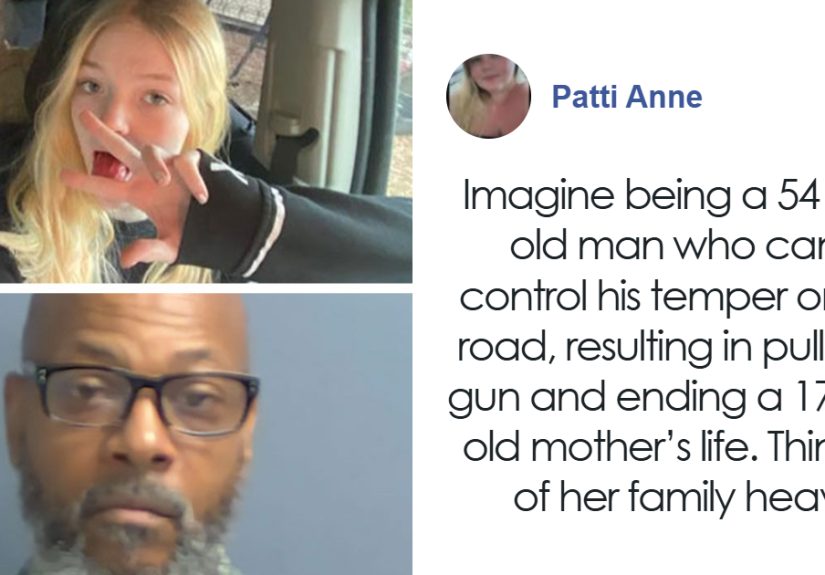
In Louisiana, a 17-year-old who was seven months pregnant was riding in the front passenger seat when a road rage encounter escalated into gunfire.
She later died, and her baby was delivered early and received medical care.[1] Authorities reported that the incident began with aggressive behaviors between vehicles
and led to criminal charges against the alleged shooter.[1]
The details vary across early reports, and loved ones often dispute parts of the narrativesomething that happens frequently in fast-moving investigations.
But the theme is painfully consistent: road conflict that should have ended with two annoyed drivers… didn’t.
And because a passenger was pregnant, the consequences extended to two lives at once.
Road rage vs. aggressive driving: the difference matters
Aggressive driving: dangerous behavior, still “just” traffic (until it isn’t)
Aggressive driving is a cluster of risky behaviorstailgating, unsafe lane changes, failure to yield, sudden braking, speeding, and ignoring traffic controls.
It’s dangerous because it raises crash risk for everyone nearby and can set the stage for escalation.[8]
Road rage: when anger becomes a threat
Road rage is more than bad manners. It’s when a driving conflict crosses into intimidation, threats, or violence.
The key shift is intent: it stops being “I’m driving badly” and becomes “I’m trying to punish you.” That’s why road rage incidents can turn criminal
even if they start with something as small as a merge or a honk.
And here’s the frustrating reality: in the moment, people don’t announce, “Hello, I am now escalating to road rage.”
They just get louder, closer, fasteruntil someone makes a decision nobody expected.
Why road rage escalates so fast
If you’ve ever felt your blood pressure rise because someone cut you off, congratulationsyou’re human. The problem is what happens next.
Psychologists have long noted that certain drivers are more prone to road anger, especially when stress, anxiety, and hostile thoughts pile up.[9]
Driving also creates a weird social bubble: you can’t hear tone, you can’t see full facial expressions, and you can easily assume the worst.
Transportation safety experts point to factors that reliably fuel aggressive driving: congestion, running late, and “anonymity” (the sense that you’re insulated
from consequences because you’ll never see these people again).[4] Add in phones, fatigue, financial stress, and a culture of hurryand it’s not surprising
that tempers flare.
Survey research consistently shows how widespread aggressive behavior is behind the wheel. A large majority of drivers report experiencing or engaging in
aggressive behaviors at least occasionally, which means most of us are interacting with it on a regular basiseven if we don’t call it “road rage.”[3]
The scary math: “normal” risky driving still kills
Not every road rage story involves a weapon. Most don’t. But aggressive driving still has consequences at scaleespecially speeding.
In 2023, speeding killed 11,775 people in the United States, and it was a contributing factor in 29% of traffic fatalities.[4]
That’s not “a few bad apples.” That’s a nationwide pattern.
Speeding also increases the intensity of every interaction on the road. A tailgater at 25 mph is annoying.
A tailgater at highway speed is a rolling stress testone that pressures the person in front to do something risky, too.
When weapons enter the picture, the risk spikes
Road rage becomes especially deadly when a gun is present in the vehicle. Analyses of road rage shootings using Gun Violence Archive data have found that
shootings in road rage incidents rose compared with pre-pandemic levels, with 2023 translating to a person shot and wounded or killed in a road rage incident
about every 18 hours on average.[2]
You don’t need to be an expert to see the danger here: the road is already full of split-second decisions.
Add a lethal weapon to a tense moment, and the margin for error disappears.
De-escalation that actually works (even when your ego disagrees)
This is the part people skip because it feels like “letting them win.” But on the road, the goal isn’t winningit’s arriving alive.
Here’s what safety guidance typically boils down to: create space, refuse engagement, and prioritize a calm exit from the situation.[7]
1) Don’t “teach a lesson”
The road is not a classroom, and you are not the substitute teacher. Behaviors like brake-checking, blocking someone from merging, or speeding up to prevent passing
are escalation triggers. They also increase crash risk.
2) Give space early
If someone is tailgating or driving aggressively, increase distance from the car in front of you, change lanes when safe, and let them pass.
Safety agencies explicitly recommend giving aggressive drivers plenty of space and moving over if someone wants to pass.[7]
3) Keep your body language boring
No eye contact battles. No gestures. No sarcastic claps. Your car horn isn’t a therapist and your middle finger isn’t a conflict-resolution tool.
The less “feedback” you give, the faster the incident usually dies.
4) Don’t stop to argue
If the other driver tries to provoke you at a light or in a parking lot, stay in the car, keep doors locked, and focus on getting away safely.
If you feel threatened or followed, contact police/emergency services and drive to a well-lit, public place rather than home.[7]
5) Use a simple script (for passengers too)
If you’re the passenger and the driver is getting heated, you can help without turning it into a lecture. Try:
“Heylet’s just let them go. Not worth it.” Or: “I’ll navigate. You focus on staying steady.”
The best de-escalation is the one that happens before anyone is fully angry.
Pregnancy and passenger safety: what to know
Pregnancy doesn’t cause road ragebut it changes the stakes. Even routine driving risks matter more when an expectant parent is in the vehicle.
Medical organizations emphasize that wearing a seat belt is still the safest choice during pregnancy, using both lap and shoulder belts,
and placing them correctly for protection.[6]
A practical reminder: the lap belt should sit low across the hips (not across the belly), and the shoulder belt should go between the breasts
and off to the side of the belly. If the belt feels uncomfortable, adjust the seat position and belt placementdon’t skip it.
And if there’s a crashor even a “minor” incident that causes pain, bleeding, dizziness, or decreased fetal movementseek medical care promptly.
This isn’t about panic; it’s about protecting both parent and baby with timely evaluation.
What families often face after a road rage tragedy
Beyond the headlines, families are left with a brutal mix of grief, confusion, anger, and logisticsmedical decisions, legal proceedings, and public commentary.
In high-profile cases, loved ones may also face online blame, rumors, or harassment. That pile-on doesn’t help anyone heal.
If you’re supporting someone after a traumatic loss, the most useful help is usually simple and specific:
meals, childcare, rides, paperwork help, and showing up consistently without forcing conversation.
Grief isn’t linear, and it doesn’t have a neat timeline.
Preventing the next headline: a realistic, everyday plan
Big policy debates matter, but prevention also lives in small, repeatable choicesespecially because most road conflicts start with everyday stress.
Think of this as a “low-drama driving” toolkit.
For drivers
- Leave earlier than you think you need. Being late is a classic trigger for aggressive driving.[4]
- Assume mistakes, not malice. Most bad driving is incompetence, not a personal attack.
- Pick a calming default. A playlist, an audiobook, or even just slower breathing can reduce impulsive reactions.[10]
- Practice “one safe option.” If you’re provoked, your one job is to create space and disengage.
- Don’t match energy. Someone speeding up, weaving, or tailgating doesn’t mean you should “respond in kind.”
For passengers
- Be the calm one on purpose. Your tone can lower the temperature fast.
- Offer an exit route. “Want me to pull up directions to a busy gas station?” is practical help.
- Set a shared rule ahead of time. Couples and friends can agree: “We don’t engage. Ever.”
For communities and policymakers
Prevention isn’t only personal; it’s environmental. Speed management, better road design, and targeted enforcement can reduce risky behaviors at scale.[4]
Education campaigns that normalize courtesy (signals, letting people merge, leaving space) also matterbecause culture spreads. When aggressive driving feels “normal,” it grows.
Experiences related to this topic (500-word add-on)
The following experiences are compositesbased on common situations reported by drivers, safety experts, and cliniciansnot a retelling of any one person’s private story.
They’re included because road rage prevention becomes easier when you can picture what it looks like in real life.
Experience #1: “I didn’t know I was escalating until I was already there.”
A commuter described how their worst driving moments didn’t start with yelling. They started with tight shoulders, a late meeting, and the belief that
“everyone is in my way.” One day, someone merged close in front of them. The commuter sped up, then rode too close behindtrying to “make a point.”
A minute later they realized their heart was pounding and they were no longer thinking about safety; they were thinking about fairness.
That realization changed their driving: they began treating anger like a dashboard warning light. Not a moral failurejust a signal that it’s time to slow down,
breathe, and create distance. That’s why many anger-management strategies focus on interrupting the first impulsepausing long enough to re-engage the logical brain.[10]
Experience #2: “My friend was pregnant, and suddenly I drove like my grandma was watching.”
Another driver said their habits shifted the day they became the designated driver for a pregnant friend. They stopped “squeezing through” yellow lights,
stopped speeding to beat traffic, and stopped responding to tailgaters. Not because they became fearlessbut because responsibility made the math obvious.
When a truck rode their bumper, they changed lanes and let it pass. Their friend didn’t even notice the conflict, and that was the point:
safety looks boring from the passenger seat. The driver later joked that they didn’t become a saintthey just became allergic to drama.
That mindset is useful for anyone: drive as if your passenger is precious, even if the passenger is your future self.
Experience #3: “I was a teen driver, and everything felt personal.”
A teen driver talked about how being new on the road made every interaction feel like an evaluation: people honking felt like insults,
someone passing felt like a challenge. Over time, they learned a reframing trick: other drivers’ behavior is about their day, not your worth.
Once they stopped chasing validation, they stopped chasing cars. They also built a habit of narrating calm choices out loud:
“I’m letting them pass,” “I’m giving space,” “I’m not engaging.” It sounds corny, but it kept them anchored.
That kind of self-talk is a common technique in cognitive approaches to managing anger and impulsive reactions.[9]
Experience #4: “The best apology is space.”
Sometimes you’re the one who makes the mistake. You misjudge a gap. You drift. You miss a sign. If another driver reacts aggressively, the safest “apology”
is not explaining yourself through gestures; it’s making the road safer: signal clearly, slow down smoothly, increase following distance, and exit the situation.
The goal is to remove friction, not win the debate. People rarely calm down because the other driver proved a point; they calm down when the conflict stops feeding itself.
Conclusion: the road isn’t where we settle our emotions
The death of a pregnant teen passenger in a road rage shooting is a devastating reminder that escalation can be fastand wildly disproportionate to the original “offense.”[1]
Most of us will never face something that extreme, but many of us face the early steps every week: speeding, tailgating, punishing merges, refusing to let someone in.
Those behaviors create the conditions where tragedy becomes possible.
The fix isn’t complicated, but it does require pride management: give space, refuse engagement, and treat de-escalation as a skill you practicelike using a turn signal.
Because getting home safely will always matter more than being “right.”