Table of Contents >> Show >> Hide
Let’s get one thing straight right away: if someone harms or attacks you, it is never your fault.
Your clothes, your route home, your playlist, your drink, your smile (or lack of one) do not give anyone permission
to touch you. What self-defense does is give you a toolkit so if the worst happens, you have a plan besides freezing
and hoping it stops. It’s about confidence, options, and the mindset of: “I am worth protecting.”
In this guide, we’ll walk through eight simple, practical self-defense moves every woman can practice, plus key tips
on awareness, boundaries, and the law. These moves are based on common techniques used in reputable women’s
self-defense programs and martial arts schools in the United States, which emphasize simple, gross-motor movements
that work under stress and help you break free and escape.
Important note: This article is not a replacement for in-person training with a qualified instructor.
Think of it as a roadmap: it’ll help you understand the basics, ask better questions in class, and recognize which
self-defense moves to prioritize in your practice.
Before the Moves: The Mindset of Smart Self-Defense
Awareness Is Your First Defense
Many self-defense experts estimate that most dangerous situations can be reduced or avoided with better awareness,
boundaries, and planning, long before any physical move is needed.
That means:
- Walking with purpose, head up, shoulders back, and making brief eye contact.
- Staying off your phone when walking to and from your car or public transport.
- Noticing who is around you, where exits are, and what feels “off.” Trust that feeling.
- Keeping headphones low or one ear free in unfamiliar or isolated areas.
None of this is about “paranoia.” It’s about situational awareness being present enough to spot
problems early and move away before they become a crisis.
Boundaries, Voice, and De-escalation
Self-defense isn’t just kicks and strikes. It starts with your voice:
- Use a strong, clear “Stop!” or “Back off!” to draw attention and show you’re not an easy target.
- Keep your distance when your instincts say something’s wrong you don’t owe anyone closeness.
- When possible, prioritize de-escalation and escape over fighting.
Remember: the goal of self-defense is not to “win a fight” it’s to get away safely.
Legal Basics: What “Self-Defense” Means
Laws vary by state, but in general, self-defense is legally justified when:
- There is an imminent threat of harm.
- You reasonably believe force is necessary to protect yourself.
- The force you use is proportional to the threat (for example, non-lethal force against non-lethal threat).
Some states have “stand your ground” or “castle doctrine” laws that affect when and where you may use force, especially
deadly force. These laws are controversial and complex. For precise legal guidance, talk to a local attorney
or law enforcement trainer not just the internet.
The 8 Self-Defense Moves Every Woman Should Practice
These moves are designed to be simple, use your natural body mechanics, and create an opportunity to escape.
Practice them slowly and safely in a class or with a trusted partner under supervision.
1. The Ready Stance and Strong Voice
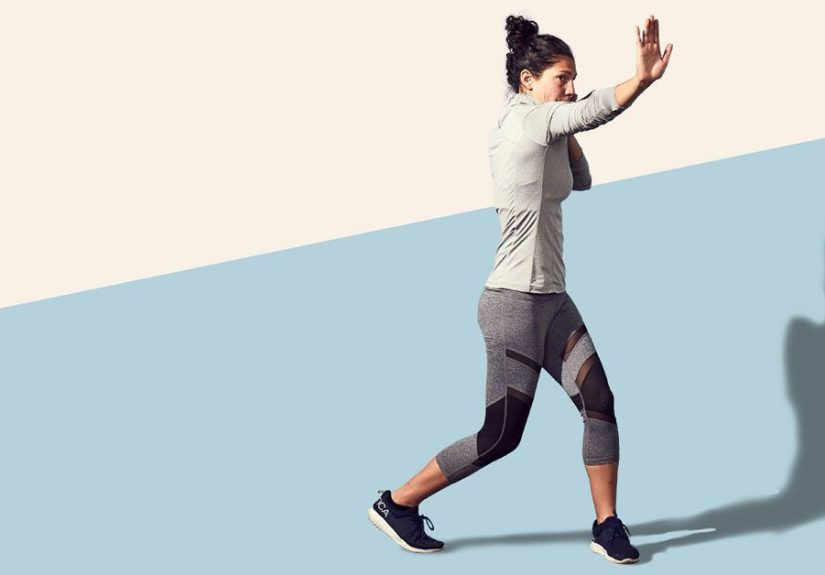
This is the “pre-move” that makes everything else easier. A good self-defense stance:
- Places one foot slightly in front of the other for balance.
- Keeps your hands up around chest height, palms open, as if saying “Stop.”
- Lets you move backward, sideways, or forward quickly.
Combined with a loud “Back off!” or “Stop!” you are doing three things at once:
- Signaling to the attacker that you are prepared to resist.
- Drawing attention from bystanders who might help.
- Putting your body in a strong, stable position in case you need to strike or run.
This stance alone can sometimes make an attacker rethink their choice. Predators usually look for people who seem
distracted, unsure, or easy to overpower.
2. Wrist Release from a Grab
Many women report situations where someone grabs their wrist to drag or control them. Simple release techniques
taught in basic self-defense classes teach you to use angles and leverage rather than just trying to yank away with brute strength.
The general idea:
- Move your hand toward the weakest point of the grip (typically near the attacker’s thumb).
- Use your whole body not just your arm to twist, step, and pull free.
- As soon as you break free, create distance and move toward safety.
Practice this slowly with a partner in a class so you can feel how little strength is needed when you use the right angle.
3. Palm-Heel Strike to the Face
Many self-defense instructors favor a palm-heel strike over a traditional punch because it’s powerful but less likely
to injure your own hand.
The basic concept:
- Your fingers are relaxed and slightly bent; the power comes from the base of the palm.
- You drive your palm forward and slightly upward toward a central target like the nose or chin.
- Your other hand and your hips help generate force, as if you’re pushing something heavy away from you.
A solid palm strike can disorient an attacker long enough for you to escape. In classes, this is often practiced on
pads to build accuracy and confidence.
4. Elbow Strike at Close Range
If someone is very close attempting to grab, bear-hug, or pin you your elbows become powerful tools because
they’re solid and hard to break.
At close range:
- Turn your body to generate power and bring your elbow across or backward.
- In real self-defense, instructors teach aiming toward available targets in the attacker’s upper body or head.
- Follow up by creating space and moving away, not standing there to “trade blows.”
Elbow strikes are especially useful indoors (hallways, bathrooms, crowded spaces) where large kicks aren’t practical.
5. Knee Strike to Create an Opening
When attackers are in front of you and close, your knee can generate tremendous upward force without needing much room.
Many programs teach a basic knee strike aimed at lowering the attacker’s ability to continue aggression and giving
you a chance to escape.
Key ideas:
- Hold onto the attacker’s shoulders, clothing, or arms (if available) to stabilize yourself.
- Drive your knee sharply upward toward a vulnerable lower-body target.
- Immediately use the moment of shock to push away and run.
Again, the goal is not revenge; it’s to create enough disruption to break free.
6. Low Kick or Stomp to the Foot or Shin
High kicks look amazing in movies. In real life, low kicks are where the money is. They are easier to balance,
quicker to execute, and less likely to get your leg caught.
Simple self-defense curricula often include:
- Shin kicks: A quick, sharp kick with the edge or ball of your foot to the front or side of the lower leg.
- Foot stomps: Driving your heel down onto the top of an attacker’s foot when they’re close.
Even if the attacker doesn’t fall, pain and surprise can loosen their grip and give you a chance to spin or pull away.
7. Escaping a Bear Hug from Behind
Being grabbed from behind is a common fear, and many self-defense programs address it directly. The details depend on
whether your arms are pinned or free, but the principles are similar: lower your center of gravity, create space, and
use simple strikes and movements to break free rather than trying to pry the attacker’s arms apart.
A typical approach taught in classes includes:
- Dropping your weight so you’re harder to lift.
- Using your hips, elbows, or feet to disrupt the attacker’s balance.
- Turning toward an opening and adding strikes if needed as you escape.
This escape is best learned hands-on with a trained instructor and a padded partner, since positioning and timing matter.
8. Using Self-Defense Tools and Creating Distance
Physical moves are one piece of the puzzle. Carrying simple tools can support your escape:
- Pepper spray (where legal and used according to local laws).
- Personal safety alarms that emit loud noise to attract attention.
- Self-defense keychains or flashlights that are easy to reach on your bag or keys.
Whatever tool you choose, remember:
- Practice accessing it quickly not buried at the bottom of your bag.
- Know the correct way to use it; many manufacturers and trainers offer short tutorials.
- Have a plan: use the tool to create a window of time to run, not to keep fighting.
How to Practice These Moves Safely and Effectively
Find a Quality Self-Defense Class
The best way to make these moves second nature is to practice them in a realistic but safe environment. Look for:
- Women-focused or women-friendly classes that emphasize real-life scenarios.
- Programs that include awareness, boundary setting, and legal context, not just “fight club.”
- Instructors who welcome questions and respect your comfort level and trauma history.
Many community centers, colleges, martial arts schools, and local police or advocacy groups offer low-cost or free
self-defense workshops for women.
Build Muscle Memory with Short, Regular Practice
You don’t need to train for hours every day. Even 10–15 minutes a couple of times a week can help:
- Practice sliding into your ready stance and using your strong voice.
- Shadow-practice palm strikes, elbow strikes, and knee strikes into the air or on a pillow.
- Visualize scenarios: someone grabs your wrist, approaches too close, or corners you what do you do first?
The more you rehearse, the more your body will know what to do even when you’re scared which is the whole point.
Combine Physical Skills with Smart Habits
Self-defense is most effective when physical skills are paired with everyday safety habits, like:
- Letting a friend know when you’re heading home and sharing your location if you feel uneasy.
- Parking in well-lit areas and having your keys ready before you reach the car.
- Setting boundaries in relationships and social situations if it feels wrong, leave.
These habits don’t guarantee safety, but they shift the odds in your favor and make it harder for someone to catch you
off guard.
Extra Insight: Real-World Experiences and Lessons Learned
To bring these ideas to life, it helps to picture how everyday women might actually use them. The stories below are
composites based on real patterns described in self-defense training communities, survivor stories, and personal
safety organizations with details changed to protect privacy while preserving the lessons.
“I Thought I Was Overreacting Until I Wasn’t”
Mia left a late-night study session and headed to the parking garage alone. At first, she brushed off the feeling that
someone was behind her. But because of a campus self-defense workshop she’d attended, she remembered one rule:
trust the weird feeling. She glanced back, noticed a man matching her pace, and decided not to head
straight toward her car.
Instead, she walked to a nearby elevator lobby where a security camera and an emergency phone were clearly visible. She
turned, looked directly at him, and stood in a ready stance with her phone in her hand. He changed direction and walked
away. She never had to throw a strike her awareness, body language, and decision to move toward a safer area did the
work for her.
“The Wrist Grab That Didn’t Go as Planned”
At a crowded bar, Jenna tried to leave a conversation that had gone from “friendly” to “pushy.” When she turned away,
the guy grabbed her wrist and tried to pull her back. Before her class, she might have laughed nervously and let him
drag her into more unwanted small talk.
But she had practiced simple wrist releases. She rotated her wrist toward the opening of his grip, stepped back, and
pulled free while loudly saying, “Don’t touch me.” A couple of people looked over; the social pressure immediately
shifted to him. He raised his hands and backed off. Jenna didn’t have to be stronger than him she just had to know
where the weak point was and use her voice.
“Close Quarters on Public Transportation”
On a crowded train, Tasha felt a man pressing into her from behind. At first she thought the car was just full, but
when his hands started to wander, she knew this wasn’t an accident. Because she’d trained on close-range tools like
elbows and voice commands, she responded quickly:
- She shifted into a stable stance.
- Used her elbow to bump backward sharply enough to create space.
- Turned to face him and said loudly, “Stop touching me.”
The man stepped away and got off at the next stop. Other riders looked up; one asked if she was okay. Tasha later said
that the biggest difference wasn’t the elbow itself it was that she felt she had permission to defend her space instead
of silently enduring it.
“Tools Are Helpful But Only If You Practice”
Priya kept pepper spray on her keychain for years but never once practiced pulling it out. Walking home one evening, she
noticed someone following her from half a block away. She moved toward a busier street, slipped her hand into her pocket,
and realized she had no idea how to use the spray quickly.
Fortunately, she reached a café and went inside; the person outside kept walking. The experience shook her but also
motivated her. She took a self-defense class that specifically covered how to deploy tools safely and legally. She
practiced drawing, aiming, and stepping away all under controlled conditions. The next time she walked home at night,
she felt not just “armed” but prepared.
“Why Training with Others Matters”
Many women say that the biggest surprise in self-defense classes isn’t how hard they can hit it’s how good it feels to
practice saying “No,” “Stop,” or “Back off” out loud. Doing this in a room full of other women, with an instructor
encouraging them to get louder, helps rewire some of the social conditioning that tells women to be polite, quiet, and
accommodating no matter what.
Over time, practicing the eight moves above with partners, pads, and realistic scenarios builds not only muscle memory
but also a deeper belief: “My safety matters. My boundaries matter. I am allowed to protect myself.” That belief alone
changes how you walk into a room, how you respond to red flags, and how quickly you act when something feels wrong.
Final Thoughts: Your Safety Is Worth the Training
You don’t have to become a martial arts master or memorize dozens of fancy techniques. Start with the basics:
- A strong stance and stronger voice.
- Simple releases from grabs.
- Powerful, easy-to-learn strikes like palm heels, elbows, knees, and low kicks.
- Smart use of tools, awareness, and legal knowledge.
Practice regularly, train with qualified instructors when you can, and remember: any step you take toward learning
self-defense is a step toward a more confident, prepared version of yourself. You are not responsible for anyone else’s
violence but you deserve every skill possible to protect your own life.