Table of Contents >> Show >> Hide
- Why escalator etiquette matters (hint: it’s not just about being “nice”)
- The core rule: pick a lane and commit to it
- Safety etiquette: the rules that prevent the “oops” moments
- Kid and stroller etiquette (aka: the fastest way to become everyone’s hero)
- The unspoken escalator manners everyone silently agrees on
- Escalator etiquette in common American scenarios
- The “awesome” part: etiquette as a tiny act of kindness
- Extra: 500+ words of escalator life experiences (the moments you’ve definitely lived)
There are two kinds of escalator rides in America: the calm, quiet glide where everyone mysteriously cooperates… and the other one, where a single stopped human turns the landing into a live-action game of bumper cars.
That’s why good escalator etiquette deserves its spot on any list of “tiny things that make life better.” It’s not flashy. It doesn’t come with a parade. But when a stranger stands to the side, holds the handrail, and doesn’t stop at the top to admire their own arrival? That’s civic poetry.
This guide is a practical, slightly funny, very usable playbook for escalator mannersthe stuff that keeps stations, malls, airports, arenas, and office towers moving like a well-oiled zipper instead of a tangled shoelace. We’ll cover the classic “stand right, walk left” convention, the safety rules transit agencies repeat for a reason, and the little courtesy moves that make you the kind of person other commuters silently thank.
Why escalator etiquette matters (hint: it’s not just about being “nice”)
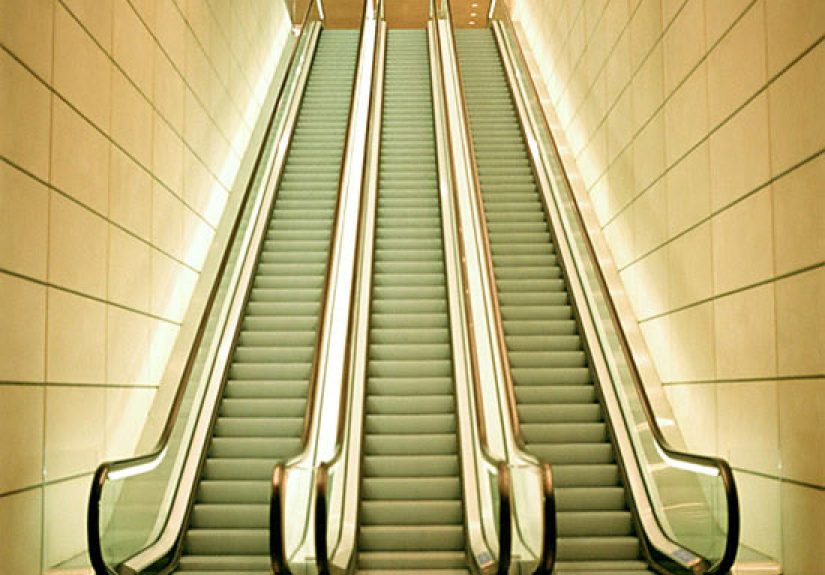
Escalators are moving staircases designed to move a lot of people through a small footprint. Etiquette isn’t about making up fancy rules to feel superiorit’s about reducing bottlenecks, preventing falls, and keeping everyone (including kids, older adults, and people carrying luggage) safer.
The smallest choiceswhere you stand, whether you pay attention, whether you block the landingcreate ripple effects. In a rush-hour transit station, a two-second pause at the top can trigger a pileup behind you. In a mall, a wandering stroller on an escalator can turn “shopping day” into “why are there sirens.”
The goal is simple: keep the line moving, keep people steady, and don’t create surprises. Your future self (and everyone else’s ankles) will appreciate it.
The core rule: pick a lane and commit to it
1) If you’re standing still, stand to the right (when local signs match)
In many U.S. transit systems, the long-running convention is: stand on the right so people in a hurry can pass on the left. It’s the simplest way to reduce friction in crowded stations. If you’re checking a map, adjusting a bag, or just enjoying the moving staircase vibes, the right side is your home base.
2) If you’re walking, walk on the leftcalmly
If you’re passing, do it on the left and do it like you’re in public: steady pace, no shoulder-checking, no dramatic sighing like you’re auditioning for “Commuters: The Musical.” If someone is on the left and not walking, a polite “Excuse me” beats the international sign for “I’m mad,” which is aggressive toe-tapping.
3) But: some places prioritize safety over walking
Here’s where it gets interesting. Some safety guidance argues that walking on escalators increases risk, and some crowd-flow research suggests that standing on both sides can move more people overall when the escalator is packed. Translation: your best move is to follow posted signs, station announcements, and the local normthen layer courtesy on top.
A practical compromise that works almost everywhere: if the escalator is crowded and nobody can pass safely, stand still, hold the handrail, and don’t treat the left side like your personal jogging lane. If the escalator is open and local custom supports passing, stand right and keep the left side moving.
Safety etiquette: the rules that prevent the “oops” moments
Courtesy is wonderful, but safety is non-negotiable. Many U.S. transit agencies and safety organizations repeat the same basics because they consistently reduce injuries.
Hold the handrail (yes, even if you’re “great at balance”)
Holding the handrail is the escalator equivalent of wearing a seatbelt. It’s not about skill; it’s about what happens when the escalator suddenly stops, someone stumbles, or a step shifts your weight at the wrong moment. Keep one hand free when you step on so you can grab the rail right away.
Face forward and stand in the center of the step
Face the direction the escalator is traveling. Keep your feet centered and avoid the edges where moving parts meet. If your shoes or laces are doing anything “dangly,” fix it before you step on.
Step on and off like you mean it
Watch the moving steps as you board. When you exit, step off promptly and move away from the landing. The top of an escalator is not the place to stop and text, regroup, or decide whether you’re hungry. If you need to pause, take three steps forward firstfuture you will thank present you for not causing a commuter accordion.
Don’t run, don’t sit, don’t lean on the rails
Running increases the chance of falls and collisions. Sitting on steps or leaning on the handrail is risky and can create unpredictable movement for others. Escalators are transportation, not playground equipment.
Keep your stuff to yourself (the handrail is not a storage shelf)
Bags on the handrail can hit people behind you or slip and cause a mess. Keep belongings close to your body, especially backpacks that extend into “other people’s personal space” like a surprise extra limb.
Kid and stroller etiquette (aka: the fastest way to become everyone’s hero)
Parents and caregivers are already doing a lot. Escalator etiquette is simply about choosing the safest option for the moment.
Hold a child’s handdon’t rely on the child holding the handrail
Many safety guidelines recommend that small children hold an adult’s hand instead of the handrail, because handrails move at a set pace and kids can lose grip or position quickly. Stay close and keep them centered on the step.
Use elevators for strollers, carts, wheelchairs, and big rolling items
This is one of the clearest “posted rule” areas: many transit systems and safety organizations advise against bringing strollers and other wheeled devices onto escalators. Elevators exist for a reasonuse them when you have a stroller, rolling cart, wheelchair, or bulky luggage.
Mind the shoe situation
Escalator safety advisories often mention shoelaces and certain loose footwear as higher risk for getting caught. You don’t need to panic about shoesbut you should make sure laces are tied and kids’ footwear isn’t flopping around like it has its own agenda.
The unspoken escalator manners everyone silently agrees on
Don’t stop at the top (or bottom)
This is the cardinal sin because it creates immediate danger for people behind you. If you must stop, step off and move to the side first. Think of the landing as a freeway on-ramp: it’s for merging, not for journaling.
Leave space, but don’t create a “gap canyon”
A small buffer between riders is smart. But if it’s busy, enormous gaps reduce capacity and slow everyone down. Aim for a comfortable spacing that keeps flow steady without turning the escalator into a single-file museum exhibit.
Headphones + phones: keep your “situational awareness” subscription active
Escalators require boarding and exiting at moving edges. If you’re deep in your screen, you’re more likely to drift, stop suddenly, or miss the exit cue. You don’t have to ditch your phonejust look up when stepping on and off.
Passing etiquette: ask, don’t shove
If someone is standing on the left, a simple “Excuse me” is usually enough. Escalator culture varies by city and station, and not everyone knows the local norm. Courtesy teaches faster than anger.
Escalator etiquette in common American scenarios
Rush-hour subway or metro station
- Stand right, pass left when it’s the local norm and there’s room to pass safely.
- Keep moving at the landingstep off, clear the area, then figure out where you’re going.
- Hold the handrail, especially on long or steep escalators where small wobbles become big ones.
Airport escalators with luggage
- If you have heavy or rolling luggage, consider an elevator or a moving walkway when available.
- Keep bags closeno swinging suitcases that clip ankles like they’re collecting souvenirs.
- Give extra space to travelers with kids, mobility devices, or tight connections.
Malls, arenas, and tourist-heavy spots
- Expect beginners: tourists, kids, and distracted shoppers may not know the “lane” convention.
- Use clear, friendly cues: “Go ahead” and “Excuse me” work wonders.
- Don’t treat the escalator as a photo studio. Take the picture after you exit.
The “awesome” part: etiquette as a tiny act of kindness
The magic of good escalator etiquette is that it’s low effort and high impact. You can improve a stranger’s day without speaking, spending money, or even making eye contact (a gift for introverts everywhere).
You stand to the side. You hold the rail. You step off promptly. You don’t block the landing. And suddenly, dozens of people move smoothly through a space that usually feels chaotic. That’s not just “following rules.” That’s contributing to a public environment that feels calmer, safer, and more respectful.
If you want a simple mantra, try this: Be predictable. Be aware. Be kind.
Extra: 500+ words of escalator life experiences (the moments you’ve definitely lived)
If you’ve spent any time around public transit, malls, airports, or big office buildings, you’ve collected escalator memories the way a winter coat collects lint: accidentally, constantly, and with a faint sense of “How did this happen?”
There’s the classic “Top-of-the-escalator freeze,” where someone reaches the landing and immediately stops as if they’ve just arrived at the end of a marathon. They stare forward, motionless, while the escalator continues delivering people behind them like a conveyor belt of impending awkwardness. In that split second, everyone becomes an amateur traffic engineer: you angle your shoulders, calculate gaps, and pray you don’t become a headline. This is the exact moment etiquette was invented forstep off, move aside, then reorient. Your shoes deserve a quiet life.
Then there’s the “Backpack sweep,” a phenomenon where a commuter’s backpack is basically a rotating turnstile. They pivot to check their phone andwhamsomeone behind them gets a surprise hit to the ribs. It’s not malicious. It’s just physics plus forgetting you’re carrying a small suitcase on your spine. The etiquette fix is simple: keep your bag close, stay facing forward, and if you need to rummage, do it after you exit. Nobody wants to be gently bludgeoned by a water bottle.
You’ve probably also seen the “Family Wall,” when a group stands shoulder-to-shoulder across the entire escalator. It’s charming in a “we are together” way, but it also turns the left lane into a mythological concept like unicorns or affordable airport snacks. Sometimes the group doesn’t realize; sometimes they do and assume no one is in a hurry. A polite “Excuse me” usually solves it. And when it doesn’t, you learn a valuable life skill: smiling while you wait.
Escalators also have “first-timers,” and honestly, they deserve some grace. You can spot them because they approach the escalator like it’s a wild animal: cautious, uncertain, and ready to jump back if it makes eye contact. They hesitate at the first step, then step on with the concentration of someone defusing a movie bomb. In those moments, the best etiquette move is patience. Give them a beat, don’t crowd them, and remember: everyone had a first escalator ride once.
And finally, there’s the subtle joy of the perfect etiquette chain reaction: you stand to the right, someone passes on the left, another person holds the handrail, a parent keeps a kid centered, and the whole escalator ride feels smooth and calm. No drama. No shuffling. No pileups. It’s a small moment of public cooperationquiet proof that strangers can share space without turning it into a competition. That’s why good escalator etiquette belongs on the “awesome things” list: it’s tiny, ordinary, and somehow makes the whole day feel more civilized.