Table of Contents >> Show >> Hide
Every family had that car.
Not the cool car. Not the car anybody would put on a bedroom poster. Not the sleek convertible, the muscle car, or the luxury sedan with a name that sounded like it belonged to a CEO or a bond villain. No, this was the family car growing up: the faded station wagon, the beige minivan, the slightly grumpy SUV, or the hand-me-down sedan with one stubborn window and an air conditioner that worked only when the moon felt cooperative.
And yet, for millions of us, that humble machine became one of the most important objects in childhood. It was a shuttle, a dining room, a dressing room, a referee’s office, a confession booth, a karaoke stage, and occasionally a place where a soccer cleat lived forever under the seat like an archaeological artifact no one dared disturb. When people talk about childhood nostalgia, they often mention toys, cartoons, or summer vacations. But the truth is simpler and funnier: a lot of growing up happened in the backseat.
That is why your family car growing up belongs on any list of life’s quietly glorious things. It was never just transportation. It was the rolling backdrop of family life. It carried your school projects, your fast-food wrappers, your arguments over legroom, your sleepy heads after long holiday dinners, and your big dramatic sighs when your parents chose oldies over your radio station again. The family car was not glamorous. It was better than glamorous. It was familiar.
Why the Family Car Becomes a Time Machine
Say “childhood car memories,” and people do not recall horsepower or trim packages. They remember textures. The burn of a seatbelt buckle in July. The weirdly satisfying thump of a heavy door closing. The particular rattle that meant Dad had turned onto the highway. The smell of fries, crayons, vinyl, wet jackets, and mystery. Oh yes, mystery. Every family car had a smell that could never be duplicated and absolutely should never be bottled.
That is the genius of memory: it loves details nobody thought were important at the time. We forget what we had for lunch three Tuesdays ago, but we remember the exact way the dome light looked when we were half-asleep after being carried from the car into the house. We remember lying sideways across the backseat on a road trip, pretending not to be tired. We remember tracing raindrops on the window and making up stories about the people in the next lane. The old family car becomes a time machine because it was present for so many ordinary moments that later turned out to be the architecture of a life.
And that is what makes this topic so powerful from both a human and SEO perspective: nostalgic family car memories are universal, emotional, and deeply sensory. Readers do not come to this subject for technical specs. They come because they want to feel something. They want to laugh at the absurdity of sweaty vinyl seats and remember the sacred politics of who got to sit by the window. They want proof that the plainest things often become the most beloved.
The Rolling Living Room of American Childhood
In many American households, the family car was practically an extension of the home. Before smartphones turned every passenger into a tiny glowing hermit, families actually had to interact in there. Imagine the horror. On long drives, siblings invented games, stared out windows, fought over invisible boundaries, and asked, “Are we there yet?” with the confidence of people who knew the answer was still “absolutely not.” The car forced togetherness in a way modern life often avoids.
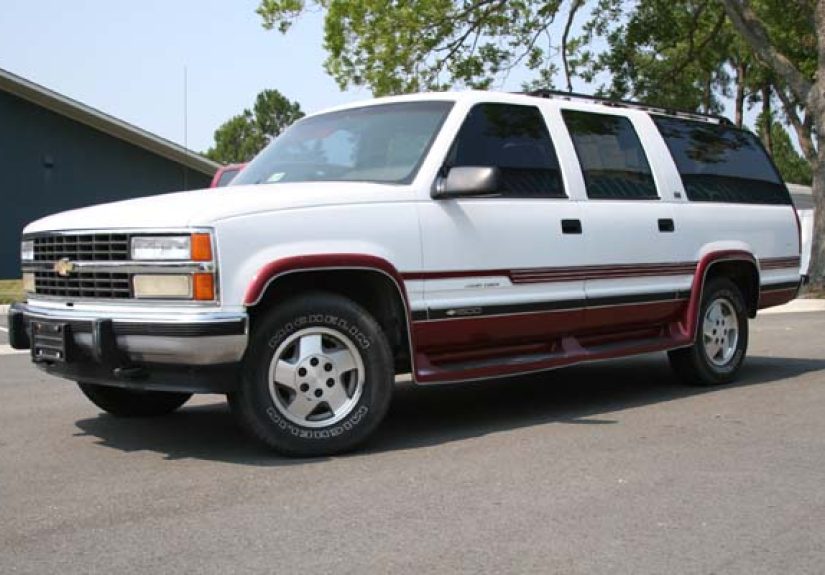
The type of family car changed over the decades, but the emotional job stayed the same. In one era, it was the mighty station wagon with fake wood paneling and enough cargo space to move a small moon. Then came the minivan, that lovable, boxy hero that made sliding doors feel like a miracle of civilization. Later, SUVs arrived with a little more swagger, as if the family vehicle had suddenly decided it wanted hiking boots and a social media rebrand. But whether it was a wagon, van, or sport-utility spaceship, the mission remained delightfully unsexy: haul the family, carry the snacks, survive the chaos.
And somehow, the less cool the car was, the more likely it became legendary. A car with a dent in the bumper and a cassette player that ate your favorite tape had character. A car with one seat that had to be kicked to recline properly had lore. A car with a door that only opened from the outside was not defective; it was “quirky,” which is family-code for “we are keeping this thing until it reaches the afterlife.”
Station Wagons: The Original Memory Machines
There is a special place in the museum of American nostalgia for the station wagon. Big, practical, and gloriously uncool, the wagon was the four-wheeled uniform of family life for generations. It was built for volume, not vanity. It held suitcases, coolers, dogs, holiday gifts, and children who somehow always had one more bag than seemed physically possible. If your family had a wagon with a rear-facing “way back” seat, congratulations: you did not just ride in a car. You rode in a childhood legend.
The wagon had a theatrical quality. You waved at strangers from the back. You made faces at drivers behind you. You felt like you were traveling in a living room that somebody accidentally bolted to an engine. And because many of these cars were huge by modern standards, they seemed indestructible. Looking back, that confidence was adorable. But memory is not a safety inspector. Memory is a poet with a fake-wood dashboard.
Minivans: The Unsung Kings of Family Life
Then came the minivan, the undisputed MVP of practical parenting. Nobody bought a minivan to look mysterious. People bought minivans because they had children, sports gear, groceries, strollers, birthday cakes, and exactly zero interest in squeezing any of it into something stylish. The minivan did not ask for applause. It simply made family logistics possible.
That is why so many people who grew up in the 1980s, 1990s, and early 2000s get misty-eyed about vans that were objectively beige. The minivan was where you ate fries on the way home from practice, changed into recital clothes in a panic, and discovered that one sibling somehow had both more elbow room and a worse attitude than physics should allow. It was also where you first understood that cupholders were not a luxury. They were a peace treaty.
The Tiny Details That Stick Forever
Ask ten people about the family car growing up and you will hear the same kind of details again and again, even if the makes and models change. The details are where the magic lives.
- The smell: not “new car smell,” but your car smell. A blend of upholstery, old receipts, peppermint gum, stale French fries, and weather.
- The sound: the turn signal, the seat spring, the groan when the trunk opened, the radio station that came in fuzzy on back roads.
- The climate drama: freezing in winter, roasting in summer, and one parent insisting, “Roll the window down, that’s what air is for.”
- The objects: a road atlas in the side pocket, pennies in the cupholder, napkins from seven restaurants, and at least one fossilized snack.
- The seating politics: who sits where, who touched whom, and who is absolutely sitting too close on purpose.
These are not glamorous memories, but they are sticky because they were repeated. The family car turned routine into ritual. Saturday errands. School drop-offs. Holiday drives. Late-night pickups. Rainy trips to the grocery store. Each trip seemed forgettable on its own. Together, they built a whole emotional landscape.
That is why old cars often feel more vivid in memory than more expensive things. A child may not remember the square footage of the house they grew up in, but they will remember the exact patch of sunlight on the backseat during a July drive, or the embarrassment of being dropped off at school in a van that made a noise like a tuba with allergies.
Why Nostalgia Makes the Old Family Car Better Than It Really Was
Let’s be honest: many of the cars we adore in memory were mechanical nonsense. They overheated. They squeaked. They stalled in parking lots. They had fabric ceilings that sagged like disappointed hammocks. They had ashtrays, cigarette lighters, and seat configurations that would make modern safety engineers lie down dramatically on the floor. And still, we love them.
Why? Because nostalgia is not a documentary. It is an emotional highlight reel. The family car becomes precious not because it was perfect, but because it was present. It showed up for everything. It was there for first days of school, bad report cards, post-game orange slices, fast-food bribery, prom photos, beach traffic, and sleepy drives home with your cheek pressed against the cool glass.
It also carried versions of the people we miss. We remember the car, yes, but really we remember our mother drumming on the steering wheel. Our father refusing to ask for directions. A grandparent handing back peppermints from the front seat. A brother hogging the armrest like it was a constitutional right. A sister claiming the “good seat” with the ruthless efficiency of a seasoned diplomat. The vehicle becomes a container for people, voices, habits, and family jokes that no longer exist in the same way.
That is what makes the family car growing up such an incredible topic. It blends memory, culture, humor, design, and emotion into one very relatable package. It is about cars, but also not about cars at all. It is about how ordinary objects become sacred because life happened around them.
The Family Car in the Age of Screens
Modern family vehicles are quieter, safer, smarter, and dramatically better at keeping everyone entertained. That is wonderful. It is also why today’s childhood car memories may feel a little different. When each passenger has a tablet, headphones, and a personalized streaming queue, the car can become less of a shared stage and more of a mobile apartment building. Efficient? Absolutely. Slightly less chaotic? Maybe. Less collectively weird? Also yes.
There is something irreplaceable about the older road-trip experience, when boredom forced invention. Kids made games out of billboards, license plates, and clouds. Parents narrated directions like explorers crossing a hostile continent called “construction traffic.” Everyone listened to the same songs because there was no alternative unless you brought a Walkman and enough batteries to power a submarine.
That shared inconvenience, oddly enough, created shared memory. The family car was never just a ride. It was a temporary world with its own rules, its own soundtrack, and its own emotional weather. And when that world disappears, even the annoying parts start to glow. Especially the annoying parts.
A 500-Word Ride Down Memory Lane
Picture a family sedan parked in the driveway on a hot Saturday morning. It is not remarkable from the outside. The paint is a little tired, one hubcap is suspiciously absent, and there is a bumper sticker whose message no one in the family fully agrees with anymore. But inside? Inside is a civilization.
The front seat smells faintly like coffee and winter coats. The backseat is a masterpiece of contradiction: crayons without paper, paper without crayons, one sneaker with no visible partner, and a collection of napkins that apparently survived three administrations. The floor holds enough crumbs to start a side business in trail mix. Somewhere under the seat is a french fry old enough to have personal wisdom.
You climb in anyway, because this is the car. This is the one that takes everybody everywhere. The engine starts with a cough, a growl, and a brief pause that feels like negotiation. The radio comes alive halfway through a song your parents love and you will someday pretend not to love until one random Tuesday in adulthood when hearing it in a grocery store nearly knocks the breath out of you.
As a kid, you do not think, “I am making memories.” You think, “Why do I have to sit in the middle?” You think, “She touched my side.” You think, “If we stop for fries, I can survive this trip.” Yet memory is busy anyway, quietly preserving the sunlight flickering through trees, the shape of your mother’s hand on the wheel, the way your father always cleared his throat before giving driving directions nobody asked for.
Maybe the car takes you to school, where you hop out carrying a project made of poster board and impossible hope. Maybe it takes you to a relative’s house, where you fall asleep on the way back and wake up just enough to realize someone is carrying you inside. Maybe it takes you on vacation, packed so tightly with bags, snacks, and family tension that opening the trunk feels like defusing a bomb.
Years later, the car is gone. Sold, traded, donated, rusted, or simply absorbed into the giant scrapyard in the sky. But then someone mentions a Ford Taurus, a Dodge Caravan, a Chevy wagon, or an old Honda with cloth seats, and suddenly there it is again. Not just the vehicle. The whole era. The sounds, the arguments, the weather, the jokes, the boredom, the belonging.
That is the trick of the family car growing up. It looked like transportation, but it was really a memory factory. It carried ordinary days so faithfully that, in hindsight, they became extraordinary. Not because anything cinematic happened. Because life happened. Over and over. In traffic, in drive-thrus, in parking lots, in summer heat, in winter dark, with everybody piled in together and nowhere else to be but there.
And maybe that is why we still love those old family cars. They remind us of a version of home that had wheels. A little noisy. A little sticky. A little ridiculous. But ours.
Final Thoughts
#851 Your family car growing up is one of those deceptively small topics that opens a giant emotional door. It is funny because old family cars were weird. It is touching because they were constant. And it is memorable because they turned routine into story without anyone noticing. The family car was where life happened in between the “important” events, which is another way of saying it was where real life happened.
So yes, your family car growing up was awesome. Even if it had manual windows, mystery smells, and upholstery capable of branding your legs in July. Especially then.