Table of Contents >> Show >> Hide
- Before You Plant: How to Make “Black” Flowers Look Actually Black
- Quick Comparison: Your “Dark Bloom” Lineup
- 1) Black Petunia (Try ‘Black Velvet’ or ‘Black Cat’)
- 2) ‘Queen of Night’ Tulip
- 3) Dark Dahlia (Like ‘Karma Choc’ or ‘Arabian Night’)
- 4) Black Hollyhock (‘Nigra’)
- 5) Black Bearded Iris (Look for Cultivars Like ‘Before the Storm’)
- 6) Black Calla Lily (Dark Zantedeschia Cultivars)
- 7) Black Hellebore (Try ‘Onyx Odyssey’)
- 8) Black Viola or Pansy (Look for ‘Molly Sanderson’ Viola)
- 9) Scabiosa ‘Black Knight’ (Pincushion Flower)
- Garden Design Ideas: Make the Dark Blooms Look Intentional (Not Accidental)
- Conclusion: A Little Darkness Is a Garden Superpower
- Bonus: of Real-World Black-Flower Gardening Experience
If your garden currently looks like a cheerful cupcake display (adorable, but predictable), it may be time to add a little mystery. “Black” flowers are the horticultural equivalent of a leather jacket: they instantly make everything nearby look cooler. They’re also a tiny optical illusionmost “black” blooms are actually so deep burgundy, plum, or chocolate-maroon that your eyes wave a white flag and call it black.
Below are nine near-black flowers that bring drama without requiring you to wear a cape while gardening (optional, but encouraged). You’ll get what they look like, when they bloom, how to grow them, and how to use them so they read as truly dark instead of “oops, that’s just purple.”
Before You Plant: How to Make “Black” Flowers Look Actually Black
True black pigment is rare in petals, so getting that inky effect is all about strategy. Think of it like styling an outfit: black looks blackest next to something lighter and in the right lighting.
- Use contrast: Pair dark blooms with white, blush, pale yellow, chartreuse, or silvery foliage (dusty miller, lamb’s ear, artemisia).
- Give them good light: Morning sun with some afternoon relief often deepens color. Hot, harsh afternoon sun can wash petals out.
- Repeat, don’t scatter: One black flower is a rumor. A drift of them is a headline.
- Mind the backdrop: Dark blooms disappear against dark mulch or shadowy evergreens. Use lighter gravel, stone edging, or bright companions to outline them.
Quick Comparison: Your “Dark Bloom” Lineup
| Flower | Best Season | Sun | Best Use |
|---|---|---|---|
| Black Petunia | Late spring–frost | Full sun | Containers, edging |
| Queen of Night Tulip | Late spring | Full sun | Spring borders, cutting |
| Dark Dahlia | Summer–fall | Full sun | Showpiece beds, bouquets |
| Black Hollyhock | Summer | Full sun | Back-of-border drama |
| Black Bearded Iris | Spring | Full sun | Perennial beds |
| Black Calla Lily | Summer | Sun–part shade | Containers, bold accents |
| Black Hellebore | Late winter–spring | Part shade | Woodland edges |
| Black Viola/Pansy | Cool seasons | Sun–part sun | Edging, pots |
| Black Knight Scabiosa | Summer | Full sun | Pollinators, cutting |
1) Black Petunia (Try ‘Black Velvet’ or ‘Black Cat’)
If you want instant goth garden vibes with minimal commitment, black petunias are your best friend. Their velvety petals look like someone used a matte-black paint swatchespecially in containers where you can control the backdrop.
Why it’s intriguing
The texture is the magic. These blooms don’t just look darkthey absorb light. Put them next to white alyssum or lime-green sweet potato vine and they look even blacker.
How to grow it
- Light: Full sun for best flowering.
- Soil: Well-drained potting mix or garden soil that doesn’t stay soggy.
- Water: Consistent moisture, but don’t drown thempetunias hate “wet feet.”
- Feeding: Petunias are hungry. A regular blooming fertilizer keeps them from sulking mid-summer.
Design tip
Plant them in a light-colored pot (stone, white, galvanized metal). The container becomes a spotlight, and the flowers become the plot twist.
2) ‘Queen of Night’ Tulip
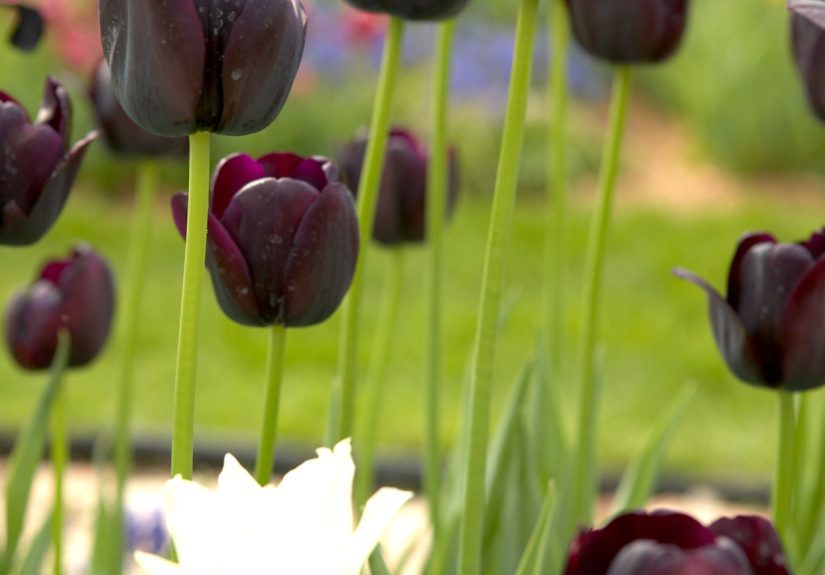
This is the classic “black tulip” lookdeep, dark maroon so intense it reads black from a few feet away. It blooms in late spring, right when you’re emotionally ready for winter to stop being dramatic.
Why it’s intriguing
Tulips are already elegant; ‘Queen of Night’ is elegant with a secret. In bright sun it may show wine-red undertones, but in evening light it looks nearly ink-black.
How to grow it
- Planting time: Fall, before the ground freezes.
- Depth: About 6–8 inches deep (deeper in sandy soil).
- Light: Full sun is best for strong stems.
- After bloom: Let foliage die back naturally so bulbs can recharge.
Design tip
Pair with creamy white tulips or pale pinks for a “formal tuxedo” effect. Or go full cinematic: plant behind yellow daffodils and let the contrast do the talking.
3) Dark Dahlia (Like ‘Karma Choc’ or ‘Arabian Night’)
Dahlias don’t whisper. They enter the garden like they paid for VIP parking. The darkest cultivars range from near-black burgundy to deep chocolate-redespecially striking when the flowers are large and layered.
Why it’s intriguing
Many “black dahlias” combine dark blooms with dark stems or foliage, which amplifies the effect. In bouquets, they look like you commissioned flowers for a fancy haunted mansion (in the best way).
How to grow it
- Light: Full sun (aim for 6+ hours).
- Soil: Fertile and well-drained; dahlias love compost but hate soggy roots.
- Support: Stake taller varieties earlywaiting until they flop is a classic dahlia trap.
- Cold climates: In many areas, lift and store tubers after frost for next year.
Design tip
Plant dark dahlias with airy companions (ornamental grasses, gaura, cosmos) so the blooms look even richer. Heavy, dark-on-dark beds can read muddygive these divas a bright stage.
4) Black Hollyhock (‘Nigra’)
Hollyhocks are the skyscrapers of cottage gardens, and ‘Nigra’ is the moody penthouse suite. Tall spikes can reach several feet, lined with deep maroon blooms that often appear blackespecially from a distance.
Why it’s intriguing
It’s not just the colorit’s the height. A wall, fence, or back-of-border planting suddenly looks like a storybook set.
How to grow it
- Life cycle: Often grown as a biennial (leafy year one, blooms year two), though it can act perennial in the right conditions.
- Light: Full sun for best flowering.
- Spacing: Give airflow. Crowding invites trouble.
- Common issue: Hollyhock rust. Pick resistant strains when possible, remove infected leaves, and avoid overhead watering.
Design tip
Plant ‘Nigra’ behind pale foxgloves, white daisies, or soft pink roses for a romantic-but-mysterious cottage vibe.
5) Black Bearded Iris (Look for Cultivars Like ‘Before the Storm’)
Bearded irises already have a theatrical silhouette. “Black” varieties add an extra layer of dramaruffled petals in deep purple-black shades with a contrasting beard that can look bronze or grape-toned.
Why it’s intriguing
Irises bloom when spring is peaking, so dark flowers feel unexpected among the usual pastels. Many top dark cultivars have a reputation for strong performance and big, showy blooms.
How to grow it
- Light: Full sun is the sweet spot.
- Soil: Well-drained; soggy soil can rot rhizomes.
- Planting: Keep rhizomes shallowpartly exposed is normal.
- Maintenance: Divide clumps every few years to keep blooms strong.
Design tip
Use irises as punctuation marks. A few dark clumps repeating through the bed creates rhythmlike bold commas in a sentence made of flowers.
6) Black Calla Lily (Dark Zantedeschia Cultivars)
Calla lilies are sleek and modernmore “art gallery” than “cottagecore.” Dark cultivars lean toward near-black plum or smoky burgundy, and the glossy, sculptural shape makes them look expensive (even when you got them on a totally reasonable sale).
Why it’s intriguing
The bloom is basically living architecture. One plant can make a container look designed, even if the rest of your patio situation is “two chairs and chaos.”
How to grow it
- Light: Sun to partial shade; in hotter areas, afternoon shade can prevent scorch.
- Soil: Moist, humus-rich, well-drainedthink “consistently damp,” not “swamp monster.”
- Cold climates: Many gardeners dig and store the rhizomes/corms before hard freezes.
- Safety note: Callas are toxic if chewedkeep away from pets and small children who snack on plants like it’s a hobby.
Design tip
Pair black callas with lime coleus, silver dichondra, or white bacopa in containers for a crisp, high-contrast look.
7) Black Hellebore (Try ‘Onyx Odyssey’)
If you want your garden to look interesting when most plants are still asleep, hellebores are the cheat code. Dark varieties can look slate, deep purple, or nearly blackespecially in cool, filtered light.
Why it’s intriguing
The blooms arrive in late winter to early spring, when the garden is basically a beige spreadsheet. Dark hellebores feel like a plot twist: elegant, moody flowers nodding above evergreen foliage.
How to grow it
- Light: Part shade to shadeperfect under deciduous trees (sun in winter, shade in summer).
- Soil: Rich, well-drained, and mulched; hellebores like moisture but not sogginess.
- Longevity: Once established, they’re tough and long-lived.
- Safety note: Also toxic if ingestedadmire, don’t snack.
Design tip
Plant near paths or the front of a woodland bed so you actually notice the winter blooms. They’re subtle up close, but unforgettable.
8) Black Viola or Pansy (Look for ‘Molly Sanderson’ Viola)
Want a small, low-growing black flower that works in pots, borders, and window boxes? Enter the black viola/pansy category. Many “black” forms are deep purple-black with a golden eyeor nearly solid dark petals that look like tiny velvet masks.
Why it’s intriguing
These are the accessories of the garden world: compact, versatile, and surprisingly powerful when repeated. A ribbon of dark violas along a path looks intentional and a little mischievous.
How to grow it
- Season: Cool-season stars. They shine in fall, winter (mild climates), and spring.
- Light: Full sun in cool weather; part sun can help them last longer as temperatures rise.
- Soil: Organically rich and well-drained.
- Care: Deadhead spent blooms to keep flowers coming.
Design tip
Plant them with white violas and dusty miller for a black-and-white “classic film” palette. Or pair with bright tulips in spring for a color combo that feels both modern and slightly rebellious.
9) Scabiosa ‘Black Knight’ (Pincushion Flower)
Scabiosa ‘Black Knight’ brings dark, pincushion-style blooms (often described as so deep red they appear black) on slender stems that pollinators adore. It’s a perfect choice when you want black flowers that feel airy instead of heavy.
Why it’s intriguing
The flower shape is all texturerounded, tufted, and almost architectural. Plus, it plays nicely with cottage garden styles and cutting gardens without stealing the whole show.
How to grow it
- Light: Full sun.
- Soil: Average, well-drained soil is ideal.
- Bloom boost: Deadheading encourages repeat flowering.
- Climate note: It’s often grown as an annual, though it can persist longer in mild conditions.
Design tip
Combine with pale pink yarrow, white cosmos, or lavender for a “romantic garden with a secret playlist” vibe.
Garden Design Ideas: Make the Dark Blooms Look Intentional (Not Accidental)
Create a “Moon Garden… But Make It Noir”
Traditional moon gardens lean white for nighttime glow. Keep the glow, add the intrigue: mix white nicotiana, white roses, and pale lavender with black petunias, dark irises, and near-black violas. The contrast reads sophisticated, not spooky (unless you want spookyno judgment).
Use Dark Flowers as Focal Points, Not Background Noise
Black flowers can visually recede. That’s great for depth, but it also means they can vanish if you treat them like filler. Use them where your eye lands: near the front door, along a path, in a centerpiece container, or as a repeating accent through a border.
Pick the Right Supporting Cast
- Silver foliage: dusty miller, artemisia, lamb’s ear
- Lime/chartreuse: heuchera, sweet potato vine, lady’s mantle
- Soft pastels: blush roses, pale foxgloves, creamy tulips
- Structural greens: boxwood, upright grasses, clipped herbs
Conclusion: A Little Darkness Is a Garden Superpower
Black flowers aren’t about making your garden “dark.” They’re about making your garden interesting. They sharpen bright colors, elevate pastels, and add depth that ordinary blooms can’t. Whether you go all-in on a goth garden palette or just tuck a few near-black blooms into your existing beds, you’ll notice the difference immediately: everything around them looks more vividlike your garden learned how to do eyeliner.
Bonus: of Real-World Black-Flower Gardening Experience
The first time I planted “black” flowers, I expected instant midnight magic. What I gotat noon, in full sunwas a flower that looked… politely purple. I felt betrayed, like I’d ordered black coffee and got a mocha with feelings. Here’s what I learned (the slightly hilarious way) so your black flowers actually deliver the drama you’re paying for.
1) Lighting is everything. Dark blooms look their blackest in morning light, late afternoon, or light shade. In harsh midday sun, many “black” petals reveal their true identity: deep burgundy, plum, or chocolate-red. That doesn’t make them less beautiful; it just means you should place them where you’ll see them at their best. I now put black petunias in containers that get morning sun and a bit of afternoon shelter. The blooms look richer, and the plants don’t melt into crispy sadness.
2) Backgrounds matter more than you think. The year I used dark mulch everywhere, my black violas basically disappeared. It looked like I planted “invisible flowers,” which is not the vibe I was going for (unless the theme is “budget cuts”). Switching to lighter edging stones and adding a band of white alyssum made those same violas pop overnight. Black flowers are not background plantsthey need a spotlight.
3) One is never enough. A single dark dahlia in a busy border reads as “interesting red.” Three to five planted together reads as “whoa, what is THAT?” The same goes for irises and scabiosa. Repetition turns novelty into design. If you’re nervous, repeat the plant in two or three spots. Your garden will feel cohesive, not costume-y.
4) Pair them with texture, not just color. Black calla lilies look amazing with trailing silver dichondra. Black hollyhocks look even more dramatic against a pale fence. Dark tulips feel luxe next to soft, feathery spring greens. Texture keeps the dark palette from feeling flat. It’s the difference between “dark shirt” and “dark outfit styled correctly.”
5) Expect the color to shift. Weather, temperature, and even soil conditions can influence how dark the blooms appear. Some summers my “black” petunias look pitchy and velvety; other summers they lean more eggplant. Instead of fighting it, I plan for it: I surround dark flowers with companions that still look great whether the bloom reads black, burgundy, or purple-black. That way, the garden stays dramaticeven if the flowers decide to be moody in more ways than one.