Table of Contents >> Show >> Hide
- First, let’s give it a real name: you’re a flagger (and it’s a legit job)
- Why #962 is awesome (even if you’re freezing, sweating, or both)
- It’s not “stand there and vibe.” It’s safety science in a neon vest
- A day in the life: what “holding the sign” actually looks like
- How to be the best STOP/SLOW paddle boss on the crew
- Driver etiquette: how to make a flagger’s day (and keep everyone safe)
- So yes#962 is awesome, but it’s also serious
- Bonus: of work-zone moments (the lived experience of holding the sign)
You know the scene: one person is wrestling a jackhammer like it owes them money, another is knee-deep in asphalt fumes,
and a third is operating a machine the size of a small apartment building. Then there’s youstanding at the edge of it all,
holding a bright STOP/SLOW paddle like you’re the calm, fluorescent conductor of a very loud orchestra.
If “1000 Awesome Things” had a Hall of Fame for tiny joys, #962 belongs in a glass case with a little spotlight over it:
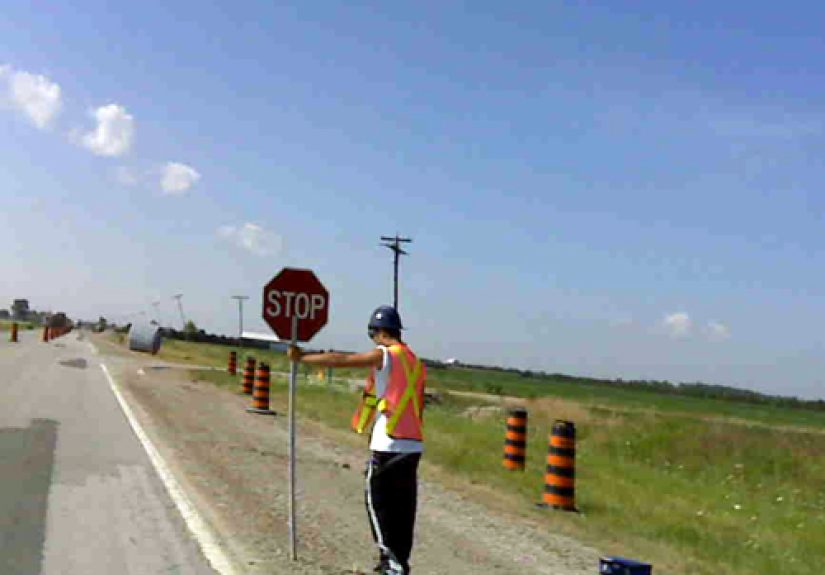
being the person on the construction crew who gets to hold the stop sign. On the surface, it looks like the easiest job on site.
In reality, it’s one of the most important. You’re the human hinge that keeps a work zone swinging safely between “progress” and “please don’t hit anybody.”
Also: you get to politely boss around traffic with one wrist flick. That’s a special kind of power.
First, let’s give it a real name: you’re a flagger (and it’s a legit job)
In work zones, the “stop sign person” is typically a traffic control flagger: the worker who guides vehicles (and sometimes pedestrians)
safely through a construction or maintenance area. This role shows up in official job classifications right alongside crossing guards because the work is similar:
you’re managing people’s movement in places where mistakes happen fast and consequences are heavy.
Translation: you’re not “just holding a sign.” You’re performing a safety-critical role in a work zone environment where visibility, communication,
timing, and calm authority matter. Your tools may be simple, but the responsibility isn’t.
Why #962 is awesome (even if you’re freezing, sweating, or both)
1) You’re the calmest person in the loudest place
Construction sites are a constant mash-up of noise, motion, dust, and deadlines. The flagger’s job is basically:
bring order to chaos, one vehicle at a time. You become the steady point everyone can depend onworkers behind you, drivers in front of you.
That’s a strange kind of peace: a small island of “I’ve got this” in a sea of “beep-beep-BANG.”
2) You get the “main character energy” of the work zone
Drivers may not remember the brand of the excavator, but they remember the human who made eye contact, lifted a hand, and safely got them through.
For thirty seconds, you’re the face of the entire operationcustomer service, traffic engineering, and safety enforcement rolled into one high-visibility vest.
3) It looks simple… until you realize you’re running a live, moving system
A flagger isn’t just reacting; you’re anticipating. You’re reading speed, spacing, driver attention, weather, sight distance, and work activity
then choosing the safest moment to release a line of cars like you’re timing a parade.
And yes, sometimes you do it while someone in a pickup truck is doing the “I’m late” dance behind their steering wheel.
It’s not “stand there and vibe.” It’s safety science in a neon vest
Roadway and highway work zones are high-risk environments. The biggest danger is often the same thing that makes the job necessary in the first place:
moving traffic. Struck-by incidents and vehicle intrusions are a known hazard in construction and road work environments.
That’s why work zone safety guidance emphasizes planning, training, visibility, and traffic control devices.
The STOP/SLOW paddle isn’t random: it’s standardized for a reason
The United States uses standardized traffic control practices so drivers aren’t guessing what a sign means from state to state.
The STOP/SLOW paddle has specific design expectationsshape, color, lettering, and nighttime visibilitybecause consistency reduces confusion.
In many cases, flags are considered a limited-use option compared to a paddle, because the paddle is clearer and more uniform.
That standardization is the difference between “I know what to do” and “Is that person waving at me or challenging me to a duel?”
In a work zone, we prefer fewer surprises.
Visibility is PPE (and it’s not just for looks)
High-visibility apparel is a cornerstone of work zone safety. It helps drivers detect and recognize a person soonerespecially at dawn, dusk,
in rain, or around distracting visual clutter like cones, barrels, and equipment. Apparel standards (like ANSI/ISEA guidance) exist because
conspicuity is measurable, designable, andmost importantlylife-saving.
In practice, that means the vest (or jacket or shirt) isn’t a fashion choice. It’s a functional safety control.
If your vest could be described as “kinda beige,” it’s time for a wardrobe upgrade.
Where you stand matters more than people realize
A good flagger doesn’t just pick a spot; they choose a flagger station with visibility, an escape route, and smart separation from moving traffic.
Work zone guidance often emphasizes that workers need adequate lighting at night, reduced glare, and positioning that helps approaching drivers see and respond.
A flagger’s station is basically a tiny stage where the audience is driving 35–65 mph. The goal is: be seen early, be understood instantly, and stay protected.
Traffic control isn’t only externalinternal planning matters too
Not all work-zone hazards come from passing motorists. Construction vehicles and equipment moving inside the work area also create struck-by risks.
That’s where ideas like an Internal Traffic Control Plan (ITCP) come inplanning that separates people on foot from vehicles and equipment,
clarifies routes, and reduces chaos within the site.
The flagger is often the bridge between “outside” traffic control and “inside” workflow. When the plan is tight, everyone’s day is safer.
When the plan is loose, your day turns into a real-time puzzle with too many pieces.
A day in the life: what “holding the sign” actually looks like
Imagine a two-lane road where a crew is patching pavement. One lane is closed. Traffic alternates.
The flagger’s job is to keep a safe flow while protecting workers and drivers.
Step 1: Pre-shift reality check
- Equipment check: paddle condition, retroreflective material (if needed), radio/communication tools, batteries, flashlight for low light.
- PPE check: high-visibility apparel, hard hat (if required), appropriate footwear, weather protection.
- Briefing: where the work happens, what vehicles are coming in/out, when trucks are backing, where the “no-go” zones are.
Step 2: The first wave of drivers (a.k.a. “morning mood roulette”)
Early traffic tends to include commuters and delivery driverspeople who have a schedule and a strong opinion about it.
Your job is to be clear, predictable, and confident. Hesitation creates confusion. Confusion creates danger.
Step 3: The “human factors” portion of the program
A surprising amount of flagging is communication psychology. You can often tell what kind of day a driver is having by how they approach:
rolling stops, phone glances, aggressive lane changes, or the classic “I’m going to merge at the last second like it’s a sport.”
Your calm posture and consistent signals help reduce the chance that a stressed driver makes a worse decision.
It’s like being a crossing guard for adultsadults who have 4,000 pounds of momentum.
Step 4: The midday stretch (where boredom is the real enemy)
Long, repetitive stretches can be deceptively hard. Staying alert is part of the job.
The safest flaggers treat every approach as “new,” even if the 97th car looks like the 96th.
Step 5: Night work (visibility goes from important to everything)
Night work zones add new hazards: glare, reduced contrast, driver fatigue, and sometimes faster speeds.
This is where lighting, retroreflective materials, and extra attention to positioning matter even more.
Some agencies also use technology solutionslike automated flagger assistance devices (AFADs) in certain scenariosto reduce direct exposure.
How to be the best STOP/SLOW paddle boss on the crew
Be boringin the best way
In traffic control, “boring” means predictable. Your signals should be consistent. Your posture should be steady.
Your timing should feel deliberate, not rushed. Drivers trust what they can read quickly.
Think like a driver (even when drivers aren’t thinking)
Drivers make mistakes. They get distracted. They misjudge distance. They follow the car ahead instead of the signs.
Your job is to anticipate that reality and create space for it. That’s one reason following distance matters so much in work zones:
rear-end crashes are a known issue in these environments, and tight spacing leaves no room for error.
Use communication like a tool, not a last resort
Eye contact, hand cues (when appropriate and trained), and clear, assertive positioning can help.
If you’re using radios with another flagger, short, standardized calls reduce confusion:
“Releasing five,” “Hold,” “Truck entering,” “All stop.” The goal is clarity, not chatter.
Manage your own human limits
Heat, cold, and fatigue change reaction time and attention. Rotations, hydration, and breaks aren’t “soft”they’re safety controls.
A flagger who is mentally sharp is a safer flagger.
Driver etiquette: how to make a flagger’s day (and keep everyone safe)
If you’re reading this as a driver, here’s the cheat code for work zone safety:
treat the zone like a living room someone is currently renovatingwith people in it.
Slow down, stay alert, and do what the signs and flaggers tell you to do.
- Slow down early: reduced speeds exist because conditions change and workers are close.
- Merge sooner, not later: when signs tell you a lane is closing, take the hint.
- Increase following distance: extra space helps prevent rear-end crashes and gives you time to react.
- Put the phone away: work zones are not the place for “just a quick glance.”
- Respect the flagger: they’re not delaying you for fun; they’re sequencing traffic so everyone gets home.
Work zone campaigns often boil down to one simple idea: Respect the zone so we all get home.
It’s not catchy because it’s cute. It’s catchy because it’s true.
So yes#962 is awesome, but it’s also serious
The reason this “small joy” lands so well is the contrast: the job looks easy, yet it carries real responsibility.
Work zone crashes still injure tens of thousands of people each year, and fatalities remain a major concern.
When you’re the person holding the STOP/SLOW paddle, you’re part of the safety system that prevents those numbers from being even worse.
And in a culture where we’re quick to complain about “road work again,” it’s worth pausing to appreciate the human being out there
making the whole messy process safer and more orderly.
Bonus: of work-zone moments (the lived experience of holding the sign)
There’s a unique kind of storytelling that happens when you’re the person with the paddle. Your whole day is made of micro-scenes:
thirty seconds with one driver, ten seconds with the next, and a hundred tiny interactions that add up to a strange, shared rhythm.
You start to notice patterns. You start to notice people. And you definitely start to notice which vehicles have the most dramatic brake lights.
One moment that sticks with a lot of flaggers is the kid wave. A minivan rolls up. The driver looks stressed.
The back window drops and there’s a little arm enthusiastically windmilling like it’s a parade route. You lift your free hand, give a wave back,
and suddenly your shift contains a small spark of humanity. The parent’s face softens toolike they remembered you’re a person, not a traffic cone
with opinions. That wave doesn’t fix the heat or the long hours, but it does something better: it makes the day feel seen.
Then there’s the polite trucker nod. A big rig approaches slowly, perfectly centered, giving you space and time.
The driver’s eyes are up, not down. They follow your instructions cleanly. As they pass, there’s a nodnot dramatic, just a quiet “I got you.”
It’s the opposite of the driver who creeps forward on STOP like the word is optional. When someone respects the process, you can feel your shoulders drop.
Your job becomes what it’s supposed to be: safe and steady.
Weather writes its own chapters. In summer, your vest becomes a portable greenhouse, and you learn the true meaning of “hydrate.”
In winter, the wind finds every gap in your jacket like it’s being paid by the draft. Rain adds the special challenge of reflections and glare,
where headlights bounce off wet pavement and your visibility game has to be on point. Those are the shifts when you appreciate good gear,
clear positioning, and a crew that rotates people so nobody’s stuck in one place too long.
And yes, there’s the sign twirlthe harmless little flourish that turns a repetitive motion into a skill.
Nobody’s saying you should run a circus act in the road, but there’s something satisfying about being smooth and confident with your equipment.
It’s the same satisfaction baristas get from a clean latte pour: a tiny “nailed it” in the middle of a workday.
The best part, though, is the quiet pride at the end of a long shift. You watched hundreds of vehicles pass.
You kept your crew protected. You helped strangers get where they’re going. You were the calm point in a moving system.
That’s why #962 lands: it’s not just a funny “easy job” momentit’s the kind of work that matters, even when it looks simple from a car window.