Table of Contents >> Show >> Hide
- What Makes These Beach Stone Arrangements So Mesmerizing?
- Why the Process Feels Therapeutic
- The Power of Impermanence in Beach Land Art
- What the “30 Pics” Format Gets Right
- Therapeutic Benefits Through Two Lenses: Art-Making and Nature Exposure
- How to Try Beach Stone Art Responsibly
- Why This Story Connects So Strongly Online
- Conclusion
- Extended Experience Section (Added for Length: ~)
Some people go to the beach to tan. Some go to swim. Some go to eat fries and accidentally feed half a seagull family. And then there are artists like Jon Foreman, who walk onto a stretch of sand, look at scattered stones, shells, and driftwood, and see a temporary masterpiece waiting to happen.
The viral appeal behind beach stone art is easy to understand: it combines visual beauty, patience, geometry, and a strange little miracle of timing. These intricate arrangements are often made in public, exposed to wind, footsteps, and the tide, which means the work is breathtaking because it will not last. That fleeting quality is part of the pointand part of why so many people find it calming to watch, photograph, and share.
In this article, we’ll look at why this style of ephemeral land art has captured so much attention, what makes Foreman’s stone patterns so compelling, why the process feels therapeutic, and how to appreciate (or try) similar work responsibly. If you came for the “30 pics” energy, don’t worrywe’re absolutely talking about the visual magic. We’re just also giving it the full story it deserves.
What Makes These Beach Stone Arrangements So Mesmerizing?
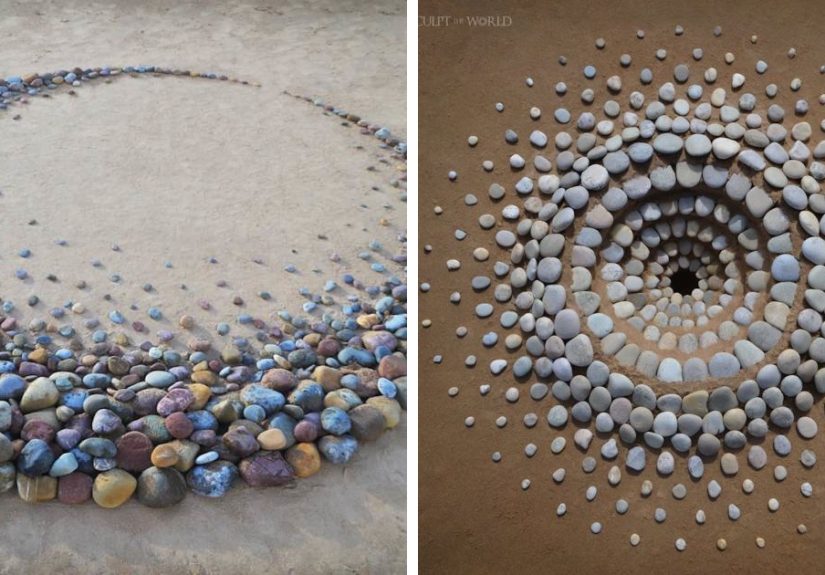
At first glance, the patterns can look digitally edited. Spirals seem too precise. Gradients look too intentional. Concentric circles appear as if they were designed in software and then dropped onto the sand. But that’s the trick: they’re made from found natural materials, by hand, on-site, often under time pressure.
Foreman’s work stands out because it blends order and nature. Beaches are dynamic environmentsmessy, textured, unpredictable. His arrangements introduce symmetry, rhythm, and repetition without erasing the landscape’s character. Instead of fighting the environment, the designs often echo it. A spiral can resemble a shell. A sweeping pattern can mirror a breaking wave. A circular composition can feel like a tide pool viewed from above.
Visual elements that make the patterns “scroll-stopping”
- Color gradients: Stones are sorted by tone and size to create subtle transitions.
- Geometry: Spirals, circles, arcs, and radial forms create instant visual coherence.
- Scale: Some pieces are small and intimate; others spread across large sections of beach.
- Texture contrast: Smooth stones against grainy sand create natural definition.
- Ephemeral tension: The viewer knows the tide (or a curious dog) may erase it soon.
This is why the work photographs so well. It’s not just “pretty rocks on sand.” It’s composition, timing, and environmental awareness working together. The result feels both ancient and modernlike a mandala, a map, and a design experiment all at once.
Why the Process Feels Therapeutic
The phrase “therapeutic” gets used a lot online, sometimes for things as minor as alphabetizing spices. In this case, though, the word fits. The act of arranging stones on a beach naturally includes many of the ingredients people associate with emotional regulation and stress relief: repetitive motion, focused attention, sensory engagement, and immersion in nature.
In interviews and coverage over the years, Foreman has described the process as deeply calming and immersive. That makes sense. Building a pattern from found stones requires presence. You’re scanning the ground, comparing shapes, sorting by color, adjusting spacing, stepping back, and re-entering the work. It becomes difficult to obsess over emails, deadlines, or awkward things you said in 2017 when your brain is busy deciding whether this pebble belongs in the inner arc or the outer ring.
The “therapy” isn’t just the finished image
A big reason people connect with therapeutic beach art is that the reward is not only visual. The process itself can be restorative:
- Repetition: Repeated placement motions can calm mental noise.
- Nonverbal expression: Pattern-making gives shape to emotion without needing words.
- Sensory grounding: Wind, sand, water sounds, and the weight of stones pull attention into the present moment.
- Low-stakes imperfection: Nature will erase the piece anyway, which can reduce pressure to make it “perfect.”
- Embodied focus: Sorting, kneeling, walking, and reaching create a gentle physical rhythm.
That last point matters more than people think. A lot of modern stress is “head-only stress.” Activities that reconnect the mind and bodyespecially outdoorsoften feel soothing because they interrupt rumination. You stop spiraling mentally and start making an actual spiral in the sand. Way more productive, honestly.
The Power of Impermanence in Beach Land Art
One of the most fascinating aspects of Foreman’s work is that it is intentionally temporary. Waves reclaim it. Wind softens edges. Foot traffic disrupts symmetry. In some cases, the artist knows from the start that the piece will only survive for a short window.
That impermanence is not a flawit’s a feature. In fact, it changes how viewers experience the artwork. A permanent sculpture can be revisited, analyzed, and archived. Ephemeral art, by contrast, asks for immediate attention. You either notice it now, or you miss it. That urgency gives even quiet pieces a dramatic edge.
It also creates a philosophical layer. Temporary works often invite reflection on control, attachment, and change. You can spend hours building something beautiful and still let it go. That idea resonates far beyond art. It mirrors the beach itself: tides come in, tides go out, and the shoreline is never exactly the same twice.
How this fits into a broader land art tradition
Foreman’s practice sits comfortably within the wider conversation around land art and earthworks, while remaining distinct in scale and spirit. Traditional earthworks can range from subtle interventions in the landscape to large, monumental changes. Foreman’s approach, like other ephemeral nature-based artists, emphasizes temporary transformation using found materials rather than permanent alteration.
In that sense, his work feels closer to meditative environmental drawing than heavy construction. It’s precise, yesbut also light-touch, responsive, and deeply tied to place.
What the “30 Pics” Format Gets Right
Gallery-style posts featuring 20, 30, or 40 images sometimes get dismissed as quick-click content. But for this topic, the format actually makes sense. Stone arrangement art is process-heavy and variation-rich. One image can show skill. Thirty images can show a visual language.
Across a larger set, viewers start to notice patterns in the artist’s thinking:
- How color gradients are built from surprisingly ordinary materials.
- How motifs repeat (spirals, crescents, circles) but never feel identical.
- How different beaches and conditions influence the final composition.
- How scale changes the moodfrom intimate and meditative to cinematic.
- How the artist adapts to what the environment offers that day.
The “30 pics” structure also mirrors the experience of walking a beach and noticing one arrangement after another. It invites slow looking. And in an internet culture built around speed, slow looking is practically rebellious.
Therapeutic Benefits Through Two Lenses: Art-Making and Nature Exposure
Even though not every creative ritual is formal therapy, there is a strong overlap between what makes beach stone arranging feel good and what researchers and clinicians discuss when they talk about art, stress reduction, and wellbeing.
1) Art-making can support emotional regulation
Creative activity is often used in mental health settings because it can support expression, focus, and stress relief. Clinicians and health systems frequently describe art-based practices as useful for processing emotion, engaging the senses, and reducing distress in certain contexts. This does not mean “making a stone spiral cures everything by sunset,” but it does explain why many people feel better after a focused creative session.
2) Beach environments can support mental restoration
There’s also the environmental side. Time in natureespecially in coastal or “blue space” settingshas been associated with improved mood, attention, and overall wellbeing. The beach offers a powerful sensory environment: moving water, open horizons, ambient sound, shifting light, and natural textures. When you combine that with intentional, hands-on creative work, you get a practice that many people experience as deeply restorative.
In plain English: it’s hard to stay mentally clenched while sorting smooth stones by color next to the ocean. Not impossible. Just difficult.
How to Try Beach Stone Art Responsibly
If this kind of art makes you want to run outside and start arranging pebbles immediately, that’s a pretty wholesome impulse. But there’s an important caveat: not every location is appropriate for moving or stacking rocks.
In some parks and trails, rock cairns are used for navigation, and altering them can create safety issues. In sensitive environments, moving rocks may disturb habitats for small animals and aquatic life. That means responsible creativity starts with context.
Good etiquette for trying stone pattern art
- Check local rules, especially in parks, preserves, and protected shorelines.
- Avoid altering official cairns or trail markers.
- Don’t remove rocks from habitat-sensitive zones (streams, tide pools, nesting areas).
- Use loose, already-scattered materials when permitted.
- Leave the site as you found it (or better).
- Photograph your work instead of trying to preserve it physically.
The best version of this practice is collaborative with nature, not competitive with it. Think “temporary dialogue,” not “I have improved this beach.” The beach was doing great before us.
Why This Story Connects So Strongly Online
The headline works because it combines three things the internet loves: visual beauty, human skill, and emotional honesty. The art is striking, the process is unusual, and the therapeutic angle gives it a human center. It’s not just “look at this cool pattern.” It’s “look at how someone turns ordinary materials, patience, and a tide window into meaning.”
In a time when many people feel overstimulated, stories like this are especially appealing. They remind us that creativity doesn’t always require a studio, expensive tools, or permanent results. Sometimes it’s a patch of sand, a handful of stones, and enough attention to notice what’s possible.
Conclusion
Artist Arranges Stones In Stunning Patterns On The Beach, Finds It Very Therapeutic (30 Pics) is more than a feel-good gallery title. It points to a powerful idea: art can be simple, temporary, site-specific, and still deeply moving. Jon Foreman’s beach stone arrangements show how geometry, color, and patience can transform a shoreline into a moment of wonderwithout needing to last forever.
Whether you’re here for the mesmerizing visuals, the land art inspiration, or the mental health angle, the takeaway is the same: creative attention changes how we experience a place. And sometimes, the most meaningful artwork is the kind that disappears with the tide and leaves behind a calmer mind.
Extended Experience Section (Added for Length: ~)
Imagine arriving at the beach early, before the crowd shows up with coolers, umbrellas, and a Bluetooth speaker that somehow thinks everyone wants to hear its playlist. The air is cool. The tide has pulled back enough to reveal a wide band of damp sand, and the shoreline looks like it has been reset overnight. You begin by wandering, not building. That part matters. Your eyes adjust to differences in shape and color: charcoal pebbles, pale stones, rust-toned chips, shells with broken edges, a curved piece of driftwood that looks like it belongs in a museum gift shop.
At first, the process feels casual. You collect a few pieces and place them in a loose circle. Then something changes. You notice spacing. One stone is too large. Another breaks the color flow. You move them again. The circle becomes cleaner. You add an outer ring. You start sorting stones into small groups by tonelight, medium, darkwithout even realizing you’ve created a system. This is usually the moment when time gets weird. Ten minutes feels like two. Forty minutes feels like twelve.
The body settles into the work. Kneel, place, step back. Walk, gather, return. Repeat. The ocean provides a steady soundtrack, and every so often a wave reminds you who owns the schedule. You’re not forcing an idea onto the beach so much as negotiating with it. A patch of firmer sand invites a curve. A cluster of similar stones suggests a gradient. A piece of seaweed becomes a line. The composition grows because the environment gives you options.
What surprises many people is how emotionally specific the process can feel. A tight, symmetrical pattern may feel grounding on a chaotic day. A looser spiral may feel more honest when you’re mentally scattered. Some people describe a sense of relief once they stop chasing perfection. If a line wobbles, the beach doesn’t care. If the tide reaches the edge early, that becomes part of the piece. The work teaches flexibility in real time.
And then there’s the ending, which is often the most memorable part. You finish the arrangement, stand back, and finally see the whole thing at once. For a few minutes, it feels completebalanced, intentional, strangely alive. Maybe someone walking by pauses and smiles. Maybe a child points at it. Maybe no one sees it but you. Then the water creeps closer, or the wind starts to soften the edges, and the pattern begins to dissolve. Instead of feeling like failure, it can feel like closure.
That experience is a big reason stone arrangement art resonates so widely. It offers a rare combination of control and surrender. You make choices carefully, but you also accept that the result is temporary. In everyday life, we often get stuck trying to make everything permanentplans, outcomes, opinions, even moods. A beach pattern made of stones quietly argues for another approach: make something beautiful, pay attention while it exists, and let it change. Honestly, that’s not just an art lesson. That’s a life skill.