Table of Contents >> Show >> Hide
- Bob Vila’s Best Brush Killers at a Glance (and What They’re Actually Good For)
- 1) Best Overall: Natural Elements Non-Toxic Weed Killer
- 2) Best Bang for the Buck: Earth’s Ally Ready-To-Use Weed & Grass Killer
- 3) Most Versatile: Natural Armor All-Natural Weed & Grass Killer
- 4) Best Spray Bottle: Green Gobbler 20% Vinegar Weed & Grass Killer
- 5) Best Heavy-Duty (Natural): OrganicMatters Natural Weed Killer
- 6) Best for Dense Brush: BioAdvanced Ready-to-Use Brush Killer Plus
- 7) Also Consider: Just for Pets Pet-Safe Weed Killer
- What Counts as “Brush” (So You Don’t Buy the Wrong Kind of Plant Rage)
- Brush Killer Ingredients 101: Contact vs. Systemic (a.k.a. “Scorch” vs. “Root Removal”)
- How to Choose the Best Brush Killer for Your Yard
- Application Playbook: How to Get Better Results (Without Buying a Second Bottle in Anger)
- Scenario Guide: Matching the Product to the Problem
- Safety, Pets, and the “Please Don’t Nuke Your Yard” Checklist
- Alternatives (and Helpful Add-Ons) to Brush Killer
- Conclusion: So, What’s the Best Brush Killer?
- Real-World Experiences: What Homeowners Commonly Notice (and What Actually Helps)
Brush has a special talent: you ignore it for two weekends, and suddenly your backyard looks like it’s auditioning for a wilderness survival show. The good news is you don’t need a chainsaw-and-a-prayer approach for every vine, bramble, and renegade sapling. The right brush killer can turn “dense green chaos” into “manageable yard” without you filing for new elbows.
This guide breaks down Bob Vila’s top brush killer picks (with a few practical upgrades: what each one is best at, what it won’t do, and how to apply it so you’re not just giving weeds a lightly seasoned spa day). We’ll keep it real, a little funny, and very focused on results.
Bob Vila’s Best Brush Killers at a Glance (and What They’re Actually Good For)
Bob Vila’s list leans heavily toward ready-to-use, “spray and walk away” optionsmany of them natural/organic-style formulas that rely on ingredients like vinegar, salt, soap, and plant oils. There’s also one standout synthetic brush killer pick designed for tougher woody growth.
1) Best Overall: Natural Elements Non-Toxic Weed Killer
Think of this as the “everyday cleanup crew.” It’s a ready-to-use formula built around common, biodegradable-style actives (salt + vinegar + soap). It’s typically best for young, tender growth and general weed-and-grass situations where you want quick visible damage without bringing the heavy chemical toolbox.
2) Best Bang for the Buck: Earth’s Ally Ready-To-Use Weed & Grass Killer
Similar “natural actives” vibe, often positioned as a value play for homeowners who need to treat more area without spending like they’re sponsoring the weeds’ college fund. Best for small-to-medium weeds and grass you can fully wet on contact.
3) Most Versatile: Natural Armor All-Natural Weed & Grass Killer
A broader ingredient mix (often including things like citric acid and plant oils), plus a convenient sprayer setup. Translation: it’s designed for people who want one bottle that can handle a lot of “what even is that plant?” moments. Dense brush may still take repeat treatments.
4) Best Spray Bottle: Green Gobbler 20% Vinegar Weed & Grass Killer
This is where we raise an eyebrow and put on safety glasses. “Horticultural vinegar” at around 20% acetic acid can scorch foliage fast. It’s great for driveway cracks, fence lines, and other places where you want fast top-kill. But it’s still mostly a contact-style approachperennials can re-sprout if roots survive.
5) Best Heavy-Duty (Natural): OrganicMatters Natural Weed Killer
Another natural formula, usually emphasizing a stronger punch via a blend of vinegar/salt/plant oils and surfactant-type helpers. Best for homeowners who want a stronger natural option for repeated knockdownsespecially where kids/pets are a concern and you’re willing to trade “instant permanent victory” for “steady progress.”
6) Best for Dense Brush: BioAdvanced Ready-to-Use Brush Killer Plus
This is the specialist. It uses triclopyr (a classic choice for woody plants and broadleaf vines). It’s often a better fit when you’re dealing with brushy vines, brambles, poison ivy/oak-type problems, and woody invasives. If your yard problem has bark, thorns, or a stubborn attitude, this is the category you’re shopping in.
7) Also Consider: Just for Pets Pet-Safe Weed Killer
Another “natural actives” product designed for households where pets roam and you want a more cautious ingredient profile. It can be useful for small weeds and light brushbut like many natural contact-style killers, the toughest perennials may need repeat treatments or a different strategy.
One more note: Bob Vila’s roundup-style coverage also calls out that some popular brush killers aren’t included due to concerns about harsher ingredients and environmental/pet safety. Whether you agree with every line in that debate or not, it’s a reminder to shop with your site, situation, and risk tolerance in mindnot just “strongest bottle wins.”
What Counts as “Brush” (So You Don’t Buy the Wrong Kind of Plant Rage)
In yard-care language, brush usually means a messy mix of:
- Woody saplings (young trees that pop up along fences and edges)
- Woody shrubs (the “thicket builders”)
- Vines (especially the ones that climb, cling, and spread)
- Bramble-type plants (blackberry, multiflora rose, thorny invaders)
Here’s the big buying truth: what kills baby weeds doesn’t always kill brush. If your “weed” has a woody stem, deep roots, or a vine the thickness of a finger, you’ll usually need a product that can move through the plantnot just singe the leaves.
Brush Killer Ingredients 101: Contact vs. Systemic (a.k.a. “Scorch” vs. “Root Removal”)
Contact-style killers (often vinegar/salt/essential oil blends)
These work mainly where they land. They can burn back leaves quickly, which looks satisfying (and it is), but if the plant’s root system survives, many perennials simply regroup and return like they pay rent.
Best uses: small annual weeds, fresh sprouts, edges, cracks, and places where you want quick visible control.
Systemic herbicides (like triclopyr or glyphosate)
Systemics are designed to be absorbed and moved within the planthelping kill not just foliage, but the “engine room” below. For brush and woody vines, this is often what separates “temporary setback” from “goodbye forever.”
Two names you’ll see a lot when brush gets serious:
- Triclopyr: often used for woody plants and broadleaf vines. Many formulations are considered “selective” in the sense that they target broadleaf/woody plants more than grasseshelpful near lawns when used correctly.
- Glyphosate: a non-selective herbicidemeaning it can injure or kill most plants it contacts. It’s powerful, but you need careful aim and drift control.
How to Choose the Best Brush Killer for Your Yard
Step 1: Identify what you’re trying to kill
You don’t need a botany degreejust a simple classification:
- Mostly grassy weeds? Many “brush” products won’t be ideal.
- Broadleaf vines/brambles? Triclopyr-type brush killers are often a strong match.
- Mixed jungle (grass + broadleaf + woody)? Consider whether you want selective control or a total reset.
Step 2: Decide how “surgical” you need to be
If brush is weaving through ornamental beds or near trees you love, you want precision: a targeted brush killer, a shielded sprayer, or even a paint-on method for cut stumps. If it’s a back corner you’re reclaiming, you can be more aggressive.
Step 3: Pick your application style
- Ready-to-use (RTU): easiest, great for small-to-medium jobs.
- Concentrate: better value for big areas, but you must measure and mix correctly.
- Cut-stump / paint-on: ideal for woody plants and thick vines when you want fewer off-target risks.
Step 4: Choose your speed vs. staying power
Want fast browning? Vinegar-heavy formulas deliver drama quickly. Want fewer comebacks? Systemic herbicides (used correctly) are often more durable. The “best brush killer” is the one that fits your yard’s priorities.
Application Playbook: How to Get Better Results (Without Buying a Second Bottle in Anger)
Spray when plants are actively growing
Systemics generally perform best when the plant is actively moving nutrientsoften late spring through early fall, depending on region and species. For vines and brush, you want healthy leaves to absorb the product.
Pick calm weather like a responsible adult
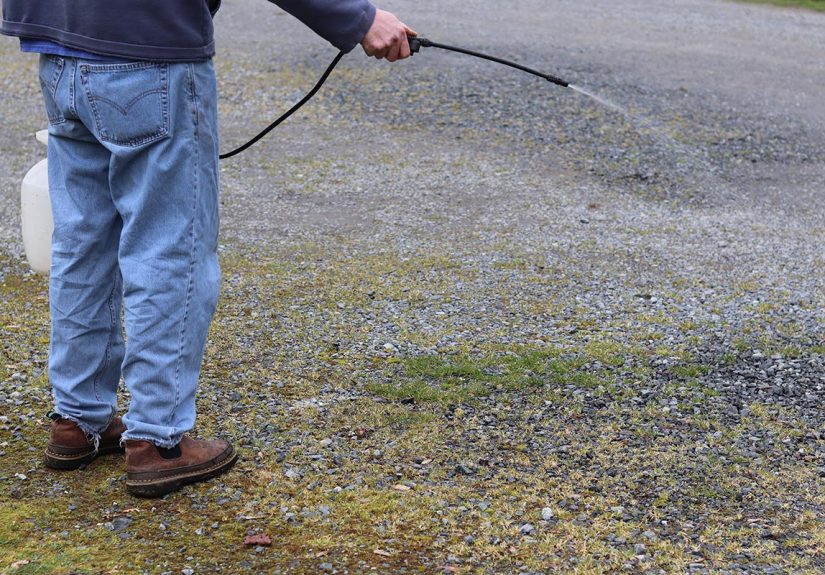
Windy day spraying is a great way to accidentally landscape your neighbor’s roses into a tragic poem. Spray on calm days, aim low, and keep the nozzle close to the target.
Wet the leavesdon’t just mist them
Many brush killers work best when you coat the foliage thoroughly (often “to the point of glistening,” not necessarily dripping). Spotty coverage = spotty results.
Use the right tactic for woody stems: cut-stump treatment
For thick vines and saplings, a smart strategy is: cut the plant, then apply the herbicide to the fresh stump surface promptly. This can reduce resprouting and minimizes the need to spray everything around it.
Don’t fight the calendar: expect brush to take time
Even strong brush killers may take days to show full effects, and woody plants can take weeks to fully die back. If you expect instant results, you’ll either reapply too soonor declare defeat prematurely.
Scenario Guide: Matching the Product to the Problem
Poison ivy (and its equally annoying cousins)
Poison ivy control often works best with systemic ingredients that can reach the roots. Triclopyr-based brush killers are frequently recommended for poison ivy and other woody vines, and glyphosate can also workthough it’s non-selective and requires extra care around desirable plants. For big vines, cut-stump treatment can be especially effective.
Blackberry brambles and thorny brush
Brambles are tough because they spread and regenerate. If you’re using a natural contact-style product, plan on repeat treatments and focus on new growth. For heavy infestations, a systemic brush killer may deliver fewer comebacksespecially when applied at the right time and with good coverage.
Saplings along a fence line
If you can pull them while small, great. If they’ve already “graduated” into real wood, consider cutting and treating the stump, or using a brush killer designed for woody plants. This is one of those moments where precision beats brute force.
Dense brush thickets you want gone
Start with a mechanical step if possible: cut paths, reduce height, and remove what you can safely. Then apply a brush killer to regrowth or remaining foliage. Thickets often require more than one pass, because you’re battling root reserves, not just leaves.
Safety, Pets, and the “Please Don’t Nuke Your Yard” Checklist
- Read the label and follow mixing/application instructions exactly.
- Wear basic PPE: gloves and eye protection are the bare minimum.
- Keep kids and pets away until the label says it’s safe to reenter the area.
- Avoid spraying before rain unless the product specifies rainfast timing.
- Protect desirable plants with shields, careful aim, or stump/paint-on methods.
- Store properly and never reuse chemical containers for anything else.
And yes, “natural” products still deserve respect. High-strength vinegar can irritate skin and eyes, and any herbicide natural or syntheticcan cause damage if it drifts or is overapplied.
Alternatives (and Helpful Add-Ons) to Brush Killer
Sometimes the best brush control is a combo move:
- Cut + treat stumps for woody plants and thick vines.
- Mow or trim repeatedly to exhaust regrowth when herbicides aren’t a fit.
- Smother with mulch or landscape fabric where appropriate (after removal).
- Replant and shade to reduce “open real estate” where brush reinvades.
Conclusion: So, What’s the Best Brush Killer?
If you want an easy, household-friendly approach for lighter jobs, Bob Vila’s top picks highlight several ready-to-use natural formulas that can knock back common weeds and young growthespecially when applied thoroughly and repeated as needed.
If your “brush” is truly brushwoody vines, brambles, poison ivy, stubborn saplingsthen the “best” brush killer is often the one designed for that reality, and a triclopyr-based brush killer (plus smart application methods like cut-stump treatment) may save you weeks of frustration.
Bottom line: match the product to the plant, spray with intention, and give the chemistry enough time to do its job. Your yard didn’t become a jungle overnightso give it a reasonable chance to become a yard again.
Real-World Experiences: What Homeowners Commonly Notice (and What Actually Helps)
Let’s talk about the stuff that doesn’t always show up on the front label: the “what’s it like on a Saturday afternoon” reality. Across homeowner reports and extension-style guidance, a few patterns pop up again and againespecially when people try brush killers for the first time and expect a Hollywood-style collapse of the entire thicket.
Experience #1: “It worked… then it came back.” This is the classic outcome when contact-style formulas (often vinegar/salt/oil blends) are used on perennials. The leaves brown quickly, everyone celebrates, and two or three weeks later the plant reappears like it never signed the eviction notice. The fix is either (a) repeat treatments timed to fresh regrowth, or (b) switching tactics to a systemic option for plants with deep roots. For tough brush, a single scorch is usually a setbacknot a final chapter.
Experience #2: “I sprayed, but only the top died.” Coverage matters. Brush and vines often have layered leaves and hidden stems. A light mist hits the top canopy, and the lower foliage stays green and smug. Homeowners who get better results tend to treat in sections, move slowly, and aim for thorough coverage on actively growing leaves. For dense brush, trimming first (to reduce the mass) can make the follow-up treatment much more effective, because you’re not trying to coat a small forest with a handheld sprayer.
Experience #3: “Poison ivy laughed at my spray.” Poison ivy is resilient and it doesn’t play fairespecially if the vine is mature. Many people report the best success when they stop trying to win with a single foliar spray and instead use a more targeted plan: spray when it’s actively growing, and for big vines, cut and treat the stump quickly so the herbicide moves into the root system. Also, homeowners who take precautions seriously (gloves, long sleeves, careful cleanup) avoid the worst “I got it on my skin and now regret every decision” outcomes.
Experience #4: “The wind ruined everything.” Drift is the sneaky villain in brush control. Even a mild breeze can carry fine droplets onto shrubs, flowers, or vegetable beds. People who end up happiest with their results usually spray on calm days, keep the nozzle close to the target, and avoid the temptation to “just get it done” when conditions aren’t cooperating. If precision is critical, cut-stump or paint-on methods often feel like a cheat code: less airborne spray, more targeted control.
Experience #5: “I expected instant death.” Brush doesn’t always die dramatically. Systemic products can take time, and woody plants may look stubbornly intact while internal transport is shutting down. Many homeowners report that the best approach is to follow label guidance, wait the recommended window, and then evaluate. If there’s regrowth, treat the regrowth (which is often more vulnerable) rather than panic-spraying the whole area twice in one week.
The takeaway from all these real-world patterns is refreshingly simple: match the chemistry to the plant, apply with good coverage and timing, and choose the least chaotic method for your situation (foliar spray for accessible growth, cut-stump for woody stems, repeated contact treatments for young weeds). Do that, and your “brush problem” stops being a recurring seasonal saga and starts becoming a project you can actually finish.