Table of Contents >> Show >> Hide
- Before You Treat It: Make Sure It’s Likely a Simple Strain
- Easy Way #1: Use Cold/Heat + “Smart Rest” to Calm Things Down
- Easy Way #2: Move GentlySimple Stretches and Micro-Exercises
- Easy Way #3: Fix the TriggerErgonomics, Sleep Setup, and OTC Support
- How Long Does a Neck Strain Take to Heal?
- of Real-Life Neck Strain Experiences (Relatable, Not Glamorous)
- Conclusion
A neck strain is the human body’s way of saying, “Congratulations on existing in 2026please stop feeding me bad posture.” Whether you slept like a pretzel, spent hours “just answering one more email,” or tried a heroic weekend project that your neck did not sign up for, a strained neck muscle can make turning your head feel like a full-contact sport.
The good news: most simple neck strains improve with basic, at-home careno complicated gadgets, no dramatic immobilization, and no need to negotiate with your pillow like it’s a hostage situation. Below are three easy, evidence-based approaches used by major U.S. medical organizations and health systems, rewritten into a practical plan you can actually follow.
Before You Treat It: Make Sure It’s Likely a Simple Strain
A neck strain usually means an overstretched or overworked muscle (and sometimes nearby soft tissue). It often shows up after awkward sleep, prolonged screen time, sudden movement, minor sports mishaps, or light lifting done with “confidence” instead of technique. Common symptoms include:
- Soreness or tightness in the neck (sometimes upper shoulders)
- Stiffness or reduced range of motion
- Muscle spasm or “knotted” feeling
- Headache that seems to start at the base of the skull
Hit pause and get medical care promptly if any of these red flags apply, because they can signal something more serious than a strain:
- Severe pain after a fall, car crash, or significant trauma
- Weakness, numbness, tingling, or shooting pain into an arm/hand
- Fever, unexplained illness, or a stiff neck with severe headache
- Loss of balance, trouble walking, or changes in bowel/bladder control
- Pain that doesn’t improve over time or keeps getting worse
If none of that sounds like you, greatlet’s treat this like the annoyingly common (but usually fixable) neck strain it probably is.
Easy Way #1: Use Cold/Heat + “Smart Rest” to Calm Things Down
This is the fastest path to early relief: lower inflammation, ease muscle spasm, and stop feeding the strain with the exact activity that triggered it (looking at you, laptop-on-the-couch posture).
Step 1: Start with cold in the early phase
For a fresh strain, cold therapy helps numb pain and may reduce early inflammation. Try an ice pack (or a bag of frozen peas that will never emotionally recover) wrapped in a thin towel.
- Apply for 10–15 minutes at a time.
- Repeat every few hours as needed for the first day or two (or up to ~48–72 hours if it feels helpful).
- Never place ice directly on bare skin, and don’t fall asleep with it on.
Step 2: Transition to heat when stiffness takes over
After the initial soreness calms downor when the neck feels more tight than hot/inflamedheat can relax muscles and improve comfort. Think warm shower, warm compress, or a heating pad on a low setting.
- Use heat for 10–15 minutes at a time.
- Don’t fall asleep on a heating pad (your skin does not enjoy surprise consequences).
- If heat feels worse, switch back to coldyour body gets a vote here.
Step 3: Practice “smart rest” (not “couch coma”)
Rest helpsbriefly. The goal is to avoid activities that spike pain while still keeping your neck moving gently. Too much bed rest or immobilization can slow recovery by letting muscles stiffen and weaken.
- For 24–48 hours, reduce aggravating activity (heavy lifting, intense workouts, long drives, looking down at your phone for hours).
- Keep daily activity light and comfortableshort walks, normal household movement, and gentle neck motion are usually helpful.
- If you use a soft neck collar, keep it short-term and only if a clinician advises it or it’s truly needed for brief relief.
Easy Way #2: Move GentlySimple Stretches and Micro-Exercises
It sounds unfair, but stiffness often improves faster with gentle movement than with total avoidance. The key word is gentle. You’re not trying to “stretch it out” like taffyyou’re teaching the area that it’s safe to move again.
The rules of pain (so you don’t turn a strain into a saga)
- Green light: mild discomfort or “stretchy tightness” that eases afterward.
- Yellow light: pain that rises above a 4/10 or lingers longer than an hourscale back.
- Red light: sharp pain, dizziness, arm symptoms (numbness/tingling/weakness), or worsening headachestop and consider medical advice.
Three easy stretches you can do almost anywhere
1) Side-to-side rotation (range-of-motion reset)
- Sit tall, shoulders relaxed.
- Turn your head slowly to the right until you feel a gentle limit.
- Hold 2 seconds, return to center, then left.
- Do 5–10 each side, 2–3 times/day.
2) “Yes” and “No” nods (mobility without drama)
- Slowly nod down and up (like a calm “yes”).
- Then do a tiny side-to-side “no,” staying in a comfortable range.
- Do 5–10 of each, 2–3 times/day.
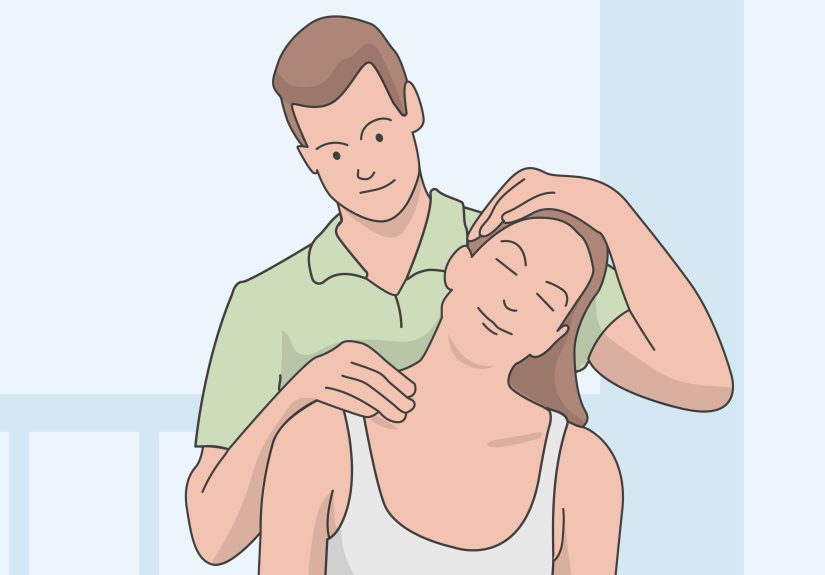
3) Upper trapezius stretch (the classic “desk neck” release)
- Sit tall. Keep one hand under your thigh or hold the chair seat.
- Gently tilt your head away from that side (ear toward opposite shoulder).
- Hold 15–30 seconds. Repeat 2 times each side.
- Skip this if it causes sharp pain or arm symptoms.
Two micro-strength moves (because stability matters)
When pain is calming down, a little strengthening can help support the neck and upper backespecially if your strain came from posture or prolonged sitting.
1) Chin tucks (anti-“text neck” training)
- Sit or stand tall.
- Gently draw your chin straight back (like making a double chin on purposeyes, it feels rude).
- Hold 3 seconds, relax.
- Do 8–12 reps, once or twice daily.
2) Shoulder blade squeezes (upper-back support)
- With arms relaxed at your sides, squeeze shoulder blades down and back.
- Hold 3–5 seconds, relax.
- Do 10 reps, once or twice daily.
If you’re unsure what’s safe, a physical therapist can personalize exercises and progressions. But many mild strains respond well to these basics when done consistently.
Easy Way #3: Fix the TriggerErgonomics, Sleep Setup, and OTC Support
If you treat the pain but keep the cause, your neck will be back in your inbox like, “Hey bestie, it’s me again.” This step is where you stop the loop.
Ergonomic tweaks that actually matter
- Screen height: Raise your monitor so your eyes naturally land near the top third of the screen.
- Keyboard + mouse: Keep elbows near your sides; shoulders relaxed (not auditioning for “shoulder earrings”).
- Phone posture: Bring the phone up to you, not your face down to the phone. Use speakerphone or earbuds for long calls.
- Break schedule: Every 30–60 minutes, do a 30-second “reset”: stand, roll shoulders, gently rotate your neck.
Sleep positions and pillow sanity
Sleep is supposed to be restorative, not a surprise neck obstacle course. In general, aim for a neutral neck position.
- Back sleepers: A pillow that supports the curve of your neck without pushing your head forward can help.
- Side sleepers: Use a pillow high enough to keep your nose aligned with the center of your body (not tilted toward the mattress).
- Stomach sleeping: Often rough on the neck because it forces rotationif possible, transition to side/back or use a very thin pillow.
Over-the-counter pain relief (useful, but read the fine print)
OTC options can help you stay comfortable enough to movebecause movement is part of recovery. Common choices include: acetaminophen for pain, or NSAIDs like ibuprofen/naproxen for pain plus inflammation.
- Follow label directions.
- Avoid NSAIDs (or ask a clinician first) if you have kidney disease, a history of ulcers/bleeding, are on blood thinners, or are pregnant.
- Consider topical options (like menthol or NSAID gels where available) if you want less systemic medicationask a pharmacist for guidance.
When “easy” becomes “get help” (and that’s still a win)
If you’re doing the basics and still not improving, professional care can speed things up. Consider seeing a clinician if:
- Your pain is severe or persists beyond 1–2 weeks without clear improvement.
- You keep re-straining your neck (pattern = clue).
- You need a tailored plan because your work/sport demands specific movement.
Physical therapy often focuses on targeted mobility, strengthening, and posture retraining. Some people also find short-term relief from manual therapy or massage when used alongside exercise and activity adjustments.
How Long Does a Neck Strain Take to Heal?
Many mild strains start improving within a few days, especially when you combine symptom relief (cold/heat, OTC meds if appropriate) with gentle movement and ergonomic fixes. More irritated strains may take a couple of weeks. The trend you want is simple: each day should be a little less stiff, a little more mobile, or a little less reactive.
If you feel stuck at the same pain level, or if symptoms spread into the arm/hand, it’s smart to get evaluated. That doesn’t mean you “failed” at home careit means you’re upgrading to the right tool for the job.
of Real-Life Neck Strain Experiences (Relatable, Not Glamorous)
Neck strains are rarely dramatic. They’re more like sitcom injuries: the kind that happen while doing something deeply unheroiclike staring at a spreadsheet or bravely holding your phone at chest level for three hours because “my arms get tired.”
One super common experience is the “Laptop Hunch Regret”. Someone works from a couch, bed, or kitchen chair that was designed for vibes, not vertebrae. After a few days of leaning forward, their upper traps feel like overcooked steak, and turning the head becomes a cautious, slow-motion operation. What tends to help here isn’t a single magical stretchit’s the combination: ice for the first cranky day, then heat when everything feels tight, plus a monitor raise (even stacking books counts), and frequent micro-breaks. People often report that once they stop “feeding” the posture trigger, the neck finally starts to calm down.
Another classic is the “Sleep Surprise”. You go to bed fine, wake up feeling like your neck got into an argument overnight, and now you’re losing. Often it’s a pillow mismatch: too high, too flat, or shaped like a decorative cloud that provides emotional support but no structural support. The fix people describe is boring (which is good): a pillow that keeps the neck neutral, plus gentle range-of-motion turns and nods after a warm shower. Many also find it helpful to avoid sudden stretches first thing in the morningwarming up, then moving gradually, tends to feel better than trying to “crack it back into place.”
Then there’s the “Weekend Warrior Neck Tax”: painting a ceiling, gardening all day, moving furniture, or assembling something with instructions written in hieroglyphics. The neck gets overworked from prolonged looking up/down or holding tension while lifting. A lot of people feel better when they treat it like any other overuse strain: cold early if it’s really sore, heat later for tightness, and “smart rest” that avoids more overhead work for a couple of days. They often add shoulder blade squeezes and chin tucks once the sharpness fades, which helps because upper-back support takes pressure off the neck muscles that were doing overtime.
Finally, many people recognize the “Stress + Clenching Combo”. They don’t notice they’re tightening shoulders all day until their neck complains loudly. In these cases, relief often comes from pairing physical steps (heat, gentle stretching, massage) with habit cues: a phone alarm that says “drop your shoulders,” a sticky note on the monitor, or a short breathing reset. It’s not that stress is “all in your head” it’s that tension can be very real in your muscles, and your neck keeps receipts.
The shared lesson across these experiences is consistent: the best “easy treatment” isn’t one trick. It’s a simple triocalm the symptoms, move gently, and fix the thing that caused the straindone with enough consistency to let your neck trust you again.
Conclusion
Treating a neck strain doesn’t have to be complicated. Start by calming the area with cold (then heat), keep activity comfortable but not frozen in place, and add gentle motion to reduce stiffness. Then do the part that prevents repeat episodes: adjust your desk, phone habits, and sleep setup so your neck isn’t forced into the same problem all day, every day.
And remember: if you have red-flag symptoms, pain after major trauma, or symptoms that travel into your arm with numbness or weakness, get checked out. Otherwise, most everyday neck strains respond well to these basic stepsand your neck can go back to doing its main job: holding up your head without drama.