Table of Contents >> Show >> Hide
- What Is English Toffee, Exactly?
- Ingredients for Easy English Toffee
- Equipment You Will Want Nearby
- How to Make Easy English Toffee
- Easy English Toffee Recipe Tips for Success
- Troubleshooting Homemade Toffee
- Variations on This Easy English Toffee Recipe
- How to Store and Serve English Toffee
- Why This Is the Best Easy English Toffee Recipe for Beginners
- Conclusion
- Real Kitchen Experiences With Easy English Toffee Recipe
- SEO Tags
If your dream dessert is something buttery, crunchy, chocolatey, and just dramatic enough to make you feel like a Victorian candy baron, this easy English toffee recipe is calling your name. The good news: despite its fancy reputation, homemade English toffee is not culinary sorcery. It is mostly butter, sugar, heat, patience, and the ability to avoid wandering off to answer a text while molten sugar is plotting mischief.
This version keeps things approachable for home cooks while still delivering that classic snap, rich caramelized flavor, glossy chocolate top, and nutty crunch. It is the kind of sweet that looks impressive in a holiday tin, disappears from dessert trays at suspicious speed, and makes people say, “Wait, you made this?” Yes. Yes, you did.
If you have been looking for an easy English toffee recipe that tastes homemade in the best possible way, uses familiar ingredients, and includes helpful troubleshooting so your candy does not stage a rebellion, you are in the right kitchen.
What Is English Toffee, Exactly?
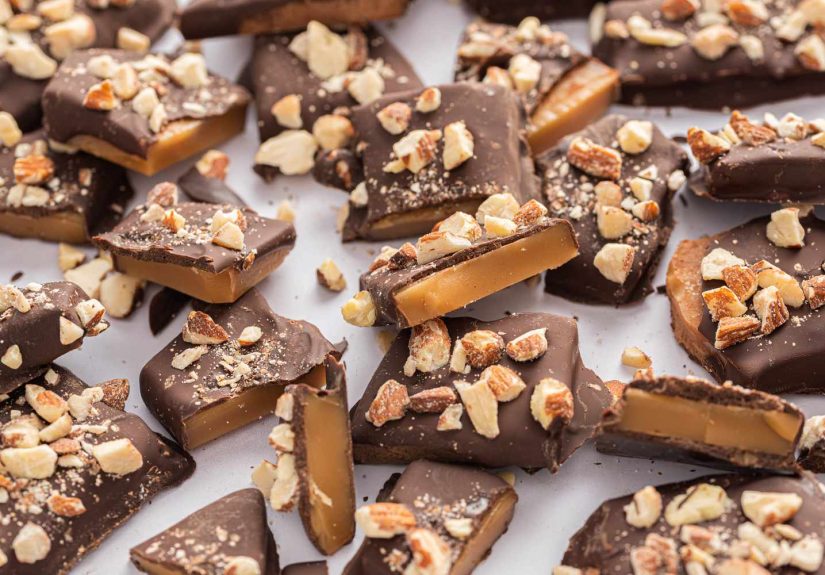
English toffee is a buttery hard candy made by cooking sugar and butter until the mixture reaches a crisp, crackly stage. In many American kitchens, it is often finished with a layer of melted chocolate and a generous scatter of toasted nuts, usually almonds or pecans. The result lands somewhere between candy-shop luxury and “I should probably hide this from myself.”
What makes great toffee special is the contrast. The candy base should be deeply caramelized without tasting burned. The texture should break cleanly instead of bending like a sad piece of taffy. The chocolate adds smooth richness, while the nuts bring warmth, crunch, and a very convincing excuse to eat another piece.
The beauty of this recipe is that it feels elegant but relies on a short ingredient list and straightforward technique. In other words, it is perfect for beginners, holiday bakers, gift givers, and anyone who enjoys a dessert with a little swagger.
Ingredients for Easy English Toffee
For the toffee base
- 1 cup unsalted butter
- 1 cup granulated sugar
- 3 tablespoons water
- 1 tablespoon light corn syrup
- 1/2 teaspoon kosher salt
- 1 teaspoon vanilla extract
For the topping
- 1 cup semisweet or dark chocolate chips
- 3/4 cup toasted almonds or pecans, finely chopped
- Flaky sea salt, optional but highly recommended
Why these ingredients work
The butter gives the candy its rich flavor and signature melt-meets-snap texture. Sugar creates structure and sweetness. Water helps the sugar dissolve more evenly in the beginning, while a little corn syrup helps reduce the odds of graininess. Salt keeps the flavor from tasting flat, vanilla rounds things out, chocolate adds balance, and toasted nuts keep the whole situation from becoming a one-note sugar parade.
Equipment You Will Want Nearby
- A heavy-bottomed saucepan
- A candy thermometer
- A heatproof spatula or wooden spoon
- A parchment-lined baking sheet or 9×13-inch pan
- An offset spatula or spoon for spreading chocolate
Could you make toffee without a thermometer? Technically yes. Should a beginner choose chaos that early in the relationship? Probably not. A thermometer makes the process dramatically easier and much more repeatable.
How to Make Easy English Toffee
1. Prep your pan before the sugar gets bossy
Line a baking sheet or 9×13-inch pan with parchment paper. Lightly grease it if you want extra insurance. Sprinkle about half of the chopped toasted nuts over the pan now if you like a layered look, or save all the nuts for the top if you want a cleaner finish.
2. Start the toffee mixture
In a heavy saucepan, combine the butter, sugar, water, corn syrup, and salt. Set the pan over medium heat and stir until the butter melts and the mixture begins to come together.
3. Cook with patience, not panic
Attach your candy thermometer and continue cooking over medium heat. Stir frequently at first, then more carefully as the mixture deepens in color. You are aiming for 300°F, the classic hard-crack point for crisp toffee. The color should look deep golden to amber, and the aroma should smell rich and nutty, not scorched and tragic.
This is not the moment to crank the heat to high because you are feeling “efficient.” Fast heat can cause separation, uneven cooking, or bitterness. Toffee rewards calm people and punishes impatient ones. It is basically the yoga teacher of candy.
4. Finish the candy
As soon as the mixture reaches 300°F, remove the pan from the heat. Stir in the vanilla quickly and carefully. Pour the hot toffee onto the prepared pan. Let it spread naturally, then gently nudge it into shape if needed. Do not fuss with it too much.
5. Add the chocolate layer
Let the hot toffee sit for 1 to 2 minutes, then sprinkle the chocolate chips over the surface. Wait another minute until they soften, then spread the melted chocolate into an even layer. Sprinkle with the remaining toasted nuts and a pinch of flaky sea salt if using.
6. Cool and break
Let the toffee cool completely at room temperature, or chill briefly if your kitchen runs warm. Once fully set, break it into irregular shards. Perfect squares are nice, but jagged candy pieces have personality. They say, “I’m artisanal,” even when you made them in pajama pants.
Easy English Toffee Recipe Tips for Success
Use a light-colored pan if possible
A lighter pan makes it easier to judge the color of the candy as it cooks. That matters because flavor develops quickly near the end, and the line between deeply caramelized and accidentally smoky is thinner than anyone wants to admit.
Toast the nuts first
Raw nuts are fine. Toasted nuts are better. They bring deeper flavor, better crunch, and that warm roasted note that makes homemade toffee taste like it came from a very expensive holiday shop.
Do not scrape every bit from the saucepan
The last stubborn streaks in the pot can sometimes be slightly overcooked. Pour the toffee confidently, but do not obsess over extracting every final drop like it owes you rent.
Work carefully with hot sugar
Molten sugar is far hotter than boiling water and much clingier. Keep kids, pets, and curious snackers at a safe distance while cooking. This recipe is easy, but it is still candy, not finger paint.
Troubleshooting Homemade Toffee
Why did my toffee turn grainy?
Graininess usually happens when sugar crystals form during cooking. A little corn syrup helps prevent that, and steady heat helps too. Starting with fully dissolved sugar also matters. A heavy pan and patient cooking go a long way.
Why did the butter separate?
This often happens when the heat is too aggressive or the mixture cooks unevenly. Medium heat is your friend. If the mixture looks oily or split, keep stirring gently and lower the heat slightly. Sometimes it will come back together before the final temperature.
Why is my toffee chewy instead of crunchy?
The candy likely did not reach a high enough temperature. For that classic snap, aim for hard-crack stage. A chewy result usually means it stopped too early. Still delicious, but more “enthusiastic caramel” than true English toffee.
Why did my chocolate slide off?
That can happen if the toffee surface is too cool, too oily, or very smooth. Adding the chocolate while the candy is still warm helps it bond better. A light press of chopped nuts into the chocolate also gives it a little structural backup.
Variations on This Easy English Toffee Recipe
Chocolate almond toffee
Use toasted almonds and dark chocolate for a classic version with bold, slightly bittersweet flavor.
Pecan toffee
Pecans add a deeper, buttery flavor that makes the candy taste especially rich and cozy.
Sea salt toffee
A finishing sprinkle of flaky sea salt makes the sweetness pop and keeps each bite balanced.
Espresso toffee
Add a small pinch of espresso powder to the sugar mixture for a subtle roasted note that works beautifully with chocolate.
Nut-free toffee
Skip the nuts entirely. The candy will still be delicious, crisp, and generously dramatic.
How to Store and Serve English Toffee
Once fully cooled, store the toffee in an airtight container. Keep pieces separated with parchment or wax paper if stacking. In a cool room, it should hold well for days, and often much longer if stored carefully. If your kitchen is warm or humid, refrigerating it can help preserve the snap and keep the chocolate neat.
For serving, pile it into a cookie tin, package it in little gift bags, or arrange it on a dessert board with shortbread, candied nuts, and coffee. It also makes a fantastic topping for vanilla ice cream, cheesecake, or brownie sundaes. Basically, if dessert is involved, toffee is rarely the wrong decision.
Why This Is the Best Easy English Toffee Recipe for Beginners
There are plenty of English toffee recipes out there, but beginner-friendly matters. This version focuses on the techniques that actually help: moderate heat, simple ingredients, a reliable temperature target, and toppings that make the candy feel polished without adding unnecessary complications.
It is also flexible. You can swap the nuts, change the chocolate, add a hint of espresso, or leave it almost plain. Once you make one successful batch, the whole process feels much less intimidating. The candy thermometer stops looking like a science fair prop and starts looking like your ticket to buttery glory.
Conclusion
This easy English toffee recipe proves that homemade candy does not have to be fussy to be impressive. With butter, sugar, chocolate, nuts, and a little attention, you can make a crisp, golden candy that looks gift-worthy and tastes even better than store-bought. It is rich, crunchy, sweet, slightly salty, and endlessly snackable. In short, it is the kind of recipe that earns a permanent place in your dessert rotation and your holiday survival kit.
Make one batch, and you will understand why English toffee has such a loyal fan club. Make two batches, and you will understand why people start hiding a private container in the back of the fridge “for guests.” There may never be guests. That is not the point.
Real Kitchen Experiences With Easy English Toffee Recipe
One of the most interesting things about making English toffee at home is how quickly it changes your relationship with candy. Before you make it, toffee seems like one of those treats that appears fully formed in a glossy box with a ribbon, as if it were raised in a finishing school and taught proper table manners. After you make it once, you realize it is actually a very human recipe. It bubbles, it browns, it demands your attention, and then it rewards you in the most satisfying possible way: with a loud, clean snap and a very smug sense of accomplishment.
For many home cooks, the first batch feels like a tiny kitchen adventure. At the beginning, the pot looks harmless enough, just butter and sugar minding their business. Then the mixture starts foaming, darkening, and smelling deeply caramelized, and suddenly the whole room takes on that cozy candy-shop aroma. It is the kind of smell that makes people drift into the kitchen and ask suspiciously casual questions like, “What are you making?” They know something good is happening. They are not subtle.
The experience is also surprisingly sensory. You hear the steady bubbling change as the water cooks off. You watch the color move from pale gold to rich amber. You feel the tiny pulse of urgency at the end when the thermometer climbs into the final zone and it is time to pour. Then comes the immediate satisfaction of sprinkling chocolate over the hot candy and watching it melt into a glossy layer like it always intended to be there. It is a dessert, yes, but it is also a little bit of edible theater.
Another common experience is discovering how generous this recipe feels. A single batch makes enough to share, and English toffee looks wonderful broken into rustic shards and tucked into tins, jars, or bakery bags. It feels homemade in the best sense of the word: personal, warm, and slightly more thoughtful than grabbing a last-minute box of cookies at the store. People remember homemade toffee because it tastes like effort, even when the ingredient list is refreshingly short.
There is also the very real joy of learning from small imperfections. Maybe your first batch is a touch darker than planned. Maybe the chocolate layer is a little uneven. Maybe the pieces break into wild abstract shapes instead of neat little rectangles. None of that ruins the experience. In fact, it is part of what makes homemade toffee charming. It is not supposed to look machine-stamped. Those imperfect shards are proof that a real person stood at the stove and made something special.
Over time, many cooks turn this easy English toffee recipe into a tradition. It becomes a December ritual, a rainy weekend project, or the dessert you make when you want your kitchen to smell like comfort with excellent taste. Some people prefer dark chocolate and almonds. Others swear by pecans and extra sea salt. The recipe adapts to your habits, your cravings, and your snack priorities. That is the beauty of it. English toffee starts as candy, but it often becomes memory: the kind wrapped in parchment, shared with friends, and quietly guarded from the person in your house who always says they will “just take one piece.”