Table of Contents >> Show >> Hide
- The Instagram Account Behind the Viral Subway Mask Photos
- Why Ridiculous Corona Masks Go So Viral
- Types of Ridiculous Corona Masks Seen on the Subway
- 1. Plastic Bag Helmets and Food Container Shields
- 2. Lace, Panties, and “Fashion First” Masks
- 3. Full-Face Costume Masks
- 4. Hoodie, Scarf, and Sweater Pretend-Masks
- 5. Nose-Out, Chin-Strapped, and “Barely There” Masks
- 6. Pet Masks and Matching Outfits
- 7. DIY Engineering Projects: Duct Tape, Filters, and Goggles
- What These Photos Reveal About Mask Culture
- The Serious Side: What Works for Mask Safety on the Subway
- How to Enjoy Viral Mask Content Without Being “That Person” on the Train
- of Real-World Experience: What It Felt Like to Ride the Subway During the Era of Ridiculous Masks
- Conclusion
Riding the subway during the height of the coronavirus pandemic was already an adventure. Add in
some of the most ridiculous “corona masks” ever spotted on public transit, and you’ve
basically got a live-action meme scroll. That’s exactly what the viral Instagram account
@subwaycreatures captured – a stream of homemade, improvised, and totally unscientific
face coverings that became so popular they inspired a full feature on Bored Panda and similar
sites around the world.
Instead of the standard blue surgical mask, subway riders showed up in everything from plastic
bags and cake lids to lace underwear and knitted beanies pulled over their faces. The result:
a strange mix of pandemic anxiety, dark humor, and “you can’t make this up” New York City
energy that the internet could not stop sharing.
In this deep dive, we’ll explore the Instagram page behind the infamous
“ridiculous corona masks” gallery, look at some of the wildest types of DIY face coverings,
and talk about what these photos reveal about human behavior in a crisis. We’ll also balance
the laughs with a reality check on what actually works for mask safety on subways and other
crowded transit systems.
The Instagram Account Behind the Viral Subway Mask Photos
The star of this story is Subway Creatures, a long-running Instagram account devoted to
the weird, wonderful, and occasionally unhinged scenes spotted on New York City’s subway. The
account is submission-based, meaning riders send in their most surprising snapshots from daily
commutes. Long before COVID-19, it was already famous for bizarre costumes, acrobatic performers,
unexpected pets, and all manner of “only in NYC” moments.
When the pandemic hit, the content didn’t stop – it evolved. Suddenly, much of the account’s
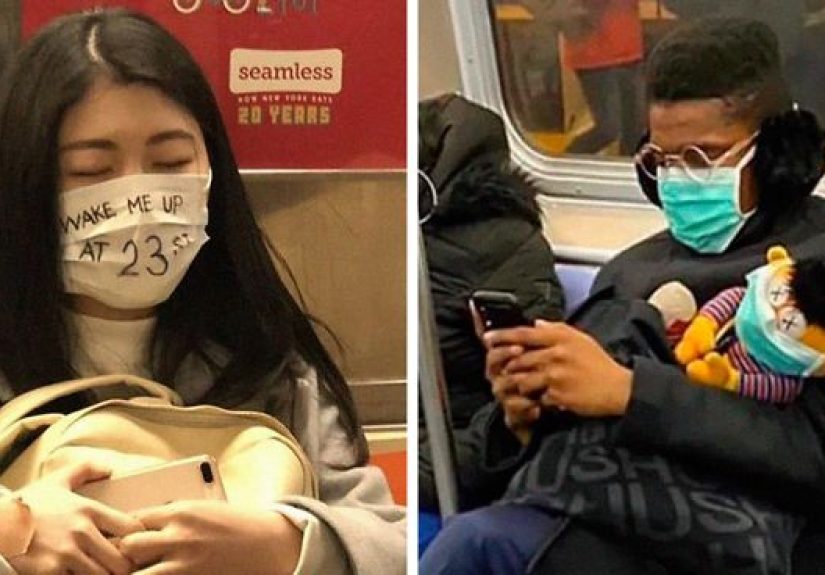
feed was full of improvised corona masks: people wrapping scarves up to their eyes, wearing
plastic buckets over their heads, and trying out every possible object as a face covering.
Sites like Bored Panda and Demilked rounded up these images into viral galleries, including the
now-legendary feature titled
“This Instagram Page Is Posting The Most Ridiculous Corona Masks Spotted On The Subway (37 Pics)”.
While the tone is playful and sometimes savage, the photos also document a real moment in
history: when riders were worried about airborne infection, supplies were inconsistent, public
health guidance kept evolving, and people were just trying to cope – sometimes with creativity,
sometimes with chaos.
Why Ridiculous Corona Masks Go So Viral
It’s easy to laugh at a guy wearing a cake box on his head, but there’s more going on than
internet giggles. These ridiculous corona masks hit a nerve for several reasons:
- They mix fear and comedy. The pandemic was (and is) serious, but humor is one of the
most common coping mechanisms people use under stress. - They’re incredibly relatable. Most of us have had a moment of mask awkwardness – wearing
it wrong, forgetting it at home, or improvising with whatever was in the car or bag. - They show rule-bending in real time. People technically “follow” the mask rule, but in the
most bare-minimum or absurd way possible. - They’re visually unforgettable. A plastic bag helmet or lace underwear mask will always
stand out more in a feed than a regular surgical mask.
In other words, these subway mask fails live at the intersection of health anxiety, rebellious
energy, and meme-ready visuals – pure fuel for the social media era.
Types of Ridiculous Corona Masks Seen on the Subway
The original 37 pics and similar galleries reveal patterns. While each commuter is a unique
disaster, many ridiculous masks can be grouped into categories. Here are some of the most
memorable “designs.”
1. Plastic Bag Helmets and Food Container Shields
One of the most common “innovations” was the plastic bag helmet: a grocery bag, trash bag, or
clear dry-cleaning bag pulled over the entire head. In some photos, riders added a twist:
using cake lids, water cooler jugs, or giant salad containers as makeshift visors.
These contraptions do create a barrier of sorts, but they also trap air, fog up instantly,
and – in worst-case scenarios – pose a risk of suffocation. Actual health guidance has warned
against any mask or covering that makes breathing difficult or uses plastic over both mouth and
nose.
2. Lace, Panties, and “Fashion First” Masks
Then there’s the lingerie category: people wearing lace panties, thin tights, or sheer fashion
scarves as face coverings. Are they technically “wearing something” on their face? Sure. Are
those fabrics designed to filter respiratory droplets? Not at all.
During the pandemic, experts repeatedly emphasized that tightly woven fabric, multi-layer cloth,
surgical masks, and respirators like N95s provide the best protection in public spaces – not
delicate see-through materials.
3. Full-Face Costume Masks
Some riders skipped the medical look altogether and went straight for Halloween: gas masks,
horse heads, LED helmets, even full cosplay masks. The effect is somewhere between dystopian
sci-fi and “please don’t sit next to me.”
Depending on how they’re constructed, some of these masks might actually block droplets, but
many have vents, gaps, or filters that aren’t designed for viruses. They look intimidating,
but looks don’t equal lab-tested protection.
4. Hoodie, Scarf, and Sweater Pretend-Masks
Another genre is the “I’m trying, okay?” mask: people pull a hoodie up over the mouth, wrap a
sweater around their face, or bury their nose in a scarf without securing it. One movement –
or one deep breath – and everything slips out of place.
Public health agencies stressed that, especially in packed indoor spaces like subways, masks
should fully cover both nose and mouth and fit snugly along the sides of the face with no major
gaps. The floppy scarf that keeps falling down doesn’t quite make the cut.
5. Nose-Out, Chin-Strapped, and “Barely There” Masks
Maybe the most familiar category: people technically wearing a mask, but letting it slide under
the nose or hang off the chin like a limp bib. In the subway photos, you can see riders scrolling
on their phone as if nothing is wrong, completely oblivious to the fact that their “mask” is
protecting the exact opposite of what it’s supposed to.
Studies found that consistent mask use in indoor public settings was associated with lower odds
of testing positive for COVID-19 – when the mask was worn correctly and consistently.
A chin strap doesn’t count.
6. Pet Masks and Matching Outfits
Some of the sweetest – and strangest – photos show masked dogs riding the train, their owners
proudly documenting the moment. In certain images, the dog mask is purely decorative; in others,
it looks like a child-sized surgical mask stretched around a snout.
While the cuteness factor is undeniable, animal health experts generally don’t recommend standard
human face masks for pets, as they can restrict breathing and aren’t designed for their anatomy.
Still, the images capture the vibe of early 2020 perfectly: everyone – human and animal – getting
dragged into mask culture.
7. DIY Engineering Projects: Duct Tape, Filters, and Goggles
Rounding out the absurdity are the heavily engineered corona masks: multi-layer contraptions with
duct tape, hardware store filters, protective goggles, and sometimes even snorkels. These riders
look like they’re about to enter a chemical spill rather than a subway car.
Some of these setups might provide real protection if they use proper respirators and filters,
but others are pure theater – more about feeling safe (and looking intense) than following
evidence-based guidelines.
What These Photos Reveal About Mask Culture
Taken together, the 37 ridiculous mask photos and similar collections are more than just
viral content. They’re a snapshot of how people react when:
- Rules are strict, but enforcement is inconsistent.
- Public health messaging changes over time.
- Supplies are sometimes short or unevenly distributed.
- Everyone is stressed, tired, and looking for ways to reclaim control – or at least a laugh.
In that environment, mask-wearing becomes a kind of language. A perfectly fitted N95 says
“I’m taking this very seriously.” A lace mask says “I’ll play along, but on my terms.” A cake
box helmet screams “I’m terrified and also unhinged.” Social media accounts like @subwaycreatures
and coverage on humor sites turned that language into entertainment – and, in a sideways way,
into public commentary on how we handled the pandemic on the ground.
The Serious Side: What Works for Mask Safety on the Subway
Laughing at ridiculous corona masks is healthy; copying them is not. Research and public health
guidance have consistently shown that:
- Proper masks reduce infection risk. Studies in indoor public settings found that
consistent use of face masks or respirators was associated with lower odds of testing positive
for COVID-19, especially when people wore N95/KN95 respirators or surgical masks. - Fit and materials matter. Tightly woven multi-layer fabric, surgical masks, and
respirators like N95s filter particles far better than thin or stretchy materials. - Correct use is non-negotiable. Covering both mouth and nose, minimizing gaps
around the cheeks and nose bridge, and keeping the mask on for the entire ride are key –
especially in crowded subway cars. - Public transit is a high-risk environment in surges. Health agencies have repeatedly
recommended masking on buses, trains, and subways during periods of high respiratory virus
transmission.
None of that means we can’t enjoy the wild photos from the early pandemic days. But the main
takeaway for future surges is simple: leave the plastic bag helmets and lace experiments to
history, and stick with something that’s designed for filtration and breathing safety.
How to Enjoy Viral Mask Content Without Being “That Person” on the Train
If you love scrolling through Bored Panda-style galleries of ridiculous subway masks (and
honestly, who doesn’t?), here’s how to enjoy the humor while still being a responsible rider:
- Save the ridiculousness for your feed, not your commute. When you’re actually
on the train, wear a properly fitted mask if public health guidance suggests it or if you’re
personally trying to reduce risk. - Think of others in the car. Not everyone has the same health status. High-risk
riders, older adults, and immunocompromised people may be relying on you to wear your mask
correctly. - Check updated recommendations. Local and national guidance on mask use changes
over time as conditions and data evolve. Look at current advice rather than relying on early-2020
memories. - Use humor to connect, not to shame. Laugh at the situation, not at specific people.
Many of those “mask fails” came from confusion, fear, or lack of access to better options.
In short: it’s possible to enjoy memes and follow the science at the same time.
of Real-World Experience: What It Felt Like to Ride the Subway During the Era of Ridiculous Masks
To really understand why this Instagram page and those 37 pics hit so hard, you have to imagine
yourself standing in a swaying subway car during the peak of the pandemic. The train doors close,
you grab the overhead bar, and then you look around. Instead of a sea of normal surgical masks,
it feels like someone shuffled together a deck of DIY ideas from the internet and dealt one to
each rider.
In one corner, there’s a guy in a full gas mask, complete with fogged-up lenses, as if he’s
preparing for a chemical incident rather than a commute to Queens. Right across from him, someone
has taken the “improvise a mask” advice a little too literally and stretched a T-shirt over their
nose and mouth, the sleeves tied behind their head. Every time the train brakes, the shirt slides
down a little, and they nudge it back up with the same resigned motion.
The absurdity is funny, but it’s also strangely comforting. In a moment when everyone is anxious,
seeing that other people are also confused – also trying, also failing in dramatic fashion – makes
you feel less alone. You might think, “Okay, at least I’m not the person wearing a salad container
as a helmet.” That tiny bit of distance can make it easier to carry on with the day.
There’s another layer, too: the unspoken etiquette of judging and being judged. You can feel it
when someone side-eyes the person with their mask under their nose, or when you catch someone
subtly adjusting their fit after noticing an N95 across the aisle. The subway becomes a rolling
social experiment in risk tolerance and peer pressure, and the most extreme mask choices are like
neon signs broadcasting, “I’m terrified,” or “I don’t care,” or “I’m here for the bit.”
If you were a regular rider back then, you probably developed your own rituals. Maybe you checked
your mask seal twice before going down the stairs. Maybe you tried to stand away from anyone with
a visibly bad mask, like the guy whose face covering was a single layer of lacy fabric. Or maybe
you played your own private game of “spot the next Subway Creatures submission,” mentally rating
each mask from “actually pretty smart” to “oh no, please don’t breathe near me.”
The longer the pandemic dragged on, the more those daily scenes shifted from shocking to oddly
routine. The first time you saw someone wearing a plastic bag on their head, it was alarming and
surreal. By month six, you’d just nudge your friend and say, “Okay, that’s at least a 9 out of 10
on the ridiculous scale,” and then go back to your podcast. The absurd became normalized, and the
internet – through pages like @subwaycreatures and features on sites like Bored Panda – turned
that normalization into shared memory.
Looking back now, those ridiculous corona masks feel like cultural artifacts. They remind us how
quickly humans adapt, how we use humor to soften fear, and how public transit silently records our
collective moods. Whether you were ever featured in one of those viral galleries or just silently
watched from your corner of the car, you were part of that story.
And maybe that’s why the photos still resonate. They’re not just about bad mask technique. They’re
about resilience, improvisation, and the way a cramped subway car became a stage where people
worked out – in real time – what it meant to live through a global crisis and still get to work
on time.
Conclusion
“This Instagram Page Is Posting The Most Ridiculous Corona Masks Spotted On The Subway (37 Pics)”
isn’t just a catchy headline – it’s a snapshot of a very strange chapter in urban life. The
ridiculous corona masks captured on @subwaycreatures and amplified by Bored Panda and other sites
made us laugh, cringe, and reflect on how we handle fear and rules when the stakes are high.
The images are pure comedy, but they also underline a serious point: when it comes to real-world
health, especially on crowded subways, evidence-based mask use still matters more than creativity.
Enjoy the memes, remember the lessons, and next time mask guidance comes back into play, leave the
cake box at home and reach for something that actually works.
SEO Summary
sapo: From plastic bag helmets to lace underwear face coverings, an Instagram account dedicated to New York’s subway riders turned pandemic mask fails into viral legend. This in-depth look at “This Instagram Page Is Posting The Most Ridiculous Corona Masks Spotted On The Subway (37 Pics)” breaks down the funniest photos, the story of @subwaycreatures, and the real science of what actually makes a mask effective on public transit. Laugh at the chaos, then learn how to avoid becoming the next meme in someone’s camera roll.