Table of Contents >> Show >> Hide
- Why XXL Freshman still matters (even when we pretend it doesn’t)
- How we ranked the best XXL Freshman rappers
- The Best XXL Freshman Rappers of All Time, Ranked
- 1) Kendrick Lamar (Freshman Class of 2011)
- 2) J. Cole (Freshman Class of 2010)
- 3) Future (Freshman Class of 2012)
- 4) Travis Scott (Freshman Class of 2013)
- 5) Kid Cudi (Freshman Class of 2009)
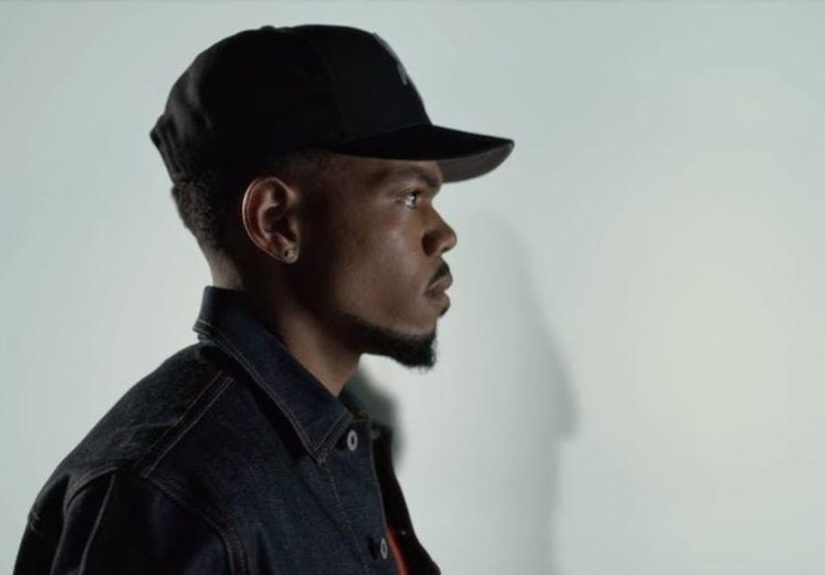
- 6) Chance the Rapper (Freshman Class of 2014)
- 7) 21 Savage (Freshman Class of 2016)
- 8) Megan Thee Stallion (Freshman Class of 2019)
- 9) Mac Miller (Freshman Class of 2011)
- 10) ScHoolboy Q (Freshman Class of 2013)
- 11) Joey Bada$$ (Freshman Class of 2013)
- 12) Wiz Khalifa (Freshman Class of 2010)
- 13) Lil Uzi Vert (Freshman Class of 2016)
- 14) Danny Brown (Freshman Class of 2012)
- 15) Nipsey Hussle (Freshman Class of 2010)
- Honorable mentions (aka: the “don’t yell at me” section)
- FAQ: XXL Freshman Class basics
- Experiences: the XXL Freshman “watch party” feeling
- Wrap-up
Every summer, hip-hop gets the same group text: “Yo… who made XXL Freshman this year?”
And immediately, the arguments begin. Group chats light up. Comment sections turn into boxing rings.
Someone says, “This list is trash,” while secretly refreshing the cypher videos like it’s the Super Bowl.
That’s the magic of the XXL Freshman Class: it’s part talent showcase, part cultural time capsule,
and part “let’s bookmark this so we can brag later” moment. In this ranking, we’re looking back across eras to answer
a deceptively simple question: who are the best XXL Freshman rappers of all timethe ones who used that
“Freshman” stamp as a launchpad (or a warning label) and turned it into real legacy?
Why XXL Freshman still matters (even when we pretend it doesn’t)
XXL’s Freshman tradition dates back to the late 2000s, and it’s always been more than a magazine cover.
The idea is simple: spotlight a class of rising artists and give them a stageespecially through freestyles
and cyphersbefore the rest of the world fully catches up.
XXL itself has been clear that Freshman isn’t a pure “best rapper” contest. It’s about capturing what’s happening
in hip-hop at that moment and betting on who could become tomorrow’s stars. And yes, that’s why the list can feel
messy. Forecasting the future is hardask anyone who said, “Streaming is just a phase.” (How’s that going?)
But the proof is in the alumni. Over the years, the Freshman cover has included artists who went on to become
festival headliners, chart fixtures, and straight-up genre shapersplus a few “remember when” names that make you
grateful you don’t have to submit a résumé to the internet.
How we ranked the best XXL Freshman rappers
Ranking “best” is like ranking your favorite pizza toppingssomebody’s going to yell, and they might even be right.
So we used a balanced scorecard that rewards greatness across different lanes:
- Artistry & rapping ability: lyrical skill, originality, storytelling, and voice.
- Catalog strength: projects that hold up over time, not just a hot month.
- Cultural impact: influence on sound, style, and the next generation.
- Longevity: sustained relevance beyond the Freshman moment.
- “Freshman-to-legend” leap: how big the jump was from “promising” to “defining.”
One more note: we’re ranking XXL Freshman rappersmeaning artists who were actually selected for a
Freshman class. If your favorite isn’t here, don’t panic. Scroll to honorable mentions
before you start drafting the angry essay.
The Best XXL Freshman Rappers of All Time, Ranked
1) Kendrick Lamar (Freshman Class of 2011)
Kendrick is the rare artist who’s elite at everything: technical rapping, concept-building, album crafting,
cultural commentary, and making songs that still slap in the car. His post-Freshman run didn’t just validate the pick
it raised the bar for what “rapper” can mean in popular culture.
The ultimate flex: his album DAMN. won the Pulitzer Prize for Musica milestone that signaled
hip-hop’s place in the highest levels of American arts recognition. If you’re building a “best XXL Freshman ever”
shortlist, Kendrick is the name everyone reluctantly agrees on before resuming chaos.
2) J. Cole (Freshman Class of 2010)
Cole’s career is a masterclass in growth: sharp writing, soulful production, and an ability to speak to fans without
sounding like a motivational poster with a beat. He’s also one of the era’s most consistent album artistssomeone who
can drop a project and turn the entire week into a discussion forum.
From chart-topping albums to years of cultural presence, Cole turned the Freshman stamp into something closer to a
long-term brand of trust: “If he’s on it, it’s worth your time.”
3) Future (Freshman Class of 2012)
If you’ve listened to mainstream rap any time in the last decade, you’ve heard Future’s fingerprintsdirectly or through
the artists he influenced. He helped define modern trap’s emotional palette: melodic but tough, vulnerable but brash,
futuristic but rooted in street storytelling.
Future’s legacy isn’t just hits. It’s a whole approach to cadence, mood, and production that shaped the sound of an era.
4) Travis Scott (Freshman Class of 2013)
Travis turned rap into event architecture. His music is engineered for maximum atmosphere: big drums, huge hooks,
and production that feels like it was designed for arenas and fireworkssometimes literally.
Whether you rate him more for rapping or for sonic world-building, his influence on modern mainstream rap aesthetics is
undeniable. When people talk about “album experiences,” he’s one of the reasons that phrase exists.
5) Kid Cudi (Freshman Class of 2009)
Cudi helped normalize a whole emotional vocabulary in rapintrospective, melodic, and vulnerable in a way that opened
doors for generations of artists who didn’t want to pretend they were invincible 24/7.
His impact is bigger than any single hit: he helped shift the culture toward accepting “feelings in the music” as a
strength, not a soft spot.
6) Chance the Rapper (Freshman Class of 2014)
Chance captured the mixtape-era lightning in a bottlebright, joyful, and creatively fearlesswhile also proving that
independence could be a serious power move. For a stretch, he felt like the face of an optimistic new lane in rap.
Even with the internet’s famously short memory, Chance’s peak years remain a reference point for what “buzz” looks like
when it’s backed by real artistry.
7) 21 Savage (Freshman Class of 2016)
21 is a perfect example of an artist leveling up in public. Early on, the appeal was minimalism and cold precision.
Over time, he expanded into sharper writing, stronger song-making, and a calm authority that makes even quiet bars feel
heavy.
He’s also one of the most successful “Freshman-to-mainstay” storiesproof that evolving without losing your voice is
a superpower.
8) Megan Thee Stallion (Freshman Class of 2019)
Megan brought star power and high-level rapping in the same packagecharisma, cadence, and crowd control, plus the kind
of technical skill that stands up in any room. She didn’t just “make it”; she dominated moments.
In a tradition that’s often male-heavy, her Freshman selection also felt like XXL acknowledging what the culture was
already hearing: elite talent with real crossover strength.
9) Mac Miller (Freshman Class of 2011)
Mac’s story is one of the most beloved growth arcs in modern hip-hop: from youthful, catchy early work to increasingly
thoughtful and musically ambitious projects. He became a true album artist who kept expanding his sound and his writing.
His legacy lives in the respect he earned across scenesrap, indie, jazz-influenced productionand in how many artists
cite him as a creative model.
10) ScHoolboy Q (Freshman Class of 2013)
Q’s greatest strength is that he can be ferocious and hilarious in the same breath. His delivery is unmistakable, his
songs are packed with personality, and his catalog includes projects that defined an era of West Coast rap’s modern
mainstream resurgence.
If you like rap that feels dangerous but still has replay value, Q is one of the best to ever come out of the Freshman
pipeline.
11) Joey Bada$$ (Freshman Class of 2013)
Joey arrived as a lyrical throwback who still sounded freshsharp bars, confident presence, and a sense of craft that
made him stand out even in a stacked class. He’s stayed relevant by blending technique with real-life themes and
polished song-making.
In a Freshman tradition that sometimes rewards hype, Joey’s staying power is rooted in skilland that’s always a good bet.
12) Wiz Khalifa (Freshman Class of 2010)
Wiz mastered a specific kind of effortless cool: smooth flows, memorable hooks, and music that soundtracks good times
without feeling disposable. His mixtape momentum turned into lasting mainstream success, and he became a defining voice
for a whole stoner-pop-rap era (without needing to take himself too seriously).
13) Lil Uzi Vert (Freshman Class of 2016)
Uzi helped push rap’s melodic, emo-leaning edge into the center of pop culture. Whether you call it rap, rock energy, or
pure vibe engineering, Uzi’s influence on newer artists’ vocal styles and aesthetics is everywhere.
The key: Uzi makes experimentation feel fun, not like homework.
14) Danny Brown (Freshman Class of 2012)
Danny Brown is proof that “best” doesn’t always mean “biggest.” His voice is instantly recognizable, his writing is
daring, and his albums are packed with risks that pay off for listeners who like their rap a little weirdin the best way.
He’s a critics’ favorite for a reason: he expands what hip-hop can sound like while still delivering real bars.
15) Nipsey Hussle (Freshman Class of 2010)
Nipsey represented a different type of greatness: long-view thinking, community focus, and an entrepreneurial approach
that inspired artists to build ownership alongside art. Musically, he combined motivation and realism with a steady,
confident presence.
His legacy continues to resonate because it was bigger than music aloneand because it challenged artists to think about
what success should mean.
Honorable mentions (aka: the “don’t yell at me” section)
These Freshman alumni have strong cases too, depending on what you value mostlyricism, influence, hits, catalog, or pure
“I had to run that back” energy:
- Big Sean (2010): longevity, hitmaking, and a steady evolution.
- Freddie Gibbs (2010): elite rapping and a deep, respected catalog.
- Wale (2009): sharp writing and a major presence in late-2000s/early-2010s rap.
- YG (2011): West Coast anthems and cultural imprint.
- Anderson .Paak (2016): a rare musician-rapper hybrid with real crossover.
- Denzel Curry (2016): intensity, craft, and consistent growth.
- Polo G (2020): melodic storytelling and mainstream success.
Also worth remembering: sometimes the “best” Freshman isn’t the one who wins the cypher that yearit’s the one who
builds a decade-long career after the cameras leave.
FAQ: XXL Freshman Class basics
What is the XXL Freshman Class?
It’s XXL’s annual selection of rising hip-hop artiststypically a class-sized snapshot of who’s buzzing and who the
magazine believes could become major figures. XXL has described it as a platform and a prediction, not a strict “best
rapper” contest.
When did XXL Freshman start?
The Freshman concept goes back to the late 2000s (with early classes beginning in 2007). It’s now a long-running
tradition that regularly sparks debateand that debate is basically part of the rollout.
What’s the “10th spot” people talk about?
In some years, XXL has used a fan-voted slot (“10th spot”) so audiences can help pick who gets on the coverturning the
list into an interactive cultural argument. Because of course it did.
Experiences: the XXL Freshman “watch party” feeling
If you’ve ever followed the XXL Freshman rollout, you know it’s not just a listit’s a season.
There’s a specific rhythm to it, like a holiday that shows up every year with the same traditions and the same drama.
First comes the reveal, when your feed turns into a split-screen of celebration and outrage. Somebody posts,
“Finally! They got it right,” while another person types, “This is the downfall of hip-hop,” with the intensity of a
courtroom closing argument.
Then comes the scouting phase: people who already know every artist start acting like proud relatives (“I told y’all
they were next”), and people who don’t know the names start speed-running the catalog like it’s homework due at midnight.
It’s a surprisingly fun way to discover music, because the conversation forces you to listen closely. You don’t just hear
a songyou hear it through the lens of a debate. Is this artist actually great, or just hot right now?
And even when the answer is “both,” it still makes you pay attention.
The freestyles and cyphers are where the experience becomes real. Watching a cypher for the first time is like walking
into a gym and seeing who’s here to play around and who’s here to set a personal record. Some artists look totally
comfortable, like the camera is their natural habitat. Others look like they just realized the whole internet is about
to grade them with no curve. And that tensionconfidence vs. nerves, charisma vs. technical skillis part of why people
keep coming back.
There’s also a strange kind of time travel built into XXL Freshman fandom. You can watch an older cypher and feel the
“before” moment: the instant when someone is still a rising name, before the headlines, before the stadium tours, before
the awards, before everybody has an opinion that sounds like it’s been rehearsed for years. It can be weirdly emotional,
even if you’re not trying to be sentimental. You remember what it felt like when an artist was a secret you shared with
a friend, not a name printed on festival posters.
And then there’s the competitive fun of it: people love picking “their” Freshman. It’s like drafting a fantasy team,
except the points are cultural impact and the trophies are screenshots of old tweets. Everyone wants the receipt that
proves they saw it coming. “I called it!” is basically the official slogan of Freshman season. You see it when someone
from a class blows up years later and the comments fill with victory laps, as if predicting talent is an Olympic sport.
The best part is that XXL Freshman can remind you that hip-hop is bigger than one lane. In the same tradition, you’ll see
lyrical purists, hitmakers, experimental artists, regional stars, and genre-benders all sharing the same spotlight.
The list isn’t perfectnothing that tries to summarize an entire culture ever isbut it creates a moment where people
argue, listen, revisit, and discover. And in a world where music moves at scroll-speed, that shared attention is rare.
So even if you roll your eyes at the picks, you might still find yourself watching the cyphers anyway. Not because you
have to agree with the list, but because it’s one of the few traditions that still feels like the culture gathering in
the same roompassing the aux, comparing notes, and deciding who’s really got next.