Table of Contents >> Show >> Hide
Spin a Lazy Susan in the middle of a noisy dinner table and you’ll see something magical happen.
The salt glides toward your uncle, the hot sauce cruises to your teen, and nobody has to play
“pass the pickles” across a crowded table. This simple rotating tray solves an age-old problem:
how do you feed a bunch of hungry people without an army of servers?
But for all its everyday usefulness, the big question remains: who on earth was Susan,
and why was she so lazy? Spoiler: there is no single sleepy Victorian maid to blame.
The truth is more interestingand says a lot about changing kitchens, shrinking servant staffs,
and clever marketing.
What Exactly Is a Lazy Susan?
At its core, a Lazy Susan is just a rotating tray. Traditionally round, it sits
on a table or countertop and spins on ball bearings so every diner can reach shared dishes with a
quick flick of the wrist. Modern versions come in everything from bamboo and acacia wood to clear
acrylic and stainless steel, and you’ll find them in:
- Dining tables, for family-style meals
- Kitchen cabinets and pantries, to tame spices and condiments
- Refrigerators, so the hot sauce doesn’t disappear into the abyss
- Bathroom counters and makeup vanities
The design is simple, but the function is powerful: you get easy access in small or
awkward spaces without having to dig, shuffle, or knock things over. No wonder Lazy Susans
have become a staple in modern kitchen organization and cabinet hardware.
A Short History of the Spinning Tray
While the name “Lazy Susan” is fairly modern, the rotating serving surface itself has
been around for centuries. In the 1700s, England’s upper classes used pedestal tables with rotating
tops for tea, wine, and dessert tastings. These early “self-service” tables helped diners serve
themselves without calling for a butler every time they wanted more port.
By the 18th and 19th centuries, the broader idea of a silent helper at the table evolved into what
people called a dumbwaiter. Sometimes the term meant a wheeled serving cart; sometimes
it described a small elevator used to send food between floors. In other cases, it referred to a
tabletop stand or rotating tray that held dishes and condiments. The common theme:
something that serves you without talking back.
In the United States, spinning servers became popular in communal settings like utopian communities,
where everyone shared meals and “self-service” was a practical necessity. Patents from the late 19th
century describe “self-waiting tables” with improved mechanisms to keep crumbs from jamming the
turntable and to help the tray spin smoothly under heavy dishes.
So by the time the 20th century rolled in, the hardware of the Lazy Susan was already familiar.
What it didn’t yet have was the catchy name.
The Name Game: So Who Was Susan?
Here’s the fun part: despite all sorts of confident stories, no one can say with certainty who
Susan wasor whether she was a real person at all. Historians generally agree that the name’s
true origin has been lost to time. What we do have is a handful of competing theories and some early
written clues.
The Earliest “Lazy Susan” Mentions
Newspaper references from the early 1900s mention a revolving serving tray nicknamed “Lazy Susan” and
describe it as a way to solve the “servant problem”polite code for “we can’t (or don’t want to) keep
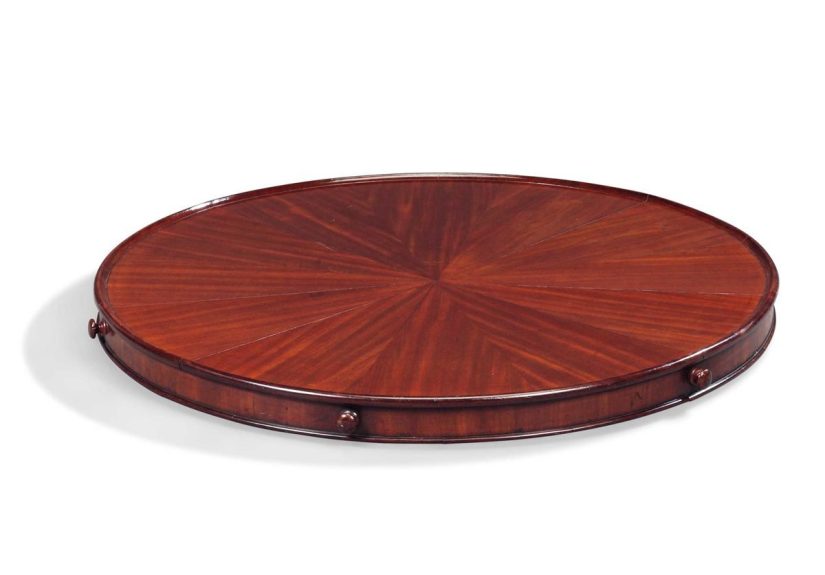
a full staff anymore.” Department-store ads in the 1910s promoted mahogany “revolving servers” and
“Lazy Susans” as modern conveniences for the self-service table, aimed squarely at middle-class families
trying to live like the elite, but with fewer household employees.
By the early 1930s, dictionaries had started listing “Lazy Susan” as a standard term. The device had
fully entered the mainstream and the name stuckno matter who Susan was.
The Thomas Jefferson Legend
One of the most popular folk tales credits Thomas Jefferson with inventing the Lazy Susan
in the 18th century and naming it after his daughter, who allegedly complained about being served last
at dinner. It’s a charming story: Dad hears Susan’s plea, designs a spinning tray, and suddenly dinner
is fair.
The problem? There’s no solid historical evidence to back it up. Jefferson used various
self-service gadgets, revolving book stands, and a complex dumbwaiter system at Monticello, but there’s
no documented Lazy Susan sitting on his dining table or any record of him naming such a device after
his daughter. The Jefferson story likely survives because it feels satisfying, not because it’s proven.
The Thomas Edison Theory
Another theory ropes in Thomas Edison. Because he invented the phonograph (which spins like
a record on a turntable), some people like to imagine he also invented the Lazy Susan or at least inspired
its mechanism. In this version, the name “Susan” is sometimes tied to a mythical daughter of Edison’s,
even though no historical documentation supports that either.
Again, it’s a neat story, but there’s no definitive link between Edison’s workshop and your
spinning tray of soy sauce.
The “Lazy Servant” Idea
Another popular explanation is more cultural than personal. In the 18th and 19th centuries, household
servants were often given generic female namesthink “Betty,” “Molly,” or “Susan”even when that wasn’t
their real name. Some language historians suggest that “Lazy Susan” could have started as a slightly
snarky nickname for a mechanical “servant” that never complained, never took breaks, and never dropped
the gravy boat.
Under this theory, the name is a joking nod: your spinning tray is the “lazy” helper that sits there
and silently does the work of a human server. It’s not kind, exactly, but it does fit with the social
attitudes of the time and the way products were advertised, especially as families reduced staff and
turned to gadgets instead.
Was There Ever a Real Susan?
Could there have been an actual Susana maid, a cook, or a family memberwhose name was slapped onto the
device and then copied by others? It’s possible, but so far nothing in the historical record points to
a single, definitive Susan who started it all.
Most historians land on a simple conclusion: “Lazy Susan” is a clever marketing nickname that grew out
of existing dumbwaiter-style gadgets and cultural attitudes about servants, not a tribute to one specific
woman.
The “Real Reason” Behind the Name
So if Jefferson and Edison probably aren’t the culprits, what’s the real story?
When you line up the evidenceearly 1900s ads, shifting household labor, and the boom in “self-service”
gadgetsthe most likely answer looks like this:
- Rotating servers and dumbwaiter-style devices already existed and were popular among wealthy and communal households.
-
In the early 20th century, many families were cutting back on live-in staff, especially after
economic downturns and changing social expectations. -
Manufacturers and retailers needed a way to pitch these devices as the perfect substitute for a full
waitstaffa quiet “servant” that lived in the center of the table. -
A catchy, slightly cheeky name like “Lazy Susan” made the product feel friendly, modern, and a bit humorous,
which helped it stand out in catalogs and advertisements.
In other words, the “real reason” is less about one person and more about marketing and technology. The Lazy
Susan is the poster child for a moment when households were beginning to rely more on mechanical helpers
than human ones. The name captured that shift in a way that felt lighthearted enough to use at the dinner table.
How the Lazy Susan Took Over Modern Kitchens
Fast forward to today and Lazy Susans have moved far beyond formal dining rooms. Modern homeowners and
organizers love them for one simple reason: they make awkward spaces usable.
Corner Cabinets and the “Black Hole” Problem
Every kitchen has that one cabinet where items go in and are never heard from again. Corner bases are
notorious for this. Install a Lazy Susan inside, though, and suddenly:
- Pots, pans, and lids glide into view instead of getting buried in the back.
- Spices and sauces stop hiding in dark corners.
- You use every inch of storage instead of wasting prime real estate.
Adjustable, kidney-shaped, or pie-cut Lazy Susans are specifically designed to swing out from tight corners,
making them a favorite upgrade in kitchen remodels and DIY cabinet makeovers.
Pantries, Fridges, and Everything Else
In pantries, smaller turntables keep oils, vinegars, and sauces from getting lost behind cereal boxes.
In refrigerators, clear, rimmed Lazy Susans keep jars from toppling while still allowing you to see the
label without doing yoga in front of the open door. Organizing pros often recommend them for:
- Condiments and sauces
- Nut butters and jams
- Snack stations
- Coffee bars and tea stations
- Bathroom skincare and hair products
The modern Lazy Susan has traded heavy carved wood for lightweight plastics, bamboo, non-skid surfaces,
and raised edges to keep everything in place. But the basic promise remains unchanged: spin it, grab it,
and get on with your day.
Why the Name Still Matters
You could argue that the name “Lazy Susan” is outdatedor even unfairto whoever Susan might have been.
Yet the phrase has become so embedded in everyday language that it functions as a shorthand for
convenient access. Most people don’t think about servants or social status when they hear it; they
think about that handy spinning tray in their corner cabinet.
The name also reminds us that a lot of household technology sits at the intersection of labor, class,
and clever branding. Every time a new gadget shows up to “save you time,” it’s worth asking:
what kind of work is it replacing, and what story is the marketing trying to tell?
In the case of the Lazy Susan, the story is that of a silent helper who doesn’t ring a bell or slip on the
dining-room rug. She just spins, patiently, until someone needs the soy sauce.
Real-World Experiences with Lazy Susans
History and etymology are fun, but the Lazy Susan really proves itself in everyday life. If you’ve lived
with one for a while, you already know it has a personality. Sometimes it’s the hero of the kitchen;
sometimes it’s the chaos coordinator who deserves a raise.
The First-Time Spin
Ask any new homeowner about their first Lazy Susan and you’ll hear something like this: “I didn’t realize
how much stuff I owned until I watched it all go around in a circle.” That first organizing session is
strangely satisfying. You line up your spices, sauces, or baking supplies, give the tray a gentle push,
and suddenly everything feels intentional instead of random.
The real joy shows up the next time you cook. Instead of rummaging through a cluttered cabinet for cumin,
you spin, spot the label, and move on. That tiny winsaving five seconds and avoiding a mini avalanche of
bottlesadds up when you cook every day.
The Family-Style Dinner Upgrade
Lazy Susans also shine at big family dinners. Picture a long table covered with platters of food. Normally,
people at each end of the table are locked in a power struggle over who reaches the mashed potatoes first.
Add a large Lazy Susan in the center, and suddenly the mood shifts from “hand me that” to “give it a spin!”
Kids, especially, love the sense of control. They can rotate the tray to reach the salsa or salad dressing
without asking an adult to pass things down the line. For hosts, it’s a quiet superpower: guests serve
themselves, plates stay moving, and nobody has to keep jumping up to fetch forgotten condiments.
When a Lazy Susan Backfires
Of course, no tool is perfect. Overload a corner-cabinet Lazy Susan with heavy pans, and it can feel more
like a spinning disaster zone than a clever organizer. The same goes for tiny bottles that tip over every
time you rotate the tray. Most people eventually learn a few ground rules:
- Heavy items toward the outside edge, lighter items in the center.
- Group similar items together so you’re not spinning through five kinds of vinegar to find the sugar.
- Give it an occasional clean-out; otherwise, it becomes a rotating museum of expired sauces.
Once you respect those limits, the Lazy Susan becomes a dependable teammate instead of a kitchen prank.
Small Spaces, Big Impact
In small apartments, Lazy Susans often become make-or-break tools for storage. A single turntable
on a narrow shelf can hold a week’s worth of cooking oils and seasonings. Another one in the bathroom turns
a cluttered countertop into a neat carousel of skincare, cotton pads, and hair products. For renters who
can’t remodel or add custom cabinetry, a couple of well-placed turntables can make the difference between
“everything has a place” and “everything lives in a pile.”
That’s part of why the Lazy Susan keeps getting rediscovered by new generations. Home organization trends
rise and fall, but the basic idea of spinning storage is hard to beat. It’s simple, visual, and oddly
satisfyinglike giving your clutter a quick, graceful dance instead of a wrestling match.
From Servant Substitute to Everyday Essential
When you connect those modern experiences back to the name, the transformation is striking. A gadget that
started as a substitute for household staff is now a friendly, nearly invisible part of everyday
life. Whether you call it a Lazy Susan, a turntable, or just “that spinning thing in the corner cabinet,”
it quietly does what it was always meant to do: make sharing and storage easier for everyone sitting at
the tableor digging through the pantry.
So the next time you give your Lazy Susan a spin, you can smile at the mystery wrapped up in its name.
We may never know exactly which Susan inspired it, but we do know this: in a world full of overcomplicated
gadgets, a simple spinning tray has managed to stay relevant for centuries. That doesn’t sound lazy at all.