Table of Contents >> Show >> Hide
- How I Chose the Best Salt Spreaders of 2025
- The 8 Best Salt Spreaders of 2025
- 1. Best Overall: Chapin 88200A 80-Pound SureSpread Residential Ice Melt and Salt Spreader
- 2. Best Value: Scotts Elite Spreader
- 3. Best for Rock Salt: EarthWay Polar Tech 90950
- 4. Best for Large Driveways: Agri-Fab 45-0548 130-Pound Ice Melt Push Spreader
- 5. Best Mid-Size Workhorse: Brinly PS10-70BH 70-Pound Broadcast Ice Melt Spreader
- 6. Best Commercial-Grade Walk-Behind: Meyer Hot Shot-85
- 7. Best Precision Option: SaltDogg WB400 Walk-Behind Drop Spreader
- 8. Best Handheld Salt Spreader: Scotts Whirl Hand-Powered Spreader
- What Type of Salt Spreader Should You Buy?
- What to Look for Before You Buy
- Common Salt Spreader Mistakes
- Real-World Winter Experience: What These Spreaders Teach You After a Few Storms
- Final Verdict
- SEO Tags
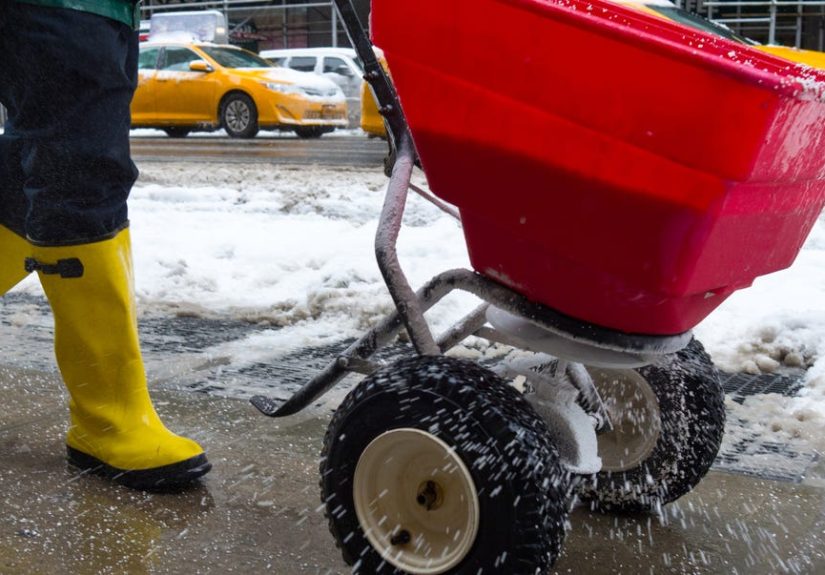
If winter at your house means icy steps, a slippery driveway, and at least one dramatic “whoa-whoa-whoa” moment while carrying groceries, a good salt spreader is not a luxury. It is a sanity-saver. The right spreader helps you apply ice melt evenly, waste less product, and avoid turning your walkway into a salty moonscape.
For this roundup, I compared the salt spreaders that kept showing up in trusted U.S. review coverage, manufacturer lineups, and major retailer listings. Instead of blindly crowning the biggest hopper as the winner, I looked at what actually matters in the cold: clog resistance, control, corrosion resistance, wheel quality, spread pattern, and how easy each model is to use when you are bundled up like a human burrito.
The result is a practical guide to the best salt spreaders of 2025 for every type of winter job, from narrow front steps to long suburban driveways and small commercial lots. Some are all-purpose machines that can pull double duty in warmer months for seed and fertilizer. Others are winter specialists that look at a bag of rock salt and say, “Cute. Is that all you’ve got?”
How I Chose the Best Salt Spreaders of 2025
A salt spreader can look impressive on a product page and still become a rolling disappointment in real life. That is why I focused on five things: capacity, spread control, material compatibility, build quality, and ease of movement.
Capacity matters because refilling a tiny hopper in freezing wind gets old fast. Spread control matters because you want salt on the pavement, not in your flower beds. Material compatibility is huge too, since some spreaders handle bagged ice melt beautifully but get grumpy with chunkier rock salt. Then there is build quality: rust-resistant hoppers, enclosed gearboxes, stainless hardware, and solid pneumatic tires all make a real difference once slush, moisture, and road grime enter the chat.
Finally, there is maneuverability. A spreader that feels great on a dry garage floor can become a chore on uneven sidewalks, icy drive aprons, and snow-packed edges. The best models balance durability with control, so you can keep moving without fighting the machine.
The 8 Best Salt Spreaders of 2025
1. Best Overall: Chapin 88200A 80-Pound SureSpread Residential Ice Melt and Salt Spreader
If you want one recommendation that suits most homeowners, this is the one. The Chapin 88200A hits the sweet spot between residential-friendly size and serious winter performance. Its 80-pound capacity is large enough for a typical driveway and sidewalk route without turning the spreader into a tank, and its spiked auger is designed to help break up clumps before they jam the flow.
What really makes it stand out is balance. The pneumatic tires help it roll over uneven surfaces, while the adjustable gate and baffles give you better control than bargain-bin models that fling salt like confetti at a parade. It is the kind of spreader that feels thoughtfully designed for winter instead of simply rebranded from lawn season.
Best for: Most homeowners who want a dependable walk-behind spreader for regular winter use.
Why it wins: Strong capacity, good control, and a design that is built specifically for ice melt and salt.
2. Best Value: Scotts Elite Spreader
The Scotts Elite earns its spot because it is versatile, widely available, and surprisingly polished for the price range. This is an all-season spreader, which means it can handle seed, fertilizer, and ice melt without demanding a second machine in the garage. Its dual-rotor design helps with even distribution, and the 6-foot spread pattern makes it fast enough for medium-size driveways and walkways.
The Elite is a smart choice for homeowners who do not want a dedicated winter-only tool. It is especially appealing if you already use a spreader in spring and fall and just want one machine to work year-round. The only catch is that Scotts advises against using oversized, unscreened rock salt, so this one shines brightest with free-flowing ice melt products.
Best for: Budget-conscious buyers who want year-round value.
Why it wins: Accurate spreading, useful speed, and four-season versatility.
3. Best for Rock Salt: EarthWay Polar Tech 90950
The EarthWay Polar Tech 90950 feels like the answer for people who are tired of consumer-grade spreaders acting dramatic around coarse material. This 50-pound model is built with winter use in mind, and its design focuses on keeping material flowing smoothly while maintaining a controllable spread pattern. It is compact, but it punches above its weight.
This is a strong pick for people who want something sturdier than a light residential spreader without jumping to a huge commercial unit. The frame and control linkage feel purpose-built, and the pneumatic tires help it move confidently through slush and packed snow. If your winter routine includes chunkier ice melt or bagged rock salt, this model deserves serious attention.
Best for: Homeowners and small-property managers using tougher winter materials.
Why it wins: Winter-focused design, solid control, and better confidence with coarse material.
4. Best for Large Driveways: Agri-Fab 45-0548 130-Pound Ice Melt Push Spreader
Some driveways are less “driveway” and more “small airport runway.” For those, the Agri-Fab 45-0548 is the better tool. Its 130-pound hopper means fewer refill stops, which is exactly what you want when it is cold enough to make your eyelashes feel judgmental. This model also includes practical winter extras like a grate, cover, and deflector.
The grate improves material flow, the cover helps keep your product dry, and the deflector helps narrow the spread when you do not want to shower the lawn edge or garage apron. That trio makes it a standout for bigger residential jobs where efficiency matters, but precision still counts.
Best for: Long driveways, corner lots, and larger residential routes.
Why it wins: Big hopper, smart winter accessories, and less time spent refilling.
5. Best Mid-Size Workhorse: Brinly PS10-70BH 70-Pound Broadcast Ice Melt Spreader
The Brinly PS10-70BH is the spreader for shoppers who like adjustability and do not mind paying for a better-built machine. Its 70-pound capacity keeps it manageable, while the corrosion-minded details, including stainless fasteners and a rugged polypropylene hopper, make it appealing for repeated winter use.
One of its best features is the calibration dial with a wide range of settings. That matters when you switch products or want finer control instead of dumping out too much ice melt in one pass. This model sits in a very useful middle ground: bigger and more capable than entry-level spreaders, but not so large that it becomes annoying to store or maneuver.
Best for: Buyers who want more control without going fully commercial.
Why it wins: Excellent adjustability, solid materials, and a practical 70-pound size.
6. Best Commercial-Grade Walk-Behind: Meyer Hot Shot-85
Meyer knows snow equipment, and the Hot Shot-85 feels like a spreader for people who are done fooling around. With an 85-pound capacity and professional-grade positioning, it is a strong match for contractors, maintenance crews, and homeowners who would rather buy one tough spreader than replace a cheaper one every few winters.
It is designed for bagged rock salt and other free-flowing granular materials, which makes it a good fit for users who want a winter-first tool. If your priority is durability, a more work-oriented design, and the confidence that comes with a snow-and-ice-focused brand, the Meyer deserves its place high on the shortlist.
Best for: Frequent winter users and light commercial routes.
Why it wins: Professional-grade build, strong capacity, and winter-specific credibility.
7. Best Precision Option: SaltDogg WB400 Walk-Behind Drop Spreader
Broadcast spreaders are great for speed, but sometimes you want precision, not a salt halo. That is where the SaltDogg WB400 shines. This is a drop spreader, which means it places material in a more controlled path rather than throwing it wide. It is especially handy near sensitive foliage, narrow sidewalks, decorative hardscaping, or areas where you want to avoid overspread.
Its 200-pound capacity is seriously impressive, and the 44-inch profile can cover a path in one pass. That combination makes it a bit of a unicorn: high-capacity and highly controlled. For facilities teams, property managers, or meticulous homeowners, it is a very smart specialty choice.
Best for: Precision spreading on sidewalks, paths, and landscaped areas.
Why it wins: Controlled drop design, huge capacity, and excellent coverage for straight runs.
8. Best Handheld Salt Spreader: Scotts Whirl Hand-Powered Spreader
Not everyone needs a walk-behind machine. If your winter battle zone is a short front walk, porch steps, a side entrance, or the patch around the mailbox, the Scotts Whirl is a practical little hero. It is hand-powered, compact, and designed for smaller areas up to about 1,500 square feet.
The big appeal here is simplicity. It is easy to carry, easy to store, and easy to use when you only need a quick application in tight spaces. This is not the tool for a giant driveway, but for spot treatment and smaller residential jobs, it is refreshingly convenient. It is also a nice year-round backup for seed and fertilizer.
Best for: Small walkways, steps, and quick touch-ups.
Why it wins: Lightweight, affordable, and ideal for tight spaces.
What Type of Salt Spreader Should You Buy?
Handheld spreaders are best for steps, narrow walks, porches, and quick spot treatments. They are affordable and easy to store, but they are not ideal for big areas unless you enjoy frequent refills and repetitive arm workouts.
Broadcast spreaders are the most versatile choice for homeowners. They throw material over a wider area, making them faster for driveways and longer sidewalks. They are great when speed matters, but they require more awareness around lawn edges and beds.
Drop spreaders are the control freaks of the group, and I mean that as a compliment. They place material directly below the hopper, which reduces waste and overspread. They are slower for open areas, but excellent when accuracy matters.
What to Look for Before You Buy
Corrosion resistance: Salt is rough on equipment. Poly hoppers, stainless hardware, and enclosed gearboxes are your friends.
Tire quality: Pneumatic tires usually handle icy, uneven surfaces better than hard plastic wheels.
Material compatibility: Some models are happy with ice melt pellets but not oversized rock salt. Check before you buy.
Flow control: A spreader that lets you fine-tune output will save product and reduce waste.
Storage size: Bigger is better until it has to live in your garage all summer.
Common Salt Spreader Mistakes
The biggest mistake is using wet or clumpy material and then blaming the spreader. The second biggest mistake is never cleaning the machine afterward. Salt attracts moisture, moisture leads to corrosion, and corrosion turns “good deal” into “garage sculpture.”
Another common error is applying way too much product. More salt does not automatically mean faster melting. Often it just means extra cost, extra mess, and extra stress on nearby concrete, grass, and plantings. A controlled, even application is usually the better move.
Real-World Winter Experience: What These Spreaders Teach You After a Few Storms
Here is the part that product listings rarely mention: a salt spreader changes your winter routine more than you expect. The first time you use a decent one, you realize how much time you used to waste tossing handfuls of ice melt like a medieval peasant paying road tax.
With a handheld spreader, the experience is all about convenience. You hear the crank, feel the rhythm, and suddenly steps, porch landings, and short sidewalk runs are done in a couple of minutes. It is not glamorous, but it is satisfying in the same weird way vacuuming a very dirty rug is satisfying. You can see the coverage, you can control the path, and you are far less likely to dump an accidental mountain of salt in one spot.
Move up to a walk-behind model and the lesson changes. What stands out first is consistency. Instead of patchy little piles and bare icy stretches, you get a more even application from end to end. That matters not just for appearance, but for safety. Uneven salting creates false confidence. You think the path is treated, then discover a slick patch with your dignity. A good spreader cuts down on that problem because it helps you develop a repeatable routine.
You also learn very quickly that tires matter. Cheap wheels feel annoying on day one and infuriating by storm three. Better pneumatic tires glide over the lumpy mess where plowed snow, driveway edges, and frozen footprints all meet. It is one of those details that sounds boring until you are pushing 70 to 100 pounds of material across a crusty surface in boots that make every movement feel like slow-motion theater.
Another real-world lesson is that spread width is not always about being wider. On open pavement, a broader pattern is fantastic. On a narrow front walk lined with dormant shrubs or decorative stone, not so much. That is why many homeowners end up loving either a spreader with a deflector or a dedicated drop spreader for certain zones. Precision saves product, but it also keeps winter care from becoming spring regret when the grass along the edge looks rough.
Then there is maintenance, the least exciting but most important part of the whole experience. The people who stay happy with their salt spreaders are usually the people who rinse them off, let them dry, and do not leave leftover salt sitting in the hopper until April. It is not hard, but it is easy to skip when you come inside freezing and just want coffee. Unfortunately, salt never takes the night off. Ignore cleanup and it starts chewing through fasteners, linkages, and every little corner you forgot existed.
One more experience-based truth: the best spreader is not always the biggest or most expensive. For a townhouse with a short front walk, a large commercial-style spreader can feel ridiculous. For a long driveway with a side path and a sloped entrance, a tiny handheld unit can turn into a repetitive nuisance. Matching the spreader to the job is what makes winter maintenance feel efficient instead of exhausting.
That is why this category is more interesting than it looks. A salt spreader is not just a bin on wheels. It is a tool that affects how quickly you get outside work done, how much product you waste, how safe your surfaces stay, and how annoyed you feel every time the forecast casually mentions “wintry mix.” Choose well, and your winter routine gets smoother. Choose badly, and you will be outside muttering at a clogged hopper while your neighbor with the good spreader is already back inside eating chili.
Final Verdict
If I had to recommend just one salt spreader for most people, I would choose the Chapin 88200A. It offers the best balance of winter-specific design, manageable capacity, and real control. If you want the best all-season value, the Scotts Elite is the smarter buy. If your driveway is long enough to qualify as a cardio program, go for the Agri-Fab 45-0548. And if you only need to treat steps and short paths, the Scotts Whirl makes winter upkeep refreshingly easy.
In other words, the best salt spreader of 2025 depends less on hype and more on the kind of winter mess you actually need to manage. Buy for your space, your material, and your tolerance for refills. Your back, your boots, and your icy front walk will all appreciate the good judgment.